

TL;DR:
- Early detection of water damage can prevent costly repairs and health risks.
- Regular maintenance and prompt repairs are crucial to avoid insurance claim issues.
- Visible and hidden signs include stains, mould, soft floors, and increasing water bills.
Spot the signs of water damage early and save your property
Water damage rarely announces itself with a burst pipe or a flooded room. More often, it creeps in quietly: a faint stain on the ceiling, a slightly higher water bill, a musty smell you keep meaning to investigate. For South African homeowners and property managers, ignoring these subtle signals can turn a minor fix into a major structural repair bill. This guide walks you through exactly what to watch for, why early action matters more than most people realise, and what steps to take the moment you suspect something is wrong beneath the surface of your property.
Table of Contents
- Why early detection of water damage matters
- Visible and hidden signs to watch for in your property
- Common causes of water damage in South African homes
- Immediate steps to take if you spot water damage
- Why regular waterproofing and flexibility are your real defences
- Get expert help to safeguard your property
- Frequently asked questions
Key Takeaways
| Point | Details |
|---|---|
| Detect hidden damage early | Even small changes like higher bills or faint cracks often reveal deeper water problems. |
| Insurance exclusions apply | Most home policies cover sudden damage but not issues from neglect or poor maintenance. |
| Know visible and hidden signs | Watch for not just stains and mould, but also subtle signs like soft floors or running water sounds. |
| Act quickly to prevent escalation | Immediate steps greatly reduce repair costs and support insurance claims. |
| Proactive maintenance is best | Schedule regular waterproofing checks to protect your South African property long-term. |
Why early detection of water damage matters
The gap between a small damp patch and a structurally compromised wall can be surprisingly short. Water moves along the path of least resistance, and once it finds a way in, it exploits every weakness it encounters. Over weeks and months, what started as a hairline crack above a window frame can saturate insulation, rot timber, corrode reinforcing steel, and foster mould colonies that affect both the building and the health of people inside it.
From a financial perspective, early detection is not just advisable, it is essential. A minor roof repair or gutter replacement might cost a few thousand rand. Full structural repairs to water-damaged walls, ceilings, and foundations can run into the tens or even hundreds of thousands. Spotting the problem early keeps repair costs in a manageable range.
| Stage of water damage | Typical repair cost range | Time to reach this stage |
|---|---|---|
| Minor leak or damp patch | R2,000 to R8,000 | Weeks |
| Moderate damage (mould, plaster damage) | R15,000 to R50,000 | 1 to 6 months |
| Severe structural damage | R80,000 to R300,000+ | 6 months to several years |
There is also the insurance dimension, and this is where many South African homeowners are caught off guard. Most home insurance policies cover sudden damage from storms or accidental leaks, but they routinely exclude wear-and-tear, poor maintenance, blocked gutters, and pre-existing damage. If your insurer finds evidence that the problem developed gradually and was not addressed, your claim may be rejected entirely.
Statistic to consider: A blocked gutter or ageing roof tile is rarely covered by home insurance. Undiscovered slow leaks, which account for a significant proportion of structural water damage claims, are frequently excluded under most standard South African policies.
This is why documenting your maintenance history matters. Keeping records of gutter cleaning, roof inspections, plumbing repairs, and waterproofing treatments tells a clear story if a claim is ever needed. It proves you acted responsibly and maintained the property. It can also support you in efforts to prevent water damage before problems escalate.
Pro Tip: Start a simple logbook or digital record (a folder of dated photos and invoices on your phone works perfectly) for all maintenance work on your property. Even informal notes with dates can support an insurance claim or help a contractor understand your property’s history quickly.
Visible and hidden signs to watch for in your property
Knowing the stakes, the next step is to get familiar with what water damage looks and feels like in practice. Some signs are immediately obvious. Others require you to pay closer attention over time.
The common signs of water damage that most homeowners recognise include:
- Brown or yellow staining on ceilings and walls
- Paint that is bubbling, peeling, or blistering
- Plaster that feels soft or crumbles to the touch
- Visible mould growth, often black, green, or grey in colour
- Persistent musty or earthy odours in a room, even when it appears dry
- Cracked or lifting floor tiles, especially in bathrooms and kitchens
- Warped or swollen timber door frames, skirting boards, or flooring
These visible clues are important, but the hidden signs are often more dangerous because they go unnoticed for longer. Hidden water leak signals include unexplained spikes in your water bill and the sound of running water when all taps are off. Slab leaks, which are leaks beneath a concrete floor, can cause warm patches underfoot or cracks that seem to appear from nowhere.
| Sign | Visible or hidden | How to spot it |
|---|---|---|
| Ceiling stains | Visible | Brownish rings, often after rain |
| Peeling paint | Visible | Bubbling or flaking wall surfaces |
| Warm or soft floor spots | Hidden | Walk slowly, feel for soft give or warmth |
| Rising water bill | Hidden | Compare monthly bills over 3 to 6 months |
| Running water sounds | Hidden | Listen at night when the house is quiet |
| Foundation cracks | Both | Inspect along base walls and concrete slab edges |
| Musty smell | Hidden | Strongest in enclosed spaces, wardrobes, under sinks |
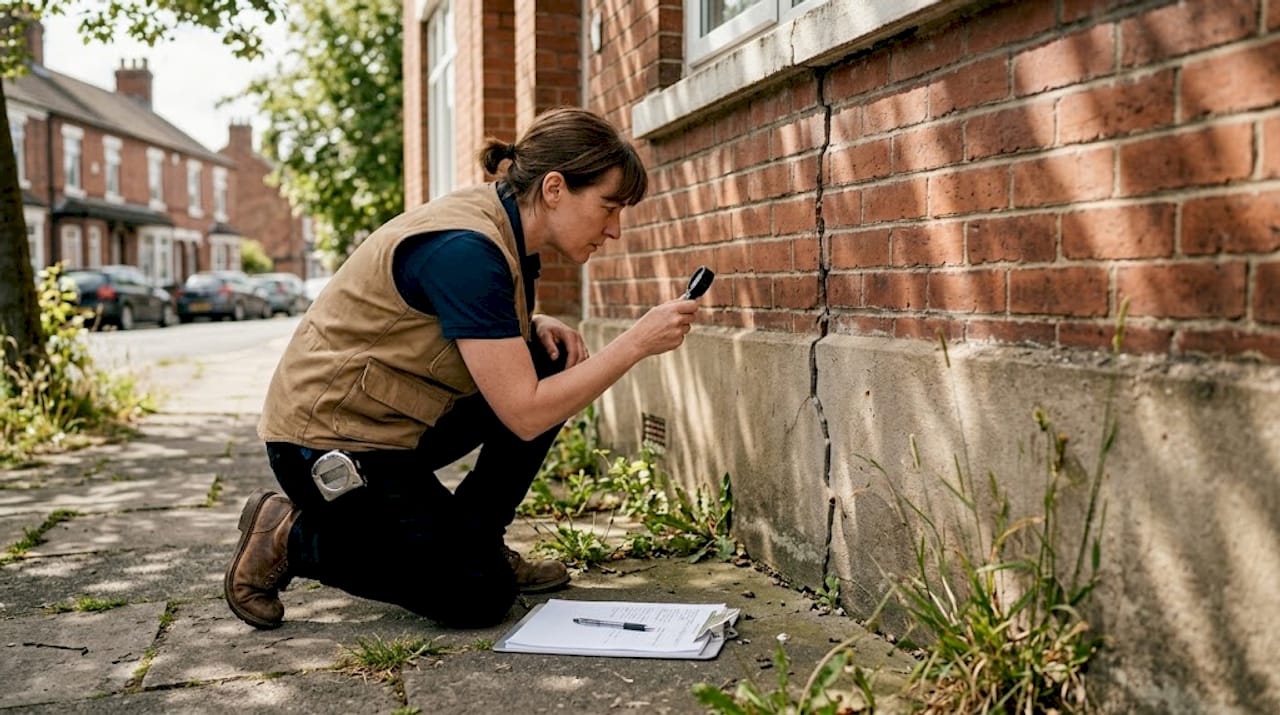
For structural water damage indicators such as cracks in foundations or external walls, a professional assessment is always the right call. Cracks that widen over time or appear in diagonal patterns near door and window frames often point to soil movement caused by prolonged water infiltration.
Pro Tip: Review your water bill every three months and compare it to the same period in the previous year. A jump of more than 20% with no change in household habits is a red flag worth investigating immediately.
When should you call a professional rather than investigate yourself? If you find mould spreading across more than a small area, if you suspect a slab or underground leak, or if cracks are appearing in structural elements, do not delay. These are not DIY situations.
Common causes of water damage in South African homes
Learning the signs is half the battle. Knowing what typically causes them in South African properties gives you a strategic advantage when it comes to prevention.
“Many homeowners only discover a plumbing leak or waterproofing failure after the damage has already become costly. The sources are usually mundane: blocked gutters, ageing pipes, or a neglected gutter joint. Prevention costs far less than the cure.”
Here are the five most common causes of water damage in South African homes, along with practical guidance for each:
-
Blocked or damaged gutters and downpipes. During Cape Town’s wet winters or KwaZulu-Natal’s summer storms, gutters overwhelmed by leaves and debris force water back against the fascia board and into the roof structure. Clean gutters at least twice a year and check downpipe joints for cracks.
-
Leaking or ageing roofs. Broken or displaced roof tiles, corroded IBR sheeting, and failing flashing around chimneys or skylights are among the most frequent entry points for water. A small gap in flashing can allow litres of water into ceiling cavities after a single heavy downpour.
-
Burst or leaking geysers. South African homes rely heavily on conventional geysers, which have a lifespan of roughly 8 to 12 years. A failing geyser can leak slowly into ceiling spaces for weeks before discovery. Fit a drip tray and overflow pipe, and have your geyser inspected annually.
-
Poor or failed drainage around the foundation. If the ground around your home slopes towards the walls rather than away from them, rainwater pools against the foundation. Over time, this hydrostatic pressure (meaning the force of water pressing against a surface) forces moisture through even hairline cracks in concrete. Checking that garden beds and paving slope away from the house is a simple but effective precaution.
-
Ageing or corroded plumbing pipes. Many older South African homes still have galvanised steel pipes that are well past their serviceable life. These corrode from the inside, reducing water quality and eventually causing pinhole leaks inside walls. These are precisely the waterproofing failure examples that owners often discover only after significant hidden damage has occurred. If your home is more than 25 years old and has never had its plumbing assessed, schedule an inspection.
South Africa’s climate adds particular stress. The Western Cape faces intense winter rainfall, Gauteng experiences fierce summer electrical storms, and coastal areas deal with high humidity that accelerates mould growth and material degradation. These regional differences mean that what is a low-risk issue in a dry region can become a serious problem in a wetter one.
Immediate steps to take if you spot water damage
Once you recognise the signs and sources, a fast response can make all the difference. Acting quickly limits the spread of damage, reduces repair costs, and improves your position with insurers.
Here is a clear sequence to follow:
-
Stop the source if possible. Turn off the water supply to the affected area or to the whole property if you cannot isolate the leak. For a burst geyser, switch off the power at the distribution board as well as the water supply.
-
Move belongings and protect what you can. Shift furniture, rugs, electronics, and documents away from the affected area. Place towels or buckets to contain ongoing dripping.
-
Document everything immediately. Take dated photographs and video footage of all visible damage before you move or remove anything. Capture the affected area from multiple angles. This documentation is critical for supporting an insurance claim and for giving contractors a clear picture of the original extent of damage.
-
Contact your insurer promptly. Notify your insurer as soon as possible and be honest about how the damage occurred. Understand that sudden accidental leaks may be covered, but slow or maintenance-related leaks often are not. Your maintenance logbook becomes valuable here.
-
Call a qualified waterproofing specialist. Know when to call waterproofing professionals rather than attempting a DIY repair. A specialist can assess not just the visible damage but also the underlying cause, which is what matters for a lasting fix.
-
Follow up with proper maintenance. Once repairs are complete, establish a schedule for maintaining waterproofed areas to prevent recurrence. Waterproofing membranes and sealants have limited lifespans and need periodic inspection.
There are also several things you should avoid doing when water damage is discovered:
- Do not use electrical appliances or light switches in a waterlogged area
- Do not remove or disturb mould without protective equipment and proper guidance
- Do not delay calling your insurer, as late notification can affect your claim
- Do not start major repairs before an insurance assessor has inspected the damage
- Do not assume the problem is resolved once visible water has dried. Moisture can linger inside walls and floors for weeks, continuing to cause hidden damage.
Why regular waterproofing and flexibility are your real defences
There is a belief held by many homeowners in South Africa that having good insurance is enough. After a claim is declined for wear-and-tear or neglected maintenance, that belief tends to shift quite sharply.
The truth is that insurance is designed for the unexpected, not the inevitable. A roof that has not been inspected in a decade, gutters that have never been cleared, or waterproofing applied once and never revisited are not unexpected failures. They are foreseeable outcomes of deferred maintenance. Insurance exclusions for poor maintenance exist precisely because insurers expect property owners to uphold basic care standards.
The real defence is a flexible, ongoing approach to waterproofing maintenance importance that treats your property as a living asset. Schedules change, priorities shift, and sometimes a professional picks up something you missed. What matters is that you stay engaged and keep records.
A documented maintenance history does two things simultaneously: it helps you catch problems early by revealing patterns over time, and it provides evidence that you have been a responsible owner if a claim ever becomes necessary. That dual value is something no single insurance policy can replicate. The peace of mind that comes from knowing your property is genuinely protected is worth far more than the cost of a periodic inspection.
Get expert help to safeguard your property
Finding signs of water damage early is a strong first step, but knowing what to do next requires expertise that goes beyond what any checklist can provide.

At Pro Waterproofing, we offer professional inspections, targeted waterproofing repairs, and ongoing maintenance planning tailored to South African properties and their specific climate challenges. Whether you have spotted a warning sign or simply want confidence that your home is properly protected, our team is equipped to assess, advise, and act. Reach out today to arrange an inspection and give your property the professional attention it deserves year-round.
Frequently asked questions
What are three early signs of hidden water damage?
Unexplained water bill spikes, warm or soft spots on floors, and new cracks in walls or floors are three reliable early indicators of a hidden leak worth investigating.
Does home insurance cover all types of water damage in South Africa?
No. Most policies cover sudden accidental damage only, and will not pay for damage resulting from wear-and-tear, poor maintenance, or blocked gutters.
How can I prevent water damage before it starts?
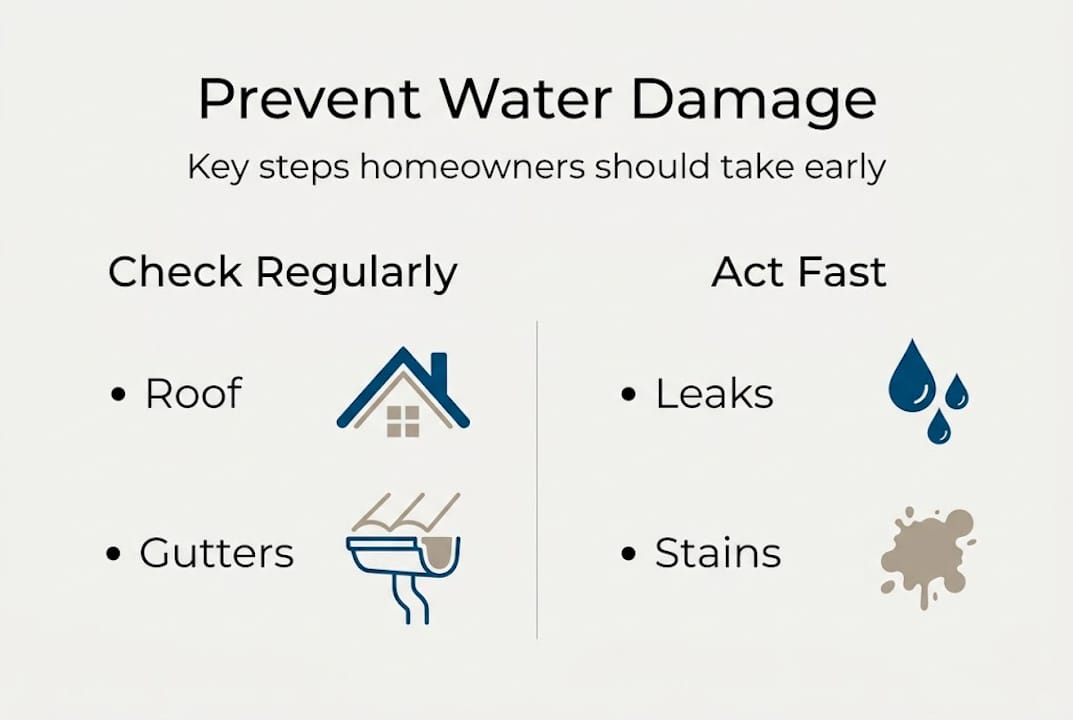
Regular inspections of your roof, gutters, and plumbing, combined with prompt repairs and routine waterproofing checks, are the most effective way to reduce risk before damage occurs.
Are mould and musty smells always a sign of water damage?
Not always. While mould and musty odours are strongly associated with moisture intrusion, poor ventilation alone can produce similar conditions, so a professional inspection is needed to confirm the cause.