
TL;DR:
- Waterproofing failures often result from skipped procedures, ignoring regulations, or unqualified contractors.
- Compliance with South African standards and thorough documentation are essential for legal protection and insurance claims.
- Proper surface preparation, system selection, and contractor verification are key to waterproofing success and longevity.
Moisture causes 85% of construction defects in South Africa, yet most property owners still treat waterproofing as an afterthought rather than a foundational safety requirement. The reality is that waterproofing failures rarely come down to choosing the wrong product. They come down to skipping procedures, ignoring regulations, and hiring unqualified contractors. Whether you manage a residential complex in Cape Town or a commercial warehouse in Johannesburg, understanding the correct safety procedures is not optional. It protects your structure, keeps you legally compliant, and saves you from the kind of remediation costs that can dwarf the original project budget many times over.
Table of Contents
- Why safety procedures matter in waterproofing
- South African legal standards and compliance requirements
- Step-by-step workflow: Waterproofing safety procedures
- Choosing the right system: Best practices and key considerations
- Ensuring contractor competence and safety compliance
- The practical truth behind waterproofing success in South Africa
- Get expert waterproofing advice and solutions
- Frequently asked questions
Key Takeaways
| Point | Details |
|---|---|
| Legal compliance protects assets | Following SANS 10400 and NHBRC rules is essential for insurance and property value. |
| Proper workflow prevents failure | A clear, documented sequence of procedures is the best defence against leaks and costly repairs. |
| Surface preparation is critical | Most waterproofing failures result from skipping or rushing surface prep stages. |
| Choose system for site risks | The right waterproofing system must match your property’s conditions for durability and safety. |
| Qualified contractors are non-negotiable | Always hire registered, insured professionals to ensure compliance and long-term protection. |
Why safety procedures matter in waterproofing
When waterproofing fails, the consequences ripple outward fast. A single missed step during installation can allow water ingress that silently destroys concrete, corrodes reinforcing steel, and breeds mould behind walls for months before anyone notices. By then, what started as a R20,000 waterproofing job can become a R200,000 structural repair. The financial risk alone should be enough to take procedures seriously.
But the risks go further than money. Improper waterproofing leads to 80% of water ingress failures, and when those failures coincide with non-compliance, property owners face insurance denial and failed building inspections. Insurers are increasingly scrutinising waterproofing records when processing claims related to water damage. If you cannot produce documentation showing compliant installation, your claim may be rejected outright, regardless of how severe the damage is.
South African law requires understanding waterproofing regulations as a baseline responsibility for any property owner undertaking construction or significant maintenance. The NHBRC guidelines mandate that residential builders use certified, compliant waterproofing systems, and commercial properties face equally strict standards under local authority bylaws.
Here is what you stand to lose when safety procedures are ignored:
- Structural integrity: Water penetration weakens concrete and causes spalling, cracking, and eventual collapse risk.
- Insurance cover: Non-compliant installations are grounds for claim rejection.
- Legal standing: Failing inspections can result in stop-work orders or occupation certificate refusals.
- Resale value: Damp problems are among the top deal-breakers for property buyers and valuers.
- Tenant safety: Mould growth from water ingress creates serious health hazards.
“The most expensive waterproofing job is the one you have to do twice. Correct procedures the first time around are always cheaper than remediation.”
Proactive investment in proper safety procedures is not a luxury. It is the difference between a building that performs for 30 years and one that requires constant patchwork repairs. Review the owner guide to waterproofing standards to understand exactly what your obligations are before any project begins.
Having established the steep costs of failure, let’s unpack the legal and regulatory backbone behind waterproofing safety.
South African legal standards and compliance requirements
Waterproofing in South Africa is legally mandated under SANS 10400 Parts K, L, and P. These sections of the National Building Regulations cover moisture exclusion, roof construction, and drainage respectively. Every structure built or significantly altered in South Africa must comply with these standards. Ignorance of them is not a legal defence.
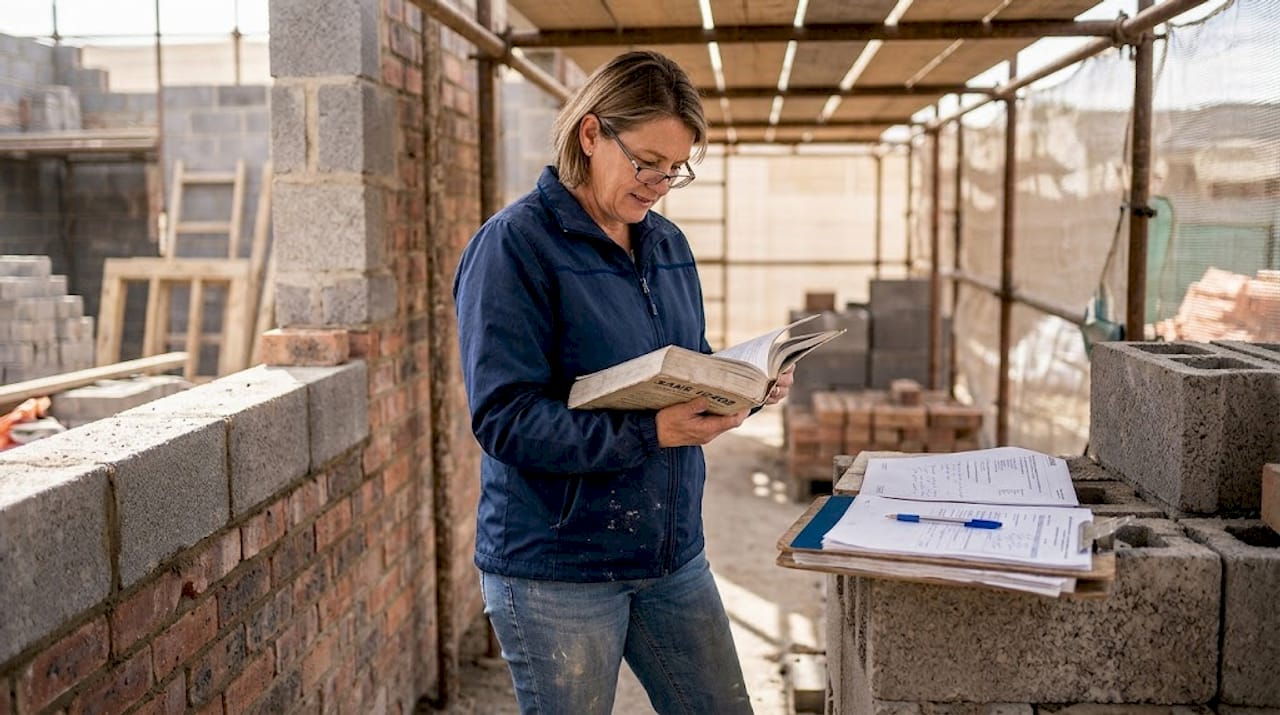
Part K deals specifically with moisture resistance in walls and floors. Part L covers roof construction and the prevention of rainwater penetration. Part P addresses drainage, which directly affects how well waterproofing systems perform over time. Together, these three sections form the legal minimum for any compliant waterproofing installation.
The DWASA/WTASA/PRAWA requirements add another layer of accountability. These industry associations set professional standards for contractors and products. Using a registered member gives you a paper trail that supports both warranty claims and legal compliance.
Here is a comparison of key requirements across residential and commercial properties:
| Requirement | Residential | Commercial |
|---|---|---|
| NHBRC enrolment | Mandatory for new builds | Not required, but recommended |
| SANS 10400 compliance | Mandatory | Mandatory |
| Contractor registration | NHBRC-registered builder | DWASA/WTASA/PRAWA preferred |
| Product certification | SABS-approved products | SABS-approved products |
| Warranty period | Minimum 5 years (NHBRC) | Contractually defined |
| Inspection frequency | Biannual | Biannual |
For both property types, documentation is not optional. You need to keep records of:
- Contractor registration certificates
- Product data sheets and SABS approval numbers
- Application method statements
- Inspection reports (biannual minimum)
- Warranties from both contractor and product manufacturer
The complete guide to waterproofing regulations provides a thorough breakdown of how these requirements apply to different building types. For a deeper look at what the industry standards for waterproofing actually demand in practice, it is worth reviewing the full scope before appointing any contractor.
With the regulatory environment clear, the next step is understanding the precise workflow that ensures safe, compliant waterproofing.
Step-by-step workflow: Waterproofing safety procedures
A step-by-step waterproofing process covers assessment, preparation, priming, reinforcement, membrane application, testing, and documentation. Each stage builds on the last. Skipping even one creates a weak point that water will eventually find.
Here is the correct sequence:
- Site assessment: Identify the water source, exposure level, substrate condition, and any existing damage. A proper assessment determines which system is appropriate and flags any structural issues that must be resolved first.
- Surface preparation: Remove all loose material, contamination, and existing failed coatings. Grind or scarify as needed. This is the single most important step and the one most often rushed.
- Crack and joint repair: Fill cracks with appropriate flexible sealant or cementitious compound. Reinforce movement joints with bond breaker tape before membrane application.
- Primer application: Apply the correct primer for the substrate and membrane system. Priming improves adhesion and seals porous surfaces. Skipping this step is a common cause of delamination.
- Reinforcement at details: Apply reinforcing fabric or mesh at corners, pipe penetrations, and upstands. These are the highest-risk areas for failure and must be treated before the main membrane.
- Membrane application: Apply the waterproofing membrane in the specified number of coats or layers, at the correct thickness, and within the manufacturer’s stated application conditions.
- Flood or vacuum testing: Before covering any membrane, test it. Flood testing for flat areas and vacuum testing for specific joints confirms integrity before the system is buried under screed or tiles.
- Documentation and handover: Record every product used, application date, weather conditions, and test results. File these with the warranty documentation.
Pro Tip: Never allow the membrane to be covered before testing is complete. Once screed or tiles go down, finding the source of a leak becomes enormously expensive and disruptive.
| Step | Time typically allowed | Common shortcut (avoid) |
|---|---|---|
| Surface preparation | 1 to 2 days | Applying over damp or dusty substrate |
| Primer curing | 2 to 4 hours | Applying membrane before primer is dry |
| Membrane curing | 24 to 48 hours per coat | Applying second coat too early |
| Flood testing | Minimum 24 hours | Skipping or shortening test duration |
Refer to the detailed waterproofing process for application-specific guidance on different substrates and system types.
Armed with a clear process, let’s now consider which systems and materials to choose for specific South African building contexts.
Choosing the right system: Best practices and key considerations
Common systems include cementitious, liquid-applied, bitumen torch-on, and EPDM/TPO membranes, each suited to different locations and lifespans. Choosing the wrong system for your site conditions is as dangerous as poor installation. The system must match the substrate, the exposure, and the expected movement.
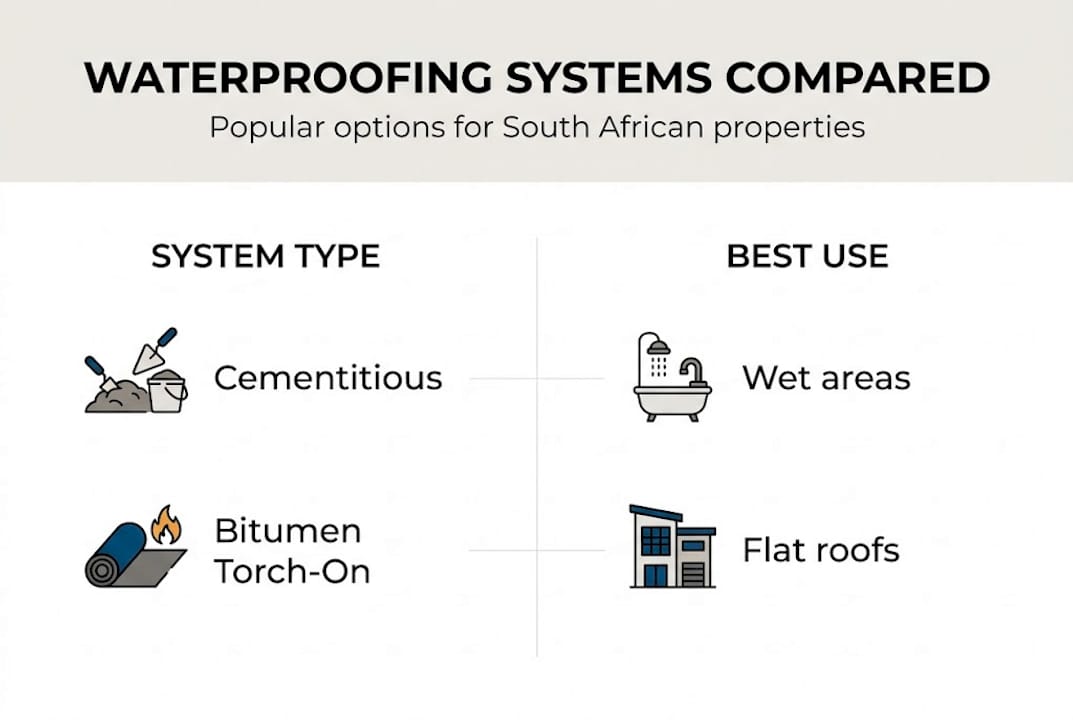
| System | Typical lifespan | Best application | Key limitation |
|---|---|---|---|
| Cementitious | 10 to 15 years | Wet areas, basements | Rigid, not for moving joints |
| Liquid-applied | 10 to 20 years | Roofs, balconies | UV degradation if unprotected |
| Bitumen torch-on | 10 to 15 years | Flat roofs | Fire risk during installation |
| EPDM/TPO | 20 to 30+ years | Large flat roofs | Higher initial cost |
High water table sites need drainage layers and robust membranes; coastal areas require UV and chemical resistance. These are not optional upgrades. They are safety requirements for those specific environments.
For below-grade applications such as basements and underground parking, the system must resist hydrostatic pressure. A liquid-applied membrane alone is rarely sufficient. You need a drainage board, a robust membrane rated for hydrostatic conditions, and a working drainage channel at the base of the wall.
For rooftop applications, UV exposure is the primary degradation factor in most South African climates. Unprotected liquid membranes will chalk and crack within a few years. Either specify a UV-stable product or protect the membrane with a reflective coating or paving system.
Key considerations before selecting a system:
- Substrate movement: Concrete slabs move. Choose a flexible system for any application where cracking is possible.
- Drainage: No membrane survives standing water indefinitely. Ensure falls and drainage are correct before waterproofing.
- Chemical exposure: Industrial floors and plant rooms may require chemically resistant systems.
- Access for maintenance: Inaccessible areas need longer-lasting systems with minimal maintenance requirements.
Pro Tip: Preparation always outperforms product selection. A premium EPDM membrane applied over a poorly prepared substrate will fail faster than a basic liquid system applied correctly over a clean, primed surface.
Review waterproofing standards by property type to match the correct system to your specific building category.
Once the right system is chosen, finding and verifying a qualified contractor is the last critical safety factor.
Ensuring contractor competence and safety compliance
Hire DWASA/WTASA/PRAWA registered contractors and check their insurance, SANS compliance, and warranties before signing any contract. This is not bureaucratic box-ticking. It is the only reliable way to ensure that the person applying your waterproofing system has the training, accountability, and legal standing to do it correctly.
Unqualified contractors are a serious liability. If they install a non-compliant system and it fails, your insurer may deny the claim, the warranty is void, and you may face legal action from tenants or buyers who suffer consequential losses. The role of waterproofing contractors in South Africa is clearly defined, and using someone outside that framework exposes you to significant risk.
Traditional torch-on bitumen is less reliable than modern EPDM/TPO systems; prioritise contractor skill and preparation above all else. This matters because many contractors still default to torch-on bitumen out of habit, even when a more durable system is available and appropriate.
Before appointing any contractor, verify the following:
- Association registration: Confirm active membership with DWASA, WTASA, or PRAWA.
- Public liability insurance: Minimum R2 million cover is standard. Request the certificate.
- SANS-compliant products: Ask for the product data sheets and SABS approval numbers for every product they intend to use.
- Written method statement: A reputable contractor will provide a written sequence of work before starting.
- Warranty terms: Understand what is covered, for how long, and what maintenance is required to keep the warranty valid.
- Site safety compliance: Confirm that the contractor follows Occupational Health and Safety Act requirements for their team on your site.
Pro Tip: Ask the questions for contractors that separate professionals from opportunists. A contractor who cannot answer basic questions about product certification or warranty conditions is a red flag.
Onsite supervision is equally important. Even a registered contractor can cut corners if no one is watching. Either appoint a project manager or conduct regular site visits during critical application stages, particularly surface preparation, primer application, and testing. For guidance on identifying licensed waterproofing contractors who meet all these criteria, use verified directories and association member lists.
With all technical, regulatory, and practical safety aspects covered, let’s look at why the real-world application hinges less on material and more on preparation and oversight.
The practical truth behind waterproofing success in South Africa
After working across hundreds of South African properties, the pattern is consistent. Failures almost never come from choosing the wrong product. They come from skipping surface preparation, which is the most common cause of system failure, combined with absent documentation and infrequent inspection.
The uncomfortable truth is that a R500-per-litre premium membrane applied over a dusty, damp, or cracked substrate will fail within two years. A mid-range product applied correctly over a well-prepared surface will last its full rated lifespan and beyond. Property owners who focus their budget and attention on preparation rather than product upgrades consistently get better outcomes.
Documentation is the other piece that most owners underestimate. Without records, you have no warranty, no insurance backing, and no baseline for future inspections. The long-term protection standards make clear that ongoing compliance is an active responsibility, not a one-time tick-box. A proactive biannual inspection programme costs a fraction of what emergency repairs demand, and it keeps your legal standing intact.
Get expert waterproofing advice and solutions
Navigating SANS 10400 compliance, contractor verification, and system selection is straightforward when you have the right support. Pro Waterproofing connects South African property owners and building managers with SANS-compliant specialists who handle everything from initial assessment through to final documentation and warranty management.
Whether you need a compliance check on an existing installation or a full waterproofing project managed from start to finish, the team at Pro Waterproofing brings verified expertise and a commitment to procedures that protect your investment. For a detailed comparison of service providers, see South Africa’s top waterproofing contractors and find the right fit for your property type and budget.
Frequently asked questions
What are the biggest risks of poor waterproofing in South Africa?
Poor waterproofing is responsible for 80% of water ingress failures, leading to structural damage, mould growth, insurance denial, and costly remediation that far exceeds the original installation cost.
What documentation is required to prove waterproofing compliance?
You need contractor registration certificates, product data sheets, warranties, and biannual inspection reports to demonstrate compliance to insurers, local authorities, and future buyers.
Which waterproofing system lasts longest for flat roofs?
EPDM and TPO membranes last 20 to 30+ years on flat roofs when correctly installed and maintained, making them the most durable option currently available for large roof areas in South Africa.
How often should waterproofing be inspected?
Biannual inspections are mandatory in South Africa to maintain warranty validity and demonstrate ongoing compliance with SANS 10400 and NHBRC requirements.
What is the most important safety procedure people overlook?
Thorough surface preparation is consistently the most skipped step and accounts for the majority of premature waterproofing failures across all property types in South Africa.