

TL;DR:
- Polyurethane waterproofing forms a seamless, flexible membrane resistant to thermal movement and cracking.
- Its adaptability makes it ideal for South Africa’s diverse, demanding climate zones.
- Proper application and maintenance significantly extend the lifespan of polyurethane waterproofing systems.
Not all waterproofing systems are built equal, and South Africa’s climate makes that gap painfully obvious. Property owners across the country routinely choose the cheapest or most familiar option, only to find themselves dealing with leaks, damp walls, and costly repairs within a few years. Polyurethane waterproofing challenges that pattern entirely. Unlike rigid, brittle systems that crack under thermal stress, polyurethane forms a seamless, flexible membrane that moves with your building. This guide walks you through exactly what polyurethane waterproofing is, why it suits South African conditions better than most alternatives, and how to apply and maintain it correctly for lasting results.
Table of Contents
- Understanding polyurethane waterproofing
- Key advantages for South African properties
- Step-by-step application process
- Mistakes to avoid and maintenance tips
- A practical perspective on polyurethane waterproofing in South Africa
- Professional guidance and solutions for South African properties
- Frequently asked questions
Key Takeaways
| Point | Details |
|---|---|
| Polyurethane is flexible | It adapts to South Africa’s varied climate extremes, protecting against leaks and movement-related cracks. |
| Professional prep is essential | Quality surface preparation and UV protection are critical for longevity and performance. |
| Versatile for many areas | Solvent-based and water-based polyurethane options cover exterior and interior needs efficiently. |
| Cost-effective protection | While not the cheapest, polyurethane delivers strong value and longer-term cost savings over rigid alternatives. |
Understanding polyurethane waterproofing
Polyurethane waterproofing is a liquid-applied membrane system. You apply it in a liquid state directly onto a prepared surface, where it cures into a tough, rubber-like coating that bonds firmly to the substrate beneath. There are no seams, no joints, and no overlapping sheets to worry about. That seamless quality is precisely what makes it so effective against water penetration.
The chemistry behind it is straightforward: polyurethane compounds react to form long, flexible polymer chains. These chains give the cured membrane its famous elasticity, allowing it to stretch and recover without cracking. This matters enormously for South African properties, which face thermal cycling every single day. A Highveld roof can reach 70°C on a summer afternoon and cool sharply overnight. A rigid waterproofing system simply cannot accommodate that kind of movement without developing micro-cracks over time.
The importance of waterproofing becomes clear when you consider how quickly water finds those cracks and works its way into a structure. Polyurethane removes that vulnerability.
Common applications include:
- Flat roofs and low-pitched roofs where water pools and sits
- Balconies and terraces exposed to both foot traffic and rain
- Decks subjected to UV radiation and seasonal moisture
- Wet areas such as bathrooms and basements where interior moisture is the primary concern
- Podium decks and planter boxes in commercial and residential complexes
Polyurethane also handles complex surface geometry well. Flashings, drains, penetrations, and awkward corners can all be waterproofed in a single continuous application, reducing the number of failure points dramatically.
“Polyurethane offers flexibility for thermal cycling and movement in diverse South African climates and requires UV protection and professional preparation to avoid failures.”
This distinction between flexibility and rigidity is the core reason polyurethane continues to outperform older systems on South African roofs and structures. When the building breathes, the membrane breathes with it.
Key advantages for South African properties
South Africa presents a genuinely unique waterproofing challenge. The Western Cape deals with heavy winter rainfall and wet, cold conditions. The Highveld experiences intense summer thunderstorms paired with scorching heat. Coastal KwaZulu-Natal brings humidity and salt-laden air year-round. No single rigid system handles all of these conditions well. Polyurethane does.
The property waterproofing advantages specific to polyurethane systems include genuine adaptability across these climate zones. Because the membrane remains flexible after curing, it absorbs movement caused by temperature swings without developing the hairline fractures that eventually allow water in.
For SA property owners, PU systems excel in flexibility for thermal cycling across diverse climates, but you must specify UV-protected formulations for exterior use and ensure professional surface preparation to avoid the most common failure modes.
Comparison of common waterproofing systems:
| System | Flexibility | UV resistance | Seam risk | Lifespan |
|---|---|---|---|---|
| Polyurethane | Excellent | Requires additive | None | 10 to 15+ years |
| Acrylic | Moderate | Good | Minimal | 5 to 8 years |
| Bitumen (torch-on) | Low | Poor without coating | High at seams | 8 to 12 years |
| Cementitious | Very low | Poor | High | 5 to 10 years |
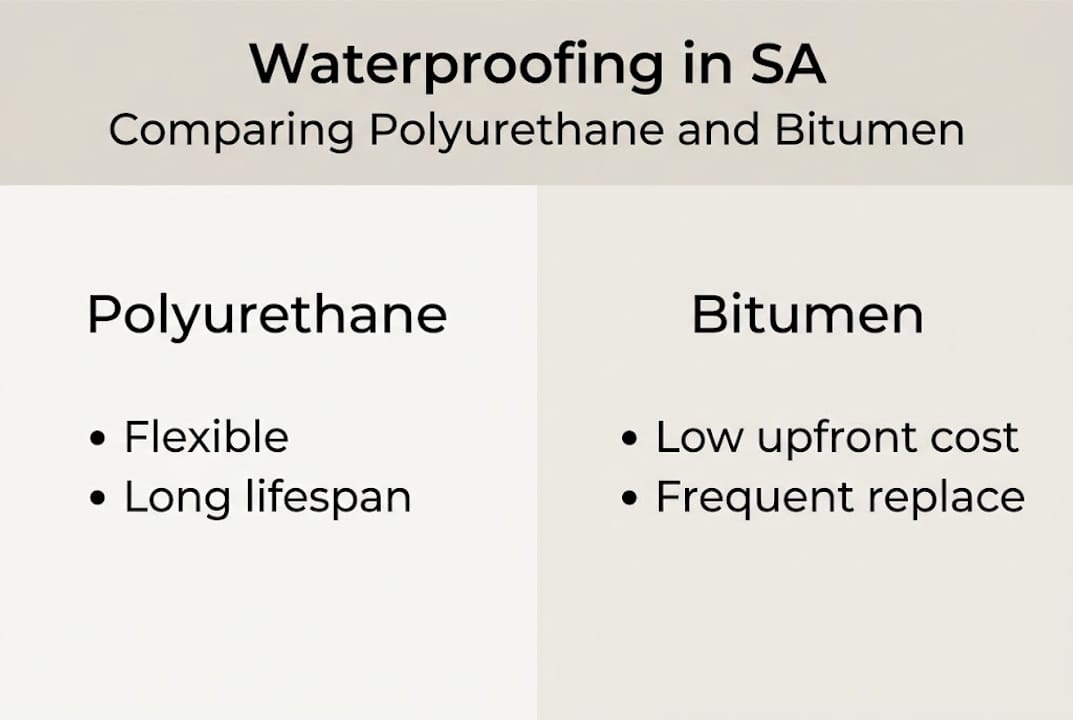
The cost picture is also compelling. Bitumen torch-on systems carry lower upfront costs but require more frequent replacement and are prone to seam failures. Acrylics are affordable but degrade faster under prolonged UV exposure, which is unavoidable in most of South Africa. Polyurethane costs more initially but typically delivers better long-term value when you account for maintenance and replacement cycles.
When comparing waterproofing methods for complex surfaces such as balconies with multiple penetrations or irregular geometry, polyurethane’s seamless application dramatically reduces the labour required to seal every junction individually.
Pro Tip: Always specify a UV-stable or UV-protected polyurethane formulation for any exterior application. Standard polyurethane degrades under sustained UV exposure, which is an unavoidable reality on South African roofs.
Step-by-step application process
Understanding the application process helps you recognise quality work when you see it and ask the right questions before a contractor starts. Skipping or rushing any stage is where most failures originate.
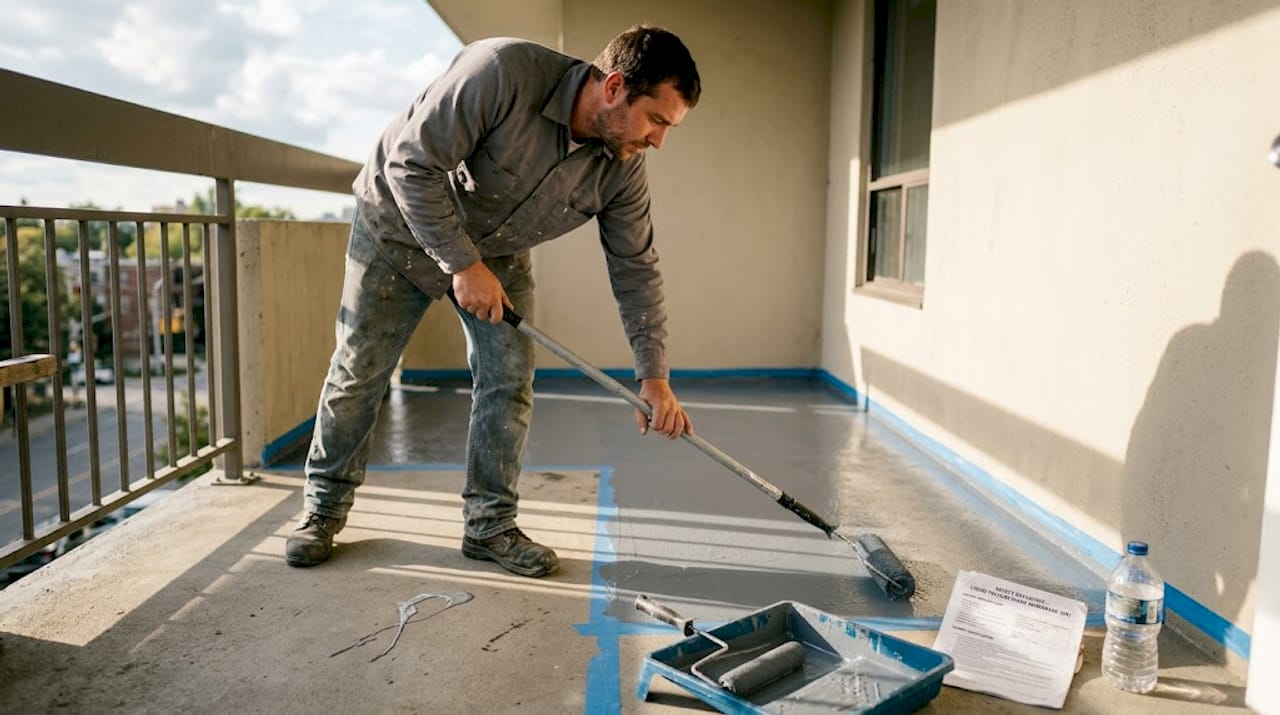
The application methodology follows a clear sequence: surface preparation (clean, dry, repair cracks), prime if needed, apply two or more coats, and reinforce all joints and corners. Every step in that sequence matters equally.
Following waterproofing best practices means the process looks like this:
- Clean the surface thoroughly. Remove all dust, grease, loose material, and previous coatings that may prevent adhesion. Mechanical cleaning such as grinding or pressure washing is often necessary.
- Allow complete drying. Applying polyurethane over a damp substrate traps moisture beneath the membrane, which causes blistering and adhesion failure. The surface must be bone dry.
- Repair existing cracks and damage. Fill cracks, spalls, and hollows with a compatible repair mortar or filler. Structural movement cracks need flexible sealant rather than rigid fillers.
- Apply primer if required. Dense, non-absorbent surfaces such as concrete often need priming to ensure the polyurethane bonds correctly and does not delaminate under pressure.
- Embed reinforcement fabric at joints and corners. These are the highest-risk areas for movement and stress concentration. A fibreglass or polyester mat set into the first coat provides critical additional strength.
- Apply the first coat and allow curing. Do not rush this stage. Curing times depend on temperature and humidity, and applying the second coat too early prevents proper film formation.
- Apply subsequent coats to achieve the specified dry film thickness. Thinner applications may look complete but will fail sooner.
Curing times by temperature:
| Ambient temperature | Touch dry | Recoat time | Full cure |
|---|---|---|---|
| Below 10°C | 4 to 6 hours | 12 to 24 hours | 7 days |
| 10°C to 25°C | 1 to 3 hours | 6 to 12 hours | 5 to 7 days |
| Above 25°C | 30 to 60 minutes | 3 to 6 hours | 3 to 5 days |
The benefits of professional waterproofing are most visible at this stage. Skilled applicators monitor ambient conditions, adjust product selection accordingly, and know how to handle the subtle variables that make the difference between a 5-year and a 15-year result.
Pro Tip: Request a material data sheet from your contractor before work begins. It should specify the required dry film thickness, recoat windows, and cure times. If they cannot provide this, that is a serious warning sign.
Mistakes to avoid and maintenance tips
Polyurethane waterproofing fails for predictable, avoidable reasons. Knowing what those reasons are puts you in a much stronger position when managing a project or evaluating an existing installation.
The most common errors property owners and contractors make include:
- Skipping surface preparation. Poor surface preparation is the single biggest cause of membrane failure. No waterproofing product can compensate for inadequate substrate work.
- Selecting the wrong product. Using a water-based interior product on an exposed exterior roof, or choosing a system without UV stabilisation, guarantees premature failure in South African conditions.
- Inadequate joint and corner treatment. Flat sections rarely fail first. It is always the junctions, upstands, and corners where water finds its way through.
- Applying too thin. Contractors sometimes stretch product volumes to reduce costs. Under-thickness membranes crack and wear out far sooner than specified.
- Ignoring UV protection. South Africa’s solar radiation is intense year-round. The role of waterproofing coatings in blocking UV degradation is just as important as blocking water itself.
“Common failures stem from poor surface preparation and lack of UV protection; proper maintenance is key for longevity.”
For maintenance, a consistent routine protects your investment and extends property lifespan significantly. Inspect your waterproofed areas at least twice a year, ideally before winter rains and after summer storms. Look for bubbling, cracking, peeling, or discolouration. Clear drains and gutters so water does not pond on the membrane longer than necessary.
Pro Tip: Small repairs carried out promptly cost a fraction of what a full membrane replacement does. If you notice a blister or a small crack, address it within weeks rather than months.
Professional recoating every 5 to 7 years, depending on exposure conditions, keeps the system performing at its best and avoids the compounding damage that develops when a membrane is left to deteriorate unchecked.
A practical perspective on polyurethane waterproofing in South Africa
Here is something most waterproofing guides will not tell you plainly: the product you choose matters less than the care taken to install it. We see this pattern consistently across residential and commercial properties in South Africa. A premium polyurethane system installed carelessly will fail faster than a mid-range product applied with proper preparation and technique.
Property owners underestimate this because waterproofing is invisible once complete. You cannot see whether the substrate was properly dried or whether the joints were correctly reinforced. That invisibility creates a space where shortcuts happen.
The other reality is that South Africa’s climate punishes poor choices rapidly. A membrane that might last four years in a mild European climate may fail within 18 months on a north-facing Johannesburg roof. UV radiation, thermal cycling, and seasonal rain collectively stress waterproofing systems in ways that demand both the right product and the right process.
Choosing a contractor who understands industry waterproofing standards and can demonstrate their preparation methodology is ultimately more important than the brand of polyurethane they apply. Ask for a written scope of work before any project begins. It is the clearest indicator of professionalism.
Professional guidance and solutions for South African properties
Choosing the right waterproofing system is only half the challenge. The other half is ensuring it is installed by someone who genuinely understands South African conditions, building types, and the specific demands of your property.
At Pro Waterproofing, we work with residential and commercial property owners across South Africa to assess existing conditions, recommend the correct system for each application, and ensure installation meets the standards that deliver lasting results. Whether you are dealing with a leaking flat roof, a damp basement, or planning a new construction project, our team can provide a thorough assessment and a tailored solution. Contact us today to arrange a consultation and protect your property before water damage escalates.
Frequently asked questions
How does polyurethane waterproofing prevent leaks?
Polyurethane forms a seamless, flexible membrane that blocks water from penetrating surfaces even under thermal movement, eliminating the seam failures common in sheet-based systems.
Can polyurethane waterproofing be used inside and outside?
Yes, solvent-based systems are ideal for exposed exterior applications, while water-based versions are better suited to interior wet areas such as bathrooms and basements.
What is the biggest cause of polyurethane waterproofing failure?
Failure is most often caused by poor surface preparation and insufficient UV protection on outdoor surfaces, both of which are avoidable with correct planning and product selection.
How long does polyurethane waterproofing last?
With proper preparation and routine maintenance, polyurethane systems protect South African properties reliably for more than a decade, with some installations reaching 15 years or more.
Is professional installation recommended?
Professional installation is strongly advised because correct application and surface preparation are the primary factors that determine whether a polyurethane system delivers its full lifespan, particularly in South Africa’s demanding climate conditions.