

TL;DR:
- Most roof leaks in South Africa are caused by blocked gutters and failed flashing, not aging materials. Proper surface preparation and ongoing maintenance are essential for long-lasting waterproofing. Regular inspections, gutter cleaning, and professional repairs prevent costly water damage.
Up to 70% of roof repairs are entirely preventable with proper maintenance, yet most South African homeowners only act after water is already dripping through the ceiling. The misunderstanding runs deep: many people believe roof leaks are caused by ageing materials alone, when the real culprits are often blocked gutters, failed flashing, and inadequate waterproofing preparation. Knowing the truth changes everything. This article walks you through the actual causes of roof leaks in South African conditions, the most effective waterproofing methods available, the critical preparation steps that make or break any system, and the maintenance routines that keep your roof watertight for years to come.
Table of Contents
- Understanding the main causes of roof leaks in South Africa
- Comparing the most effective roof waterproofing methods
- Critical preparation steps: How to ensure lasting leak prevention
- Maintaining your roof: Ongoing strategies to keep leaks at bay
- What most homeowners get wrong about roof leak prevention
- Get professional help for lasting leak prevention
- Frequently asked questions
Key Takeaways
| Point | Details |
|---|---|
| Gutter care matters | Blocked gutters cause most preventable leaks, so regular cleaning and guards are vital. |
| Choose suitable membranes | Torch-on bitumen and liquid-applied systems each have specific strengths for South African roofs. |
| Surface prep is crucial | Thorough cleaning, priming, and repairs are essential before any waterproofing. |
| Routine maintenance is key | Twice-yearly roof checks and scheduled recoating prevent costly repairs. |
Understanding the main causes of roof leaks in South Africa
Most homeowners are surprised to learn that the roof membrane itself is rarely the first thing to fail. The trouble usually starts somewhere far less obvious, and by the time you spot a water stain on your ceiling, the damage has often been building for weeks or even months.
Understanding the roof waterproofing basics for South African homes means recognising the specific vulnerabilities that our climate creates. Intense summer thunderstorms in Gauteng, persistent Cape winter rains, and the coastal humidity of KwaZulu-Natal all place very different stresses on roofing systems. A leak that starts during a Cape Town cold front may have a completely different origin to one that appears after a Johannesburg hailstorm.
Here are the most common causes of roof leaks in South African homes:
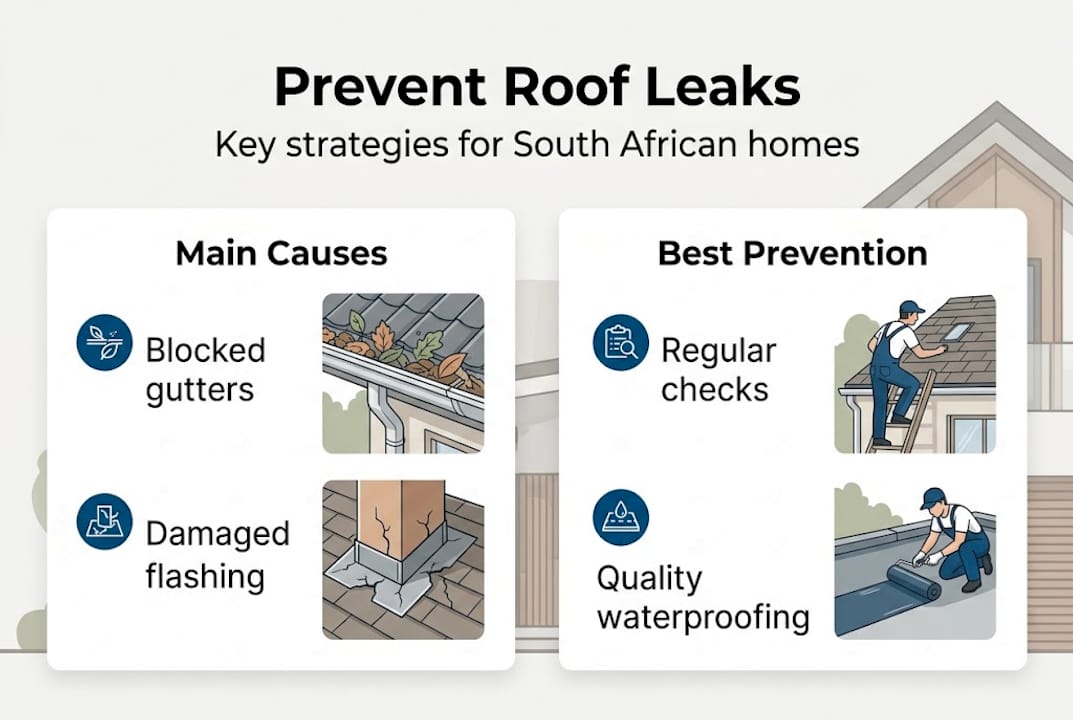
- Blocked gutters and downpipes: Leaf debris, bird nests, and dirt accumulate and force water to back up beneath roof coverings and under fascia boards.
- Damaged or lifted flashing: The metal strips sealing joints around chimneys, skylights, and parapet walls are a frequent failure point, especially when exposed to UV degradation and thermal expansion.
- Cracked or blistered waterproofing membranes: Flat roofs are particularly vulnerable to membrane failure caused by standing water, UV exposure, and poor original installation.
- Deteriorated pointing and mortar: On tiled roofs, the mortar bedding along ridge caps can crack over time, allowing water to penetrate during heavy rain.
- Poor roof design or inadequate slope: Flat roofs with insufficient fall trap rainwater rather than draining it, accelerating membrane breakdown.
“The most dangerous leak is the one you cannot yet see. Water travels along roof battens, timbers, and insulation before it ever reaches your ceiling, meaning visible damage is almost always the final stage of a longer problem.”
Flat roofs carry a higher risk of membrane failure than pitched roofs because standing water applies constant pressure and accelerates degradation. Pitched roofs are generally more forgiving but are vulnerable at their junctions: valleys, ridges, and the points where the roof meets a wall. Knowing the different waterproofing types for South Africa that apply to each roof style is an important first step in protecting your property.
The biggest myth homeowners carry is that a new roof does not need waterproofing attention. In reality, even brand new installations can have gaps around penetrations such as pipes, vents, and solar panel fixings. These small openings, left unsealed, become entry points for water within the first rainy season.
Comparing the most effective roof waterproofing methods
Once you understand where leaks originate, the logical next question is: which waterproofing solution is right for my home? The South African market offers several systems, but two dominate for good reason: torch-on bitumen membranes and liquid-applied membranes.
Choosing between them is not simply a matter of price. It depends on your roof type, the complexity of its shape, your budget for future maintenance, and how long you plan to stay in the property.
Torch-on bitumen membranes
Torch-on bitumen membranes are a popular choice for flat roofs in South Africa, offering a lifespan of 15 to 25 years when UV-reflective coatings are applied. The system involves heating modified bitumen sheets with a gas torch and bonding them directly to the roof surface. The result is a thick, durable layer that handles foot traffic and resists puncture reasonably well.
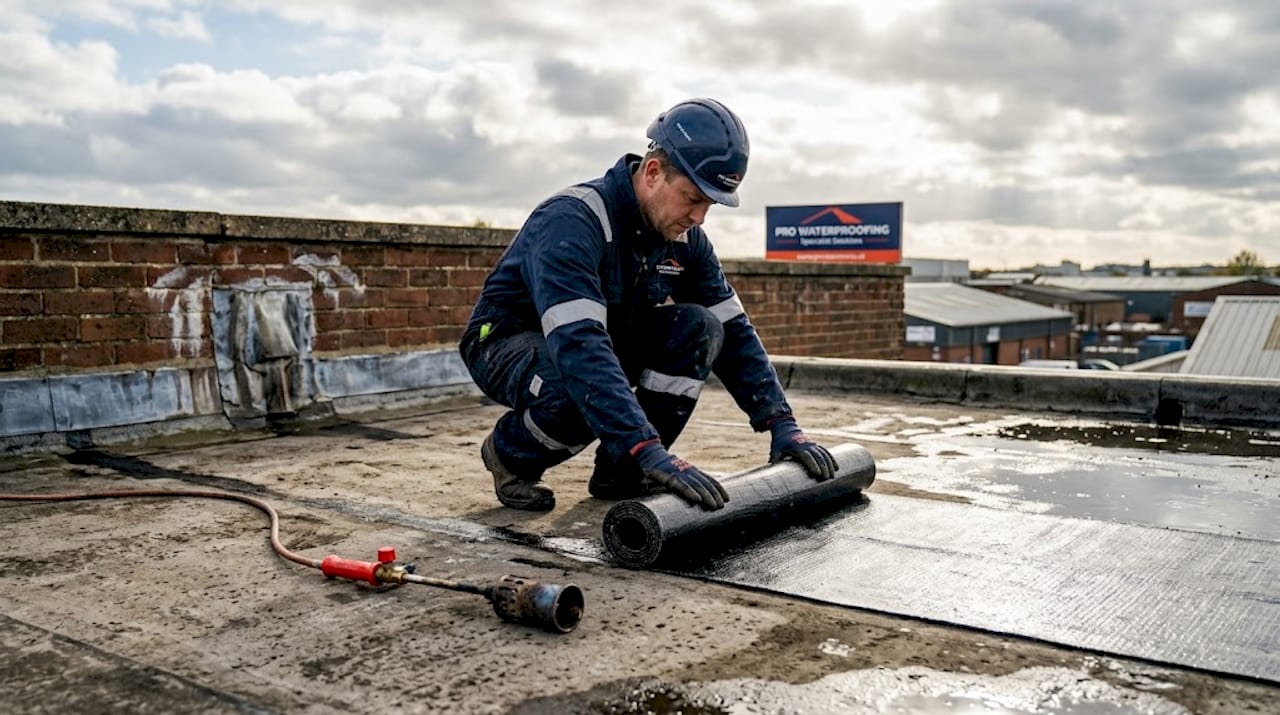
The key strength of torch-on systems is their longevity. A properly installed torch-on membrane with a quality UV coating can outlast many liquid systems by a decade. They are particularly well suited to large, open flat roof areas where a seamless bond across wide expanses is achievable and the risk of complex detailing is low. You can read more about flat roof waterproofing solutions to understand where this system performs best.
Liquid-applied membrane systems
Liquid-applied membranes, including polyurethane and acrylic options, provide seamless coverage that conforms to any surface shape. This makes them ideal for roofs with multiple penetrations, irregular edges, parapet walls, or curved surfaces. Because they are applied as a liquid and cure in place, there are no seams or overlaps where water can work its way underneath. These systems typically require recoating every 5 to 8 years to maintain performance, which adds a maintenance cost but keeps the upfront expense lower.
Here is a clear comparison to help you decide:
| Feature | Torch-on bitumen | Liquid-applied membrane |
|---|---|---|
| Lifespan | 15 to 25 years | 10 to 15 years (with recoating) |
| Roof shape suitability | Best for simple flat roofs | Ideal for complex shapes |
| Seam risk | Low with skilled installer | None (fully seamless) |
| UV resistance | High with coating | Moderate to high |
| Maintenance requirement | Low after installation | Recoat every 5 to 8 years |
| Upfront cost | Higher | Lower to moderate |
Both systems also differ in how they handle comparing waterproofing methods across South Africa’s varied climate zones. In areas with extreme UV exposure such as the Northern Cape or Free State Highveld, torch-on systems with a white reflective coating perform exceptionally well. In coastal areas where surfaces may be damp or irregular, liquid-applied polyurethane often provides more reliable adhesion.
Pro Tip: For roofs with skylights, drainage outlets, expansion joints, or pipe penetrations, liquid-applied membranes are almost always the better choice. Their seamless nature eliminates the fiddly overlap work that torch-on sheets require around obstructions, which is typically where failures begin.
Critical preparation steps: How to ensure lasting leak prevention
Choosing a premium waterproofing system and then skipping proper preparation is one of the most expensive mistakes a homeowner can make. The system does not fail because it is poor quality. It fails because it was applied to a surface that could not hold it.
Surface preparation is critical for adhesion, and poor prep leads to delamination even with premium membranes. Professional installers always clean, prime, and repair the surface before any waterproofing product is applied. This is not optional; it is the foundation of the entire system’s performance.
Here is the exact sequence that experienced professionals follow:
- Thorough inspection and assessment: Identify all cracks, blisters, loose sections, failed laps, ponding areas, and damaged flashing. Document every problem before touching anything.
- Complete surface cleaning: Remove all dirt, dust, grease, moss, lichen, and loose material. High-pressure washing is standard. Any algae or organic growth must be killed with a biocidal wash and allowed to dry completely.
- Crack filling and joint sealing: All cracks wider than 0.3 mm are filled with a flexible sealant or polyurethane filler. Movement joints are treated separately with backer rods and elastic sealant to allow thermal expansion without tearing the membrane.
- Priming: A bonding primer appropriate to the chosen waterproofing system is applied to the clean, dry surface. This is the adhesion bridge between the substrate and the membrane. Skipping this step is the single most common cause of premature failure.
- Reinforcement at stress points: Fibreglass mesh or non-woven polyester fleece is embedded in the first coat of liquid membrane at corners, drains, and flashing edges. These are the points that experience the most movement and stress.
- Full membrane application: Only now is the waterproofing system applied, following the manufacturer’s specified thickness and drying time between coats.
“A waterproofing membrane is only as strong as what is beneath it. Spend 30% of your budget on preparation and you protect the remaining 70% you spent on the system itself.”
Pro Tip: Always check that your contractor tests the roof surface for moisture before applying any membrane. Applying a membrane over a damp surface traps moisture underneath, which causes blistering and adhesion failure within months. A simple moisture metre reading takes two minutes and prevents years of problems. You can learn more about roof waterproofing steps that professionals rely on before committing to any contractor.
A common mistake homeowners make is accepting a quote that skips the preparation stage to lower the price. If a contractor’s quote looks significantly cheaper than others, ask them directly: what surface preparation do you include? The answer will tell you everything.
Maintaining your roof: Ongoing strategies to keep leaks at bay
Even a perfectly installed, fully prepared waterproofing system will not last without ongoing maintenance. Roofs are exposed to some of the harshest conditions your property faces, and a once-off treatment is never a permanent solution.
Here are the core maintenance actions every South African homeowner should build into a regular routine:
- Biannual roof inspections: Inspect your roof in April before winter and again in October before the summer storm season. Look for cracked seals around penetrations, lifted flashing, and any pooling or staining.
- After every major storm: Check gutters, downpipes, and the roof surface for debris, hail damage, or shifted components. Hailstorms in Gauteng and the eastern Highveld are particularly destructive.
- Gutter clearing: Clean gutters at least twice a year, more often if your property is surrounded by trees.
- Membrane surface checks: Look for blistering, cracking, or colour fading, which are early signs that recoating is needed before failure occurs.
- Professional inspection every three years: A trained eye catches problems that homeowners typically miss, particularly around flashing, joints, and below parapets.
Here is a practical maintenance schedule to follow:
| Task | Frequency | Risk if skipped |
|---|---|---|
| Gutter clearing | Twice yearly (more near trees) | Overflow, fascia rot, interior leaks |
| Roof visual inspection | Twice yearly and after storms | Missed early damage, escalating costs |
| Liquid membrane recoating | Every 5 to 8 years | Full membrane failure and replacement |
| Flashing and seal check | Annually | Water ingress at joints and edges |
| Professional assessment | Every 3 years | Undetected structural water damage |
Gutter management deserves particular focus. Blocked gutters are responsible for approximately 70% of preventable roof repairs in South Africa. When gutters overflow consistently, water saturates the roof edge, rots timber fascias, and eventually works its way into the structure. For properties near trees, gutter guards are a wise investment that pays for itself within a season or two.
Learn more about protecting your home with waterproofing flat roofs methods that account for the ongoing maintenance requirements of different systems.
Pro Tip: Photograph your roof from the same positions every six months. A side-by-side comparison over two or three years makes it easy to spot gradual changes in membrane colour, ponding areas, or shifted components that you would otherwise miss inspection to inspection.
What most homeowners get wrong about roof leak prevention
Here is the uncomfortable truth we see repeatedly on South African projects: homeowners invest in quality materials and then wonder why the roof leaks within three years. The product was not the problem. The approach was.
Roof leak prevention is not a product decision. It is a process decision. Buying the most expensive torch-on membrane available means nothing if the contractor skips the primer, rushes the crack repair, or applies it over a surface with residual moisture. Equally, a budget liquid membrane applied with proper preparation, correct thickness, and quality reinforcement at stress points will consistently outperform a premium system badly installed.
The other thing most homeowners miss is the relationship between roof design and leak risk. A flat roof with a 1% fall behaves entirely differently to one with a proper 2% to 3% fall, even with the same membrane. If your architect or builder designed inadequate drainage into the roof structure, no waterproofing product can fully compensate for standing water over the long term.
We also see many DIY recoating attempts that cause more harm than good. Applying a new acrylic coat over a blistered or delaminating membrane simply traps the problem underneath. It looks better for a season and then fails more dramatically than before. Knowing the essential waterproofing methods and when professional intervention is genuinely necessary will save you significantly more than any DIY shortcut ever could.
Get professional help for lasting leak prevention
If this article has made one thing clear, it is that effective roof leak prevention depends on knowing the right approach at every stage, from diagnosis through to ongoing maintenance.
At Pro Waterproofing, we work with South African homeowners across residential, commercial, and industrial properties to deliver waterproofing solutions that are built to last. Whether you need a full membrane system on a flat roof, flashing repairs, or a professional inspection to assess what your roof actually needs, our team brings the expertise and local knowledge to get it right the first time. Visit our roof waterproofing solutions page to request a quote or speak with a specialist who understands South African roofing conditions. Do not wait for a water stain on your ceiling to take action.
Frequently asked questions
How often should I inspect my roof for leaks in South Africa?
Inspect your roof at least twice a year, once before winter rains and once before summer storms, and always after any significant hail or high-wind event to catch damage early.
What waterproofing method lasts longest for flat roofs?
Torch-on bitumen membranes last 15 to 25 years on South African flat roofs, particularly when a UV-reflective coating is applied during installation.
Are gutter guards really necessary for preventing leaks?
Gutter guards are highly recommended for properties near trees, given that blocked gutters contribute to approximately 70% of preventable roof repairs across South Africa.
Can I use liquid-applied membranes on any roof shape?
Liquid-applied membranes are suited to both flat and irregularly shaped roofs because they cure in place without seams, though they require recoating every 5 to 8 years to maintain their waterproofing performance.