
TL;DR:
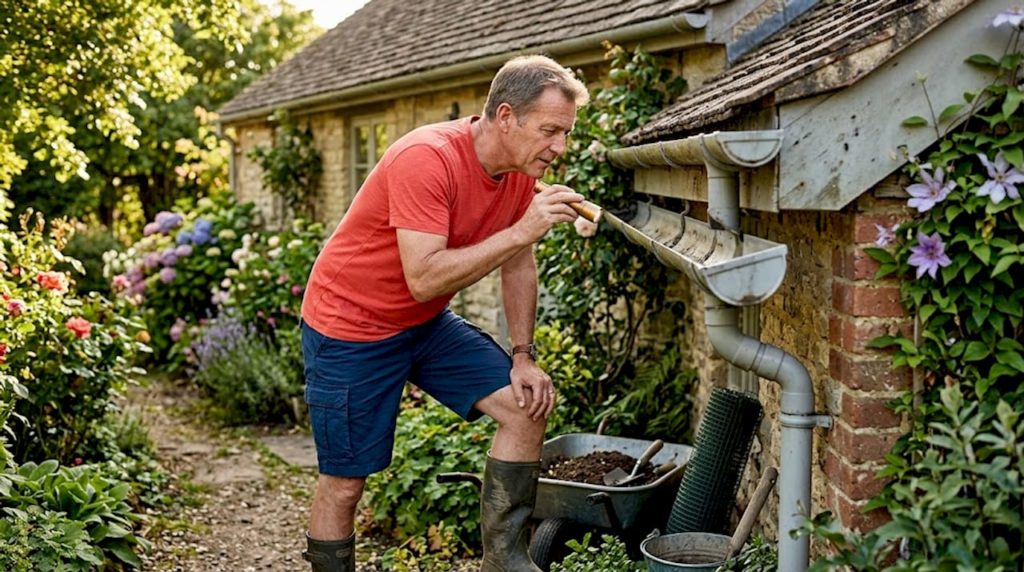
- Effective waterproofing depends on deliberate drainage systems that actively manage water flow away from structures, not surface treatments alone. Proper drainage prevents water accumulation, hydrostatic pressure, and future membrane failure, ensuring long-term structural integrity. In South Africa, regulatory standards emphasize drainage as a fundamental component, especially given regional climate and soil conditions.
Most property owners invest in waterproofing membranes and coatings, then wonder why water damage keeps appearing. The uncomfortable truth is that surface treatments alone cannot do the job. Effective waterproofing has always depended on one factor that gets far too little attention: drainage. Without a deliberate plan to move water away from your property, even the most expensive barriers will eventually fail. South African drainage requirements recognise this reality, framing drainage as a foundational measure for preventing flooding, reducing water damage, and limiting mould growth, not an optional add-on.
Table of Contents
- Why drainage is essential for waterproofing
- Understanding the South African context: Regulations and risk factors
- Types of drainage systems and their role in waterproofing
- From dampproofing to waterproofing: The drainage upgrade
- Mistakes to avoid and expert tips for effective drainage
- Expert perspective: Why drainage remains the unsung hero in South African waterproofing
- Protect your home with the right drainage and waterproofing
- Frequently asked questions
Key Takeaways
| Point | Details |
|---|---|
| Drainage is foundational | Effective waterproofing is impossible without the right drainage to control water before it causes damage. |
| Local risks matter | South African conditions require specific drainage strategies guided by regulations and soil, rainfall, and site factors. |
| Types of systems | Surface and subsurface drainage each play unique roles and must be chosen based on your property’s needs. |
| Mistakes cost more | Neglecting drainage is a common cause of waterproofing failure and expensive property damage. |
| Get expert advice | Professional assessment and installation ensure your home’s drainage and waterproofing work together for maximum protection. |
Why drainage is essential for waterproofing
Waterproofing is the process of making a structure resistant to water ingress. Drainage, on the other hand, is the active management of water flow around and away from that structure. The two are not competing strategies. They are partners. Think of waterproofing as a shield and drainage as the escape route for any water that gets past the shield or builds up pressure against it.
When water has nowhere to go, it does not simply disappear. It accumulates, builds hydrostatic pressure against walls and foundations, and eventually forces its way through even well-applied membranes. This is the single most common reason why waterproofing projects fail within a few years of completion.
“A waterproofing system without drainage is like a dam without a spillway. Sooner or later, the pressure finds a way through.”
Poor drainage leads to a cascade of problems that most homeowners only notice once serious damage has already occurred:
- Persistent damp patches on internal walls, even after waterproofing treatment
- Structural cracking caused by soil movement and water pressure against foundations
- Mould and mildew growth inside rooms, affecting air quality and health
- Flooding of basements and subfloor spaces after heavy rain events
- Deterioration of waterproofing membranes due to constant water pressure and saturation
- Foundation undermining in properties built on expansive clay or poorly compacted fill
According to InterNACHI’s training guidance, subsurface drainage systems such as perimeter drains connected to daylight or a sump are treated as part of the waterproofing “stack” itself, and dimpled membranes or drainage boards must be installed so that water drains freely away from the wall face. This is not a best-practice suggestion. It is fundamental to how proper waterproofing actually functions.
If you are researching how to protect your entire property, our comprehensive waterproofing guide walks through each area of the home in practical detail. For those specifically dealing with below-ground concerns, foundation waterproofing in South Africa explains the specific techniques that work in local conditions.
Understanding the South African context: Regulations and risk factors
South Africa is not a uniform environment. Coastal properties in Cape Town face very different moisture challenges than inland properties in Johannesburg or low-lying homes in KwaZulu-Natal. What ties them together is the need for drainage to be taken seriously, backed up by regulatory standards.
SANS 10400 sets out the minimum requirements for drainage around South African homes, addressing stormwater management, site grading, and the prevention of water accumulation. These standards frame drainage as a control measure for preventing flooding, reducing property damage, and limiting mould growth. Compliance is not optional, but many property owners do not realise that their site may require more than the minimum.
The following table illustrates how common South African site conditions increase drainage requirements and waterproofing risk:
| Risk factor | Effect on drainage need | Common locations |
|---|---|---|
| High annual rainfall | Rapid water accumulation, surface runoff | KwaZulu-Natal coast, Western Cape |
| Expansive clay soils | Poor permeability, soil movement, hydrostatic pressure | Gauteng, Free State |
| Steeply sloping sites | Fast runoff, erosion, water concentration at foundations | Hillside suburbs, mountainous areas |
| High water table | Sustained groundwater pressure against foundations | Low-lying coastal and river-adjacent areas |
| Urban hard surfaces | Reduced absorption, increased runoff to neighbouring properties | All major cities |
Key regulatory and best-practice requirements for South African property owners include:
- Minimum site grading away from the structure to direct surface water clear of walls and foundations
- Stormwater connections to municipal systems where applicable, avoiding discharge onto neighbouring properties
- Subsoil drainage where groundwater levels are likely to exert pressure on below-ground structures
- Gutters and downpipes correctly sized and directed away from the building’s footprint
- Perimeter channels or French drains where surface water cannot be adequately managed by grading alone
Understanding mould prevention and waterproofing together helps property owners see how drainage interruption and mould risk are directly connected.
Types of drainage systems and their role in waterproofing
Not all drainage systems do the same job. Choosing the wrong type, or using only one type when multiple are needed, is a frequent mistake. Here is a clear breakdown of the main options and how each supports your waterproofing strategy.
Surface drainage manages water on the ground level through grading, channels, and gutters. It is the first line of defence and the most cost-effective starting point.
Subsurface drainage deals with groundwater and water that infiltrates the soil. French drains, perforated pipes, and drainage boards are common components. This type is essential for foundations and below-ground structures.
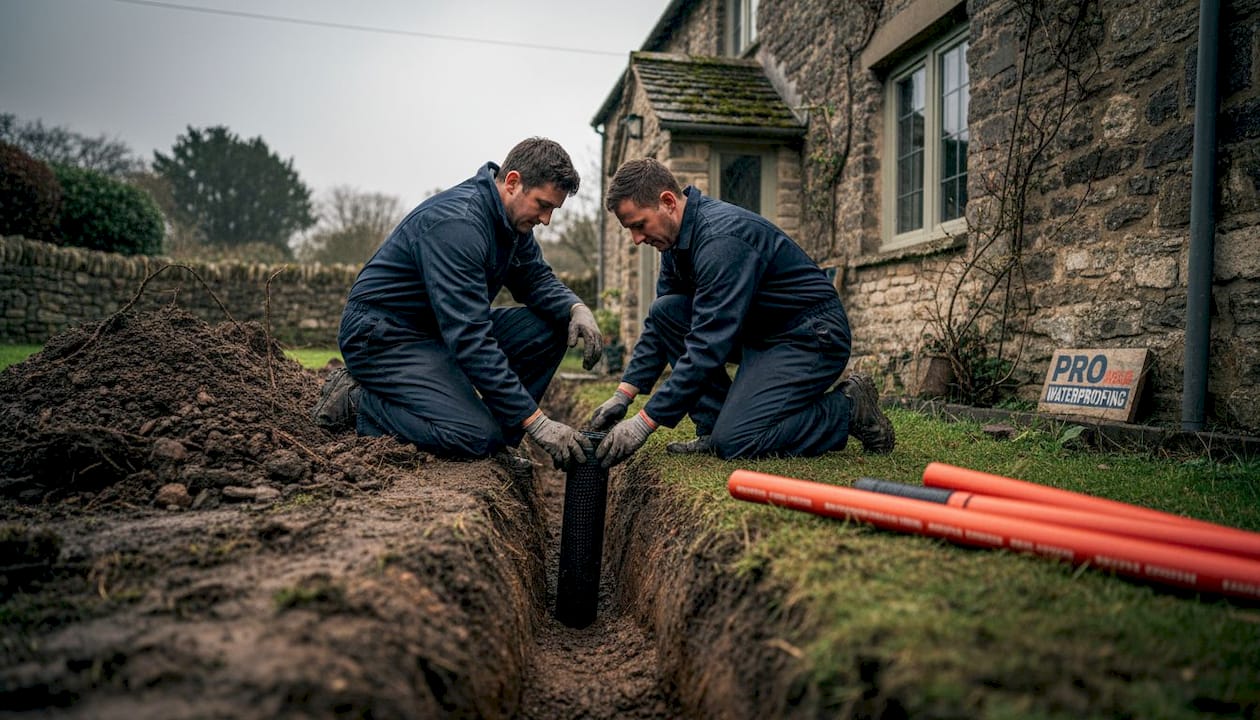
Exterior drainage is installed on the outer face of a foundation wall to intercept water before it reaches the structure. It works best when the water source is external rainfall or surface runoff.
Interior drainage manages water that has already entered or is migrating through the foundation assembly. It collects and redirects water to a sump or drain without allowing it to accumulate.
| Drainage type | Pros | Cons | Ideal for |
|---|---|---|---|
| Surface drainage | Low cost, easy to inspect and maintain | Cannot address groundwater | Roofs, yards, pathways |
| Subsurface (French drain) | Handles groundwater effectively | Requires excavation, can silt up | Foundations, gardens, retaining walls |
| Exterior drainage | Prevents water reaching the wall | Expensive, requires access to exterior | New builds, high water table sites |
| Interior drainage | Works when exterior access is limited | Does not prevent water entry, manages it | Retrofits, existing basements |
According to the National Foundation Authority, exterior drainage aims to intercept water before it reaches the foundation, while interior drainage manages water that has already entered the assembly. The right choice depends entirely on where the water is coming from and which pathways it uses to enter.
The key benefits of drainage systems extend beyond immediate flood prevention to include soil stability, reduced maintenance costs, and longer structural lifespans.
Pro Tip: When in doubt, combine a physical barrier membrane with an active drainage path. A membrane alone resists water, but drainage relieves the pressure that would otherwise force water through. The combination is far more reliable than either system used alone.
Understanding exterior versus interior drainage options in more detail will help you make an informed decision before committing to a contractor or system.
From dampproofing to waterproofing: The drainage upgrade
Many South African homes rely on dampproofing rather than true waterproofing. These are not the same thing, and the distinction matters enormously on sites where water is active rather than merely present as vapour.
Dampproofing is a surface coating applied to foundation walls to resist moisture vapour and minor water contact. It works adequately in dry to moderately damp conditions. It is not designed to withstand hydrostatic pressure, sustained water contact, or groundwater.
True waterproofing involves membranes, drainage boards, and drainage systems working together to exclude water and manage the pressure it creates. It is the standard required wherever water can accumulate against a structure.
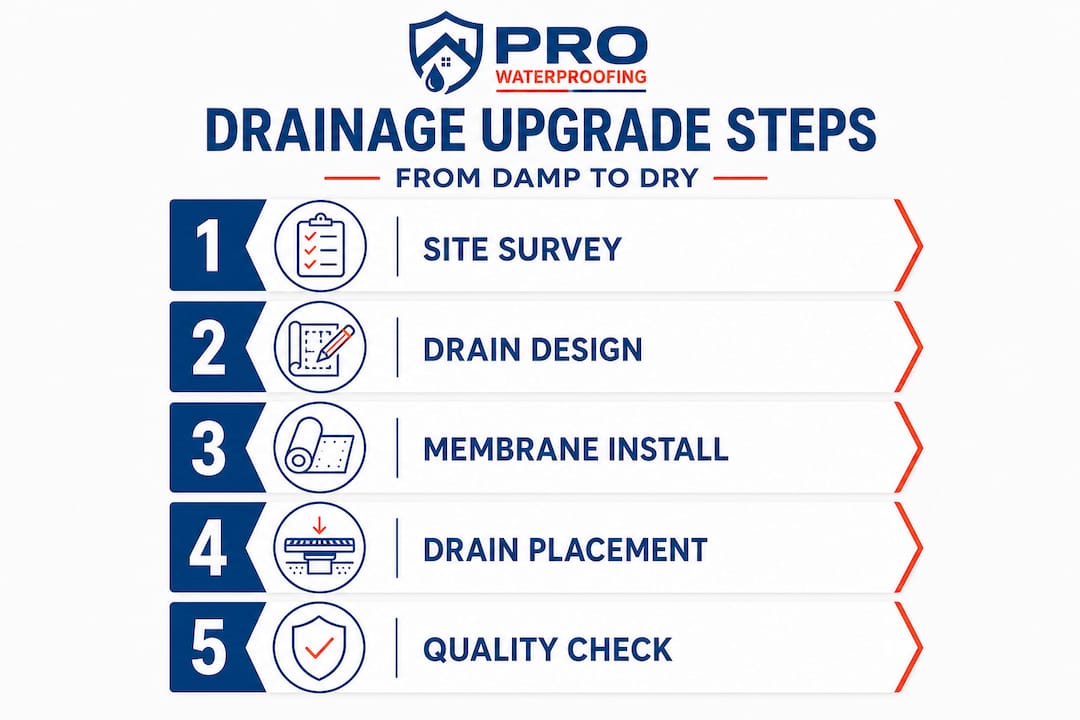
Here is how to assess whether your property needs the upgrade from dampproofing to a full waterproofing and drainage solution:
- Check your soil type. Clay soils retain water and create sustained pressure. Sandy soils drain quickly and present lower risk. Clay-dominant sites almost always require full waterproofing.
- Observe after heavy rain. If water pools near your foundation for more than an hour after rain stops, your surface drainage is insufficient and subsurface solutions are likely needed.
- Inspect internal walls and floors. Damp patches, efflorescence (white salt deposits), or musty smells indicate moisture penetration that dampproofing is failing to control.
- Check your water table. Properties in low-lying areas or near rivers are at higher risk of groundwater pressure. A local geotechnical report can confirm water table depth.
- Assess the age of existing treatments. Dampproofing coatings applied more than a decade ago may have deteriorated and should be professionally evaluated before any remedial work.
As InterNACHI’s guidance confirms, wet site conditions with a high water table require a shift from dampproofing to true waterproofing, with subsurface drainage remaining relevant as a pressure and flow management tool throughout.
An important statistic: Dampproofing without associated drainage fails significantly faster in wet soil conditions. Industry data consistently shows that the majority of dampproofing failures occur not because the coating itself was defective, but because water pressure built up behind it with no relief route. The coating simply gives way under sustained hydrostatic load.
For a thorough comparison of waterproofing methods for South African properties, the options are laid out clearly to help you choose the right approach for your specific site.
Mistakes to avoid and expert tips for effective drainage
Even well-intentioned property owners make avoidable errors when it comes to drainage. These mistakes quietly undermine waterproofing systems and lead to recurring, costly problems.
Common drainage mistakes to watch for:
- Blocked gutters and downpipes. A clogged gutter redirects roof water directly against walls and foundations. This is one of the easiest problems to prevent and one of the most frequently ignored.
- Undersized drainage pipes. Drainage components sized for average rainfall will overflow during heavy storms. South African storm events can be intense, so design to handle peak flow, not average flow.
- Incorrect site grading. Ground that slopes toward the building channels water directly to the foundation. Even a gentle slope in the wrong direction creates serious long-term risk.
- Ignoring maintenance. French drains and perimeter drain pipes can silt up over several years. Without periodic flushing or inspection, they stop functioning entirely.
- Connecting subsoil drains to sewage systems. This is a regulatory violation and can cause backflow problems. Subsoil drains must connect to stormwater systems or discharge points only.
- Waterproofing without addressing drainage first. Applying a new membrane over a wall that still has active water pressure behind it is a temporary fix at best.
South African regulations are clear that effective drainage is a prerequisite for controlling water damage and mould around homes. Ignoring it creates liability as well as physical damage.
Pro Tip: Before hiring any waterproofing contractor, ask them specifically how they plan to manage drainage as part of the waterproofing solution. If they only discuss surface coatings and membranes without mentioning drainage, that is a warning sign worth acting on.
A useful resource for understanding what to look for in reliable professionals is our guide on choosing drainage contractors. The right contractor will assess drainage and waterproofing together, not as separate questions.
For ongoing maintenance advice, practical drainage solutions cover improvement strategies that homeowners can implement or commission on a scheduled basis.
Expert perspective: Why drainage remains the unsung hero in South African waterproofing
After working with properties across vastly different South African conditions, one pattern repeats itself consistently: the most expensive waterproofing failures were not caused by cheap membranes or substandard coatings. They were caused by drainage that was never properly designed in the first place.
Property owners often associate quality waterproofing with the product applied to the surface. The thicker the coating, the better the protection, the thinking goes. But water does not respect surfaces when it has no escape route. It finds joints, cracks, service penetrations, and eventually the path of least resistance through the material itself.
What is particularly frustrating in practice is that this is rarely a hidden problem. Signs of drainage failure are almost always visible before catastrophic water ingress occurs. Staining along the base of walls, soft ground near foundations after rain, musty smells in enclosed spaces. These are signals that drainage is struggling, and they appear months or years before a membrane gives way.
The contractors who consistently deliver lasting results are the ones who inspect the drainage condition of a site before recommending any waterproofing treatment. They understand that foundation waterproofing is a system, not a product. A good contractor will sometimes tell a client that the priority is not a new membrane but better guttering, re-grading the garden, or installing a French drain. That kind of honest advice protects the property far more effectively than a premium coating applied over a drainage problem.
Regular inspection of drainage components, not just membranes and coatings, is the real secret to lasting waterproofing results. A membrane can last two decades if it is never under sustained water pressure. The same membrane will fail in five years if drainage is neglected and hydrostatic pressure builds behind it. The maintenance budget is better spent on drain clearing and inspection than on repeated membrane replacement.
Protect your home with the right drainage and waterproofing
You now understand why drainage is not a secondary concern but the foundation on which all effective waterproofing depends. That knowledge is valuable, but putting it into practice requires accurate site assessment, the right system design, and skilled installation.
At Pro Waterproofing, we approach every property as a unique water management challenge. Our team assesses both drainage conditions and waterproofing requirements together, designing solutions that address the actual source of water ingress rather than just its symptoms. Whether you need a full subsurface drainage installation, a membrane upgrade, or a professional assessment to identify what is going wrong, we can help. Reach out today to arrange a property evaluation and take the first step towards genuinely lasting protection for your investment.
Frequently asked questions
What happens if I ignore drainage when waterproofing my property?
Ignoring drainage leads to water accumulation, property damage, and mould growth even when waterproofing membranes are in place. South African drainage requirements exist specifically to prevent these outcomes as part of basic building compliance.
Is surface drainage enough, or do I need subsurface drainage as well?
Surface drainage handles overland water flow, but subsurface drainage is essential near foundations where groundwater pressure builds. As InterNACHI confirms, subsurface drainage systems form part of the waterproofing stack and must drain freely to function correctly.
Does the South African climate make drainage more important?
Yes. High rainfall events, clay soils, and regulatory requirements under SANS 10400 all make robust drainage especially critical for South African properties. Local drainage standards reflect the real-world risks that property owners face across different regions.
How do I know which drainage method is right for my property?
The correct drainage system depends on your soil type, water table depth, site gradient, and the location of water entry points. A professional site assessment is the most reliable way to identify which combination of surface, subsurface, exterior, or interior drainage will work for your specific conditions.
Can improvements to drainage reduce mould in my home?
Yes. Effective drainage limits water accumulation near and within the structure, directly reducing the conditions that allow mould to establish and spread. South African regulations specifically link drainage requirements to mould limitation as a health and structural protection measure.