

TL;DR:
- Waterproof basement flooring costs range from £3 to £27 per square foot, depending on material and installation. Proper moisture testing and basement waterproofing are essential to prevent floor failure and costly repairs. SPC luxury vinyl plank offers the best balance of waterproof performance, cost, and resale value for most homeowners.
Waterproof basement flooring cost is defined as the total expenditure covering materials, moisture preparation, and installation for a below-grade floor designed to resist water damage. Typical prices range from £3 to £27 per square foot installed, depending on whether you choose luxury vinyl plank, epoxy coatings, or porcelain tile. That wide range exists because moisture mitigation, substrate repairs, and labour all add to the base material price. Getting the budget right from the start means understanding each cost layer before you commit to a single product.
1. what are the main types of waterproof basement flooring and their costs?
The best waterproof flooring options for basements fall into five clear categories, each with a distinct price bracket and performance profile.
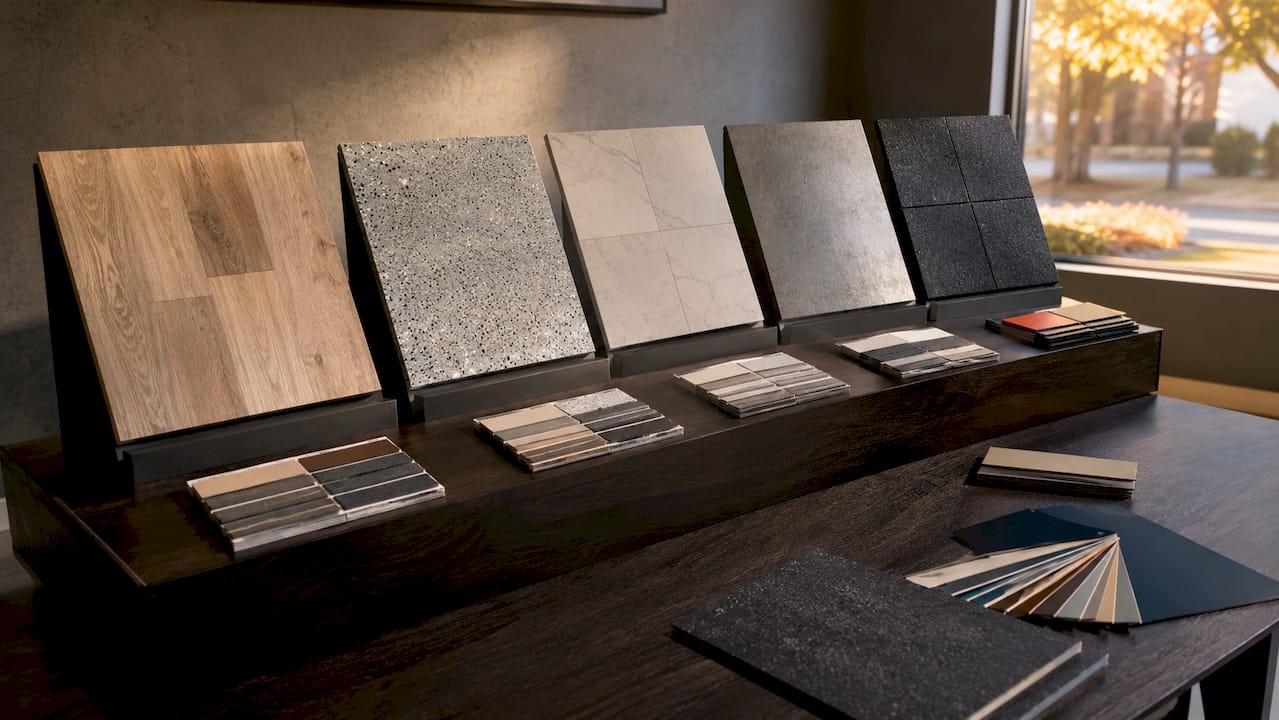
Luxury vinyl plank and sheet vinyl
Stone plastic composite (SPC) luxury vinyl plank is the most popular choice for residential basements. SPC luxury vinyl plank costs £5.50–£11.00 per square foot installed. That price reflects its 100% waterproof core, click-lock installation, and strong resale appeal. Sheet vinyl is cheaper at £2–£7 per square foot installed, but offers fewer design options and is harder to repair if damaged.
Pros: Fully waterproof, comfortable underfoot, wide style range, strong ROI.
Cons: Can lift if moisture pressure builds beneath the slab without a proper barrier.
Epoxy and polyaspartic coatings
Epoxy flooring costs £4–£12 per square foot, while polyaspartic coatings run £5–£12 per square foot. Epoxy bonds chemically with concrete, making it more resilient than vinyl in high-traffic or workshop settings. Surface preparation is critical. Grinding and patching the slab before application can double your initial estimate if the concrete is in poor condition.
Pros: Extremely durable, seamless finish, chemical resistant.
Cons: Slippery when wet unless anti-slip aggregate is added; preparation costs are significant.
Porcelain tile
Porcelain tile costs £12–£27 per square foot installed. That is the highest upfront cost in this category, but porcelain lasts 50 years or more with minimal maintenance. It suits finished basements used as living spaces or rental units where long-term durability justifies the spend.
Pros: Longest lifespan, premium appearance, fully waterproof.
Cons: Cold underfoot without radiant heating; grout lines require sealing.
Polished concrete and rubber flooring
Polished concrete costs £3–£8 per square foot. It is the most affordable finished option if your slab is already in good condition. Rubber flooring tiles cost a similar amount and are popular for gyms and utility spaces. Neither option adds significant resale value, but both are practical for functional basement uses.
Waterproof laminate and engineered hardwood
Waterproof laminate costs £4–£14 per square foot installed. Despite the “waterproof” label, most laminate products resist surface spills rather than sustained moisture from below. Engineered hardwood faces the same limitation. Neither is recommended for basements with any history of water intrusion.
Pro Tip: For DIY installation, SPC luxury vinyl plank is the most forgiving material. Professional installation for epoxy or porcelain tile is non-negotiable because surface preparation errors are irreversible and costly to fix.
2. how does moisture control affect basement flooring costs?
Moisture control is the primary cost risk in any basement flooring project. Skipping moisture testing risks flooring failure within 1–3 years, regardless of how much you spent on the material itself. That is not a minor inconvenience. It means ripping up your floor and starting again.
A calcium chloride test kit costs approximately £20–£40 and measures moisture vapour emission from the concrete slab. This test is mandatory before installing any flooring product. Many manufacturers void warranties if you cannot prove moisture testing was completed before installation.
Moisture barriers add a further layer of cost:
- Vapour barriers: £0.15–£0.40 per square foot for the material alone; installed cost rises to £4–£8 per square foot for a full concrete slab with barrier included
- Epoxy moisture barriers: £0.50–£3.00 per square foot depending on product and thickness
- Perimeter drainage channels: Variable, but typically part of a broader waterproofing scope
Many waterproof flooring warranties require prior moisture testing and barrier installation to remain valid. This is not fine print. It is a structural requirement. Skipping it to save £200 on a barrier can invalidate a warranty worth thousands of pounds. Read Prowaterproofing’s guide on basement moisture control for a full breakdown of testing methods and barrier options.
3. how do full basement waterproofing costs compare to flooring alone?
Waterproof flooring and full basement waterproofing are not the same thing. Confusing the two is one of the most expensive mistakes a homeowner can make.
Full basement waterproofing averages around £5,233, with typical ranges from £2,459 to £8,192. Extensive exterior waterproofing involving excavation can reach £15,000 or more. Waterproof flooring alone, by contrast, costs £3–£27 per square foot. The gap between these figures reflects the difference between treating a symptom and solving the underlying problem.
Experts recommend repairing water intrusion and drainage first, then installing waterproof flooring. Installing a £10-per-square-foot SPC floor over an actively leaking wall achieves nothing. The water will find its way under the floor regardless of the material’s rating.
Pro Tip: Budget your basement project in three distinct layers: water entry prevention (French drains, sump pumps, exterior coatings), moisture stabilisation (vapour barriers, epoxy sealers), and finished floor installation. Separating these costs gives you a clearer picture of where money is actually going.
Basement waterproofing projects that separate costs into these three layers produce more accurate forecasts and fewer surprise invoices. Prowaterproofing’s guide on waterproofing methods covers each layer in detail.
4. what factors drive the total basement flooring installation cost?
Several variables push the final basement flooring price up or down significantly.
Floor size and layout complexity are the most obvious drivers. A straightforward rectangular 1,000-square-foot slab is far cheaper per square foot to install than a basement with alcoves, columns, or irregular angles. Complex layouts increase both material waste and labour time.
Material quality and brand matter more than most buyers expect. Budget SPC vinyl at £5.50 per square foot and premium SPC at £11.00 per square foot may look similar in a showroom, but differ in wear layer thickness, acoustic underlayment, and warranty length. For a rental property, the premium product often pays for itself in reduced replacement cycles.
Labour rates and regional pricing vary considerably. Urban areas and specialist contractors charge more. DIY installation is viable for click-lock vinyl but not for epoxy coatings or porcelain tile, where professional preparation is required.
Substrate condition is the hidden cost most homeowners underestimate. Surface preparation and curing times represent hidden costs that can double initial flooring expenditure if neglected. A cracked or uneven slab needs grinding, patching, and levelling before any product goes down.
Additional features such as radiant floor heating add £8–£15 per square foot to the project. For a basement used as a living space, this is often worthwhile. For a utility room, it is unnecessary spend.
| Material | Material Cost (per sq ft) | Installed Cost (per sq ft) |
|---|---|---|
| Sheet vinyl | £1–£3 | £2–£7 |
| SPC luxury vinyl plank | £2–£5 | £5.50–£11 |
| Epoxy coating | £1–£4 | £4–£12 |
| Polished concrete | £1–£3 | £3–£8 |
| Porcelain tile | £4–£10 | £12–£27 |
| Waterproof laminate | £2–£6 | £4–£14 |
5. which options offer the best value for homeowners and investors?
Luxury vinyl plank provides excellent ROI for most homeowners due to its balance of cost, waterproof rating, and resale appeal. SPC LVP is the default recommendation for finished basements used as living spaces, home offices, or rental accommodation.
Here is how to match the right product to your situation:
- Best overall value: SPC luxury vinyl plank at £5.50–£11 per square foot installed. Fully waterproof, DIY-friendly, and preferred by estate agents and buyers.
- Best for workshops and garages: Epoxy coating at £4–£12 per square foot. Chemical resistant and seamless, but requires professional application.
- Best for long-term investment properties: Porcelain tile at £12–£27 per square foot. The 50-year lifespan justifies the cost in high-value properties.
- Best budget option: Polished concrete at £3–£8 per square foot. Practical for utility spaces, but adds no aesthetic value.
- Avoid for wet basements: Waterproof laminate and engineered hardwood. Neither handles sustained moisture from below reliably.
“Basement buyers and real estate agents often prefer SPC LVP flooring as it combines waterproof performance with cost-efficiency and aesthetic appeal, boosting resale value when waterproofing is done correctly.” — Best Waterproof Basement Flooring 2026
For investors, the calculus is straightforward. A well-waterproofed basement with SPC LVP flooring adds usable square footage to a property. That translates directly into rental yield and resale price. Skimping on moisture remediation to save on the flooring budget is a false economy. You can find more on preventing basement water damage before committing to a flooring product.
Hidden costs in basement projects are also worth reviewing before you finalise your budget. The hidden home building costs that catch most owners off guard include substrate repairs, drainage upgrades, and permit fees that rarely appear in initial quotes.
Key takeaways
The total cost of waterproof basement flooring depends on material choice, moisture mitigation, and substrate condition. Skipping any one of these layers produces a floor that fails prematurely and costs more to fix than it would have to do correctly the first time.
| Point | Details |
|---|---|
| Cost range is wide | Waterproof basement flooring costs £3–£27 per sq ft installed depending on material type. |
| Moisture testing is non-negotiable | A £20–£40 calcium chloride test protects warranties and prevents flooring failure within 1–3 years. |
| SPC LVP offers the best ROI | Luxury vinyl plank balances waterproof performance, cost, and resale appeal for most homeowners. |
| Full waterproofing costs more | Complete basement waterproofing averages £5,233 and must be addressed before any flooring goes down. |
| Budget in three layers | Separate water entry prevention, moisture stabilisation, and floor installation for accurate forecasting. |
Why i always start with the slab, not the showroom
After years of working on basement projects across South Africa, the pattern I see most often is homeowners choosing their flooring first and their waterproofing second. It is entirely the wrong order. The floor is the last decision you make, not the first.
The most expensive call-backs I have seen involve beautiful SPC vinyl or porcelain tile installed over a slab that was never properly tested. Within 18 months, the floor is lifting, the adhesive is failing, and the homeowner is facing a full replacement. The flooring itself was fine. The preparation was not.
My honest recommendation is to spend at least 20% of your total flooring budget on moisture testing and barrier installation before you buy a single tile or plank. That figure sounds high until you compare it to the cost of doing the job twice. A calcium chloride test kit costs less than a dinner out. There is no excuse for skipping it.
I also see investors underestimate regional labour rates. A quote that looks competitive on paper often excludes substrate grinding, levelling compound, and waste disposal. Ask for a fully itemised quote that separates preparation from installation. If a contractor cannot provide that breakdown, find one who can. Prowaterproofing’s guide on interior waterproofing techniques is a useful reference before you speak to any contractor.
The basement is the foundation of your property’s value. Treat the floor as the finishing touch on a properly waterproofed space, not a substitute for one.
— Eben
Get professional waterproofing and flooring advice
Calculating the true cost of waterproof basement flooring requires more than a price-per-square-foot comparison. It requires an assessment of your slab condition, moisture levels, and the waterproofing layers already in place. Prowaterproofing provides expert consultation, professional installation, and long-term warranties for residential and commercial basement projects across South Africa. Whether you are starting from a bare concrete slab or upgrading an existing floor, the team at Prowaterproofing will give you an accurate, itemised quote that covers every layer of the project. Contact Prowaterproofing today to protect your basement and your investment.
FAQ
How much does waterproof basement flooring cost per square foot?
Waterproof basement flooring costs between £3 and £27 per square foot installed, depending on material. SPC luxury vinyl plank sits at £5.50–£11, while porcelain tile reaches £12–£27.
What does it cost to waterproof a basement fully?
Full basement waterproofing averages around £5,233, with a typical range of £2,459 to £8,192. Extensive exterior work involving excavation can exceed £15,000.
Is moisture testing really necessary before installing basement flooring?
A calcium chloride moisture test costs £20–£40 and is mandatory before installation. Skipping it risks flooring failure within 1–3 years and voids most manufacturer warranties.
Which waterproof flooring is best for a basement used as a rental unit?
SPC luxury vinyl plank is the top choice for rental basements. It combines full waterproof performance, durability, and resale appeal at a mid-range installed cost of £5.50–£11 per square foot.
Can waterproof flooring replace proper basement waterproofing?
No. Waterproof flooring resists surface moisture but cannot withstand active water intrusion from walls or beneath the slab. Address water entry and drainage before any flooring is installed.