
TL;DR:
- Waterproof vinyl flooring is ideal for basements because it is fully waterproof and easy to repair after flooding. Proper subfloor preparation, including moisture testing and installing a vapour barrier, is essential for durability. Choosing SPC vinyl on uneven slabs and fixing moisture sources beforehand ensures long-lasting basement flooring.
Waterproof vinyl flooring for basement spaces is defined as a 100% waterproof, polymer-based floor covering specifically engineered to resist moisture, minor flooding, and the temperature swings common in below-grade environments. Luxury Vinyl Plank (LVP) is widely considered the best overall basement flooring choice, combining a fully waterproof surface with high durability and installed costs ranging between $4.00 and $11.00 per square foot. Two core technologies dominate the market: Stone Polymer Composite (SPC) and Wood Polymer Composite (WPC), each suited to different basement conditions. Critically, waterproof flooring is a finishing layer, not structural waterproofing. Addressing active moisture at the source, through sump pumps, drainage, or dehumidifiers, must come before any floor goes down.
1. What types of waterproof vinyl flooring suit basements?
SPC and WPC vinyl are the two main categories worth knowing for basement use. Both are 100% waterproof through their full thickness, but they perform differently depending on your slab condition and comfort priorities.
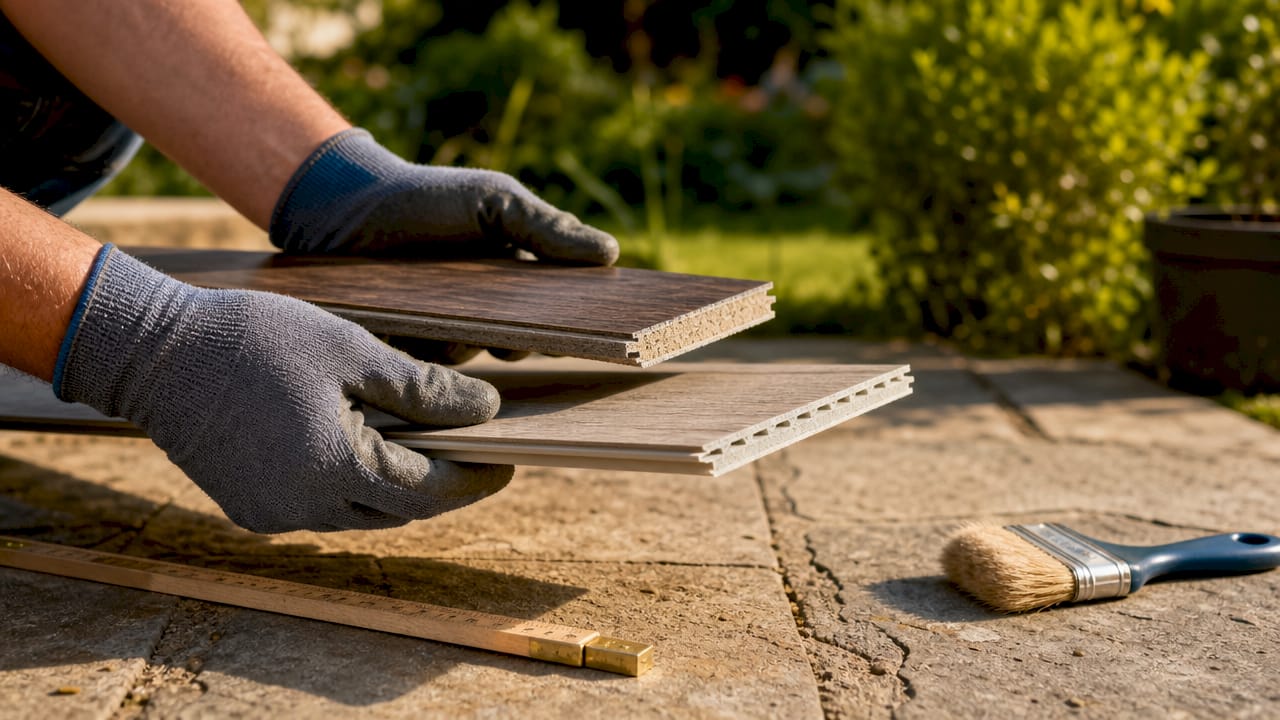
Stone Polymer Composite (SPC) has a dense, rigid core made from limestone powder and PVC. SPC bridges slab imperfections better than WPC and stays dimensionally stable under temperature swings, which makes it the stronger choice for uneven basement slabs or spaces that get cold in winter. The rigidity also means it resists denting under heavy furniture.
Wood Polymer Composite (WPC) uses a foamed polymer core, which makes it softer and warmer underfoot. It is a good fit for finished basements used as living spaces, playrooms, or home offices where comfort matters more than maximum rigidity. WPC is slightly less stable under extreme temperature changes, so it is less suited to unheated utility basements.
Both types use a click-lock floating installation, which is a major advantage in basements. No glue means planks can be lifted, the slab dried, and the floor reinstalled after a water event.
| Feature | SPC vinyl | WPC vinyl |
|---|---|---|
| Waterproof rating | 100% | 100% |
| Core rigidity | High | Moderate |
| Comfort underfoot | Firm | Softer, warmer |
| Uneven slab tolerance | Excellent | Good |
| Temperature stability | Excellent | Moderate |
| Typical cost range | Mid-range | Mid to upper-mid |
| Installation method | Floating click-lock | Floating click-lock |
Pro Tip: Choose SPC if your basement slab has visible cracks or dips of more than 3mm. Choose WPC if the slab is level and the room is used daily as a living space.
2. How to prepare your basement subfloor for vinyl installation
Subfloor preparation is the step most homeowners skip, and it is the most common reason vinyl floors fail in basements. The vinyl planks themselves are waterproof, but the concrete slab beneath them is not. Moisture migrating up through the slab can cause mould growth, odours, and floor failure even when the planks look perfect from above.
Follow these steps before any plank goes down:
- Test slab moisture. Tape a 450mm x 450mm sheet of polythene to the bare concrete and seal all edges. Leave it for 24–72 hours. Condensation on the underside confirms active moisture migration that must be addressed first.
- Fix active water problems. Treat underlying moisture with sump pumps, interior drainage channels, or a dehumidifier before installation. Waterproof flooring does not fix foundational water problems.
- Install a 6-mil polyethylene vapour barrier. A 6-mil poly vapour barrier under floating LVP is industry standard practice to prevent slab moisture from reaching the floor system. Overlap seams by at least 150mm and tape them.
- Level the slab. Fill dips greater than 3mm per 1.8 metres with a self-levelling compound. SPC vinyl tolerates minor imperfections, but large dips cause click-lock joints to stress and fail over time.
- Allow the slab to cure. If you have applied any compound or sealant, follow the manufacturer’s drying time before laying the vapour barrier.
Pro Tip: Many LVP products come with an attached underlayment that includes a vapour barrier layer. Even with this feature, adding a separate 6-mil poly sheet beneath is the safest approach for basements with any history of moisture.
3. Installation and maintenance of vinyl flooring in basements
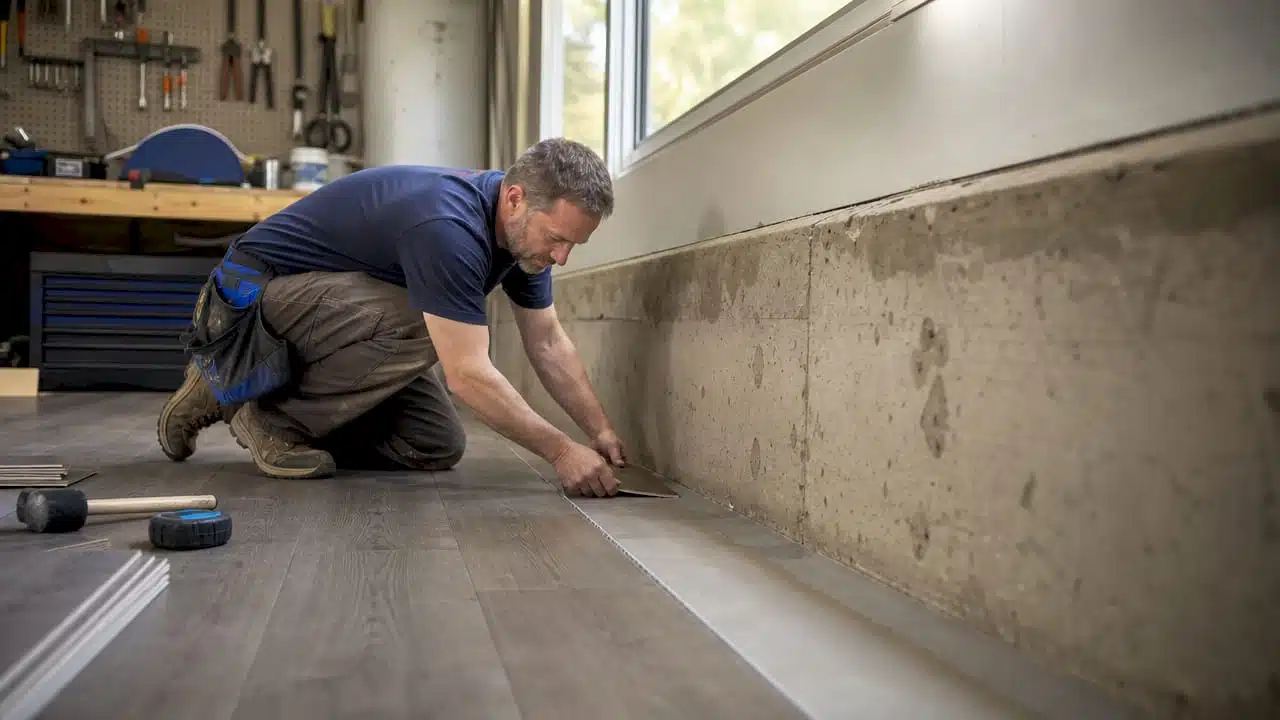
Floating installation is the correct method for basement vinyl flooring. Glued-down vinyl is a serious mistake in any space with flood risk. If water gets under a glued floor, the planks cannot be lifted without destroying them, and the adhesive can trap moisture against the slab, accelerating mould growth.
Before installation begins, let the vinyl planks acclimatise to the basement temperature and humidity for at least 48 hours. Basements are often cooler and more humid than the rest of the house. Planks that go down cold and then expand in a warmer room will buckle at the joints.
Key maintenance practices that protect your floor long-term:
- Sweep or vacuum weekly to remove grit that scratches the wear layer.
- Mop with a pH-neutral cleaner. Avoid steam mops, as sustained heat can soften the click-lock joints over time.
- Check expansion gaps around the perimeter every year. Gaps of 6–10mm allow the floor to move without buckling.
- Inspect the vapour barrier annually if you have access from below.
- After any flooding, floating LVP can be disassembled, the concrete dried fully, and the planks reinstalled, avoiding full replacement costs.
Pro Tip: Keep a box of spare planks from the original batch. Vinyl dye lots change between production runs, so replacement planks bought later may not match perfectly.
4. How does vinyl compare to other basement flooring options?
Vinyl is not the only waterproof basement flooring option, but it is the best overall balance of cost, comfort, and practicality for most homeowners. Understanding where other materials fall short helps you make a confident decision.
Porcelain tile is the most durable long-term waterproof choice for basements with heavy or frequent water exposure. Porcelain tile rates 10/10 in durability compared to LVP’s 9/10, but it costs $12–$27 per square foot installed and is significantly colder and harder underfoot. Tile also requires a skilled installer to achieve a level, grout-free finish. For utility basements or spaces prone to regular flooding, tile is worth the premium.
Waterproof laminate is not suitable for basements with any flood risk. Laminate cores swell irreversibly with standing water exposure, regardless of water-resistant marketing claims. The surface may repel splashes, but the core fails under sustained moisture.
Engineered hardwood requires stable humidity levels of 35%–55% RH and is not waterproof. Any water intrusion or system failure risks severe and permanent damage. Basements rarely maintain the stable humidity hardwood needs, making it a high-risk choice below grade.
| Flooring type | Waterproof | Durability | Cost per sq ft | Comfort | Repairability |
|---|---|---|---|---|---|
| SPC/WPC vinyl | 100% | Very high | $4–$11 | Good to excellent | Easy (floating) |
| Porcelain tile | 100% | Highest | $12–$27 | Cold, hard | Difficult |
| Waterproof laminate | Surface only | Moderate | Mid-range | Good | Poor (swells) |
| Engineered hardwood | No | High | High | Excellent | Poor in basements |
Vinyl wins on the combination of full waterproofing, lower cost, ease of repair, and comfort. Tile wins only when maximum durability under heavy water exposure justifies the higher cost and harder finish. For a detailed breakdown of basement flooring costs, the numbers shift depending on your slab condition and chosen product tier.
Key takeaways
Waterproof vinyl flooring is the best basement flooring choice because it combines 100% waterproofing, affordable installed costs, and a floating installation that allows easy repair after flooding.
| Point | Details |
|---|---|
| SPC beats WPC on uneven slabs | Choose SPC vinyl for rigid stability on cracked or uneven basement concrete. |
| Vapour barrier is non-negotiable | Install a 6-mil polyethylene sheet under all floating vinyl to block slab moisture. |
| Fix moisture before flooring | Address sump pump failures, drainage, or damp walls before any floor goes down. |
| Floating installation enables recovery | Floating LVP can be lifted, the slab dried, and planks reinstalled after flooding. |
| Tile is the only real alternative | Porcelain tile outperforms vinyl on durability but costs significantly more per square foot. |
Why I always start with the slab, not the floor
After years of seeing basement flooring projects go wrong, the pattern is almost always the same. The homeowner chose a good product, installed it correctly, and then found mould under the planks six months later. The floor was fine. The slab was the problem.
Waterproof vinyl is genuinely waterproof. But that waterproofing works in one direction: it keeps surface water from soaking through the plank. It does not stop moisture vapour rising from a concrete slab. That vapour gets trapped between the plank and the concrete, and mould follows.
My honest advice is to spend as much time on the slab as on the floor selection. Test for moisture. Fix any active water ingress. Lay a proper vapour barrier. Only then does the product choice matter. Between SPC and WPC, I lean toward SPC for most South African basements because temperature swings and uneven slabs are common. WPC is a pleasure underfoot in a finished room, but it needs a level, dry slab to perform well.
One thing I would push back on is the idea that a floating floor is “temporary.” Done correctly, with proper acclimatisation, correct expansion gaps, and a quality vapour barrier, floating LVP lasts as long as any glued alternative and is far easier to recover after a water event. That recoverability is not a minor benefit. It is the reason vinyl is the right call for most basements.
— Eben
Prowaterproofing: basement waterproofing before the floor goes down
Choosing the right vinyl is only half the job. The other half is making sure your basement is properly waterproofed before installation begins.
Prowaterproofing specialises in basement moisture control for residential and commercial properties across South Africa. The team assesses slab moisture, identifies active water ingress, and recommends the right waterproofing treatment before any flooring contractor arrives. Getting the waterproofing right first means your vinyl floor performs as it should for years, not months. Contact Prowaterproofing for a professional assessment and protect your investment from the ground up. You can also read more about vinyl flooring for basements on the Prowaterproofing site.
FAQ
What is the best waterproof vinyl flooring for a basement?
Luxury Vinyl Plank with an SPC core is the best choice for most basements. It is 100% waterproof, handles uneven slabs well, and costs $4–$11 per square foot installed.
Do I need a vapour barrier under vinyl flooring in a basement?
Yes. A 6-mil polyethylene vapour barrier under floating LVP is industry standard practice for basements, even when the vinyl has attached underlayment.
Can waterproof vinyl flooring handle basement flooding?
Floating LVP handles minor flooding well. The planks can be lifted, the slab dried and treated for mould, and the floor reinstalled without full replacement.
Is laminate flooring safe for basements?
No. Laminate cores swell permanently with standing water exposure and should not be used in any basement with flood risk, regardless of water-resistant labelling.
Should I fix basement moisture before installing vinyl flooring?
Absolutely. Waterproof flooring does not fix foundational water problems. Sump pumps, drainage, and dehumidifiers must address active moisture before any floor is installed.