
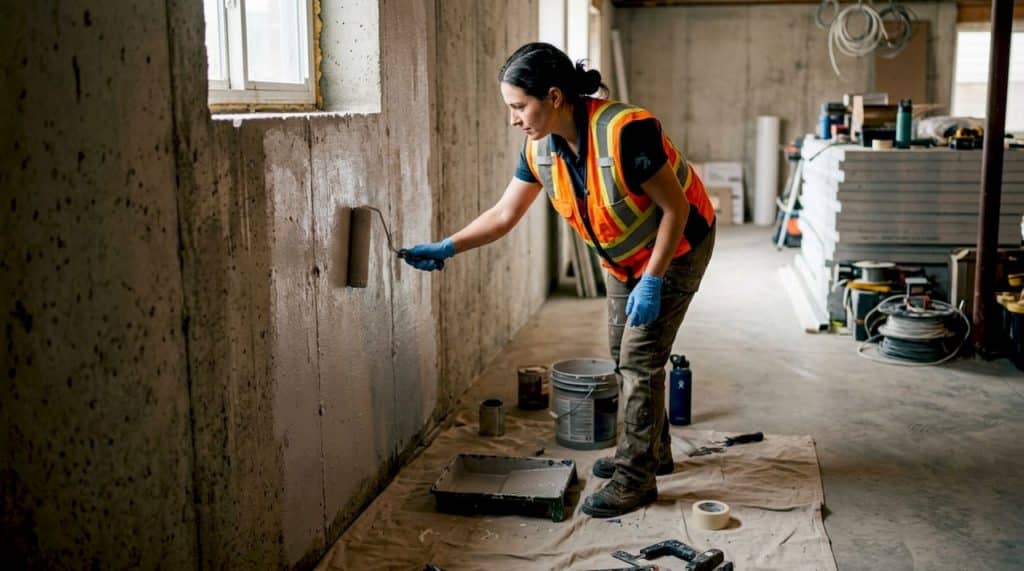
TL;DR:
- A waterproofing primer creates a stable and bondable surface, preventing membrane failure on porous substrates. It is essential for adhesion, sealing pores, and stabilizing surfaces before applying waterproof membranes. Proper selection and application of primers significantly improve membrane durability and longevity.
A waterproofing primer is defined as a specialised preparatory coating applied to substrates such as concrete, masonry, or drywall before a waterproofing membrane is installed. Its core functions are promoting adhesion, sealing surface pores, and stabilising dusty or porous bases so the membrane bonds correctly. Without it, even the highest-quality membrane can peel, bubble, or fail within months. Prowaterproofing regards primer selection as structural preparation, not optional groundwork. Understanding what a waterproofing primer does, and how to use it correctly, is the single most important step you can take before any waterproofing project.
What is a waterproofing primer and what does it do?
A waterproofing primer is the preparatory coating that creates a stable, bondable surface between a raw substrate and a waterproofing membrane. The industry term for this product is “primer” or “bonding primer,” and it sits at the foundation of every durable waterproofing system. Skipping it is the single most common cause of membrane failure on South African properties.
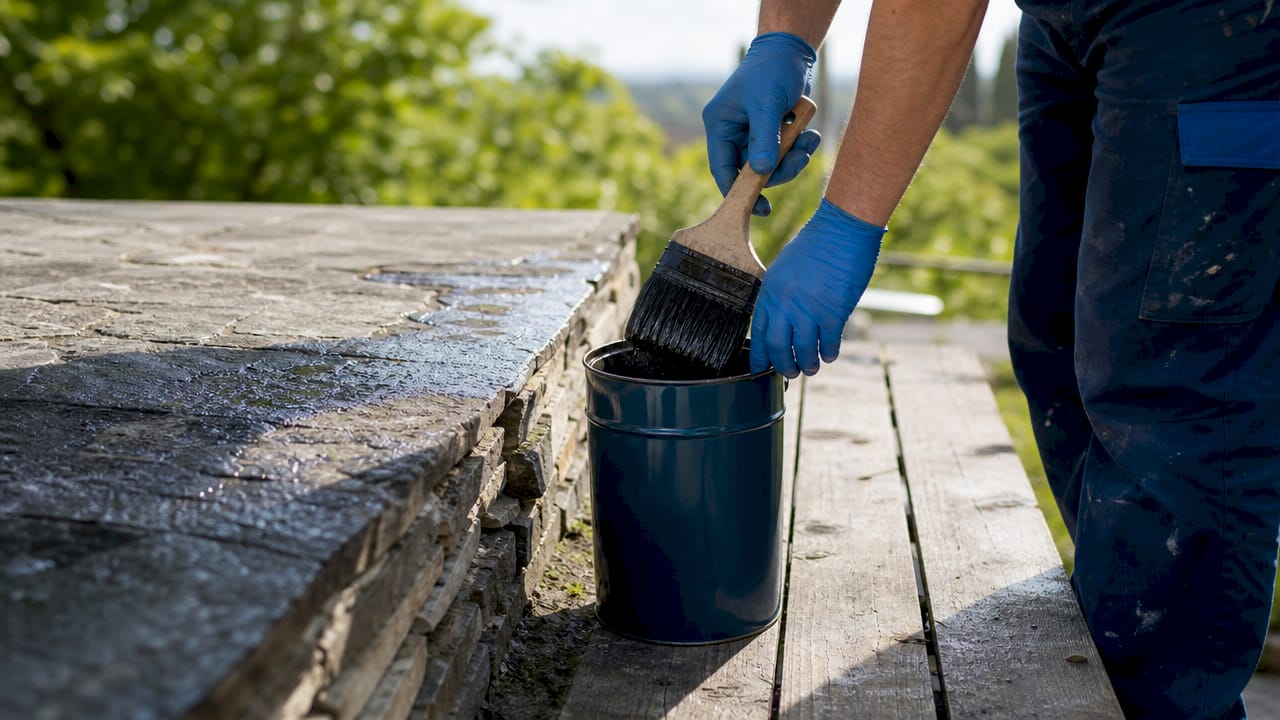
Primers work through two mechanisms simultaneously. They seal surface pores to prevent moisture from migrating upward through the substrate and disrupting the membrane from below. They also bind loose dust and friable particles to the surface, giving the membrane a stable base to grip rather than a layer of loose material that will eventually detach.
The substrates where primers matter most are concrete, masonry, fibre cement board, and drywall. Each of these materials is porous to varying degrees. A raw concrete slab, for example, will absorb a membrane unevenly, creating weak spots and air pockets. A primer applied first equalises the surface’s absorbency before the membrane goes down.
Professionals describe the membrane as the “hero” of a waterproofing system, but they regard the primer as the critical invisible bond without which the entire system fails. That framing is accurate. The membrane is visible and measurable. The primer is neither, yet it determines whether the membrane lasts five years or twenty-five.
What types of waterproofing primers are available?
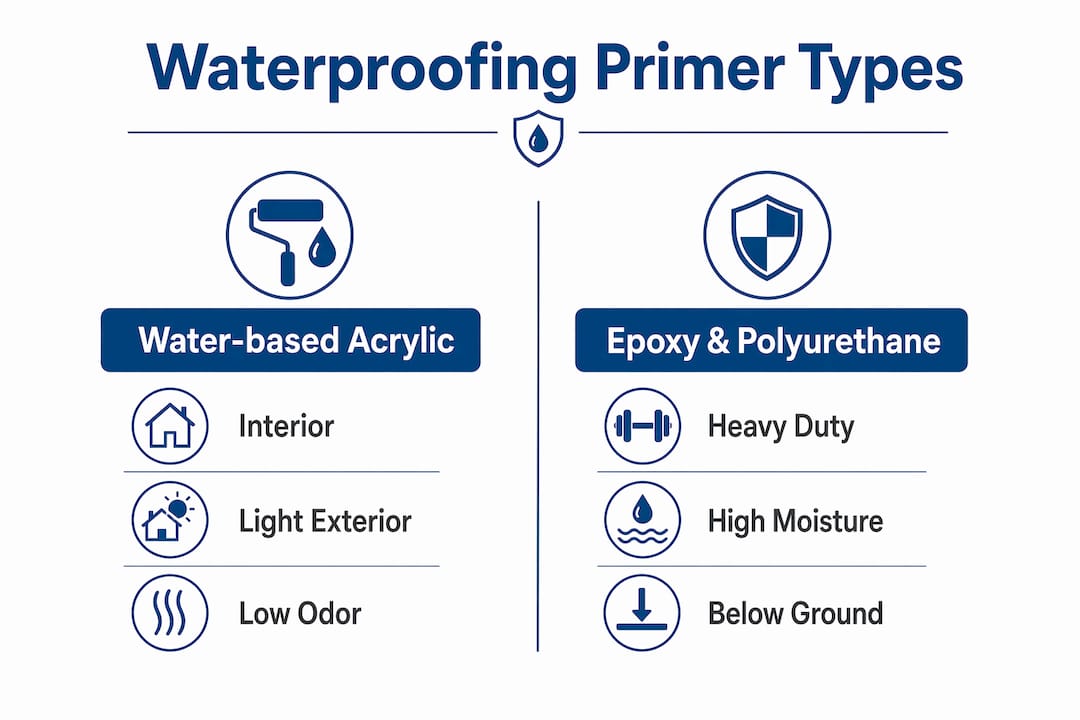
The three main resin chemistries used in waterproofing primers are acrylic, epoxy, and polyurethane. Each suits different substrates and exposure conditions.
Water-based acrylic primers are the most widely used for internal work and light external applications. They are low odour, easy to apply, and compatible with most standard waterproofing membranes. Bathrooms, kitchens, and internal wet rooms are typical applications.
Epoxy and polyurethane primers are specified for heavy-duty, high-moisture, or below-ground environments. They form a chemical bond with the substrate rather than a purely physical one, which makes them the correct choice for basements, retaining walls, and water tanks. They cost more and require careful mixing, but the bond strength justifies the investment in demanding conditions.
| Primer type | Suited substrates | Key function |
|---|---|---|
| Water-based acrylic | Concrete, masonry, drywall (internal) | Seals pores, promotes adhesion for standard membranes |
| Epoxy | Concrete, steel, below-ground structures | Chemical bonding, high moisture resistance |
| Polyurethane | Concrete, timber decks, balconies | Flexible bond, UV and chemical resistance |
| Solvent-based | Metal, old waterproof layers | Penetrating adhesion on non-porous surfaces |
One primer type to avoid in wet areas is PVA. PVA primers soften under sustained moisture exposure, which causes the membrane above to lose its bond and fail in wet zones. This is a common and costly mistake in DIY projects and even some professional applications.
Pro Tip: If you are unsure whether a surface has an existing waterproof layer, apply a small amount of water. If it beads, the surface is non-porous and requires a solvent-based or adhesion primer rather than a standard acrylic.
How do waterproofing primers improve adhesion and durability?
A primer acts as a two-way bonding bridge, adsorbing chemically or physically to the substrate on one side and bonding with the membrane polymers on the other. This dual attachment is what prevents the membrane from peeling when the substrate expands, contracts, or becomes damp.
The pore-sealing function has a direct impact on material efficiency. Proper primer use reduces coating consumption by 15%–30% by preventing the membrane from being absorbed into the substrate rather than forming a continuous film on top of it. That reduction translates directly into lower material costs on any project.
Binding surface dust is equally important. A dusty concrete surface looks solid but behaves like a layer of loose powder under a membrane. The primer penetrates and consolidates those particles, creating a unified surface. Without this step, membranes without primer risk air bubbles, inconsistent absorption, and poor surface stability that leads to early deterioration.
Drying time affects bond quality significantly. Tanking primers typically dry in 30–60 minutes. Standard primers can take up to 4 hours, depending on ambient temperature and humidity. Applying a membrane before the primer has fully cured traps moisture in the system and undermines the bond.
Pro Tip: Always check the primer manufacturer’s specified drying time and add 20% to that figure in humid or cold conditions. Rushing this stage is the most common cause of adhesion failure on South African coastal properties.
How to use waterproof primer correctly: application best practices
Surface preparation is the non-negotiable first step. The substrate must be clean, dry, and free of dust, oil, loose paint, and debris before any primer is applied. Applying primer on a dirty or damp surface produces poor adhesion and waterproofing failure regardless of membrane quality. No primer chemistry overcomes a contaminated base.
The correct application sequence is as follows:
- Clean the surface thoroughly. Remove all loose material, efflorescence, and contaminants. Use a wire brush or grinder on concrete where necessary.
- Allow the surface to dry completely. In South Africa’s coastal regions, this can take longer than expected due to humidity. Use a moisture meter on concrete slabs before proceeding.
- Dilute the primer if required. On porous substrates like drywall or lightweight concrete, a 3:1 water-to-primer ratio improves penetration. Applying primer neat on highly porous surfaces seals the top layer too quickly, preventing deeper penetration and weakening final adhesion.
- Apply by roller, brush, or spray. Rollers suit large flat areas. Brushes are better for corners, edges, and penetrations. Spray application is efficient on large commercial surfaces but requires consistent technique to avoid thin patches.
- Allow full drying before applying the membrane. Confirm drying by touch and by checking the manufacturer’s data sheet for the specific product used.
Common pitfalls include applying a single thin coat on highly absorbent surfaces, which leaves unprimed patches. Two coats are often necessary on old masonry or rough concrete. For guidance on preparing concrete surfaces before primer application, Prowaterproofing provides detailed step-by-step guidance specific to South African conditions.
Pro Tip: On vertical surfaces such as basement walls, apply primer from the bottom upward to avoid drips running over unprimed areas and creating weak adhesion lines.
Common mistakes that cause waterproofing primer failures
Incorrect primer selection and poor application account for the majority of waterproofing system failures. Understanding the specific errors makes them straightforward to avoid.
The most frequent mistakes are:
- Using PVA primer in wet areas. PVA softens under moisture, causing the membrane to detach. Always use a purpose-made waterproofing primer in bathrooms, wet rooms, and external applications.
- Applying primer to a damp substrate. Moisture trapped beneath the primer prevents proper adhesion and creates a failure plane between the substrate and the membrane.
- Skipping primer entirely. Some property owners assume a quality membrane does not need a primer. The membrane may adhere initially but will fail under thermal movement or sustained moisture exposure.
- Using inconsistent coat thickness. Thin patches leave the substrate exposed. The membrane absorbs unevenly, creating weak zones that crack or blister first.
- Ignoring substrate-specific requirements. Timber decks need a flexible polyurethane primer. Metal surfaces need a solvent-based adhesion primer. Using a standard acrylic primer on these substrates produces inadequate bonding.
| Mistake | Consequence | Prevention |
|---|---|---|
| PVA primer in wet areas | Membrane detachment under moisture | Use specialist waterproofing primer |
| Primer on damp substrate | Failed adhesion, blistering | Confirm surface is dry before application |
| Skipping primer | Membrane peeling, air bubbles | Always prime before membrane application |
| Single thin coat on porous surface | Uneven absorption, weak zones | Apply two coats or dilute for penetration |
| Wrong primer for substrate | Poor bond, early failure | Match primer chemistry to substrate type |
For a broader view of how these failures present on real properties, Prowaterproofing’s waterproofing failure examples article shows what goes wrong and why.
Where should you use waterproofing primers in your property?
Waterproofing primers are specified wherever a membrane is applied, but certain areas of a property carry higher risk and demand particular attention.
Bathrooms and wet rooms are the most common residential application. Tiles and grout are not waterproof. The substrate behind them must be sealed with a membrane bonded by a compatible primer. Without this, moisture migrates into the wall structure and causes mould, rot, and structural damage over time.
Basements and foundations face hydrostatic pressure from groundwater. This is one of the most demanding environments for any waterproofing system. Epoxy or polyurethane primers are the correct choice here because they form a chemical bond strong enough to resist that pressure. A standard acrylic primer will not hold under these conditions.
Roof decks and balconies experience thermal cycling, UV exposure, and standing water. Polyurethane primers suit these surfaces because they remain flexible as the substrate expands and contracts. A rigid primer on a roof deck will crack at the bond line before the membrane does.
Water tanks and containment structures require primers that are chemically inert and resistant to continuous water immersion. Epoxy primers are standard for these applications. The waterproofing system longevity of any containment structure depends on the primer forming a permanent, non-degrading bond.
The benefits of correct primer use across all these areas include a longer membrane lifespan, reduced maintenance frequency, and lower long-term costs. A properly primed surface allows the membrane to perform as designed rather than compensating for a poor substrate bond.
Key takeaways
A waterproofing primer is the structural foundation of every durable waterproofing system, and correct primer selection and application directly determines whether a membrane lasts or fails.
| Point | Details |
|---|---|
| Primer is non-negotiable | Skipping primer causes membrane peeling, air bubbles, and early system failure. |
| Match primer to substrate | Acrylic suits internal work; epoxy and polyurethane suit below-ground and high-moisture zones. |
| Avoid PVA in wet areas | PVA softens under moisture and causes membrane detachment in bathrooms and wet rooms. |
| Dilute on porous surfaces | A 3:1 water-to-primer ratio improves penetration on drywall and lightweight concrete. |
| Primer reduces material waste | Correct primer use cuts waterproofing membrane consumption by 15%–30% by preventing invalid absorption. |
Why I think primer is the most underestimated product in waterproofing
After years of working with waterproofing projects across South Africa, the pattern I see most consistently is this: property owners invest in premium membranes and then apply them over an unprimed or incorrectly primed surface. The membrane fails within two years. The membrane gets blamed. The primer is never mentioned.
The truth is that primer selection is not auxiliary work. It is structural preparation. A membrane applied over a correctly primed surface will outlast the same membrane applied without primer by a significant margin, regardless of the membrane’s quality rating. I have seen this play out on rooftop decks in Cape Town and basement walls in Johannesburg.
The DIY market makes this worse by selling “all-in-one” waterproofing products that claim to eliminate the need for a separate primer. In my experience, these products perform adequately on very small, low-risk areas. On anything larger or more exposed, they fall short. The two-step process exists for good reason.
My advice to any property owner commissioning a waterproofing project is simple. Before you ask about the membrane brand, ask the contractor which primer they are specifying and why. If they cannot answer that question with confidence, find a different contractor. The primer conversation tells you everything about a contractor’s technical competence.
— Eben
Prowaterproofing: professional primer and waterproofing solutions
Choosing the right primer for your property is not guesswork. It requires knowledge of the substrate, the exposure conditions, and the membrane system being used.
Prowaterproofing provides expert waterproofing services across South Africa, with primer selection and correct application built into every project from the start. Whether you are waterproofing a bathroom, a basement, or a commercial roof deck, the team at Prowaterproofing assesses your substrate and specifies the correct primer system before any membrane goes down. Every project is backed by quality assurance and a focus on long-term performance. Contact Prowaterproofing for a professional assessment and a quote tailored to your property’s specific needs.
FAQ
What is a waterproofing primer used for?
A waterproofing primer is applied to substrates like concrete, masonry, or drywall before a waterproofing membrane to promote adhesion, seal pores, and stabilise the surface. Without it, membranes are prone to peeling, air bubbles, and early failure.
Can I use a standard PVA primer for waterproofing?
No. PVA primers soften under moisture and cause membrane failure in wet areas such as bathrooms and basements. A purpose-made waterproofing primer is required for any area exposed to sustained moisture.
How long does a waterproofing primer take to dry?
Tanking primers typically dry in 30–60 minutes. Standard waterproofing primers can take up to 4 hours, depending on temperature and humidity. Always allow full drying before applying the membrane.
Do I need to dilute a waterproofing primer?
On porous substrates like drywall or lightweight concrete, diluting primer at a 3:1 water-to-primer ratio improves penetration and produces a stronger final bond. Applying primer neat on highly porous surfaces seals the top layer too quickly and weakens adhesion.
What is the difference between a waterproof primer and a standard primer?
A standard primer promotes paint adhesion and may offer limited moisture resistance. A waterproofing primer is formulated specifically to bond with waterproofing membranes, seal pores against water ingress, and withstand sustained moisture exposure without softening or degrading.