
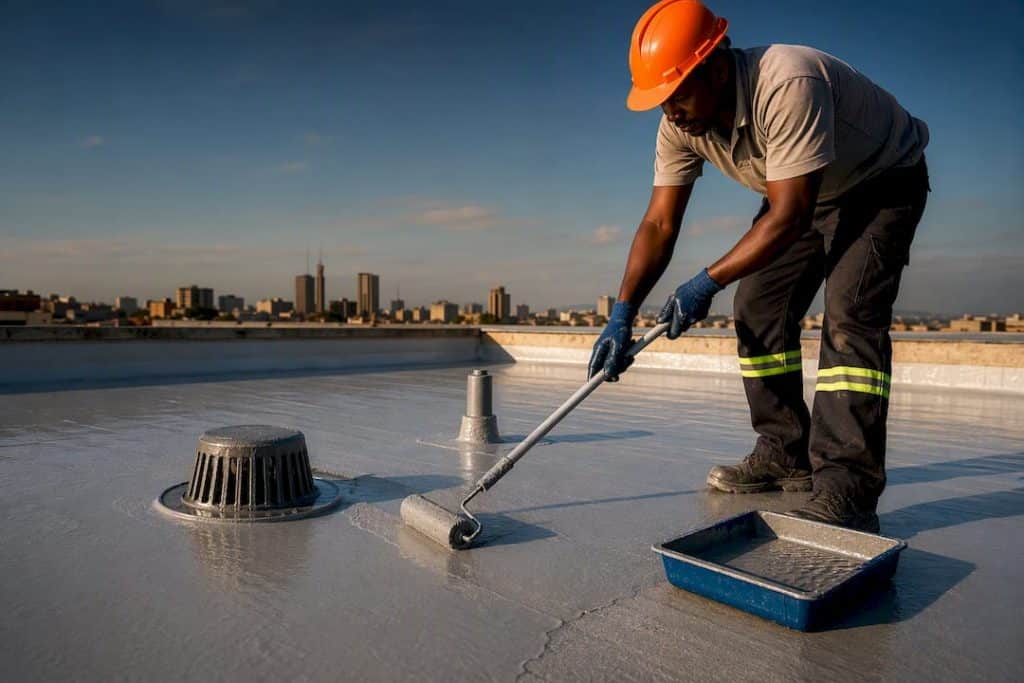
Liquid applied membrane roofing is a practical, seamless waterproofing solution for most flat and low slope roofs, balconies and refurbishment projects. It works well provided the substrate is properly prepared and you choose the right chemistry for the exposure. Acrylic, polyurethane, silicone and PMMA each suit different situations. The main constraints to check before committing are substrate condition, the weather window for curing and whether the roof carries foot traffic.
TL;DR:
- Liquid membranes excel on roofs with complex detailing, small areas, or refurbishments over sound old coatings, because they eliminate seams and laps.
- Silicone coatings offer the longest lifespan, potentially exceeding 20 years, especially on surfaces exposed to ponding water and UV, but require proper surface preparation.
- Proper surface preparation, reinforcement at joints, and correct primer application are critical factors that determine the longevity and effectiveness of any liquid membrane.
- Cost considerations over 15 to 20 years favor silicone or properly maintained polyurethane systems, as acrylics need frequent re-coating every three to five years.
- A thorough site inspection and clear scope, including substrate condition and detailing needs, are essential to selecting the right chemistry and ensuring warranty validity.
Table of Contents
- What is liquid applied membrane roofing and what are the main types?
- Is a liquid membrane the right choice for your roof?
- Which chemistry lasts longest, and where does each one fail?
- How should a liquid membrane be applied correctly?
- What standards and warranty wording should you check?
- What does a liquid membrane roof actually cost over its life?
- How do you choose a contractor and what should the brief cover?
- What lessons come up repeatedly on site?
- Does a liquid membrane work on metal, concrete and old asphalt?
- How does a liquid membrane compare with built up and single ply roofing?
- Why specification matters more than the product name
- Get a site inspection before you commit to a roofing chemistry
- Sources
What is liquid applied membrane roofing and what are the main types?
A liquid waterproofing membrane is applied wet, usually by roller, brush or spray, and cures on site into a continuous, seamless film that bonds directly to the roof surface. Unlike sheet systems, there are no laps or seams to fail, which is why liquid membranes handle upstands, pipe penetrations, gutters and awkward junctions so well. They turn up on flat roofs, balconies, walkways and podium decks, and just as often in refurbishment work over an ageing torch on or felt roof.
The four families you will encounter differ enough that picking the wrong one is a common, expensive mistake:
- Acrylic membranes are water based, low odour and the most affordable entry point, but they are not built for permanent ponding.
- Polyurethane (PU) systems cure to a flexible, seamless membrane and generally need an aliphatic topcoat to hold their colour and resist UV breakdown, according to guidance on polyurethane versus torch on waterproofing.
- Silicone coatings resist standing water without a topcoat and stay UV stable on their own.
- PMMA resins cure within an hour even in cold conditions, making them the choice for tight access windows and detailing work.
Reinforcement fabric, typically a polyester fleece embedded into the wet coating, gets used at joints, corners and penetrations to add tear resistance where the film is most likely to be stressed.
Is a liquid membrane the right choice for your roof?
Liquid systems earn their keep on roofs where geometry, not size, is the problem. A roof studded with rooflights, pipes, plant bases and parapet upstands is exactly where a seamless film outperforms a sheet product that needs dozens of detail laps.
- Complex detailing and small areas favour liquids. The lack of seams removes the single biggest point of failure on a fiddly roof.
- Large, simple, high traffic roofs often suit sheet or torch on better. Big open decks with heavy footfall or vehicle access can wear an unprotected liquid coating faster than a mechanically fixed single ply sheet, and the choice genuinely depends on roof size, traffic and detailing, as noted in this comparison of torch on and liquid waterproofing.
- Ponding water rules out weaker chemistries. If water regularly sits for more than 48 hours, you need a system with no ponding exclusion in its warranty, which points towards silicone.
- Refurbishment over an existing membrane is usually viable. Liquid systems can often be overlaid on sound bitumen or old coatings once the surface is cleaned, repaired and correctly primed, avoiding a full strip out.
- Climate exposure changes the calculus. Intense UV and wide temperature swings favour systems with proven long term stability over cheaper short-lived coatings.
Which chemistry lasts longest, and where does each one fail?
Lifespan snapshot: acrylic coatings typically need recoating every three to five years, polyurethane systems commonly run five to eight years, and well specified 100% silicone systems can deliver 20 or more years on a correctly prepared substrate.
Acrylic is the budget option: easy to apply, low odour, but UV and hydrolysis gradually thin the film, and it is not rated for permanent ponding. Polyurethane offers strong elasticity and good movement accommodation, but without an aliphatic topcoat the surface chalks and degrades under sunlight. Silicone stands out for ponding resistance and long term UV stability, though it costs more upfront and can be slippery when wet without an additive. PMMA cures fast and bonds well to metal and concrete detailing, but its sharp odour and cost usually confine it to detail work rather than whole roof coverage.
Across all four, the recurring failure pattern is the same:
- Skipped or rushed substrate preparation.
- Missing reinforcement at movement joints and penetrations.
- Coating applied below the minimum dry film thickness.
- Wrong primer, or no adhesion test, on an unfamiliar substrate.
How should a liquid membrane be applied correctly?
Correct application is less about the product in the tin and more about everything that happens before it goes on. Poor substrate preparation and joint failures remain the leading causes of leaks on liquid roofs, based on manufacturer technical guidance on surface preparation.
- Clean and repair the substrate. Remove debris, moss and loose material, and patch cracks or spalled concrete before anything else happens.
- Profile and test the surface. Grinding or shot blasting opens the pores of concrete for better bonding; an adhesion test confirms the coating will actually stick.
- Prime according to substrate. Concrete, bitumen and existing coatings each need a different primer, and using the wrong one is a common cause of early delamination.
- Apply in sequence. Primer, base coat, reinforcement at details and joints, then top coat, following the manufacturer’s application build up and its minimum dry film thickness figures.
- Respect the weather window. Solvent and moisture curing systems need specific temperature and humidity ranges, plus ventilation on enclosed roofs, to cure properly and safely.
- Check before sign off. Ask for evidence of continuous coverage, thickness readings and adhesion results before the contractor leaves site.
Pro Tip: Ask your contractor to photograph the substrate immediately after preparation and before priming. It is the only reliable proof that the surface was actually sound before the coating went on, and it settles most warranty disputes before they start.
Our step by step guide to the waterproofing application process covers each stage in more depth.
What standards and warranty wording should you check?
Manufacturer claims are only as good as the tests behind them. Before accepting a data sheet at face value, check for:
- ASTM D6694, which governs how liquid applied elastomeric coatings are tested.
- ASTM D2370, which measures tensile strength and elongation, the figures that tell you how much movement a membrane can absorb.
- ASTM E96, which tests water vapour permeance, relevant if trapped moisture is a concern.
- Independent approvals such as CRRC solar reflectance ratings, FM or UL listings, or a CCPI/ETA certificate where applicable, which back up manufacturer claims with third party test results.
- The difference between a manufacturer warranty on the product and a workmanship guarantee on the installation. Only the second one covers a contractor’s poor prep.
What does a liquid membrane roof actually cost over its life?
Cost reality: the cheapest coating rarely wins over a 15 to 20 year horizon once recoating cycles are added up.
Installed cost bands vary by chemistry and region, but the general pattern across South African suppliers is consistent:
- Acrylic and cool roof coatings sit at the lower end.
- Liquid polyurethane sits in the middle.
- Silicone costs more upfront but stretches the recoating cycle furthest.
- Sheet membranes such as PVC or EPDM, and well installed torch on, often cost more than any liquid option but can offer comparable or longer life, according to this breakdown of roof waterproofing costs.
Run the numbers over time rather than on the quote alone. An acrylic coating recoated every four years across a 16 year period means four full applications; a silicone system installed once can outlast all four cycles. Labour, scaffolding, traffic protection and substrate repairs typically move the total more than the coating itself does, so a cheap product on a poorly prepared roof rarely stays cheap.
How do you choose a contractor and what should the brief cover?
Choosing on price alone is the single most common route to a failed roof. Work through this before signing anything:
- Request the paperwork first. Ask for a written method statement, product data sheets and, ideally, a small sample patch applied on your roof before full commitment.
- Verify the warranty chain. Confirm whether the workmanship guarantee is backed by the manufacturer directly, since a contractor guarantee is only as strong as the business behind it.
- Ask for references on similar roofs. A contractor comfortable with balconies is not automatically competent on a large industrial deck with heavy ponding.
- Get a written scope, not a verbal quote. The brief should specify substrate prep steps, primer type, number of coats, reinforcement locations and minimum dry film thickness.
- Stage the sign off. Inspect after preparation, after priming and after the final coat, rather than only at project completion.
Pro Tip: A vague bid that just says “roof waterproofing coating supplied and applied” with no thickness figure or reinforcement detail is a red flag. Ask the contractor to quote against a written specification, not the other way round.
What lessons come up repeatedly on site?
Most defects seen during waterproofing projects trace back to the same root cause: preparation skipped to save time. A common repair scenario is a bitumen torch on roof recoated with silicone without a primer or adhesion test, which peels within a season. Correct prep and a proper primer solve it every time. The practical lesson for clients is simple: insist on a written scope and staged inspections before any coat goes on.
Does a liquid membrane work on metal, concrete and old asphalt?
Liquid systems are more forgiving across substrates than most sheet products, but each material has its own quirks. Concrete is the most common substrate and generally the easiest, provided laitance is removed and any cracks or spalling are repaired before priming. Moisture content matters too; a concrete deck that has not cured or dried sufficiently will trap vapour under the coating and cause blistering later.
Metal roofing, particularly profiled steel sheeting, needs a primer matched to the metal type and a check for existing corrosion, rust and loose fixings before coating. Galvanised steel and aluminium each respond differently to primers, so using a generic product without checking compatibility is a frequent cause of adhesion failure on industrial buildings. Our guide on waterproofing industrial roofs covers metal deck specifics in more detail.
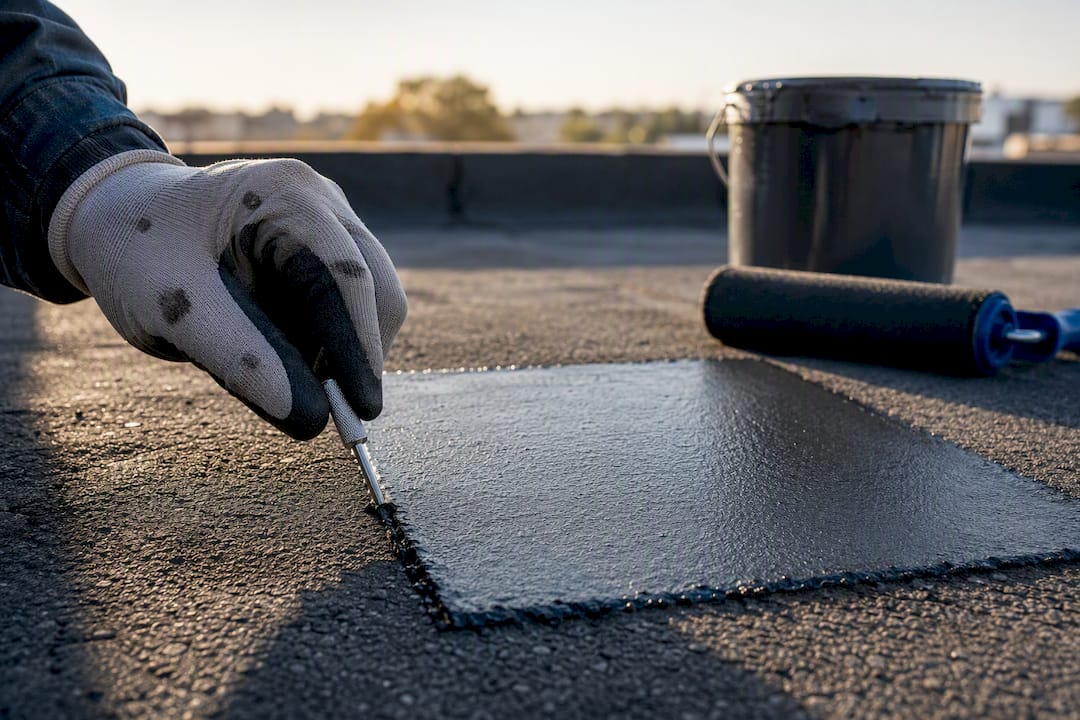
Old asphalt or bitumen substrates, including torch on felt, are workable but require particular caution. Bitumen bleed can discolour or destabilise some acrylic and polyurethane coatings, and a primer plus adhesion test is essential before any silicone coating goes over an existing bitumen surface, since skipping this step is a documented cause of adhesion failure and warranty invalidation. Old coatings of unknown composition are the trickiest case of all, and a test patch is the only reliable way to confirm compatibility before committing to a full roof.
How does a liquid membrane compare with built up and single ply roofing?
Built up roofing, the traditional layered bitumen and felt system, offers proven durability on large flat roofs but relies on hot works or torch application, and every seam and lap is a potential leak point over time. Single ply sheet membranes such as PVC or EPDM install fast on big open roofs and perform well under consistent foot traffic, but they depend on mechanically fixed or heat welded joints, and detailing around penetrations means cutting and jointing sheet material rather than simply coating around it.
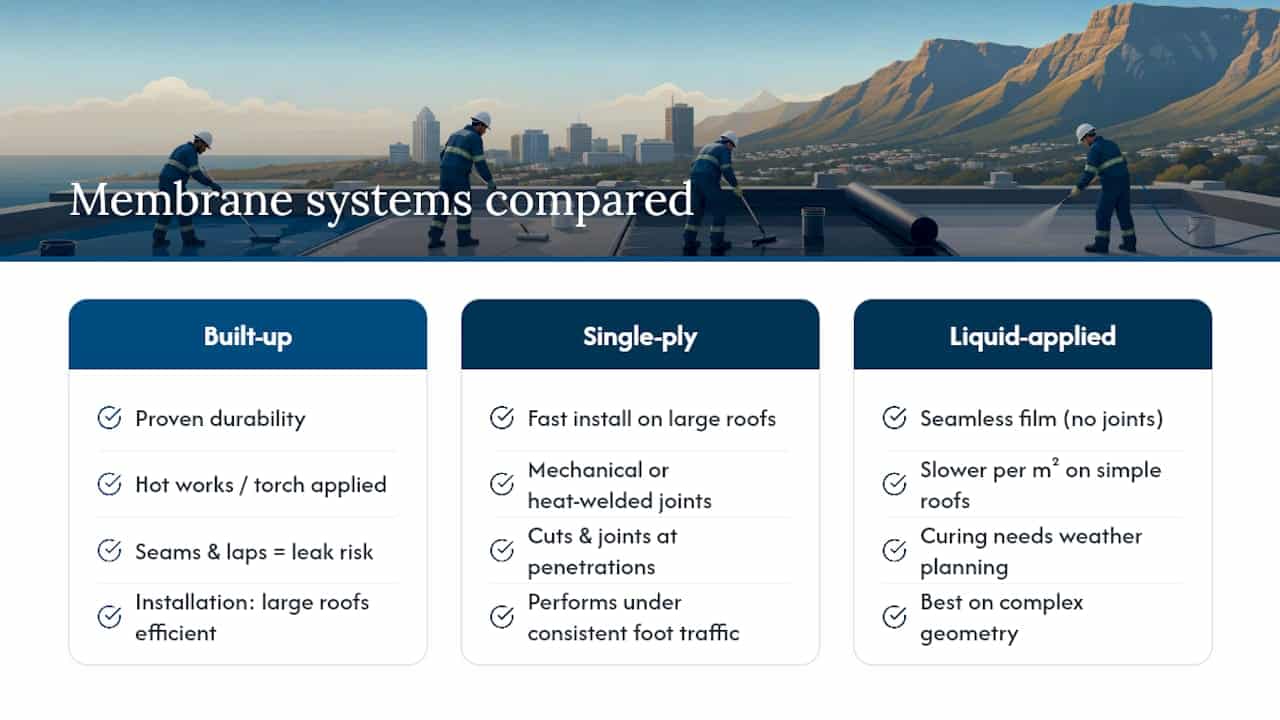
Liquid applied membranes flip that trade off. Installation is slower per square metre on a large, simple roof, and access for curing needs planning around weather. But on anything with complex geometry, the seamless film wins outright because there is no joint to fail. For refurbishment specifically, liquids have a practical edge: they can often go directly over an existing sound bitumen or single ply surface once primed, avoiding the cost and disruption of stripping the old system entirely. For a broader comparison of how these systems stack up, our roof waterproofing basics guide sets out the wider picture, and this comparison of industrial roofing systems offers a useful outside perspective on membrane choice at scale.
Why specification matters more than the product name
Most guidance on liquid roofing reads like a product catalogue: acrylic here, silicone there, pick one. That framing misses the point. The chemistry matters less than whether the substrate was actually ready for it, and whether the reinforcement went in where the roof actually moves.
The conventional advice to “choose silicone, it lasts longest” is not wrong, but it is incomplete. Silicone earns its 20 year reputation only on a properly primed, correctly profiled substrate. Put it over unprimed bitumen and it fails faster than a cheap acrylic applied correctly. That is the gap most homeowners and even some contractors miss: performance is a product of chemistry and preparation together, not chemistry alone.
If you take one thing from this, prioritise the written scope over the brand name on the tin. Ask what primer, what reinforcement, what thickness, and what test confirms adhesion. A roof specified this way, in a lower cost chemistry, will consistently outperform a premium product applied carelessly.
— Eben
Get a site inspection before you commit to a roofing chemistry
Every point above hinges on one thing: knowing your specific roof’s substrate condition, ponding pattern and detailing before choosing a membrane. That is exactly what Prowaterproofing’s site inspection covers, matching the right chemistry, acrylic, polyurethane, silicone or PMMA, to your roof’s actual condition rather than a generic recommendation.
A typical waterproofing site survey covers substrate assessment, ponding checks, existing membrane condition and a written scope before any quote is issued, so you know exactly what preparation, primer and reinforcement your roof needs before work starts. Warranties are discussed upfront, covering both product and workmanship, so responsibilities are clear from day one. If your flat roof, balcony or refurbishment project needs a proper assessment rather than a guess, request a site inspection and quote through a professional waterproofing service to get started.
Sources
For product specific detail, consult the Sikalastic-625 technical data sheet on application and preparation, and Prowaterproofing’s own flat roof waterproofing guide for South African specific examples and further detail on silicone system performance.
- Best Waterproofing for Roofs in South Africa | Complete Guide
- Torch‑on vs liquid waterproofing compared – lifespan, substrate fit and repairability
- Sikalastic-625 technical data (application and surface prep guidance)
- Roof waterproofing types, costs & products – Complete guide | ServiceLink SA