
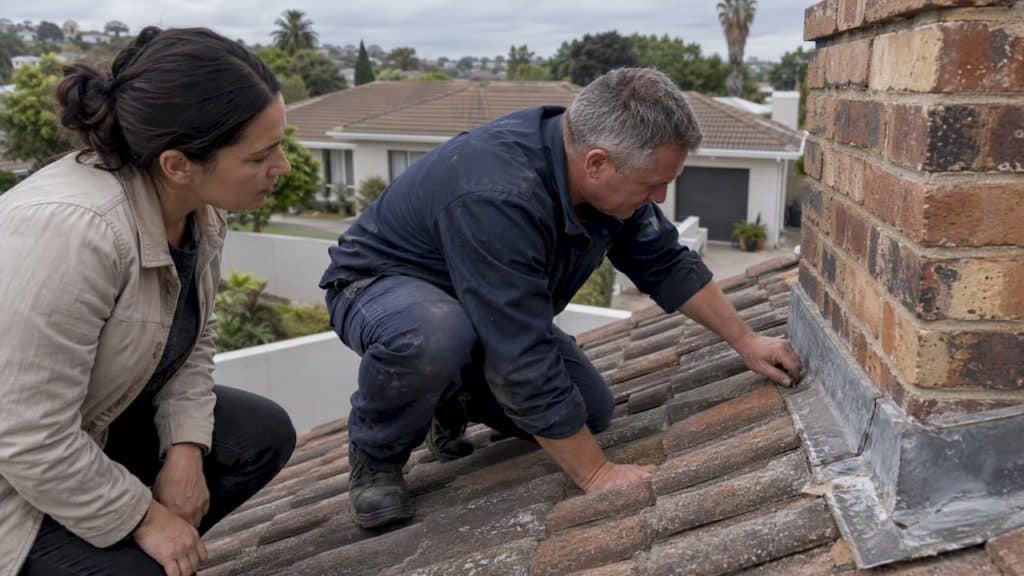
Investors inspect roofs before buying because the roof is the part of a building most likely to carry a large, hidden repair bill, and because the findings change what the property is worth to you. A roof report lets you price repairs into your offer, decide whether to walk away, and avoid inheriting a leak, a compliance problem or both. In South Africa there is an extra reason: most sales are voetstoots, so what you fail to find is often yours to fix.
TL;DR
- A roof inspection turns an unknown liability into a figure you can negotiate with, or a reason to walk away.
- Under voetstoots, a buyer accepts defects that a diligent inspection could have found, so inspect before you sign the offer to purchase.
- A ceiling stain is rarely the leak itself. Insist the inspector enters the roof void and traces the water path.
- Check the paperwork as well as the tiles: an Occupation Certificate and council-approved plans for any alterations.
- A formal written roof report typically costs far less than the repairs it can expose.
Table of Contents
- Why the roof matters more than most other line items
- The South African legal context: voetstoots and your duty to inspect
- What investors actually look for on the roof
- Questions to ask the seller before the inspector arrives
- Paperwork that belongs in a roof inspection
- What a roof inspection costs, and what it saves
- How to use the findings
- Our perspective: what we see when owners skip the roof
- After the inspection: getting repairs priced properly
- Need a roof or waterproofing assessment?
- FAQ
- Sources
Why the roof matters more than most other line items
A roof does three jobs at once. It keeps water out, it carries the load of the covering and anything attached to it, and it protects the structure and finishes below. When it fails, the damage rarely stays on the roof. Wet insulation, rotten timbers, blistered paint, mould, damaged electrics and failed ceilings all follow.
For an investor, that matters in three ways:
- Yield. A leaking property is harder to let, attracts rent reductions and produces disputes with tenants.
- Capital. A re-roof or major waterproofing job is a lump sum, not a maintenance line, and it can erase a year or more of net rental income.
- Exit value. The next buyer’s inspector will find what you did not. A defect you left unresolved comes back as a price cut when you sell.
The top-ranking guides on this topic make the same basic point: the inspection helps you judge whether you are buying a sound asset or a money pit, and it helps you plan repairs and negotiate. That logic applies with extra force to someone who is not going to live in the building and notice problems first.
The South African legal context: voetstoots and your duty to inspect
Most South African property sales include a voetstoots clause, meaning you buy the property as it stands. A professional inspection is not required by law, but one local agency explains that a buyer accepts patent defects, the ones a diligent inspection could have discovered. Hidden defects, which only show up in the first heavy rain, are where the argument usually lies, and a seller’s duty to disclose known problems still applies.
The practical conclusion for an investor is simple. Do not rely on being able to argue later that a defect was hidden. A stain you noticed and did not question, or a repair patch you did not ask about, weakens that argument. Get the inspection done before you sign, and put the key findings in writing.
This is general information, not legal advice. If a defect is serious or the seller’s disclosures look incomplete, talk to a conveyancing attorney before you sign.
What investors actually look for on the roof
A competent inspection covers the covering, the structure beneath it and the details where roofs most often fail. Use this as a checklist when you brief an inspector or walk the property yourself.
Roof condition checklist for investors
| Area | What to look for | Why it matters |
|---|---|---|
| Roof covering (tiles, sheeting, membrane) | Cracked, slipped or missing tiles; corroded or lifting sheets; blistering, cracking or ponding on flat roofs | Shows age and remaining life, and where water is most likely to get in |
| Flashings and valleys | Gaps, lifted edges, failed sealant around chimneys, skylights and wall abutments | The most common leak points, and often cheap to fix if caught early |
| Ridge caps and hips | Loose, cracked or poorly bedded capping | Wind-driven rain gets under loose capping into the roof void |
| Gutters and downpipes | Blockages, rust, sagging, water running down walls | Overflow soaks fascias and walls and can undermine foundations |
| Roof void (attic) | Water staining on timbers, damp or compressed insulation, mould, rot, insect damage, daylight where there should be none | Reveals past and active leaks the ceiling does not show |
| Ceilings and upper walls | Stains, sagging boards, fresh paint in one patch, bubbling | Fresh paint over one area can hide a recurring leak |
| Flat roofs, balconies and concrete decks | Cracks, ponding, failed waterproofing, poor falls towards outlets | Waterproofing has a finite life and leaks here can enter the rooms below |
| Alterations | Patio roofs, lofts, extensions that look newer than the main house | May lack council approval, which becomes your problem |
Why the ceiling stain misleads
Investors often assume a roof is fine because the ceiling is clean, or that a stain marks the leak. Neither is reliable. Water can run along roof timbers for several metres from a faulty flashing before it drips through, so the stain sits far from the source, according to the Completo roofing cost guide. A good inspector therefore goes into the roof void and traces the water path back to the exterior. If you want to see how that tracing works in practice, this plumbing guide on tracing ceiling leaks describes the logic, although it comes from a US plumbing company and its building context differs from ours.
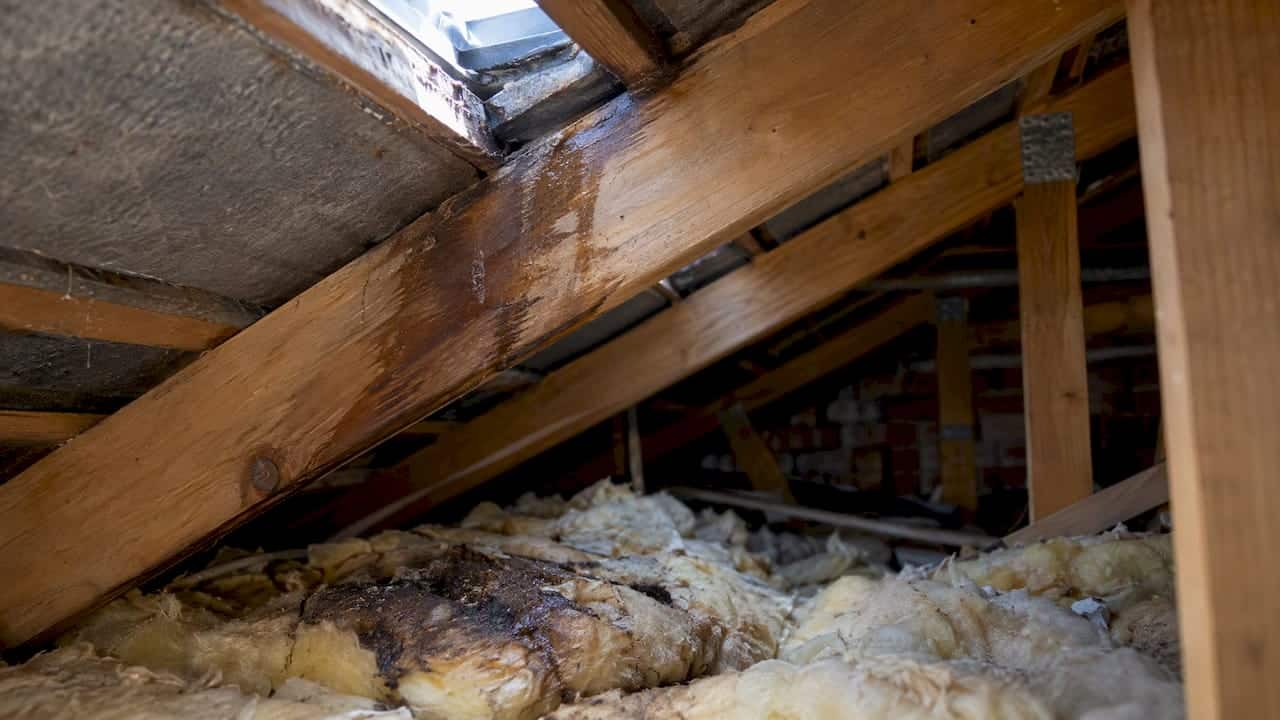
The same mistake happens after purchase. Sealing the area directly above a stain is a common and costly error because it ignores the real entry point, such as a faulty chimney flashing or ridge cap. Our own articles go through how to identify roof leaks and why a roof leaks in the first place in more detail.
Questions to ask the seller before the inspector arrives
You can learn a lot before anyone climbs a ladder. Ask these in writing so the answers are on record:
- When was the roof last replaced, repaired or re-waterproofed, and who did the work?
- Are there invoices, guarantees or compliance paperwork for that work?
- Has the property had any leaks or insurance claims linked to water?
- Has the ceiling been repainted or repaired recently, and why?
- Have any structures been added, such as a loft, carport or patio roof?
- Does the seller hold an Occupation Certificate and the approved building plans?
Vague answers are information too. A seller who cannot say when the roof was last touched is telling you that you should assume the worst for pricing purposes.
Paperwork that belongs in a roof inspection
Physical condition is only half the picture. A roof or structure that was built or altered without approval is a liability whatever it looks like.
Occupation Certificate and approved plans
The City of Cape Town’s guidance on buying or selling property is a useful starting point for what a buyer should expect from a seller. The principle holds across municipalities: ask for a valid Occupation Certificate, and do not treat a completion certificate or a valuation as proof that the building complies with the National Building Regulations (SANS 10400). Check that any alterations, such as a loft or a patio roof, were approved by the council.
If the owner cannot produce approval, you risk inheriting the problem. In the worst cases the council can require retrospective plans or removal of non-compliant structures at the owner’s expense. Compare the physical building with the plans held by your local municipality before you finalise the purchase. Municipal building control offices exist to enforce the National Building Regulations and Building Standards Act, as Drakenstein Municipality’s building control document explains, so the office is the right place to ask.
NHBRC warranties on newer homes
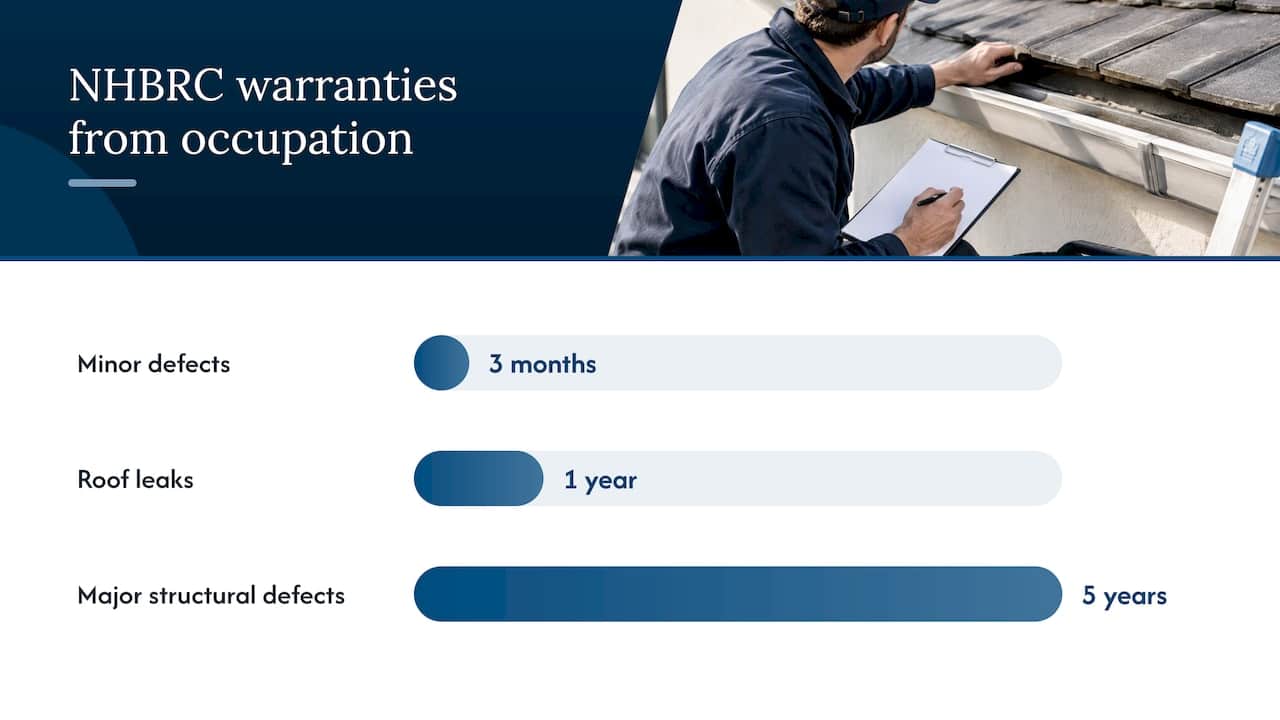
If you are buying a newer home, find out whether it was enrolled with the National Home Builders Registration Council. The NHBRC warranty framework gives the owner cover from the date of occupation: three months for minor defects, one year for roof leaks and five years for major structural defects. These warranties apply only to enrolled homes, and the clock runs from occupation, so a roof leak on a house that is already two years old falls outside the roof leak period. Ask for the enrolment details and the occupation date, and do not assume an older or informally built property has any such cover.
What a roof inspection costs, and what it saves
Professional inspection is cheap compared with the problems it finds. According to the Completo 2026 pricing guide, a formal written roof inspection for a residence typically costs R1,500 to R3,500, while a simple visual check without a formal report can start from R450 to R950. Price depends on roof size, number of storeys, access and travel distance.
For an investor, the written report is the one worth paying for. It gives you something to put in front of the seller, the bank or an insurer, and it separates cosmetic issues from structural ones. The same guide notes that a contractor who quotes firmly over the phone without seeing the roof is guessing, which is a useful test when you collect repair quotes later.
A verbal “it looks fine from the ground” is not a report. If you will be negotiating on price, you want photographs, locations, a description of the cause and a recommended repair for each item.
How to use the findings
The inspection is only useful if you act on it. There are four realistic outcomes.
- Clean report. Proceed, and keep the report. It is a baseline for future maintenance and for your own sale.
- Minor defects. Cracked tiles, blocked gutters or a failed flashing. Get a repair quote and ask the seller to fix them before transfer or reduce the price by the quoted amount.
- Major defects. Widespread covering failure, rotten timbers, failed flat-roof waterproofing. Get at least two written quotes from contractors who have physically inspected the roof, then decide whether the discount makes the deal worth it.
- Compliance or structural doubt. Unapproved alterations or signs of long-term water damage to the structure. Treat this as a reason to pause until the seller produces documents, or to walk away.
A worked example
Suppose a rental property is listed at a price that gives you a comfortable yield. The inspector finds failed flashing at a wall abutment, damp insulation in the roof void and a patched ceiling in the main bedroom. The flashing is a modest repair. The wet insulation and timber staining suggest the leak has been active for some time, so you ask for the timbers to be checked and for a quote covering both the repair and any replacement. Armed with those figures, you can ask the seller to cut the price or repair before transfer. Without the report, you would have bought the roof at face value and discovered the rest in your first winter, with a tenant on the phone.
The numbers above are illustrative, not a quote: every roof differs, and the only reliable figure comes from a contractor who has been up and looked.
Our perspective: what we see when owners skip the roof
We connect property owners with vetted waterproofing professionals, and the pattern behind most urgent enquiries is the same. The leak was knowable. A stain had been painted over, a flashing was already lifting, or a flat roof had been ageing quietly for years. The new owner just never had anyone look.
So our advice to investors is to treat the roof as a negotiation tool, not a formality. Ask for the inspection before the offer is final, make sure the inspector enters the roof void, and ask each contractor the questions that separate competent from careless: are they properly experienced, can they show licensing where it applies, and what warranty do they give in writing? Those are the same questions we encourage every client to ask, and we cover them on our site because a cheap repair done badly costs more than a proper one done once.
We also encourage owners to look at the whole building envelope. Roofs, concrete decks, balconies, bathrooms and foundations all rely on waterproofing, and the same defect often appears in more than one place. Our guide on inspecting a house and checking the roof’s condition is a good companion to this article, and the roof waterproofing checklist helps you follow up on what the inspection finds.
— Eben
After the inspection: getting repairs priced properly
Once you have a report, you need quotes you can compare. Ask every contractor to quote against the same list of defects, and expect them to go onto the roof before they price. Check that the quote states the method and materials, what is excluded and what guarantee applies. Avoid quotes that fix only the visible stain, since the cause may be elsewhere along the timbers.
If you are weighing repair against replacement, our guides on roofing repair tips to avoid full replacement and the step-by-step roof leak repair guide explain what a sound repair involves. For flat roofs and decks, the South African waterproofing standards owner guide sets out what to ask about standards and workmanship.
Need a roof or waterproofing assessment?
If an inspection has turned up leaks, failing waterproofing or a roof you are unsure about, we can connect you with vetted waterproofing professionals for residential, commercial and industrial properties, including roof, basement, bathroom, foundation and concrete deck work. Request a quote through Pro Waterproofing and have the contractor assess the roof in person before you commit to a price.
FAQ
Is a roof inspection compulsory when buying property in South Africa?
No. A professional inspection is not required by law, but it is strongly recommended. Because most sales are voetstoots, defects you could have found with a diligent inspection are generally your responsibility after transfer.
How much does a roof inspection cost?
According to 2026 pricing guidance, a formal written inspection of a residence typically costs R1,500 to R3,500, and a basic visual check can start at R450 to R950. Cost rises with roof size, height and difficult access. Commercial and industrial roofs need a separate quote.
Can a ceiling with no stains still have a leaking roof?
Yes. Water can travel along roof timbers well away from its entry point, and a stain may appear far from the actual leak, or not at all until the timbers are saturated. That is why the inspector should enter the roof void rather than judge from the rooms below.
Does a new home have a roof warranty?
Only if it is enrolled with the NHBRC. Enrolled homes carry cover from the date of occupation, including one year for roof leaks. Ask the seller for enrolment and occupation details, and speak to the NHBRC or a conveyancing attorney if the position is unclear.
What should I do if the seller cannot show an Occupation Certificate?
Pause the purchase and ask the local municipality’s building control office what is on record. Unapproved alterations can lead to retrospective plans or demolition at the owner’s cost, so get the position clarified before you sign.
Sources
- Roofing Costs South Africa: What You’ll Actually Pay in 2026, Completo
- Warranty Cover, NHBRC
- Buying or selling your property, City of Cape Town
- Building Control: Why? When? How?, Drakenstein Municipality
- The Buyer’s Duty to Inspect Property, Golden Homes