
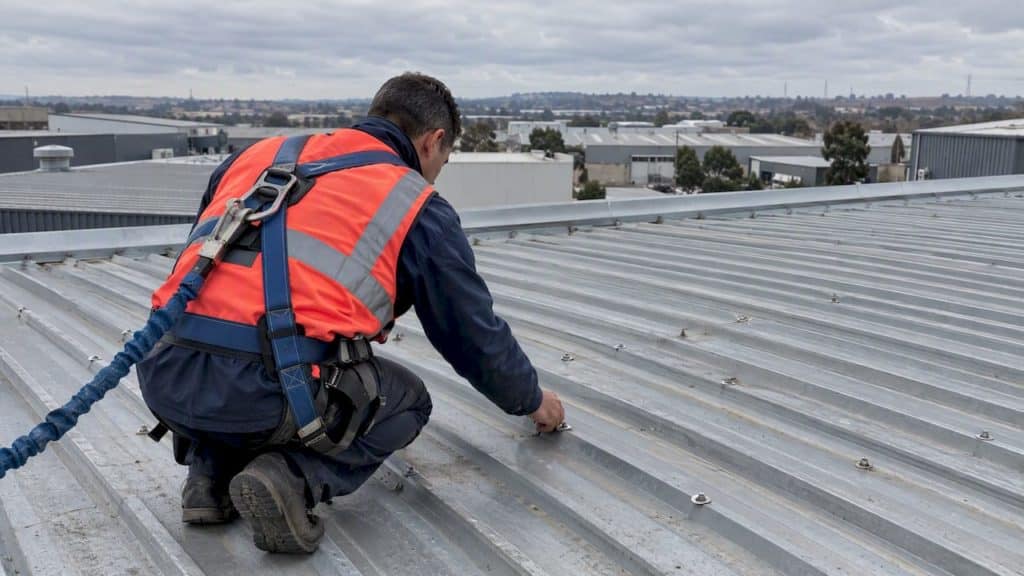
Industrial roof leaks in Gauteng can have several causes, including poorly specified or corroded sheeting, failed or unsuitable fasteners, ponding, and damaged flashings or penetrations. Storm or impact damage may also contribute. Start your inspection there. Because a leak is usually a symptom, a professional inspection is often needed to stop it coming back.
TL;DR:
- Zinc electroplated screws may carry up to five times less coating mass than hot dip galvanized alternatives, so specify the latter in repair quotes.
- Roof guidance recommends a minimum slope of about 1 in 30, or 2 degrees, where possible, because lower falls encourage ponding and strain laps.
- Call a specialist when leaks recur, corrosion is widespread, structural movement appears, or ponding persists; request standards compliance, fastener type, coating warranty, and watertightness testing.
- After major storms, inspect fasteners, flashings, valleys, and drainage, clear debris, photograph damage, and log dates and repairs to reveal recurring failures.
- Before adding rooftop equipment such as photovoltaic systems, compare its expected lifespan with the roof’s remaining service life to avoid accelerating corrosion and maintenance costs.
Table of Contents
- 1. Specification, coatings and workmanship go wrong first
- 2. How corrosion and fastener choices accelerate leaks
- 3. Design, drainage and ponding: why geometry matters
- 4. Inspection and maintenance checklist for facility teams
- 5. When to call a specialist and what to put in the brief
- 6. Practical priorities for Gauteng facility managers
- 7. How we can help
- FAQ
- Sources
1. Specification, coatings and workmanship go wrong first
Premature failure in industrial zones is often linked to inappropriately specified or low-quality materials sold on price rather than technical standards. A coil-coated sheet that looks identical to a compliant product may not meet the same technical standards, so check its specification rather than judging by appearance. Buying against a standard, not a quote, is the cheapest protection you have.
Workmanship matters just as much. Poorly sealed laps, side-laps that are too tight or too loose, and fixings placed in the wrong position all let wind-driven rain past the sheet. A common maintenance mistake is relying on paint-based “lap-and-seal” waterproofing for structural leaks, which hides the symptom without addressing the cause. Our guide to metal sheet roof waterproofing methods that last covers what a durable repair involves.
Walk the roof and look for these signs:
- Localised rust streaks running down from fixings or laps
- Peeling, blistering or chalking coatings
- Cracked, shrunken or missing sealant at laps and penetrations
- Staining on the underside of sheets or on insulation
- Sheets that have lifted or deformed around fasteners
2. How corrosion and fastener choices accelerate leaks
Fasteners are small, but they are where many leaks begin. Guidance notes that zinc electroplated fasteners marketed as “galvanized” may carry up to five times less coating mass than hot-dip galvanised fasteners. The practical result is a screw head that rusts, a washer that loses its seal and a hole that starts weeping long before the sheet itself is finished.
Coating failure follows a familiar pattern. The paint or metallic coating thins or cracks, steel is exposed, and rust spreads under the film. Look for blistering, white or red staining and flaking at edges and cut ends.
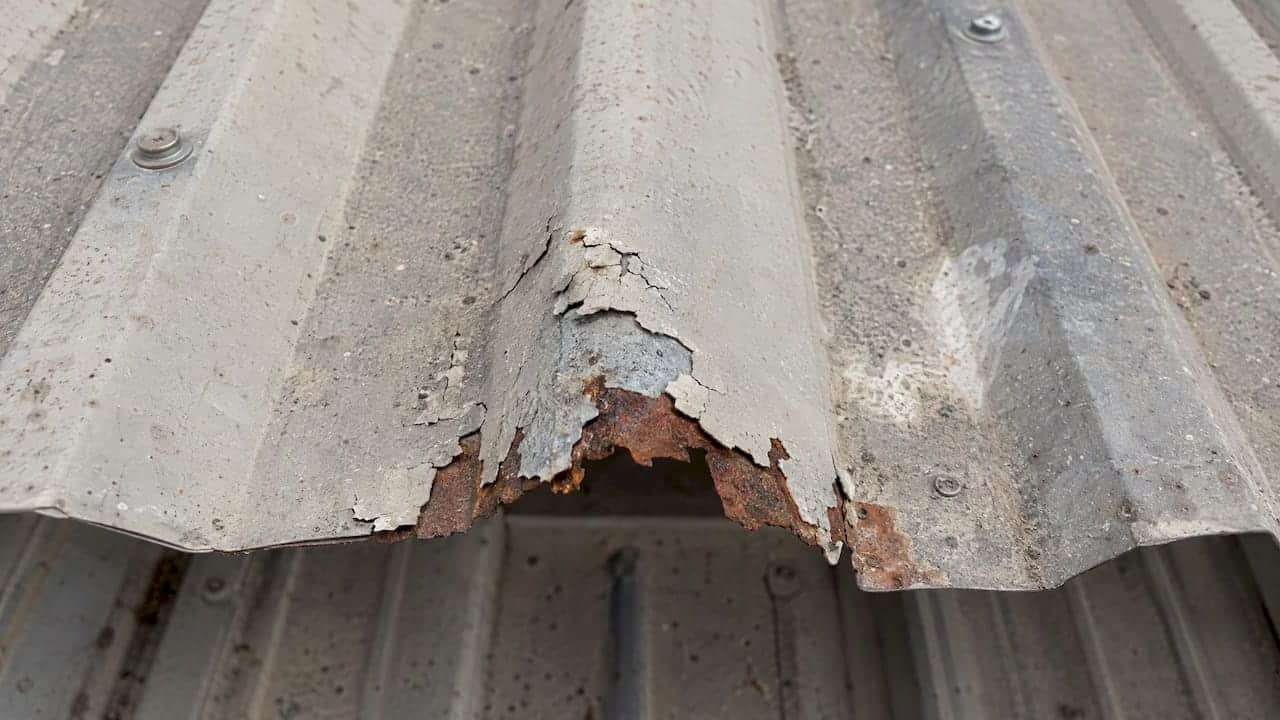
Be careful when adding load to an ageing roof. Property managers often overlook the baseline corrosion environment: if the sheeting’s remaining life does not match the lifespan of new rooftop equipment such as PV, the installation can accelerate corrosion and long-term maintenance costs. For a technical inspection, record coating thickness, underlying rust and the condition of fastener heads and washers.
3. Design, drainage and ponding: why geometry matters
Water that cannot leave the roof will find a way in. Design guidance suggests a minimum slope of about 1 in 30 (2°) to reduce ponding risk. Where settlement, sagging purlins or low fall let water sit, the coating degrades faster and laps are tested constantly.
Valleys and laps have limits. Their capacity depends on valley width and depth, roof pitch, rainfall intensity, roof length and nearby penetrations. Valleys that overfill push water sideways under laps.
Fastener setting is the last piece. Over-compressed washers split and under-compressed ones do not seal. Fixings driven at an angle deform the sheet and leave gaps. Screws should go in perpendicular, with the washer seated evenly.
For flat or low-slope areas, see our notes on flat roof waterproofing methods.
4. Inspection and maintenance checklist for facility teams
Run these checks routinely and after every major storm:
- Look for corrosion spots, rust streaks and flaking coatings across sheets and edges.
- Check for loose, backed-out or over-tightened fasteners and cracked washers.
- Inspect flashings and penetrations for displacement, gaps or failed sealant.
- Clear gutters, downpipes and valleys of debris, and note where water pools after rain.
- After storms, remove debris at once, fit temporary seals where needed, and photograph each location.
- Periodically measure coating thickness, confirm fastener type, and examine laps and valleys closely.
Moss and dirt hold moisture against coatings, so surface cleaning helps prolong coating life; commercial roof cleaning services show what regular surface maintenance looks like. For locating a leak before you call anyone, our guide on how to identify roof leaks helps.
Pro Tip: Keep a simple log with photos, dates and actions, so recurring failures at the same spot stand out.
5. When to call a specialist and what to put in the brief
Bring in a specialist when leaks repeat after repairs, corrosion is widespread, there is any sign of structural movement, or water keeps ponding. Patching in those cases only buys time.
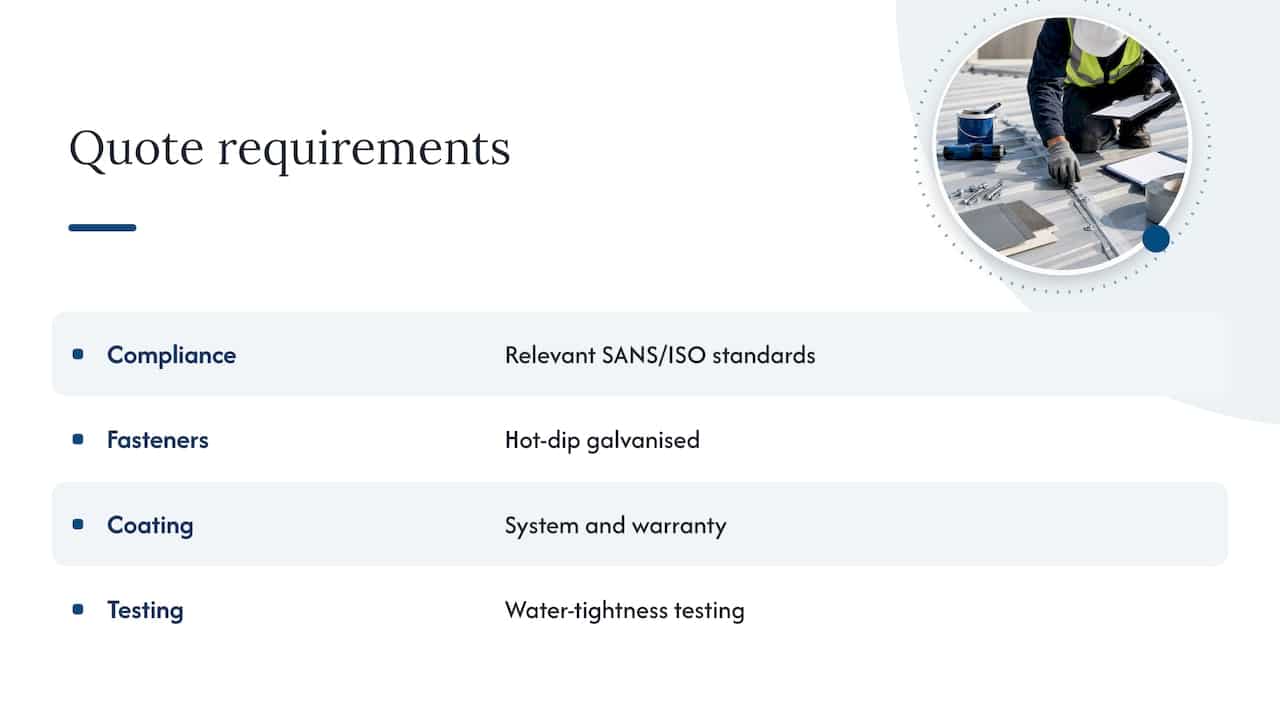
Make quotes comparable by specifying the same items for everyone: compliance with the relevant SANS/ISO standards, hot-dip galvanised fasteners, the coating system and its warranty, and water-tightness testing. Large industrial tenders already follow this logic, asking for weatherproof, structurally stable and durable roofs and contractors with proven technical experience.
Ask each contractor about their industrial roof experience, how they test, and the order in which they would carry out remedial work. Finally, match the roof’s remaining life to any planned rooftop equipment before anything is installed. For prevention planning, see our roof leak prevention strategies.
6. Practical priorities for Gauteng facility managers
Specification and routine inspection beat ad hoc patching every time. On Gauteng industrial sites, the usual mistake is chasing the drip on the floor with sealant while the real fault, a failed fastener line or a ponding valley, stays untouched. Treat every leak as a symptom that needs an investigation, not a repair ticket.
— Eben
7. How we can help
We offer waterproofing for industrial properties, so you know what is wrong before you commit to a fix. A leak that returns after patching is exactly the kind of problem we are set up to investigate.
- Request a site inspection of your roof
- Ask for a detailed quote to compare remedial options
- Get specification advice for new or replacement sheeting
Visit our waterproofing service page or request a quote to get started.
FAQ
How can I stop my roof from leaking?
Start by finding the source: check fasteners, laps, flashings and ponding areas. Replace failed fasteners with hot-dip galvanised ones, reseal damaged flashings and clear drainage. Repeated leaks usually need a professional assessment, because surface sealing alone may only give temporary relief if the cause is corrosion or installation fatigue.
Do metal roofs leak more than shingles?
Not inherently. Metal roofs leak mainly where fasteners, laps and flashings fail, so correct specification and installation decide the outcome. Well-specified sheeting with proper fixings can perform very well, while poorly specified sheeting corrodes early.
What is the best brand of roofing?
There is no single best brand, so judge the product by its specification instead. Check compliance with the relevant standards, the coating system, the fastener type and the warranty offered, as sheeting sold on price rather than standards is a common cause of early failure.
Does a minimum roof slope really matter?
Yes. Guidance suggests designing for a minimum slope of about 1 in 30 (2°) where possible, because less fall encourages ponding, which shortens coating life and stresses laps.