
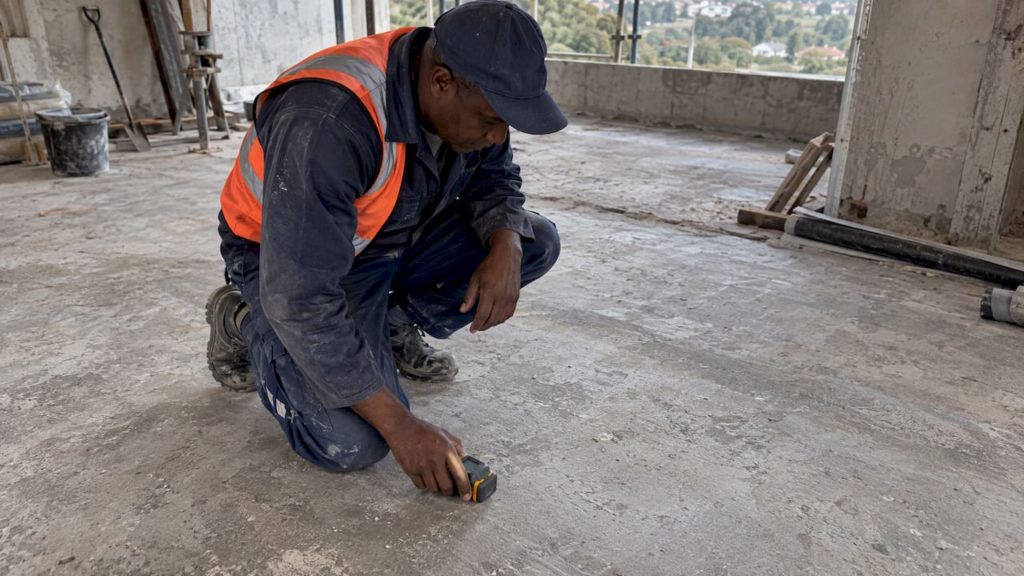
Substrate preparation makes the surface or medium ready to accept a coating or biological inoculum by ensuring soundness, the correct moisture state and freedom from contaminants that would otherwise block adhesion or growth. Across construction, resin flooring and mushroom cultivation, the same four jobs recur: creating a mechanical key for adhesion, controlling moisture, removing contamination and conditioning porosity or structural support. Readers should look for documented moisture readings, surface profile checks and manufacturer thresholds before any coating or inoculation begins.
TL;DR:
- Proper substrate preparation includes mechanical profiling, contamination removal, and moisture control, which are essential for effective bonding and growth.
- Mechanical methods like grinding and shotblasting are recommended based on substrate condition, while verifying moisture levels with written readings prevents adhesion failure.
- Organic substrates for mushroom cultivation must be hydrated to field capacity through pasteurization or lime treatment, with moisture assessments via squeeze tests or moisture meters.
- Re-testing after any preparation step is critical; failure to confirm substrate readiness leads to common issues such as coating delamination, dampness, or mould contamination.
- Contractors should provide documented moisture and surface profile results before applying coatings or membranes, and property owners should verify licenses, insurance, and warranties.
Table of Contents
- How substrate preparation works: the mechanics and the science
- Substrate preparation for construction and waterproofing
- Substrate preparation for resin flooring and coatings
- Substrate preparation for mushroom cultivation
- How to assess substrate readiness: tests and acceptance criteria
- Common causes of failure and practical troubleshooting
- Expert perspective and contractor checks from a professional waterproofing service
- When to hire a specialist and what to expect from them
- Professional waterproofing services can help with substrate readiness
- FAQ
- Sources
How substrate preparation works: the mechanics and the science
Coatings bond through a mix of mechanical interlock and surface chemistry. A roughened concrete or screed surface gives a coating more physical key to grip, while a smooth, glazed surface starves it of that grip regardless of how good the product is. Moisture moves through materials by diffusion, absorption and permeation, and each pathway affects when and how a coating or membrane should go on. Porosity governs available surface area: a coating needs enough open texture to anchor into, while fungal mycelium needs enough internal surface and air space in an organic substrate to colonise efficiently.
- A polished concrete floor resists bonding until it is mechanically profiled.
- A straw bale that is too compacted limits airflow and slows colonisation.
- A screed that looks dry on the surface can still be wet several millimetres down.
Poor substrate preparation and uncertain substrate moisture conditions are the main causes of premature bond failure in protective concrete coatings, which means the coating formulation is rarely the real culprit when adhesion fails on site.
Substrate preparation for construction and waterproofing
Before any membrane or coating touches concrete or masonry, the surface has to be sound, clean and at an acceptable moisture level. The right mechanical method depends on the substrate’s condition and the coating system specified.
- Diamond grinding suits floors needing a fine, even profile with minimal material removal.
- Shotblasting removes laitance and opens pores quickly across large areas.
- Wire-brushing works well for lighter contamination and gave strong adhesion results in practical testing, according to the UCT research on surface coatings.
- Scarifying is reserved for heavily damaged or uneven substrates needing deeper correction.
Laitance, oils, salts and failed old coatings all need removing before fresh material goes down, often through a combination of mechanical abrasion and degreasing. Curing time matters just as much as cleaning: guidance commonly used in the industry recommends new screeds and concrete require multi-week curing times before preparation, typically several weeks depend on the element before aggressive preparation begins, and some membrane systems specify a low moisture limit specified by some membrane systems. Verification should include a moisture meter reading, a calcium carbide test where precision matters, and a pull-off adhesion test on a trial patch. Our guide to surface preparation for waterproofing covers the sequence contractors typically follow on site.
Pro Tip: Always ask for the moisture reading in writing before a membrane goes down, not just a verbal assurance that the slab “feels dry”.
Substrate preparation for resin flooring and coatings
Resin systems demand a tighter tolerance than most paint coatings because delamination tends to show up fast and spreads under traffic. The concrete needs a mechanically created profile, usually achieved by grinding or shotblasting, so the resin has enough anchorage to resist peel forces.
- Degrease and vacuum the surface before priming to remove oils, dust and loose particles.
- Run a simple tape test or calcium carbide check to confirm the slab sits within the resin manufacturer’s moisture limit.
- Measure relative humidity in the slab where a quick surface check is not conclusive enough.
- Reprofile and re-test any area that fails before re-applying primer.
Our guide to liquid waterproofing membranes for concrete sets out moisture testing steps that apply equally well before resin primer goes on. For roofs and boards exposed to standing water, coating chemistry also matters: one comparison of silicone against acrylic coatings under ponding conditions found each chemistry needs a different substrate approach to hold up over time.
Substrate preparation for mushroom cultivation

Bulk substrates for mushroom growing need conditioning rather than sterilising. Pasteurisation reduces competitor organisms without destroying every microbe, which actually helps many species establish faster than a sterile medium would. Hot water pasteurisation typically runs at temperatures from 60 to 80 degrees Celsius for a duration of one to two hours, a range that knocks back moulds and insect eggs while leaving beneficial thermophilic bacteria intact. Cold lime pasteurisation works differently: hydrated lime raises pH to a strongly alkaline level generally in the range of 11 to 12, creating an environment competitors cannot tolerate, without needing heat at all. A hybrid approach called Bundu Tek combines both ideas, pairing boiling-water pasteurisation with calculated water addition to reach a target moisture without draining, aiming for moisture around 2 to 5% below maximum field capacity for more consistent batches.
Moisture is judged against field capacity, the point where the substrate holds as much water as it can without dripping. Field capacity is the target moisture state for mushroom substrates, where the substrate is moist but not dripping, and getting this wrong is one of the most common causes of failed grows. The squeeze test checks it directly: a handful of properly hydrated substrate should yield only a few drops when squeezed hard, not a steady trickle.
- For CVG (coir, vermiculite, gypsum) mixes, hydrate the coir fully, mix in vermiculite and a small proportion of gypsum, then squeeze-test before bagging.
- For straw, chop it, soak or pasteurise it hot, drain thoroughly to field capacity, then cool before inoculating.
- Re-check moisture after draining, since straw continues shedding water for some time after it is pulled from the bath.
How to assess substrate readiness: tests and acceptance criteria
A readiness check should never rely on a single observation. Visual inspection catches obvious contamination or surface damage, but it says nothing about moisture sitting below the surface.
- A squeeze test is used to assess substrate moisture near field capacity in organic substrates without requiring laboratory equipment.
- A moisture meter or calcium carbide test gives a percentage reading for concrete and screeds.
- A tape or peel test gives a fast indication of surface moisture before resin priming.
- A pull-off adhesion test measures bond strength directly on a cured sample patch.
Research into protective coatings on concrete found that unknown moisture conditions at the time of application were a primary cause of adhesion failure, which is why a documented reading matters more than an estimate. Any substrate that fails a moisture or adhesion check should be reprofiled, redried or re-pasteurised and tested again before work continues. When a reading sits close to the limit rather than clearly inside or outside it, pause and run a second method to confirm before committing to the full application.
Common causes of failure and practical troubleshooting
Most failures trace back to one of the same four roles not being met properly, whatever the material.
- Adhesion loss or blistering usually points to residual moisture or a contaminant trapped under the coating, so strip back, re-clean and re-test before reapplying.
- Wet spots or persistent dampness in concrete mean the cure period or drainage was insufficient, so allow more time and re-test with a moisture meter.
- Contamination in mushroom substrate, often shown as green or black mould, usually means pasteurisation temperature or duration fell short, so re-pasteurise and hydrate more carefully next time.
- Anaerobic pockets in organic substrates come from over-hydration, so add dry vermiculite to buffer excess moisture and improve air exchange.
The pattern worth remembering is test, isolate the cause, correct it, then re-test. Skipping the final check is how a one-off mistake becomes a recurring problem.
Expert perspective and contractor checks from a professional waterproofing service
An expert emphasises that a contractor should hand over proof of a moisture reading, not just an assurance. Ask to see the surface profile method used, whether grinding, shotblasting or wire-brushing, and confirm it matches what the coating manufacturer specifies.
- Request a written moisture test result before any membrane or coating is applied.
- Check the contractor’s licence and insurance before signing anything.
- Ask what warranty covers the finished waterproofing or coating work.
Our step-by-step guide to preparing for waterproofing sets out what property owners should expect at each stage.
When to hire a specialist and what to expect from them
Structural cracking, unexplained damp or a large resin or waterproofing job generally call for a specialist rather than a confident guess. Smaller, low-risk patch repairs are reasonable for an experienced DIYer to attempt, provided ventilation and basic safety precautions are in place. Whoever does the work, ask for a documented moisture or readiness test before the coating goes on: it is the one piece of evidence that actually tells you the job was done properly.
— Eben
Professional waterproofing services can help with substrate readiness
Getting a slab, roof or wall properly prepared before waterproofing goes on is the difference between a job that lasts and one that needs redoing within a year. Some services connect property owners with vetted contractors who document moisture readings and surface profiling rather than skipping straight to application.
- Ask any contractor for their moisture test result in writing before work starts.
- Confirm the licence, insurance and warranty cover before signing.
- Request details of the surface preparation method planned for your specific substrate.
Get a quote for waterproofing services and ask us the same questions you would ask any contractor.
FAQ
What are the types of substrates?
Substrates vary by context: construction and waterproofing substrates are typically concrete, masonry or screed, resin flooring substrates are prepared concrete slabs, and mushroom cultivation substrates are organic materials such as straw, coir or hardwood sawdust. Each type needs its own preparation method suited to its material properties.
What is the substrate in mushroom cultivation?
In mushroom cultivation, the substrate is the organic material, commonly straw, coir or sawdust, that is pasteurised and hydrated to host the mycelium as it grows. Pasteurisation and correct hydration to field capacity reduce competing organisms while supporting healthy colonisation.
What does “substrate” mean in engineering?
In engineering and construction, a substrate is the underlying surface, typically concrete, masonry or metal, onto which a coating, membrane or finish is applied. Its condition, including moisture content and surface profile, directly affects how well anything applied to it will bond and last.
What does substrate mean in painting?
In painting and coatings, the substrate is the surface being painted, and its cleanliness, dryness and texture determine how well the paint adheres and how long it holds up. A substrate with contamination, excess moisture or a surface too smooth for the product specified is a common cause of early paint failure.
Sources
- Waterproofing concrete slabs (Afrisam PDF)
- Growing mushrooms: microbial activity in substrate (Penn State Extension)
- Concrete surface coatings and the influence of substrate moisture condition on bond strength (UCT open access)