
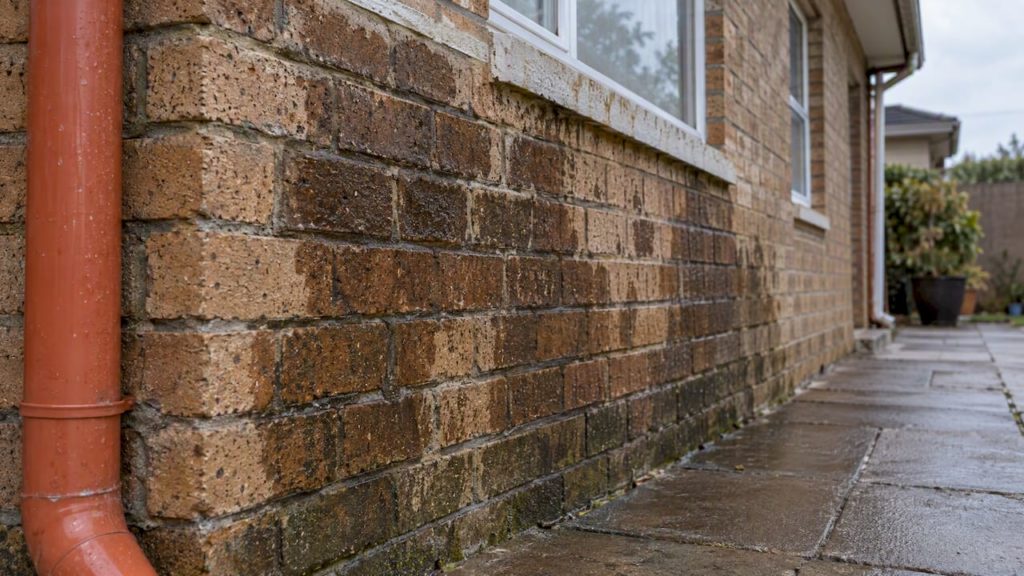
External walls absorb water because the materials they are built from are porous, and because water has several routes into them: up from the ground by capillary action, in from the sky through degraded paint, cracks and failed joints, and across from leaking pipes or blocked drainage. Most damp walls have more than one of these going on at once, which is why painting over a stain so rarely works.
This guide explains each mechanism in plain terms, how to tell them apart, and what a proper fix looks like on South African homes and commercial buildings.
TL;DR
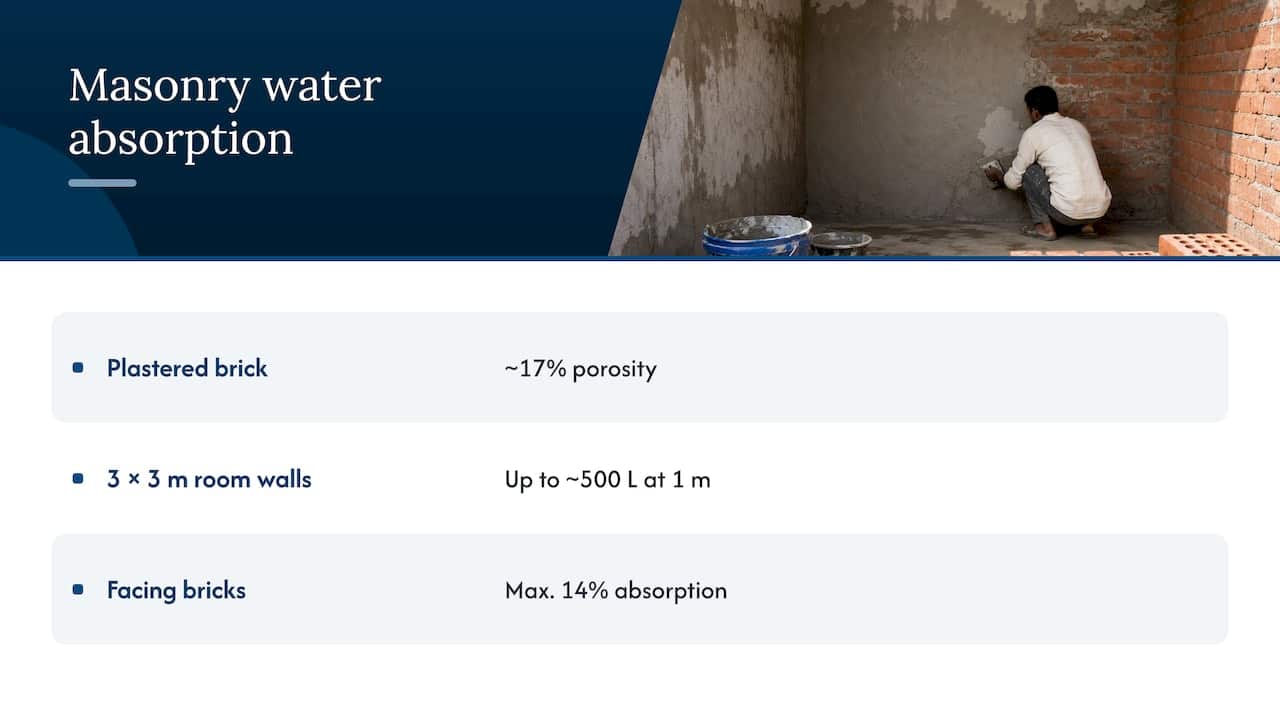
- Brick, mortar and plaster are porous. A plastered brick wall has a porosity of around 17%, so it can hold a surprising volume of water.
- Water enters from below (capillary rise, bridged or failed damp-proof course), from outside (rain through cracks, worn paint, poor flashings) and from within (plumbing leaks, condensation).
- Soil that looks dry still holds enough moisture to feed capillary action, so drainage and the damp-proof course matter more than climate.
- Find the source before you repair. Treating the symptom, such as peeling paint, lets the cause carry on damaging the structure.
- Early repair costs far less than dealing with decayed plaster, salt damage and mould later.
Table of Contents
- Walls are porous by nature
- The main routes water takes into an external wall
- How to tell which cause you have
- What happens when the water stays in
- Why painting over it fails
- What a proper fix looks like
- Our perspective
- Get your walls assessed
- Preventing it next time
- FAQ
- Sources
Walls are porous by nature
A wall is not a sealed barrier. Brick, concrete block, mortar and plaster all contain tiny voids, and water is drawn into those voids much as a sponge draws in a spill. The CSIR’s introductory guide to damp in buildings puts a number on it: plastered brick has a porosity of roughly 17%. In its worked example, a small room of 3 m by 3 m with 250 mm thick walls can hold up to about 500 litres of water when the walls are saturated to a height of one metre, and the figure grows as the dampness climbs higher.
That hidden storage is why a wall can stay damp for weeks after the leak is fixed. It is also why a wall that appears only slightly stained may be carrying far more water than you would guess.
Not all masonry is equal. Building specifications in South Africa set limits on how absorbent facing bricks may be: the ASAQS model preambles used by the CSIR require water absorption, tested to SANS 227, not to exceed 14% for facing bricks. Cheaper or poorly fired units, soft mortar and thin plaster coats can all absorb more than that, and an unprotected face will drink rain during every storm.
The main routes water takes into an external wall
1. Capillary rise from the ground
This is the classic cause of rising damp. The CSIR guide explains that the minute spaces between masonry particles and in mortar joints behave like very thin tubes. Surface tension holds a film of water around soil particles and pulls moisture up through those tubes, and it keeps doing so even when conditions look dry.
A common misconception is that dry soil holds no moisture. In practice, ground soil almost always carries enough water to drive capillary action, whatever the local climate. That applies in Gauteng’s dry winters as much as in the Western Cape’s wet ones.
The tell-tale signs are a damp band on the lower part of the wall, a tide mark, peeling paint at skirting height and white salt deposits.
2. A failed or bridged damp-proof course
Modern walls should contain a damp-proof course (DPC), a continuous barrier of damp-proofing material near the base of the wall that stops moisture travelling upwards. SANS 10400-K is the national standard for walls under the National Building Regulations. The CSIR material notes that DPC joints should be lapped by at least 150 mm, so a gap or short lap is a weak point from day one.
The DPC can fail in several ways:
- It was never installed, or was installed with gaps and poor laps.
- It has been punctured or torn during later building work.
- It is older buildings with no DPC at all, or with a degraded one.
- It has been bridged, meaning something has given water a path around it.
Bridging is the most common, and the easiest to prevent. Heaped garden soil, raised flower beds, paving laid too high, or a render coat that runs down past the DPC will all let water pass over the barrier. If the ground level outside is above the DPC, the wall is effectively sitting in wet soil.
3. Rain through the face of the wall
When the damp is higher up, or worst on the side that takes the weather, think penetrating damp. Rain hits the wall, and anything that is cracked, thin or worn gives it a way in. Typical culprits:
- Paint that has chalked, blistered or peeled, leaving bare plaster exposed.
- Hairline and structural cracks. Our article on wall cracks and what causes them explains which cracks are cosmetic and which are not.
- Crumbling mortar joints and failed sealant around windows and doors.
- Faulty roofing, blocked gutters and broken downpipes that pour water down the wall face instead of away from it.
- Parapets, copings and sills with no drip detail or with cracked cappings.
Window surrounds are a particular trouble spot, because the junction of frame, sill and plaster is hard to seal and moves with temperature.
4. Water from inside the building
Not every damp external wall is an external problem. Plumbing leaks inside a wall cavity or chase will saturate masonry from within, and the stain looks the same as rising damp. If you suspect a pipe, a useful comparison is how a shower leaking behind a wall shows itself: staining on the opposite face, soft plaster, and damp that appears regardless of the weather. In a South African home the same logic applies to geyser lines, bathroom supply pipes and waste lines.
Condensation is the other internal cause. Warm, humid air meets a cold wall surface and deposits water. It tends to show on cold external walls, in corners and behind furniture, and it improves with ventilation. The South African health department’s guideline on domestic indoor air quality lists inadequate ventilation as a factor that lets humidity build up and mould grow.
5. Poor ground and site drainage
Water that collects against a wall will find its way in. Poor falls on paving, a patio that slopes toward the house, blocked storm-water outlets and a lack of sub-soil drainage on sloping plots all load the base of the wall with water. Clayey soils make it worse: soils with swelling clay change volume with the seasons, shrinking and then swelling, as the University of Pretoria’s terrain evaluation criteria describe. That movement can open cracks that then admit more water.
How to tell which cause you have
The pattern of the damp tells you a lot. This table is a starting point, not a diagnosis.
| What you see | Likely cause | First thing to check |
|---|---|---|
| Damp band up to about a metre from the floor, tide mark, salts | Rising damp, failed or bridged DPC | Soil, paving or render above the DPC |
| Patches that appear after rain, worst on the weather side | Penetrating damp | Cracks, paint, joints, gutters, window seals |
| Damp at ceiling height or under parapets | Roof, gutter or coping failure | Roof edges, flashings, downpipes |
| Constant damp near a bathroom or kitchen wall | Plumbing leak | Pipes, shower trays, geyser connections |
| Wet patches and black mould in corners and behind furniture | Condensation | Ventilation and wall temperature |
| Damp at basement or retaining wall level | Hydrostatic pressure, poor drainage | External drainage and waterproofing membrane |
Experts stress that tracing the source matters, because damp is often mistaken for condensation when the real problem is capillary moisture from the ground or through the wall fabric. If you can, watch the wall over a dry spell and a wet spell. Damp that tracks the rain points outside. Damp that stays put points to the ground or to a pipe.
Our article on signs of damp walls and how to solve them goes deeper on the visual clues, and the guide on how to reduce dampness in a room covers what to do indoors in the meantime.
What happens when the water stays in
The stain is the least of it.
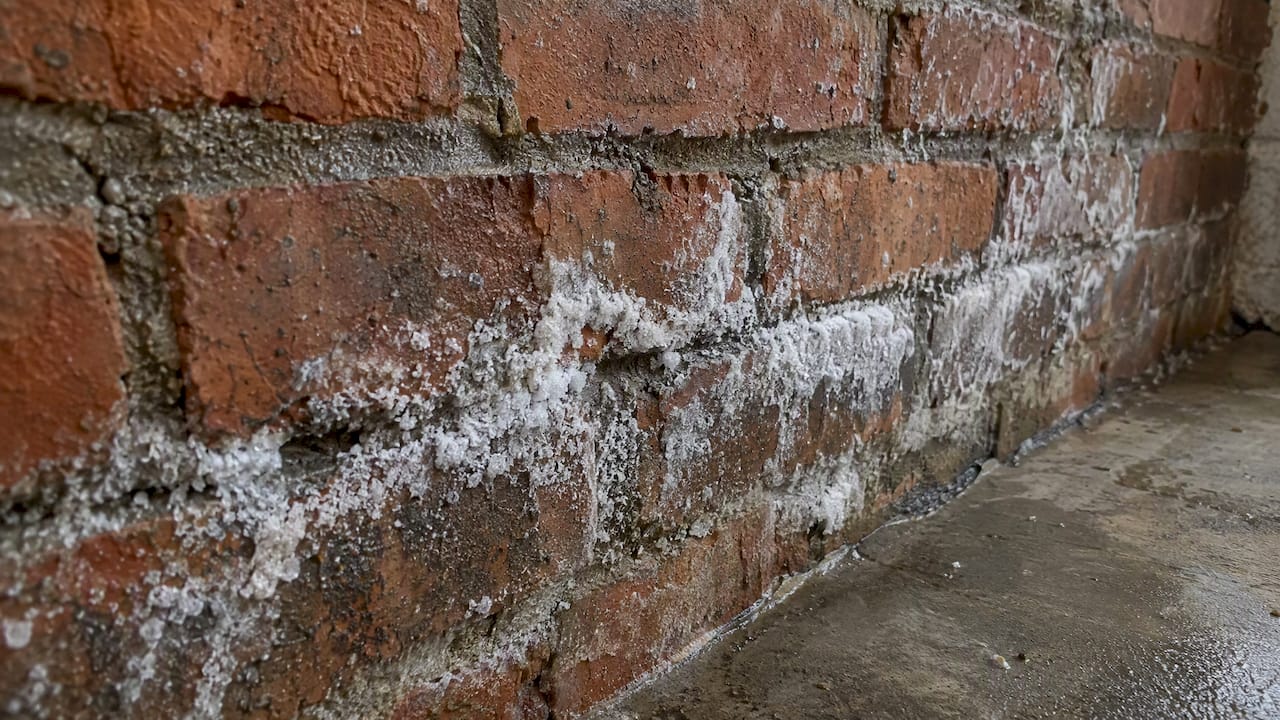
Salts and efflorescence. Water carries soluble salts from the building fabric and garden soil. The water evaporates, the salts stay, and they form white, furry deposits called efflorescence. The CSIR guide notes that over time they can damage floors and cause bricks to disintegrate. This is why plaster on a damp wall keeps blowing off however often you repaint.
Mould and health. The Department of Health guideline identifies mould as a recognised health hazard linked to respiratory illness and allergies, and names moulds such as Stachybotrys chartarum and Chaetomium globosum as indicators of serious moisture problems in buildings. If someone in the home has asthma or another respiratory condition and you can see or smell mould, speak to your doctor and deal with the moisture source promptly rather than just wiping the surface.
Structural and finish damage. Wet masonry, rotting timber lintels and door frames, corroded reinforcement and ruined internal finishes follow. Fixing a leaking roof or wall early is almost always cheaper than repairing what the water does when it is left to migrate through the structure.
Why painting over it fails
A specification for waterproof coatings gives a useful benchmark. In the CSIR’s architectural project specification, wall moisture content measured with a hygrometer must not exceed 8% (the BD 2 scale) when the primer is applied. Put plainly, a coating goes on dry walls. If you trap moisture behind paint or a membrane that is not designed for it, the coating blisters and lifts, and the cause is still there.
What a proper fix looks like
The repair should follow the cause.
- Survey first. Have the wall checked by someone who measures moisture and traces the route, rather than guessing. Ask for a written scope of work.
- Remove the bridge. Lower soil and paving below the DPC, cut back render that runs past it, and make sure water falls away from the house.
- Fix the water above. Repair gutters, downpipes, flashings, copings and sealants, and cut out and repair active cracks.
- Treat rising damp where the DPC has failed. Depending on the building, this can mean a retrofitted barrier, replastering with suitable materials and allowing the wall to dry out.
- Waterproof the exterior face where it suits the wall. Breathable, specified coatings or membranes are applied once the substrate is sound and dry. Our guide to exterior waterproofing for homeowners covers the sequence.
- Below ground, waterproof from outside. For retaining walls and basements, see our guides on waterproofing a basement from outside and basement flooding solutions.
Drying takes time. A saturated wall can need weeks or months to dry out depending on thickness, ventilation and weather, so expect the finish to come last.
Our perspective
Most of the walls we hear about were repainted at least once before anyone asked where the water was coming from. Owners understandably want the stain gone. But a quote that starts with paint, and not with a site survey, usually means the real cause has not been found.
Our model is built around that. We connect property owners and managers with vetted waterproofing professionals, and we encourage every owner to ask the same questions of any contractor: what is the diagnosed cause, what is the scope, what experience and licensing sit behind the work, and what warranty is in writing. A 5 to 10 year warranty is a reasonable thing to ask for on a waterproofing job, and a contractor who has genuinely traced the problem will usually be comfortable giving one.
For commercial and industrial owners in Gauteng and the Western Cape, the stakes are bigger: larger facades, parapets and concrete decks, and tenants who notice the damp before you do. The principle does not change. Find the water, stop the water, and only then finish the surface. Our guide to preventing moisture in walls lays out the habits that keep it from coming back, and our overview of South African waterproofing regulations explains the rules that apply.
— Eben
Get your walls assessed
If you have damp external walls and are not sure why, request a quote through Pro Waterproofing. We handle residential, commercial and industrial properties, including roofs, basements, bathrooms, foundations and concrete decks, and we connect you with a vetted contractor who can survey the wall and explain the cause before any work is priced.
Preventing it next time
A few habits go a long way:
- Keep soil, mulch and paving at least below the DPC line, and keep it sloping away from the wall.
- Clear gutters and check downpipes before the rainy season.
- Repaint or recoat before paint fails, and repair cracks as soon as you see them.
- Do not render or tile over the DPC.
- Ventilate bathrooms and kitchens, and do not push furniture hard against cold external walls.
- Fix drips and leaks quickly, because slow plumbing leaks soak walls for months unseen.
FAQ
How do I know if my walls are damp?
Look for peeling or bubbling paint, a tide mark, white salt deposits, a musty smell and dark mould patches. A cold, clammy feel to the wall is another sign. A moisture meter gives a more reliable reading than the eye, so ask for one in any survey.
Is it safe to live in a house with damp?
Persistent damp encourages mould, which the Department of Health links to respiratory illness and allergies. Children, older people and anyone with asthma are most at risk. If you have symptoms, see your doctor, and fix the moisture source rather than just cleaning the mould.
How long does a damp wall take to dry out?
It depends on wall thickness, how much water it holds, ventilation and the season. Thick masonry stores a lot of water, so drying can take weeks or even months after the cause is fixed. Do not paint or coat until the wall has dried to the level the coating manufacturer requires.
Can heavy rain alone make a wall absorb water?
Yes, if the wall face is cracked, the paint has failed or the joints are open. Rain-driven damp tends to appear on the side that takes the weather and often after storms. Repairing cracks, recoating and fixing gutters usually solves it.
Sources
- Introductory guide to damp in buildings, CSIR
- SANS 10400-K: National Building Regulations Part K, Walls
- Guideline for management of domestic indoor air quality, Department of Health
- ASAQS model preambles for trades, CSIR
- Architectural project specification, CSIR
- Terrain evaluation criteria, University of Pretoria