
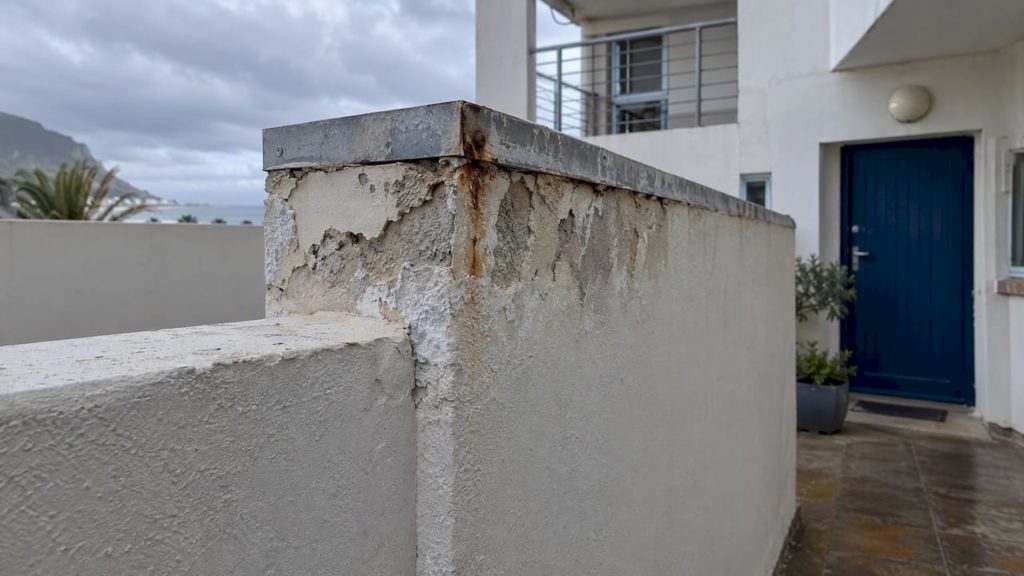
Coastal moisture damage is the gradual breakdown of a building caused by the damp, salty, wind-driven climate along the Western Cape coast. Salt in the air, rain driven sideways into walls and roofs, and persistent humidity all work together. The result is damp walls, peeling paint, corroded metal, mould and, over years, weakened structure. It is not one fault with one fix. It is a set of related problems, and the sooner you tell them apart, the cheaper they are to deal with.
This guide explains what coastal moisture damage is, why the Western Cape is so prone to it, the signs to look for, how it differs from flood damage and ordinary leaks, and what you can do about it.
TL;DR
- Coastal moisture damage is the combined effect of airborne salt, wind-driven rain, condensation and humidity on walls, roofs, concrete and steel along the Western Cape coast.
- South Africa’s national building standard names a southern coastal condensation problem area across the Western Cape, so this is a recognised risk and not a rumour.
- Typical signs are white salt crusts, bubbling paint, musty smells, black mould in corners, rust staining and damp patches that return after repainting.
- Damp can affect health: a Western Cape study linked household dampness to wheeze and rhinitis.
- Prevention starts with correct diagnosis, then the right waterproofing, ventilation and coatings. Painting over damp does not work.
Table of Contents
- What coastal moisture damage actually is
- Why the Western Cape is especially exposed
- Signs your building may have coastal moisture damage
- What it does to the building and the people inside
- Coastal moisture damage, flood damage, leaks and condensation: how to tell them apart
- Our perspective: treat the cause, not the stain
- How to limit coastal moisture damage
- Different buildings, different priorities
- Getting help from a waterproofing professional
- FAQ
- Sources
What coastal moisture damage actually is
The phrase covers several mechanisms that tend to occur together on the coast:
- Salt attack. Salt carried in sea air settles on roofs, walls and steel. It attracts moisture, speeds corrosion and leaves crystals inside masonry and plaster.
- Wind-driven rain. Rain that arrives horizontally during Cape winter fronts is pushed into places that normal rain never reaches.
- Condensation. Warm, humid indoor air meets cold wall surfaces and turns to water.
- Slow drying. High humidity means that once a wall or slab is wet, it stays wet for a long time.
The official view is clear. The South African National Standard for structural design, SANS 10400-B, identifies a Southern Coastal Condensation Problem Area stretching across the Western Cape. It describes this area as prone to severe condensation that can harm structural systems over time if preventive measures are not taken.
In plain words: your building is not just getting wet. It is being worn down by a climate that keeps it damp and keeps feeding it salt.
Why the Western Cape is especially exposed
Winter rain meets cold walls
The Western Cape is a winter-rainfall region. Technical guidance from the clay brick industry explains that in coastal winter-rainfall areas, condensation occurs when warm, humid interior air contacts the colder inner wall surface. Cape winters are cool and wet, homes are often heated intermittently, and windows stay shut. That is the perfect recipe for water forming on inside walls, behind wardrobes and above windows.
Wind and salt do the rest
The south-easterly in summer and the north-westerly fronts in winter carry salt spray and push rain at an angle. Roof edges, flashings, window sills, parapets and wall junctions take the beating. Our own article on how salt air and South Easterly winds corrode Western Cape industrial roofs shows how quickly an exposed roof system can deteriorate when salt is ignored.
Older and cavity-free buildings suffer most
Single-skin walls, flat concrete roofs, old parapets and basements below ground level all give moisture an easy route in. Cavity walls perform better: the clay brick guidance notes that the air gap stops rain reaching the inner wall and helps manage condensation. Where a building does not have that protection, the waterproofing has to work harder.
Signs your building may have coastal moisture damage
Most damage starts quietly. Walk around inside and outside your property and look for the following.
Inside
- Bubbling, flaking or peeling paint, especially low on walls or around windows.
- White, powdery or crystalline deposits on plaster or brick. This is salt left behind as moisture evaporates.
- Black, green or grey mould in corners, behind furniture, on ceilings and around window frames.
- A musty smell that does not go away with airing.
- Damp patches that come back after repainting. This tells you the source of moisture has not been dealt with.
- Water beads on windows and cold walls on winter mornings.
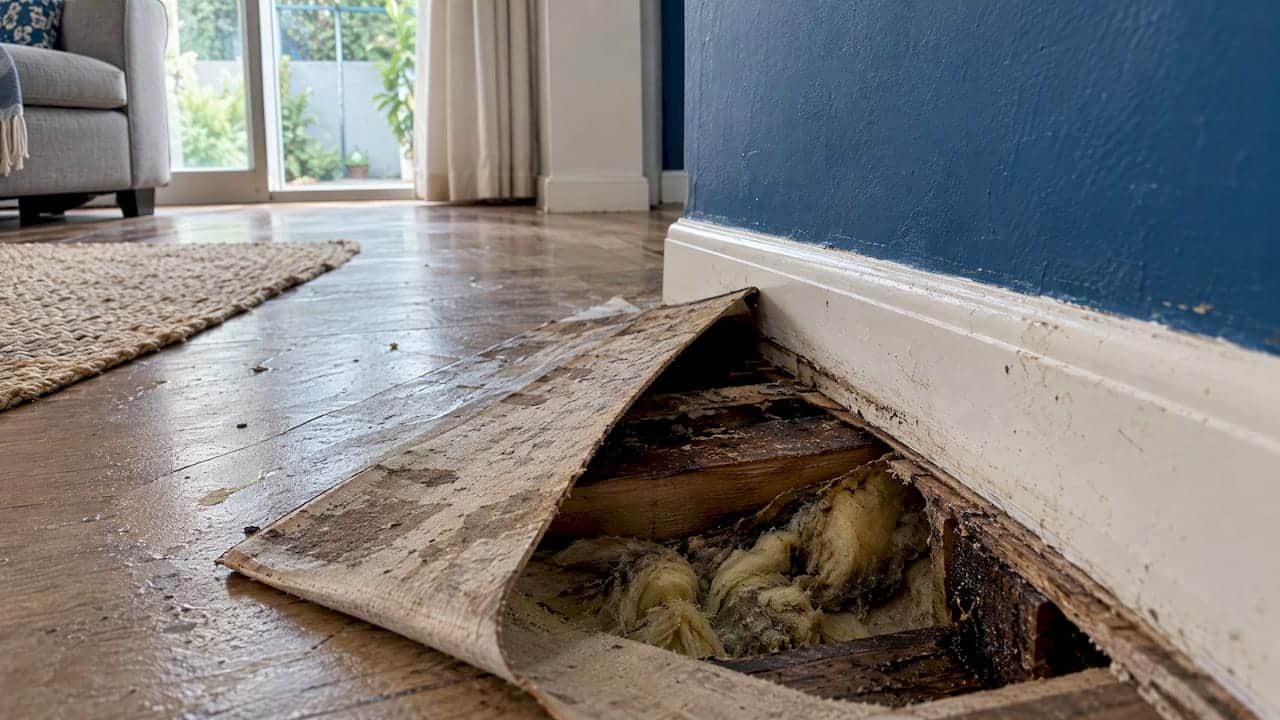
- Swollen skirting boards, warped timber floors and doors that stick.
Outside
- Rust streaks running from fixings, roof sheets, gutters, balustrades or steel lintels.
- Cracked or blistered render and paint, especially on the weather-facing side.
- Hairline cracks that open a little more each winter.
- Lifting or ponding on flat roofs and decks, and sealant that has split around pipes and upstands.
- Dark staining below parapets, window sills and roof edges.
Out of sight
Some damage is only found by looking where few people do: inside ceiling voids, under floor coverings, behind built-in cupboards and at the base of walls in garages and basements. If a wall feels cold and slightly clammy to the hand, take that seriously.
What it does to the building and the people inside
The building
Moisture and salt together are harder on materials than either alone. Typical consequences include:
- Plaster that loses its bond and crumbles.
- Paint systems that fail within a couple of seasons.
- Reinforcing steel in concrete that corrodes, expands and cracks the concrete from within.
- Roof sheets, fixings and flashings that rust through.
- Timber that rots and insulation that stops working once it is wet.
SANS 10400-B expects structural materials to resist corrosive attack by rainwater, atmospheric pollutants and condensation, so that safety and serviceability are not reduced over the design life. When waterproofing has failed or was never done properly, that expectation is no longer being met.
The people
Damp is not only a cosmetic problem. In a peer-reviewed Western Cape study, household dampness was associated with current wheeze and rhinitis, and visible mould growth with rhinitis. If someone in your home has breathing difficulties or allergies and you can see mould, speak to your doctor, and deal with the moisture source at the same time. Cleaning the mould alone is only a temporary measure.
Coastal moisture damage, flood damage, leaks and condensation: how to tell them apart
Not every wet wall is the same problem. Getting this right decides which repair makes sense.
| What you see | Likely cause | Where to look |
|---|---|---|
| Streaming windows, mould on cold walls, no staining from outside | Condensation | North- or south-facing external walls, behind wardrobes, ceiling corners |
| Damp patch after rain, often near a window, roof edge or wall junction | Wind-driven rain or failed flashing or sealant | Sills, flashings, parapets, cracks in render |
| Tide mark low on the wall with salt crust | Moisture rising from the ground, or salts carried in masonry | Skirting level, garage and ground-floor walls |
| Damp that persists in dry weather, plus rust stains | Salt contamination plus slow leak or failed roof membrane | Flat roofs, balconies, concrete decks |
| Widespread wet materials, silt marks, smell after a storm | Flood or storm ingress | Whole floor level, cavities, under floors |
Two useful tests. First, note the timing: if the problem appears a day or two after rain, water is getting in from outside. If it appears on cold, still mornings with no rain, condensation is the likelier culprit. Second, look at the position: damp that tracks the roofline or a window points to an opening, while damp low on the wall points to the ground or to salts.
Our guides on why walls get damp and on waterproofing versus damp proofing explain the differences in more detail.
After a storm or flood
The Western Cape has had serious flooding and storm damage. A May 2026 report from the Cape Times warned that trapped moisture after floodwaters recede can damage materials and encourage mould, corrosion and contamination, and that mould can begin developing within 24 to 48 hours if damp conditions are not dealt with. Surface drying is not enough. Wet cavities, insulation and the underside of floors can stay damp long after the room feels dry. If you are working out how to dry out and repair a building after floodwater, this overview of water damage restoration after floods shows what a structured remediation process involves.
Once a building is dry, the next step is stopping the next storm from doing the same thing. That is where waterproofing comes in.
Our perspective: treat the cause, not the stain
We see the same pattern again and again. A property owner notices a stain, repaints, and the stain returns within a season. Then comes a second coat of paint, then a third, and the wall underneath is by now wetter and saltier than before. Paint was never the answer, because paint was never the problem.
Our view is simple. Coastal moisture damage is a diagnosis problem first and a product problem second. Condensation needs ventilation and thermal improvements. Rain ingress needs sealed junctions, sound flashings and a proper membrane. Salt-laden masonry needs the moisture path closed before any coating goes on. A contractor who offers one product for every wall is guessing.
That is why our focus is on helping you ask the right questions before you sign anything: what is causing the damp, what system is proposed and why, what the contractor’s experience is on coastal buildings, what licensing and insurance they hold, and what the warranty covers and for how long. Our articles on industry standards for waterproofing and waterproofing best practices set out what a competent job looks like, so you can judge a quote on its merits.
In the Western Cape the stakes are higher than inland, because the climate does not give a poor repair a second chance. Salt, wind and humidity test every shortcut.
— Eben
How to limit coastal moisture damage
1. Diagnose before you repair
Find out whether you are dealing with condensation, rain ingress, rising moisture, a roof failure or a mix. A damp reading on a meter is only the start. Look at the pattern, the weather link and the building’s construction. If you cannot tell, get an experienced waterproofing professional to inspect.
2. Keep rain out at the weak points
Rain ingress is usually at an opening or junction, not through the middle of a sound wall. Check and, where needed, renew:
- Sealants around windows and doors.
- Flashings at roof edges, chimneys and parapets.
- Cracked render and failed paint on weather-facing walls.
- Gutters, downpipes and drainage so water leaves the building and does not pool against it.
Guidance for Cape West Coast building notes that horizontal rain can enter under window-sill lips, through unsealed cavities and beneath flashings, so these details deserve extra attention on exposed sites.
3. Waterproof properly where the structure needs it
Roofs, concrete decks, balconies, bathrooms, basements and foundations each need a waterproofing system that suits the surface and the movement it will see. For below-ground walls, see our guides on waterproofing basement walls from outside and interior basement wall sealers. For internal damp, read waterproofing interior walls. If you are unsure which method fits, our comparison of waterproofing methods for South African properties is a good starting point.
4. Reduce condensation
SANS 10400-B notes that vapour barriers or impervious materials may be needed to limit condensation damage, and that better thermal performance can prevent significant condensation. For existing homes, practical steps include:
- Ventilating kitchens and bathrooms, with extractor fans that vent outside.
- Opening windows briefly each day, even in winter.
- Keeping furniture a few centimetres off cold external walls.
- Avoiding drying washing indoors without ventilation.
- Improving insulation where cold surfaces are the trigger.
For ideas on protecting wall build-ups and reducing condensation risk, this guide to protecting exterior walls compares cladding options and what each means for moisture.
5. Protect steel and exposed finishes
Steel in coastal air corrodes fast. The International Zinc Association’s guide recommends hot-dip galvanizing followed by painting for steel exposed to coastal air, because the duplex coating forms a long-lasting barrier. Specify coastal-grade coatings for roofs, balustrades and fixings, and inspect them each year.
6. Inspect on a schedule
A simple routine catches most problems early. Check after the first big winter storm and again before winter starts. Look at roofs, gutters, sealants, paint condition and the base of walls. Early repairs to a flashing or a hairline crack cost far less than rebuilding a wall or replacing a corroded roof.
Different buildings, different priorities
Homes. Condensation, window and sill leaks, bathroom waterproofing and damp low on walls are the main issues. Many cases combine ventilation problems with small envelope defects.
Commercial buildings. Hidden moisture in ceilings, stock rooms and storage areas can damage stock, documents and electronics before anyone notices. Regular roof and gutter checks matter, especially before the rainy season.
Industrial buildings. Large roof areas, steel structures and exposed fixings mean salt corrosion is the main concern. Maintenance planning, correct membranes and coastal-grade coatings pay for themselves.
Investors and building managers. Moisture problems left unaddressed show up in tenant complaints, repainting cycles and inspection reports. Documenting condition and keeping warranty paperwork makes both maintenance and resale simpler.
Getting help from a waterproofing professional
If you can see signs of coastal moisture damage, we can connect you with vetted waterproofing contractors for residential, commercial and industrial properties. We cover roof, basement, bathroom, foundation and concrete deck waterproofing. Tell us about the property and the problem, and we will pass your request to the right professional.

When the quotes arrive, compare more than price. Ask what caused the damp, what system is proposed, what the contractor’s licensing and experience are, and what the warranty covers. You can start with a quote request on the Pro Waterproofing site.
FAQ
Is coastal moisture damage the same as rising damp?
No. Rising damp is moisture drawn up from the ground through masonry. Coastal moisture damage is a wider term covering salt, wind-driven rain, condensation and humidity acting on a building. The two can occur together, which is why diagnosis comes before repair.
Can I fix it by repainting?
Not on its own. Paint hides the symptom but does not stop moisture or salts. If the source is not dealt with, the paint will blister and flake again, often within a season. Coatings help only once the moisture path is closed.
Is mould from damp harmful?
It can be. A Western Cape study associated household dampness with wheeze and rhinitis, and visible mould with rhinitis. If anyone at home has asthma, allergies or breathing problems, see your doctor and fix the moisture source.
What should I do first after a storm or flood?
Make the building safe, then dry it out quickly, including cavities and underfloor spaces. Mould can start within 24 to 48 hours in damp conditions, according to a May 2026 Cape Times report. Once dry, have the weak points inspected so the next storm does not repeat the damage.
How do I know whether I need waterproofing or just better ventilation?
Check the timing and the position of the damp. Patches after rain, near roof edges or windows point to water entering from outside. Streaming windows and mould on cold, still mornings point to condensation. A professional inspection can confirm which, or whether you have both.
Sources
- SANS 10400-B: Structural design (South African National Standard)
- Clay Brick Association Technical Note 37: Cavity walling
- Indoor household exposures and associated morbidity (PMC)
- Western Cape businesses warned of hidden flood damage (Cape Times)
- International Zinc Association: Rapid guide to galvanizing