

A wet or flooding basement gets fixed by a local, certified contractor who surveys the site, diagnoses the cause and gives you a written, itemised quote. That’s the verdict, and it holds for nearly every case short of a genuine plumbing emergency.
Book your free survey now, either by phone, by searching your postcode on a contractor’s site, or through an online enquiry form. Most reputable firms turn a survey around within days, not weeks.
- Insured, certified technicians should carry out the inspection
- A written guarantee should follow any agreed works
- You pay nothing for the initial site visit in most cases
Pro Tip: Photograph the damp patches, cracks or standing water before you call anyone. It speeds up the diagnosis and gives the surveyor a head start.
Key Takeaways
Fixing a wet basement reliably means diagnosing the actual cause first, then matching it to the right waterproofing method with a written guarantee attached.
| Point | Details |
|---|---|
| Get a survey first | A proper diagnosis before any quote prevents paying for the wrong fix. |
| Match the method to the cause | Hydrostatic pressure, cracks and surface drainage each need a different solution. |
| Insist on itemised quotes | Materials, labour, excavation and VAT should each appear as separate line items. |
| Check the guarantee terms | Ask what voids the warranty and who handles emergency pump call-outs. |
| Start with Prowaterproofing | Request a free survey to get connected with a vetted, insured local contractor. |
Table of Contents
- Is basement water repair near me a job for a professional?
- What basement water repair services do contractors offer?
- What causes basement water problems in the first place?
- How much does basement waterproofing cost?
- What happens during the repair process, from survey to completion?
- What guarantees and standards should you expect?
- How do you choose the right basement waterproofing contractor?
- A publisher’s note on getting this right
- How Prowaterproofing can help you fix a wet basement
- Frequently asked questions
- Sources
Is basement water repair near me a job for a professional?
Standing water, recurring damp after heavy rain, structural cracks, visible mould, or electrics anywhere near the wet area all mean it’s time to call a contractor, not reach for a mop.
- Standing water or recurring flooding after rain
- Cracks wider than a hairline in the foundation wall
- Mould patches or a persistent musty smell
- Electrical sockets or appliances near damp areas
Blocked gutters or a poorly angled downpipe are often fixable yourself. Anything beyond that needs a proper diagnosis.
Pro Tip: If water is pooling near an electrical outlet, switch off the circuit at the consumer unit before doing anything else, if it’s safe to reach.
What basement water repair services do contractors offer?
Once a surveyor confirms the cause, the fix usually falls into one of six categories. Most local contractors offer several of these, and a good one will explain why they’ve picked one over another for your property.
- Tanking or external membranes — a waterproof barrier applied to walls, often used on new builds or full external excavations
- Cavity drain membrane systems — a studded membrane fitted internally that channels water to a drainage point rather than blocking it outright
- Perimeter drainage (French drain) — a gravel-filled trench that redirects groundwater away from the foundation
- Sump and pump installation — collects and ejects water that does get through, usually paired with a drainage system
- Resin injection — seals individual cracks in concrete or masonry, useful for isolated leaks rather than whole-wall ingress
- Plaster and mould remediation — strips damaged material and treats the surface once the water source is dealt with
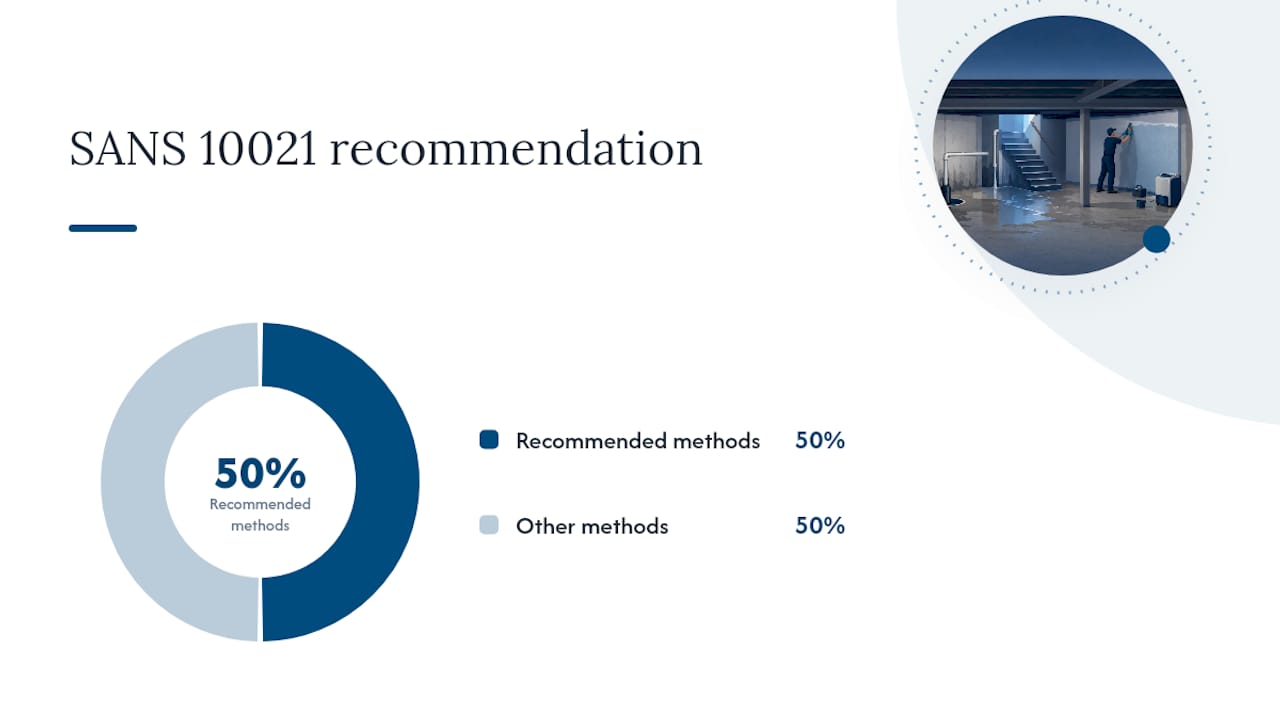
SANS 10021 recommends combining membranes, drained cavities and French drains rather than relying on one method alone, and stresses that correct detailing matters more than the product itself.
| Method | Best suited to |
|---|---|
| Tanking/external membrane | New builds, full excavation access |
| Cavity drain membrane | Retrofit, high groundwater, hydrostatic pressure |
| French drain | Surface water and lateral pressure reduction |
| Sump and pump | Persistent groundwater, low-lying properties |
| Resin injection | Isolated cracks, localised leaks |
Our guide to basement waterproofing methods breaks down installation detail for each of these if you want to go deeper before your survey.
What causes basement water problems in the first place?
Most basement leaks trace back to one of a handful of root causes, and knowing which one you’ve got helps you brief a contractor properly and spot a lazy diagnosis.
- Poor external drainage or blocked drains directing water towards the foundation
- High groundwater or hydrostatic pressure pushing against walls and slabs
- Porous or cracked walls and slabs letting moisture through gradually
- Leaking pipes or services running through or near the basement
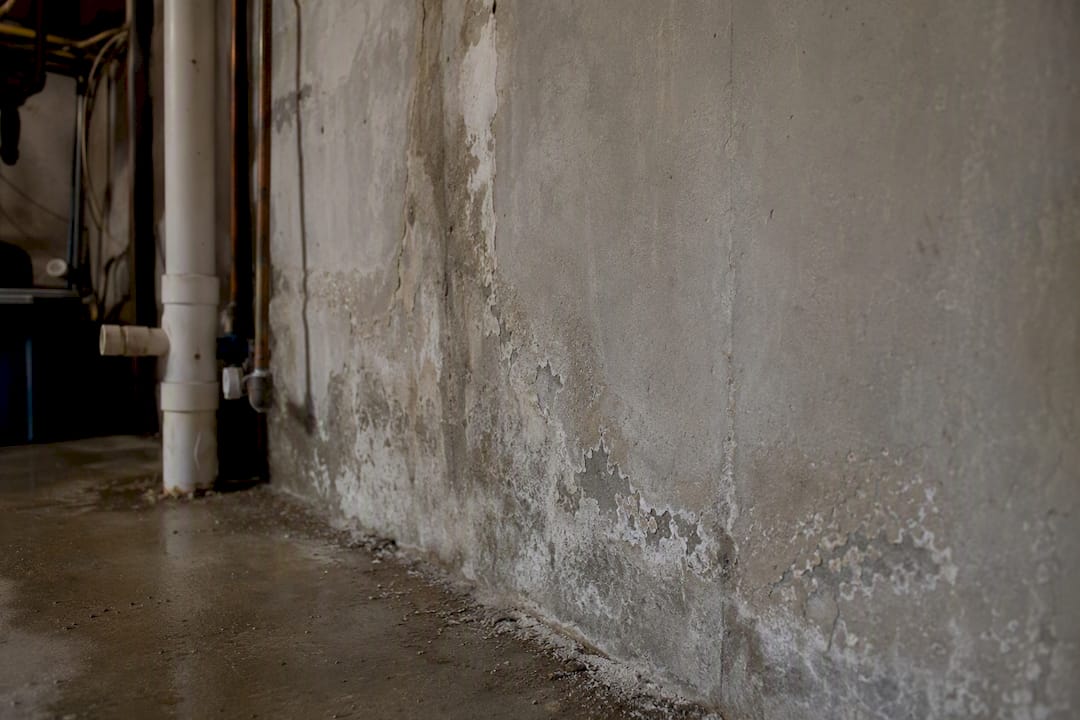
Groundwater hydrostatic pressure builds steadily over years against permanent basement walls, which is why a leak that seems sudden is often the result of slow, ongoing pressure finally finding a weak point.
Watch for efflorescence (white chalky deposits), peeling paint, a persistent damp odour, mould growth, or water tracking along the skirting board. Any of these point to ingress, even before you see standing water.
How much does basement waterproofing cost?
Costs vary enormously depending on the method, your property’s access, the local water table and how much excavation is involved, so treat any figure here as a ballpark, not a quote. Retrofit internal cavity systems and sump pump installs tend to run higher than new-build membrane work, largely because of the labour and excavation involved rather than the materials themselves, according to cost analysis from ServiceLink SA.
A proper itemised quote should break down:
- Survey fee (often waived if you proceed with the work)
- Diagnosis and moisture mapping
- Materials: membranes, drainage pipe, sump and pump units
- Labour and excavation costs
- VAT
- Guarantee and warranty paperwork
Statistic Callout: Retrofit cavity drainage and sump systems generally cost more than equivalent new-build waterproofing, driven by access and excavation demands rather than material price, per ServiceLink SA’s cost analysis.
Ask every contractor for the same breakdown, then compare like for like. A single lump-sum figure with no detail is the fastest way to overpay or miss a hidden exclusion.
What happens during the repair process, from survey to completion?
A professional job follows a fairly predictable sequence, and knowing the steps helps you judge whether a contractor is cutting corners.
- Book the site survey
- Moisture mapping and crack inspection across affected walls and floors
- External drainage and site access review, with photos
- Written scope of works and diagnosis delivered to you
- Preparation work (clearing plaster, digging trenches, exposing walls)
- Installation of the chosen system
- Commissioning, testing and handover
- Follow-up check, usually within the guarantee period
A thorough survey covers moisture mapping, crack inspection, an external drainage check, and clear written recommendations, not a verbal “you need tanking” on the doorstep.
Timelines vary by job: perimeter drainage typically takes three to seven days, cavity membrane installation five to ten days. Poor weather, restricted access, or discovering hidden pipework mid-job are the usual causes of delay.
What guarantees and standards should you expect?
Look for a long-term written guarantee, not a verbal promise, plus proof of public liability and workmanship insurance. Agrément South Africa’s performance criteria state that no dampness should be visible on the inside face of a habitable wall under normal conditions, a useful benchmark to hold any contractor to.
- Ask how long the guarantee runs and exactly what it covers
- Ask what would void the warranty (unrelated building work, blocked drains you failed to maintain)
- Ask who services the sump pump and how emergency call-outs work
Local authority approval may also be required for basement waterproofing work, so check your planning portal before major structural changes.
How do you choose the right basement waterproofing contractor?
Verified reviews, proof of insurance, and a written reference from a past job all matter more than a slick sales pitch. Ask to see photos or a case study of a similar installation before you commit.
At the survey, ask directly: what’s your diagnosis, what alternative methods did you consider, how long will it take, and what’s the full cost breakdown? A contractor who can’t answer the second question clearly probably hasn’t looked hard enough at your specific problem.
- Pressure-selling on the day of the survey
- A vague scope of works with no written detail
- No guarantee offered at all, or a verbal one only
- A fixed-price quote given without ever visiting the site
Pro Tip: Get at least two quotes for anything beyond a simple crack repair. Prices for cavity drainage and sump work vary widely between contractors, and the cheapest fixed-price quote without a site visit is almost always the one to avoid.
Our practical guide on how to stop basement leaks covers more of these selection checks if you’re comparing several contractors at once.
A publisher’s note on getting this right
Prowaterproofing focuses on connecting property owners with contractors who diagnose properly rather than sell the same fix to everyone. The written scope of works matters more than any single product name on the quote. Ask for it every time.
How Prowaterproofing can help you fix a wet basement
Prowaterproofing exists for exactly the moment you’re in right now: water in the basement and no idea which local contractor to trust. Rather than ringing round for quotes yourself, you request one free survey through us and get connected with a vetted, insured contractor covering your area, with an itemised written quote and a proper guarantee attached to the work.
Every contractor in our network works to a written scope of works, backed by long-term guarantees and certified installation, so you’re never left holding a verbal promise. Coverage runs locally across the areas we serve, including emergency response for active flooding.
Start by requesting your free site survey through Pro Waterproofing. After contact, you’ll get a survey date, a written scope of works, and an agreed start date, no pressure, no guesswork on price.
Frequently asked questions
How quickly can a contractor survey my basement?
Most local contractors offer free surveys within a few days of your enquiry, sometimes sooner for active flooding.
Does basement waterproofing need council approval?
It can, particularly for structural changes. Check your local planning portal before excavation work begins.
What voids a waterproofing guarantee?
Common exclusions include unrelated building work near the treated area or neglecting sump pump maintenance, so always ask before signing.
Who services a sump pump after installation?
The installing contractor typically offers a maintenance schedule and emergency call-out service. Confirm this at the survey stage, not after installation.
Sources
For technical depth on drainage design, see GCS Contractors’ site drainage guide and browse project examples via the TT Waterproofing sitemap and Sealtek Cape sitemap.
- Performance criteria: Water penetration and damp-proofing (Agrément South Africa)