

TL;DR:
- The best waterproofing chemicals for walls are designed to create flexible, durable, and water-impermeable membranes suited to specific substrates and moisture exposure. Proper surface preparation, correct chemical selection, and adherence to application procedures are essential to ensure long-lasting protection and prevent failure.
The best waterproofing chemical for walls is a product engineered to form a flexible, durable, and water-impermeable membrane suited to the wall’s material and expected moisture exposure. The leading options include polymer-modified cementitious coatings (PCC), acrylic-based waterproofing paints, and polyurethane or polyurea membranes. Each addresses a different combination of substrate, water pressure, and environmental condition. Choosing the wrong product does not just undermine performance. It can cause delamination, blistering, and costly repairs within a few years. This guide explains the key chemical types, how to select the right one, and how to apply it correctly for lasting protection.
What are the best waterproofing chemicals for walls?
The industry term for these products is “waterproofing membranes” or “waterproofing coatings,” though property owners commonly search for them as waterproofing chemicals. The four main categories cover most residential and commercial wall situations.
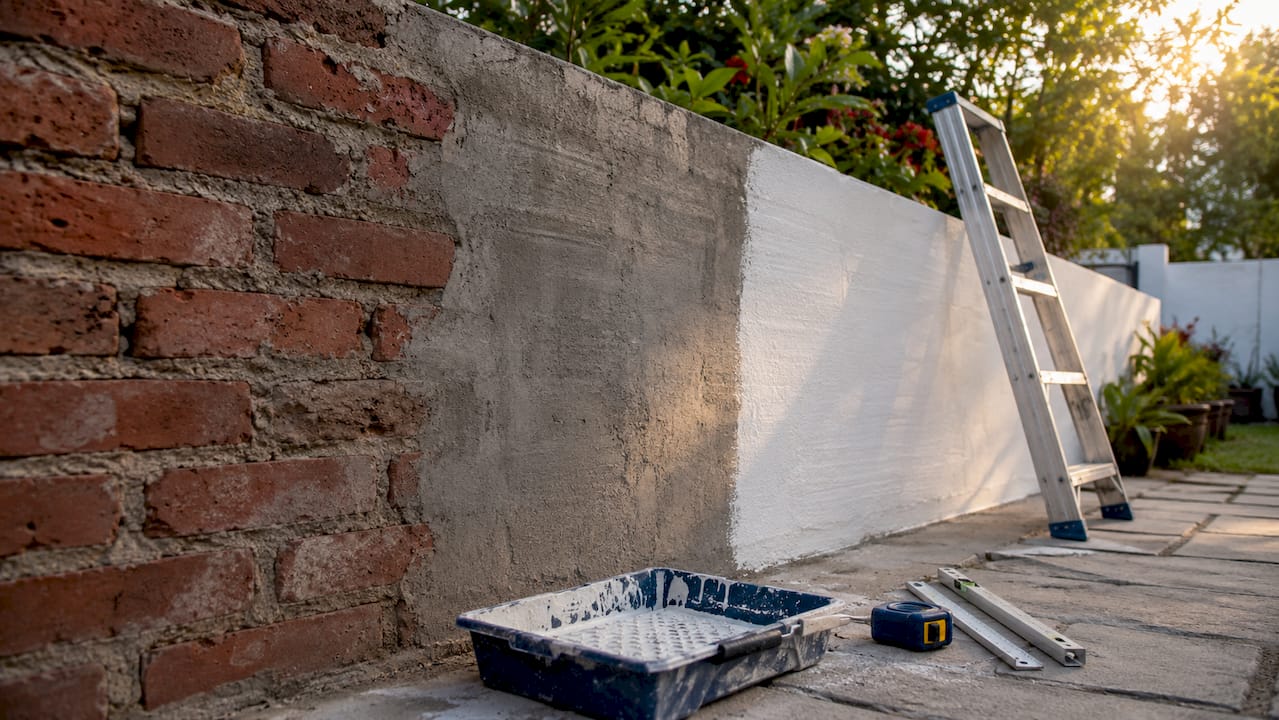
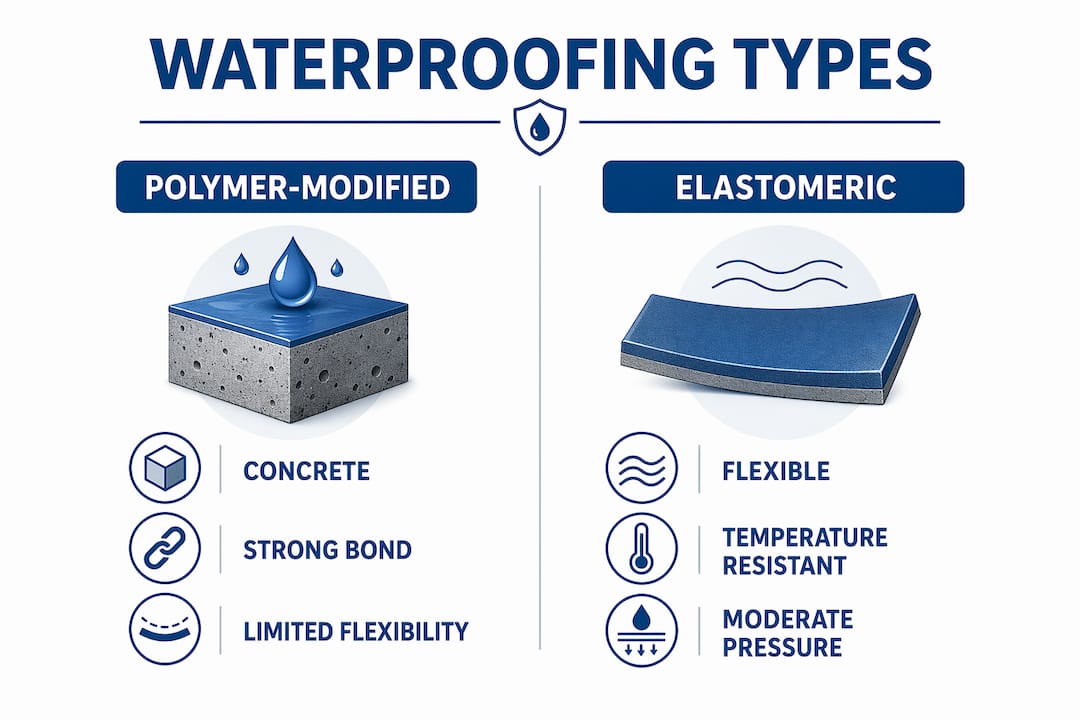
Polymer-modified cementitious coatings (PCC) are the most widely used option for concrete and masonry walls. They bond directly to the substrate and offer crack-bridging and adhesion properties that often exceed 1 N/mm². That level of adhesion means the coating stays bonded even when minor structural movement occurs. PCC is typically applied in 2–3 mm layers at around 2 kg/m² per layer, making it practical for large surface areas.
Acrylic-based waterproofing paints suit walls exposed to moderate water pressure and UV. Products such as Zinsser WaterTite can withstand up to 2.5 bar water pressure and apply to both wet and dry masonry, which makes them a reliable choice for basements and foundations. They also carry fungal protection, which matters in South Africa’s humid coastal regions.
Polyurethane and polyurea membranes are the high-performance tier. Polyurea membranes offer elongation over 350% and tensile strength above 2,000 psi, making them the correct choice for retaining walls, basements under hydrostatic pressure, and any surface subject to dynamic cracking.
Elastomeric coatings occupy a middle ground. They maintain flexibility from temperatures of -40°C to +90°C and resist fungal and algal growth. The trade-off is that they are not suitable for permanent water immersion, so they work best on above-ground exterior walls rather than below-grade structures.
Comparison of main waterproofing chemical types
| Chemical type | Best substrate | Key strength | Limitation |
|---|---|---|---|
| Polymer-modified cementitious (PCC) | Concrete, masonry, block | Strong adhesion, crack-bridging | Rigid; less suited to high movement |
| Acrylic waterproofing paint | Masonry, brick, block | UV resistance, 2.5 bar pressure | Not for permanent immersion |
| Polyurethane / polyurea membrane | Concrete, metal, most substrates | High elongation, tensile strength | Higher cost, skilled application needed |
| Elastomeric coating | Exterior walls, render | Temperature flexibility, UV stable | Not for below-grade immersion |
| Silicone sealant | Joints, gaps, penetrations | Excellent adhesion, flexibility | Localised use only |
How to choose the right waterproofing chemical for your wall
No single waterproofing chemical suits every situation. Selection depends on three factors: the wall material, the moisture source, and the environmental exposure. Getting this right before purchasing a product saves significant money and rework.
Start by identifying the wall substrate. Concrete and masonry accept PCC and polyurethane coatings well. Rendered or painted surfaces may need a primer or mechanical preparation before any coating bonds reliably. Block walls with high porosity benefit from penetrating sealants applied before a membrane coat.
Next, identify the moisture source:
- Rising damp travels upward through capillary action in the wall base. It requires a chemical damp-proof course or a cementitious slurry applied to the affected zone.
- Rainwater and driving rain call for an exterior acrylic or elastomeric coating with UV resistance.
- Groundwater and hydrostatic pressure demand polyurethane or polyurea membranes rated for the specific pressure load.
- Condensation is an interior problem that often requires a vapour barrier rather than a waterproofing membrane.
Environmental factors matter equally. UV exposure degrades many coatings over time, so exterior walls in direct sunlight need a UV-stable product. Temperature cycling between cold nights and hot days in South Africa’s highveld requires a coating with high elongation to avoid cracking. Coastal properties face salt-laden air, which accelerates corrosion and demands coatings with proven salt resistance.
Always read the product’s technical datasheet before purchasing. Check the adhesion strength rating, crack-bridging capability, and the curing temperature range. A product rated for curing between 5°C and 35°C will fail if applied during a 40°C summer afternoon.
Pro Tip: Never select a waterproofing product based on price alone. A cheaper coating applied to the wrong substrate or under the wrong conditions will fail faster than a correctly specified premium product, costing far more in repairs.
For a deeper look at wall waterproofing methods that complement chemical selection, Prowaterproofing covers the full range of practical approaches.
What application steps determine whether a waterproofing chemical succeeds?
Application quality determines whether even the best sealant for walls performs as specified. Poor surface preparation is the leading cause of delamination and failure within 1–2 years, regardless of product quality. The steps below apply to most membrane systems.
- Clean the surface thoroughly. Remove all dust, oil, efflorescence, loose paint, and biological growth. Use a wire brush, grinder, or pressure washer as appropriate. Any contamination between the substrate and the coating breaks the bond.
- Allow the surface to dry to the specified moisture content. Most polyurethane coatings require a dry substrate. Acrylic products like Zinsser WaterTite are an exception and tolerate damp masonry.
- Apply a primer where specified. Many high-performance membranes require a compatible primer to improve adhesion. Skipping this step voids most manufacturer warranties.
- Apply the base coat at the correct thickness. Use a notched trowel, roller, or spray rig to achieve the specified wet film thickness. Thin coats reduce elongation and tensile performance.
- Apply the topcoat within the recoat window. Two-coat polyurethane systems combining an aromatic base coat with an aliphatic topcoat significantly outperform single-coat applications in UV resistance and durability. The aromatic base provides tensile strength; the aliphatic topcoat protects against UV degradation.
- Respect the curing period. Do not expose the membrane to water or foot traffic before the manufacturer’s stated curing time has elapsed.
Understanding positive-side versus negative-side waterproofing is critical before application. Positive-side waterproofing is applied to the exterior face of the wall, stopping water before it enters the structure. Negative-side waterproofing is applied to the interior face when exterior access is impossible. Using a positive-side product on a negative-side problem causes blistering and peeling because the water pressure pushes the membrane off the wall from behind.
Pro Tip: Check the temperature and relative humidity at the time of application, not just the forecast. Curing conditions between -20°C and +40°C are specified for advanced polymer coatings. Applying outside this range is the most common cause of premature membrane failure on South African properties.
For a full breakdown of waterproofing system components, including primers, membranes, and protection boards, Prowaterproofing provides a detailed reference.
How do you know when wall waterproofing chemicals are failing?
Waterproofing membranes do not last indefinitely. High-quality wall waterproofing systems typically carry a lifespan of 10–15 years under normal conditions, but exposure to UV, movement, and chemical attack shortens this. Knowing the signs of failure allows you to act before water damage reaches the structure.
Watch for these indicators:
- Cracking or crazing on the membrane surface, particularly at corners and around penetrations where movement concentrates
- Blistering or bubbling, which signals moisture trapped beneath the coating, often caused by application to a damp substrate or negative-side pressure
- Efflorescence (white salt deposits) appearing through or around the coating, indicating active water movement through the wall
- Fungal or algal growth on interior walls, a reliable sign that moisture is penetrating the structure
- Paint peeling or staining on interior finishes directly behind an exterior wall
Inspect walls twice a year, and always after heavy rain or severe weather events. South African properties face intense summer storms that stress membranes far beyond their design assumptions. Pay particular attention to joints, window reveals, and any area where two materials meet, as these are the first points of failure.
Before re-applying any effective waterproof coating, address the underlying moisture source. Re-coating over active water ingress without fixing the root cause produces the same failure within months. If rising damp is the source, a chemical injection damp-proof course must precede any surface treatment. For persistent or complex damp issues, professional assessment is the most cost-effective route. Prowaterproofing’s guide on interior wall waterproofing covers inspection routines and maintenance in practical detail.
Key takeaways
The most effective waterproofing chemical for walls is always the one correctly matched to the substrate, moisture source, and environmental exposure, applied to a properly prepared surface.
| Point | Details |
|---|---|
| Match chemical to substrate | PCC suits concrete and masonry; polyurea suits high-pressure and below-grade applications. |
| Identify the moisture source first | Rising damp, hydrostatic pressure, and rainwater each require a different chemical system. |
| Surface preparation is non-negotiable | Poor cleaning and damp surfaces cause failure within 1–2 years regardless of product quality. |
| Use two-coat systems where specified | An aromatic base coat plus aliphatic topcoat doubles lifespan compared to a single coat. |
| Inspect twice yearly | Early detection of cracking, blistering, or efflorescence prevents costly structural water damage. |
What I have learnt from watching waterproofing fail on South African properties
The most common mistake I see property owners make is treating waterproofing as a painting job. They buy a product from a hardware store, roll it onto a dusty wall on a hot afternoon, and expect it to hold for a decade. It rarely lasts two years. True waterproofing membranes are engineered systems. They require the right substrate condition, the right temperature, and the right number of coats to perform as specified.
The second mistake is choosing a product based on what worked on a different wall. A polyurethane membrane that performed brilliantly on a flat concrete roof will not automatically suit a porous brick basement wall under hydrostatic pressure. The substrate and the pressure direction change everything.
What I find most encouraging is the quality of products now available in South Africa. Systems from suppliers such as Danosa, Duratite, and Torggler bring genuine engineering behind them. The technical datasheets are detailed and honest about limitations. The problem is that most property owners never read them.
My strongest advice is this: spend as much time on surface preparation as you do on product selection. A premium polyurea membrane applied to a contaminated surface will fail. A mid-range cementitious coating applied to a clean, dry, primed surface will outlast it by years. The chemistry is only as good as the surface it bonds to.
— Eben
Get professional waterproofing chemical advice from Prowaterproofing
Selecting and applying the right waterproofing system for your walls is not guesswork. Prowaterproofing provides expert assessment of your wall type, moisture source, and environmental conditions to recommend the most appropriate chemical system for your property. Whether you manage a residential home or a commercial building in South Africa, the team at Prowaterproofing matches you with the correct product and ensures it is applied to manufacturer specification. Avoid the cost of failed membranes and recurring damp. Contact Prowaterproofing for a professional consultation and a tailored waterproofing solution that lasts.
FAQ
What is the best waterproofing chemical for concrete walls?
Polymer-modified cementitious coatings (PCC) are the top choice for concrete walls, offering adhesion above 1 N/mm² and reliable crack-bridging. For walls under hydrostatic pressure, a polyurethane or polyurea membrane provides superior performance.
Can I apply waterproofing paint to a damp wall?
Acrylic waterproofing paints such as Zinsser WaterTite are formulated for application to both wet and dry masonry surfaces. Most polyurethane and cementitious systems require a dry substrate, so always check the product datasheet before proceeding.
How long does wall waterproofing last?
High-quality waterproofing systems typically last 10–15 years under normal conditions. Lifespan depends on product type, surface preparation quality, application conditions, and the severity of UV and moisture exposure.
What is the difference between positive-side and negative-side waterproofing?
Positive-side waterproofing is applied to the exterior face of a wall to stop water before it enters. Negative-side waterproofing is applied to the interior face when exterior access is blocked. Using the wrong approach causes membrane blistering and failure.
How do I know if my wall waterproofing has failed?
The clearest signs are cracking or crazing on the membrane surface, blistering, efflorescence (white salt deposits), and fungal growth on interior walls. Inspect after heavy rain and address any failure before re-applying a new coating.