
TL;DR:
- Proper landscaping actively manages surface and subsurface water to prevent water damage and foundation failure. Integrating drainage, soil, plants, and membranes from the design stage ensures long-lasting waterproofing and reduces costly repairs. Regular maintenance of drainage systems is essential for sustained protection against hydrostatic pressure and structural damage.
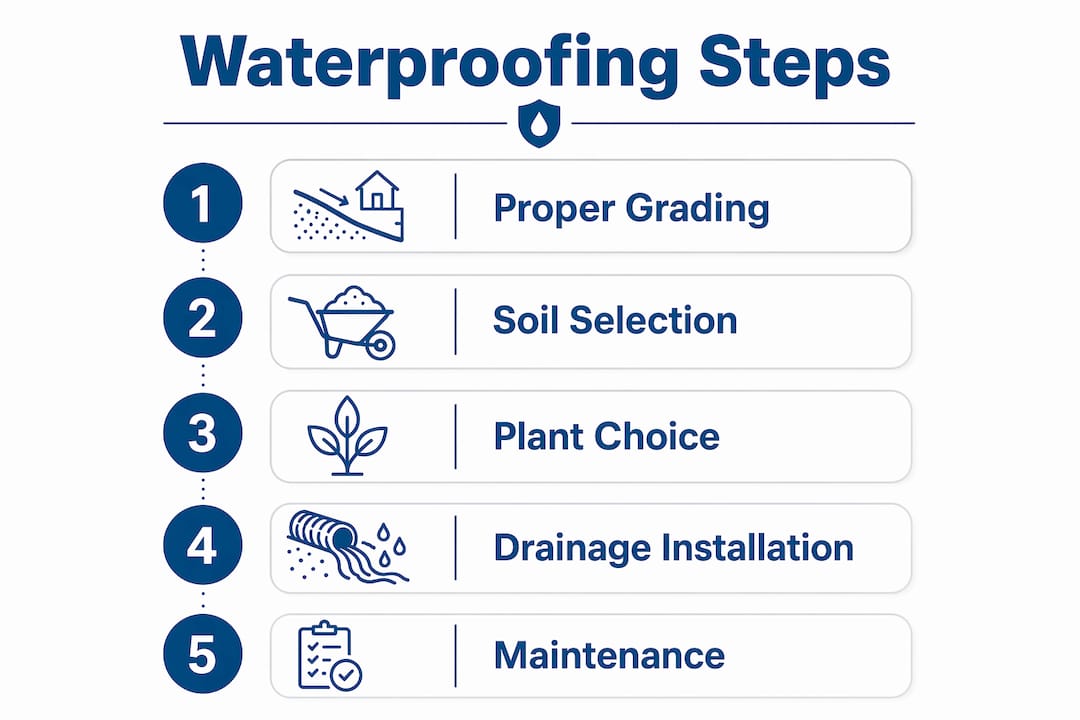
Landscaping is defined as the first line of defence against water damage, controlling how rainfall and runoff interact with your building’s foundations, walls, and drainage systems. The role of landscaping in waterproofing goes far beyond aesthetics. A well-designed garden or paved area manages surface water, reduces hydrostatic pressure, and channels moisture away from vulnerable structures. Property owners who treat landscaping as a waterproofing tool, rather than a decorative afterthought, avoid the costly foundation repairs and damp problems that follow poor water management. South African regulations and industry standards both recognise this, placing drainage requirements at the heart of responsible property design.
How does landscaping design control surface water?
Surface water management is the most direct way landscaping prevents water damage. When rain falls on your property, it needs a clear path away from your building. Without that path, water pools against walls, saturates soil, and eventually forces its way through foundations and slabs.
Slope and grading are the starting point. A 1% to 2% fall on paved and landscaped surfaces is the industry standard for directing runoff away from structures. That translates to roughly a 1/8 to 1/4 inch drop per foot of horizontal run. Get this wrong and water sits against your building instead of flowing to a drain.
South African regulations reinforce this. Drainage systems are required for all paved areas larger than 5 square metres, a rule that has been in force since 1 October 2008. This means most driveways, patios, and paved courtyards legally require compliant drainage. Ignoring this requirement does not just risk a fine. It risks structural damage that costs far more to fix than the drain would have.
Landscaping design for drainage uses several practical tools:
- Channel drains installed at low points collect surface runoff before it reaches walls or foundations.
- French drains (perforated pipes set in gravel trenches) intercept subsurface water and redirect it away from the building.
- Permeable paving allows water to pass through the surface and into a controlled sub-base rather than running off uncontrolled.
- Swales (shallow, grass-lined channels) slow and direct surface water across open ground.
Pro Tip: Grade all landscaped beds so the soil surface slopes away from your walls at a minimum of 1% fall for the first 3 metres from the building. This single measure prevents the majority of wall damp problems caused by surface water.
Poor surface water control is behind a large share of foundation and damp failures. Waterlogged ground and pooling water are reliable signs that drainage is failing and structural damage is already underway. Catching these signs early and correcting the landscaping design saves significant remediation costs.
What role do plants and soil play in waterproofing?
Soil type is a critical and often overlooked factor in waterproofing landscape solutions. Clay-rich soils expand and contract with changes in moisture content, exerting lateral pressure on foundations and retaining walls. Sandy soils drain freely but offer little structural support. Understanding what lies beneath your garden determines how you design your landscaping to protect your building.
The table below summarises how common soil types affect waterproofing risk:
| Soil type | Drainage behaviour | Waterproofing risk |
|---|---|---|
| Clay | Poor drainage, high expansion | High: lateral pressure on foundations |
| Sandy loam | Good drainage, low retention | Low to moderate: may need subsoil drainage |
| Silty soil | Moderate drainage, compacts easily | Moderate: prone to surface sealing |
| Gravel or crushed stone | Excellent drainage | Low: ideal for backfill zones |
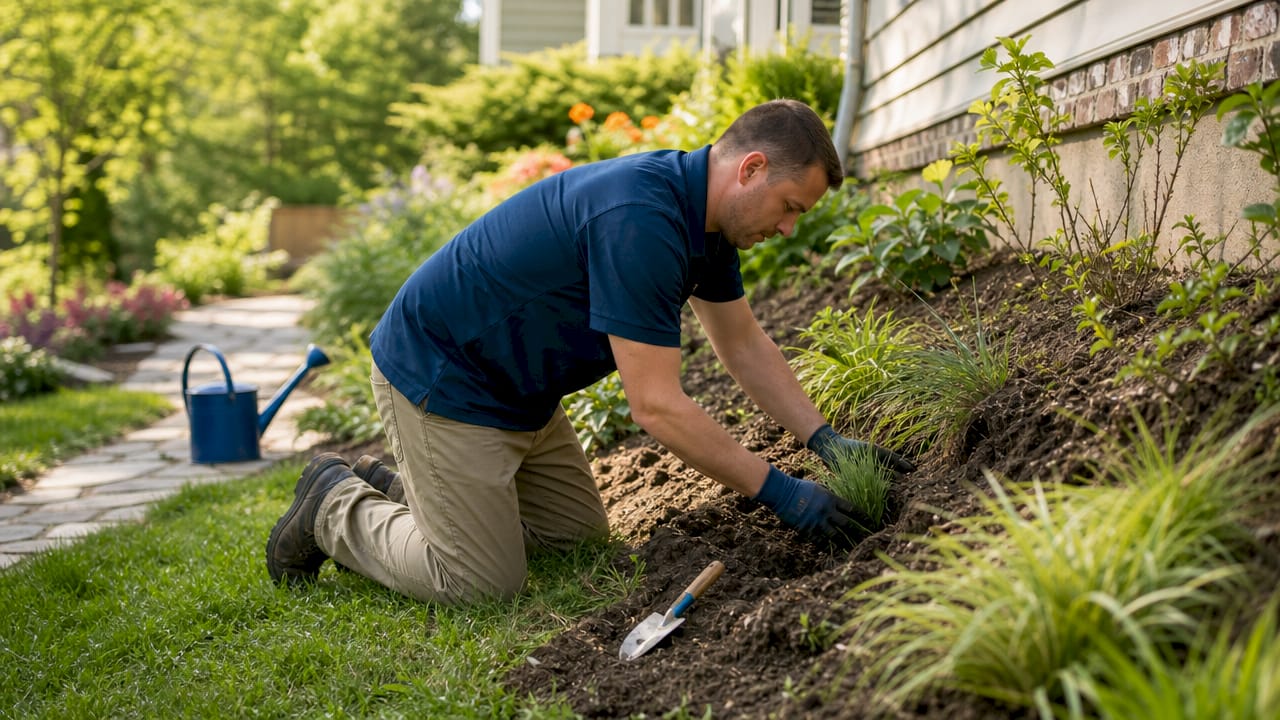
Plant selection matters just as much as soil type. Deep-rooted trees planted close to buildings are a known cause of waterproofing membrane damage. Roots follow moisture and will exploit any crack or joint in a waterproof layer. Shallow-rooted ground covers and ornamental grasses absorb surface water effectively without threatening foundations. Avoid planting large trees within 5 metres of a building’s footprint unless you have a root barrier installed.
Landscaping also acts as a permeable buffer. A well-planted bed with organic mulch absorbs rainfall gradually, reducing the volume of water that reaches the soil adjacent to your walls. This directly reduces hydrostatic pressure, which is the force exerted by water-saturated soil pressing against a foundation or retaining wall.
Common landscaping mistakes that increase moisture near walls include:
- Raising garden bed levels above the damp-proof course on external walls.
- Piling mulch directly against wall surfaces, trapping moisture against masonry.
- Planting water-hungry shrubs immediately against foundations, which draws moisture toward the wall.
- Allowing soil to slope toward the building rather than away from it.
Pro Tip: Keep all mulch, soil, and planting material at least 150mm below the top of your building’s damp-proof course. This gap prevents moisture from wicking up into the wall structure.
Which landscaping materials integrate best with waterproofing systems?
The most durable waterproofing outcomes come from combining membrane systems with the right landscape materials. Properties managed as integrated systems where landscaping, paving, and subsoil drainage work together consistently outperform those where each element is designed in isolation. This is the core principle behind effective landscaping-based waterproofing.
The following materials and techniques deliver the strongest results when integrated with waterproof membranes:
- Non-woven geotextile fabric. Geotextile fabric in drainage zones prevents fine soil particles from migrating into and clogging drainage pipes. Wrap perforated pipes in geotextile before backfilling to extend the life of the drainage system significantly.
- Crushed stone backfill. Gravel or crushed stone placed against a waterproofed foundation wall allows water to move freely downward to drainage outlets. It replaces the compacted clay or soil that would otherwise hold water against the membrane.
- Subsoil drainage pipes. Perforated pipes set in gravel redirect excess water away from foundations before it can saturate the surrounding soil. These systems extend the working life of outdoor structures and prevent long-term damp ingress.
- Weep holes and drainage outlets. Blocked weep holes behind retaining walls cause dangerous hydrostatic pressure build-up, leading to cracking or structural collapse. Outlets must remain clear of soil, plant debris, and mulch at all times.
- Root barriers. Rigid or flexible root barrier membranes installed vertically in the soil redirect tree and shrub roots away from waterproof membranes and drainage pipes.
Combining these materials with a quality waterproof membrane creates a layered defence. The membrane stops water at the wall surface. The crushed stone and geotextile move water away from the wall. The drainage pipe carries it off-site. Each layer depends on the others to function correctly. For properties with basements, external waterproofing approaches that incorporate these landscape materials deliver the most durable results.
Good construction project planning ensures these systems are sequenced correctly during a build or renovation, preventing costly rework when drainage and waterproofing layers need to be installed in the right order.
What landscaping mistakes compromise waterproofing?
The most common landscaping errors that lead to water damage are preventable. Hydrostatic pressure is the silent cause of most retaining wall and foundation failures. It builds up when drainage is blocked or absent, and the damage it causes is rarely visible until it is severe.
Watch for these specific pitfalls:
- Blocked drainage outlets. Leaf litter, mulch, and soil silt block channel drains, French drain outlets, and weep holes. Once blocked, water has nowhere to go except into the soil adjacent to your structure.
- Improper grading after planting. Soil settles after planting, and what started as a correct slope can reverse over time, directing water toward the building rather than away from it.
- Root intrusion. Tree and shrub roots penetrate waterproofing membranes and drainage pipes, creating pathways for water and reducing drainage capacity.
- Ignoring subsoil drainage. Surface drainage alone is insufficient on clay-heavy sites. Without subsoil drainage, water accumulates below the surface and exerts sustained pressure on foundations.
- Overwatering planted areas. Irrigation systems set too high saturate soil adjacent to walls, creating the same conditions as poor stormwater drainage.
Pro Tip: Inspect all drainage outlets, weep holes, and channel drains twice a year, once before the rainy season and once after. Clear any blockages immediately. This single maintenance habit prevents the majority of hydrostatic pressure failures.
Effective drainage protection for your home requires ongoing attention, not just correct installation. Landscaping changes over time as plants grow, soil settles, and debris accumulates. A drainage system that worked perfectly at installation can fail within a few years without regular maintenance.
Key takeaways
Landscaping functions as an active waterproofing layer, and properties where drainage, soil, plants, and membranes are designed together suffer far less water damage than those where each element is treated separately.
| Point | Details |
|---|---|
| Grading is non-negotiable | A 1%–2% slope away from all structures prevents surface water pooling and wall damp. |
| Soil type drives risk | Clay soils exert lateral pressure on foundations; use permeable backfill and subsoil drainage to compensate. |
| Materials work in layers | Geotextile fabric, crushed stone, and perforated pipes combined with a membrane deliver the most durable waterproofing. |
| Maintenance sustains performance | Clear drainage outlets and weep holes twice yearly to prevent hydrostatic pressure build-up. |
| Plant selection matters | Avoid deep-rooted trees near foundations; use shallow-rooted ground covers to absorb surface water safely. |
Why I treat landscaping as a waterproofing layer, not a finishing touch
Most property owners commission their waterproofing and then hand the site over to a landscaper. That sequence is the single biggest mistake I see in South African property management. By the time the landscaper arrives, the drainage design is fixed, the backfill is in, and the opportunities to integrate landscape features with the waterproofing system have passed.
The properties I have seen perform best over time are those where the waterproofing contractor and the landscaper sat in the same room at the design stage. They agreed on slope, drainage outlet positions, backfill materials, and planting zones before a single membrane was laid. The result is a property that manages water as a single system rather than a collection of independent fixes.
Sustainable plant choices also matter more than most owners realise. Indigenous, drought-tolerant species with shallow root systems absorb surface water effectively during rain events without threatening membranes or drainage pipes. They also require less irrigation, which reduces the risk of overwatering adjacent to walls.
Regular inspection is the discipline that holds everything together. I recommend treating your drainage system the way you treat your gutters: check it before the rains come, clear it after they pass, and never assume it is working simply because you cannot see a problem. Water damage is almost always invisible until it is expensive.
For properties with complex soil conditions or basement structures, the importance of integrated drainage cannot be overstated. Getting professional input at the design stage costs a fraction of what remediation costs later.
— Eben
Professional waterproofing that works with your landscaping
Landscaping and waterproofing deliver their best results when designed together from the outset. Prowaterproofing specialises in waterproofing assessments that account for your site’s soil conditions, slope, drainage layout, and existing landscape features. Rather than applying a generic solution, Prowaterproofing evaluates how water moves across and beneath your property before recommending a system.
Prevention is always less costly than remediation. A professional assessment from Prowaterproofing identifies drainage weaknesses, membrane vulnerabilities, and landscaping risks before they become structural problems. Whether you are managing a residential property, a commercial building, or an industrial site, getting the waterproofing and landscaping relationship right from the start protects your investment for the long term. Contact Prowaterproofing for a site-specific consultation.
FAQ
What is the role of landscaping in waterproofing?
Landscaping controls how surface and subsurface water moves around a building, reducing hydrostatic pressure and preventing water ingress through correct grading, drainage design, and plant selection.
How does grading prevent water damage to foundations?
A slope of 1%–2% away from the building directs surface runoff to drainage outlets rather than allowing it to pool against walls and saturate the surrounding soil.
Which plants are safe to use near a building’s foundation?
Shallow-rooted ground covers and ornamental grasses absorb surface water without threatening waterproofing membranes. Avoid large, deep-rooted trees within 5 metres of a building unless a root barrier is installed.
Why do weep holes matter for waterproofing?
Weep holes in retaining walls release water that would otherwise build up as hydrostatic pressure behind the wall. Blocked weep holes are a leading cause of retaining wall cracking and collapse.
How often should landscape drainage be inspected?
Inspect all drainage outlets, channel drains, and weep holes at least twice a year, before and after the rainy season, to clear blockages and confirm correct water flow away from structures.