

TL;DR:
- Waterproofing in fire suppression areas prevents moisture damage, corrosion, and system failure. It ensures compliance with South African standards and protects insurance coverage by maintaining system integrity. Proper design, installation, and routine inspection are essential to prevent costly retrofits and system failures.
Waterproofing in commercial fire suppression areas is defined as the application of protective coatings, membranes, and sealants to fire water storage tanks, pipework, and surrounding structures to preserve system integrity and prevent moisture-related failure. The role of waterproofing in commercial fire suppression areas extends well beyond damp prevention. It directly determines whether your fire suppression system will perform when lives and assets depend on it. South African standards such as SANS 10287 and SANS 10400, along with ASIB certification requirements, mandate that fire water infrastructure meets strict waterproofing and containment criteria. Failure to comply exposes facility managers and property developers to insurance claim denials, legal liability, and retrofit costs that can reach 500% of the original installation price. Waterproofing is not optional maintenance. It is strategic risk management for every commercial building that relies on active fire suppression.
How does waterproofing preserve water supply integrity in fire suppression systems?
Waterproofing preserves fire suppression water supply by preventing corrosion, contamination, and pressure loss across tanks and pipework. Without adequate protection, moisture ingress accelerates structural steel corrosion, introduces debris into the water supply, and reduces the pressure available at sprinkler nozzles during an emergency.
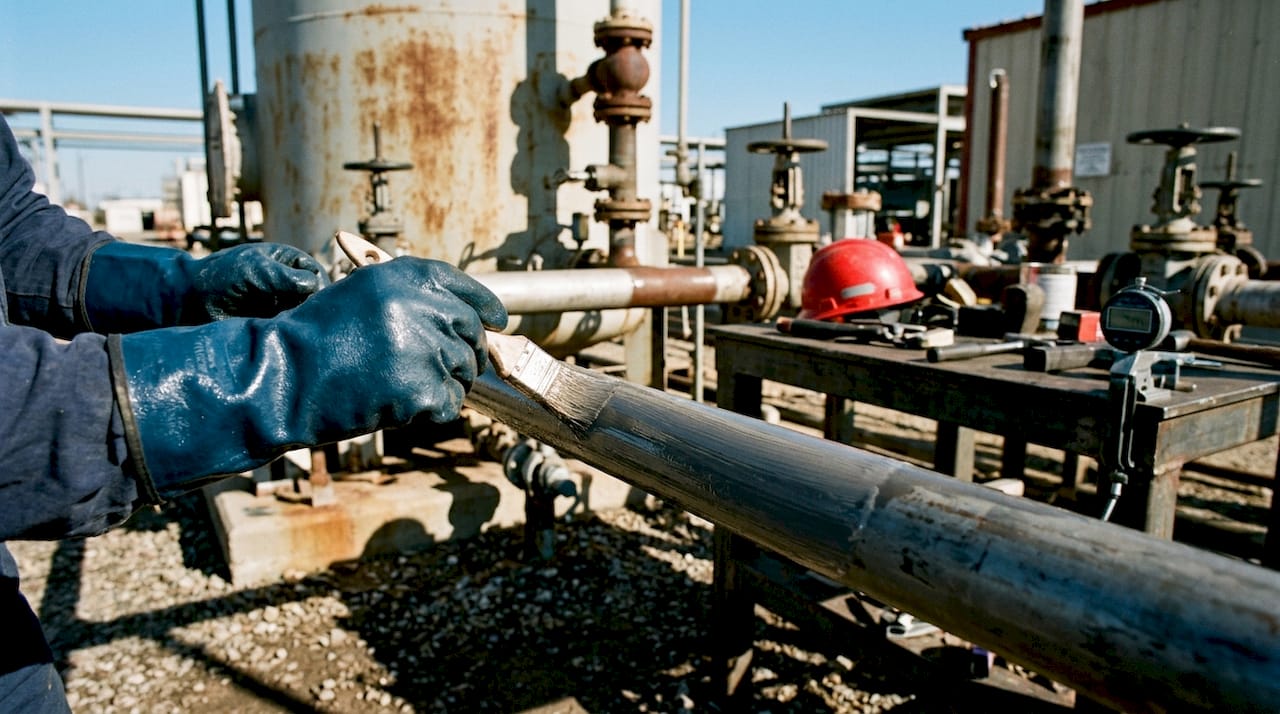
Fire-rated polyurethane coatings, complying with SANS 10400 standards, are the benchmark for fire suppression areas. Standard bituminous membranes are not sufficient. Fire-rated systems provide containment integrity, meaning no water escapes the reserve during a suppression event, and no external moisture compromises the tank structure. This distinction matters enormously when a sprinkler system must sustain pressure for 30 minutes or longer.
Steel fire water tanks face a particular threat from internal corrosion. ASIB-compliant tanks incorporate heavy-duty internal liners and vortex inhibitors to prevent cavitation and rust contamination. These engineered features work alongside external waterproofing coatings to create a complete moisture barrier. A tank that passes visual inspection but lacks a proper internal liner can still deliver rust-laden water that blocks sprinkler nozzles at the worst possible moment.
Water mist fire suppression systems add another layer of complexity. These systems use droplets under 1,000 microns, which is 99% smaller than traditional sprinkler droplets. That precision reduces collateral water damage in sensitive commercial environments such as data centres and archives. However, it also means that any contamination or pressure drop caused by poor waterproofing has an outsized effect on system performance.
| Waterproofing method | Suitability for fire suppression areas | Key advantage | Limitation |
|---|---|---|---|
| Fire-rated polyurethane coating | High | SANS 10400 compliant; containment integrity | Higher material cost |
| Cementitious waterproofing | Moderate | Rigid; suits concrete tanks | Cracks under structural movement |
| Bituminous membrane | Low | Cost-effective for general use | Not fire-rated; risk of depletion |
| Epoxy lining (internal) | High | Corrosion resistance; water quality protection | Requires surface preparation |
| Torch-on membrane | Low in occupied buildings | Durable for roofs | Fire risk during application |
Pro Tip: When selecting waterproofing materials for a commercial fire suppression area, confirm that the product carries a fire-rated classification and is compatible with the tank or substrate material. Polyurethane coatings and epoxy linings are the two most reliable options for steel and concrete fire water tanks respectively.
Why is waterproofing essential for regulatory and insurance compliance?
Regulatory compliance in South African commercial fire safety is not a matter of ticking boxes. SANS 10287 requires a risk-based maintenance approach that demands demonstrated water supply integrity, including the condition of waterproofing across tanks and pipework. A signed service record without evidence of waterproofing integrity does not satisfy this standard.
Insurance consequences are direct and severe. Insurers increasingly deny claims where fire suppression water storage is not certified and compliant with current standards. A fire loss at a non-compliant facility can result in a full claim rejection, leaving the property developer or facility manager personally liable for damages. That financial exposure dwarfs the cost of correct waterproofing at the design stage.
Retrofitting non-compliant systems is the most expensive outcome of all. Retrofit costs can reach 500% of the original installation price due to the complexity of integrating waterproofing into existing structures. This figure alone makes the case for getting waterproofing right during initial construction or refurbishment.
SANS 1475 mandates routine inspection and corrective maintenance of fire water tanks and pipework. Proper waterproofing provides the access and structural stability that inspectors need to assess system condition accurately. A degraded tank surface or corroded pipe joint cannot be reliably evaluated without first addressing the waterproofing layer.
A compliance checklist for facility managers and property developers should include:
- Confirmation that all fire water tanks carry ASIB certification and use fire-rated internal liners
- Evidence of SANS 10400-compliant coatings on tank exteriors and surrounding structures
- Documented waterproofing inspection records aligned with SANS 1475 servicing schedules
- Written confirmation from the waterproofing contractor that materials are fire-rated and substrate-compatible
- Photographic evidence of joint sealing, penetration waterproofing, and membrane continuity
- Insurance schedule review confirming that waterproofing compliance is recorded as a condition of cover
Pro Tip: Prepare a waterproofing compliance dossier before your next municipal inspection or insurance renewal. Include product data sheets, application certificates, and dated inspection photographs. Insurers and inspectors respond well to documented evidence rather than verbal assurances.
How should waterproofing be integrated into fire suppression system design?
Waterproofing must be planned at the design stage, not added as an afterthought once the fire suppression system is installed. Coordination between facility managers, plumbers, and waterproofing specialists is the single most effective way to prevent costly failures. Each discipline affects the others. A plumber who installs pipework without accounting for waterproofing penetrations creates a leak point that no coating can fully remedy after the fact.
Plumbers carry direct responsibility for the integrity of water supply piping in fire installations, from the municipal connection through private property pipework. That responsibility includes protecting pipework against moisture damage, particularly in below-ground or concealed runs. Waterproofing specialists must work alongside plumbers to seal every penetration and transition point.
ASIB-compliant fire water tanks are engineered with specific features that support waterproofing integration. Modular tank designs allow for precise placement of internal liners and external coatings during manufacture, rather than on-site application under time pressure. This approach produces a more consistent result and simplifies future inspection access.
| Building use type | Fire risk profile | Recommended waterproofing approach | Key consideration |
|---|---|---|---|
| Warehouse | High (stored goods) | Polyurethane coating on tanks; epoxy internal liner | Large tank volumes; pressure maintenance critical |
| Manufacturing plant | High (process chemicals) | Fire-rated membrane; chemical-resistant lining | Compatibility with process chemicals |
| Retail centre | Moderate | Cementitious external; epoxy internal | Aesthetic finish; access for inspection |
| Data centre | High (sensitive equipment) | Water mist system; fire-rated polyurethane | Zero tolerance for water ingress or contamination |
| Office block | Low to moderate | Standard ASIB-compliant tank with fire-rated coating | Cost efficiency; SANS 10287 compliance |
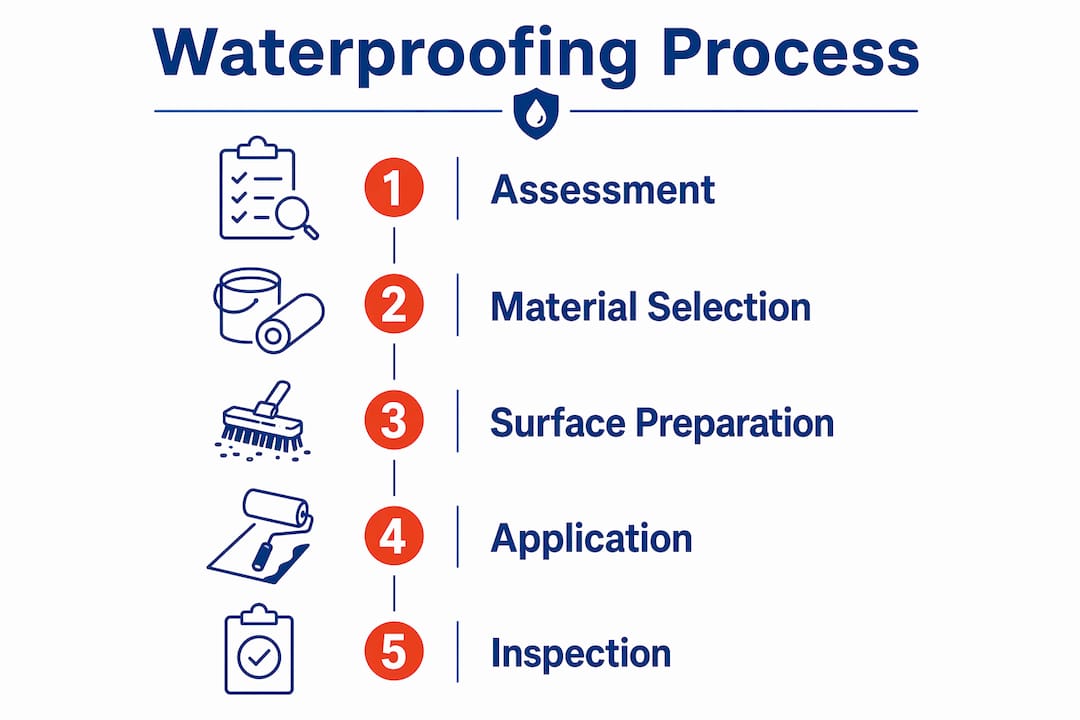
Routine maintenance must verify waterproofing effectiveness at every scheduled service. This means checking membrane continuity, joint integrity, and the condition of internal liners. A step-by-step commercial waterproofing approach that includes fire suppression zones as a distinct category ensures nothing is overlooked during annual servicing. For spray booth environments and similar high-risk commercial spaces, fire suppression design guidance reinforces why waterproofing must be built into the suppression system from the outset.
What are the most common waterproofing challenges in fire suppression areas?
Water ingress through joints and penetrations is the most frequent cause of waterproofing failure in fire suppression areas. Pipe penetrations through tank walls, roof structures, and floor slabs create discontinuities in the waterproofing membrane. If these are not sealed with compatible, fire-rated materials, moisture enters the structure and begins degrading both the waterproofing layer and the substrate beneath it.
Structural steel corrosion is the most serious consequence of progressive waterproofing failure. Fire pump bases, tank support frames, and pipe hangers all rely on structural steel. Once corrosion takes hold, the load-bearing capacity of these supports diminishes, creating a safety risk that extends beyond fire suppression performance. Treating waterproofing as strategic risk management prevents this chain of damage before it starts.
Torch-on waterproofing membranes present a specific problem in occupied commercial buildings. The open-flame application method creates an unacceptable fire risk in environments where fire suppression infrastructure is already active. Cold-applied polyurethane coatings and epoxy systems are the correct choice for occupied or sensitive fire suppression areas. They deliver equivalent performance without the application risk.
Selecting an unqualified contractor is the most avoidable challenge. Waterproofing for fire suppression areas requires knowledge of fire-rated materials, SANS standards, and ASIB requirements. A contractor without this background will apply the wrong product, creating a compliance gap that only surfaces during an inspection or, worse, during a fire event. Reviewing commercial waterproofing best practices before engaging a contractor gives facility managers the knowledge to ask the right questions.
Common maintenance pitfalls to avoid:
- Applying standard bituminous membranes in fire-rated zones without checking fire classification
- Failing to seal pipe penetrations with compatible fire-rated collars or sealants
- Skipping annual inspection of internal tank liners because the external structure appears sound
- Using torch-on application methods in occupied buildings or near active fire suppression equipment
- Neglecting to update waterproofing records after any repair or modification to the fire system
Pro Tip: Inspect all pipe penetrations and joint seals at every annual service, not just the membrane surface. Early detection of seal failure at penetration points prevents the progressive moisture damage that leads to structural steel corrosion and system failure.
Key takeaways
Waterproofing is a non-negotiable component of commercial fire suppression system integrity, with direct consequences for regulatory compliance, insurance validity, and life safety outcomes.
| Point | Details |
|---|---|
| Fire-rated coatings are mandatory | Standard membranes do not meet SANS 10400 requirements for fire suppression areas. |
| Retrofit costs are prohibitive | Non-compliant installations can cost up to 500% more to correct than initial proper waterproofing. |
| Insurance cover depends on compliance | Insurers deny claims where fire water storage is not certified and waterproofed to current standards. |
| Design-stage integration is critical | Coordinating plumbers, waterproofing specialists, and facility managers at design stage prevents costly failures. |
| Routine inspection must include waterproofing | SANS 1475 servicing must verify membrane integrity, joint seals, and internal liner condition. |
Waterproofing and fire suppression: what I have learned from the field
Having worked across commercial waterproofing projects in South Africa for many years, the pattern I see most often is this: waterproofing gets treated as a finishing trade, something applied after the “real” work is done. In fire suppression areas, that mindset is genuinely dangerous.
The most costly failures I have encountered were not caused by poor-quality materials. They were caused by poor sequencing. A fire water tank installed before the waterproofing contractor arrived on site. Pipe penetrations sealed with whatever was available on the day. Internal liners specified but never inspected after installation. Each of these decisions looked minor at the time. Together, they produced systems that failed compliance audits, triggered insurance disputes, and required full retrofits.
The South African market is tightening. ASIB certification requirements are being applied more strictly, and insurers are asking harder questions at renewal. Facility managers who treat waterproofing as a line item to be value-engineered out will face those consequences directly. The ones who build waterproofing into their fire suppression planning from day one are the ones who pass inspections, maintain cover, and sleep soundly.
My advice is straightforward. Appoint your waterproofing specialist at the same time as your fire suppression engineer. Require fire-rated product certification before any material is applied. And document everything, because the insurer will ask for it.
— Eben
Prowaterproofing: commercial fire suppression waterproofing solutions
Facility managers and property developers across South Africa trust Prowaterproofing for commercial waterproofing solutions that meet ASIB certification requirements and SANS standards for fire suppression infrastructure.
Prowaterproofing’s team works directly with fire suppression engineers and plumbers to integrate fire-rated coatings, internal liners, and joint sealing into new builds and refurbishment projects. Every solution is backed by documented compliance support, including product certification and inspection records that satisfy insurers and municipal inspectors. Whether you manage a warehouse, manufacturing plant, or retail centre, Prowaterproofing provides the technical expertise and regulatory knowledge to protect your fire suppression investment. Contact Prowaterproofing for a consultation and a tailored waterproofing assessment for your commercial fire suppression areas.
FAQ
What is the role of waterproofing in fire suppression areas?
Waterproofing protects fire water storage tanks and pipework from moisture damage, corrosion, and contamination that would compromise system pressure and water quality. Without it, fire suppression systems cannot reliably deliver water at the required flow rate during an emergency.
Which waterproofing standard applies to commercial fire suppression in South Africa?
SANS 10400 governs fire-rated waterproofing requirements for fire suppression areas, while SANS 10287 mandates risk-based maintenance that includes demonstrating waterproofing integrity. ASIB certification requirements also specify internal liner and coating standards for fire water tanks.
Can a failed waterproofing system void my fire insurance?
Yes. Insurers deny claims where fire water storage is not certified and compliant with current standards, including waterproofing requirements. Maintaining documented waterproofing compliance is a condition of cover for most commercial fire insurance policies.
What is the best waterproofing method for fire water tanks?
Fire-rated polyurethane coatings on external surfaces and epoxy linings on internal surfaces are the most reliable methods for fire water tanks. Both comply with SANS 10400 requirements and resist the moisture and chemical conditions present in fire suppression environments.
How often should waterproofing in fire suppression areas be inspected?
SANS 1475 requires routine inspection and corrective maintenance of fire water tanks and pipework. Annual professional servicing is the standard interval, and each inspection should include membrane continuity, joint seal condition, and internal liner assessment.