
TL;DR:
- Waterproof laminate flooring features sealed cores and treated edges to resist water penetration in basements. Proper subfloor preparation, including moisture testing and sealing expansion gaps with silicone, ensures long-lasting performance. If moisture issues exist, luxury vinyl plank may be a more reliable flooring option.
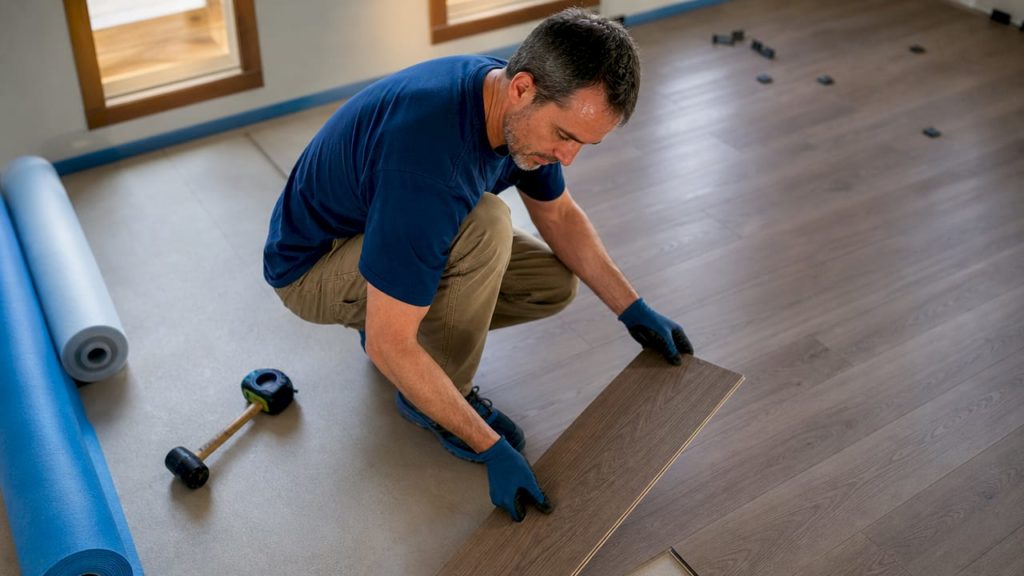
Waterproof laminate flooring for basement spaces is defined as laminate with a sealed, moisture-resistant core and treated edges designed to resist water penetration from spills and ambient humidity. Standard laminate absorbs moisture and swells. Waterproof variants from brands like Kronospan and Mohawk use composite or treated high-density fibreboard cores, surface sealing technology such as Mohawk’s HydroSeal, and interlocking joints to block water at every layer. The catch is that no laminate defeats a wet concrete slab on its own. A vapour barrier is non-negotiable in any basement installation, and moisture control beneath the floor is as critical as the product you choose.
1. What makes laminate flooring waterproof?
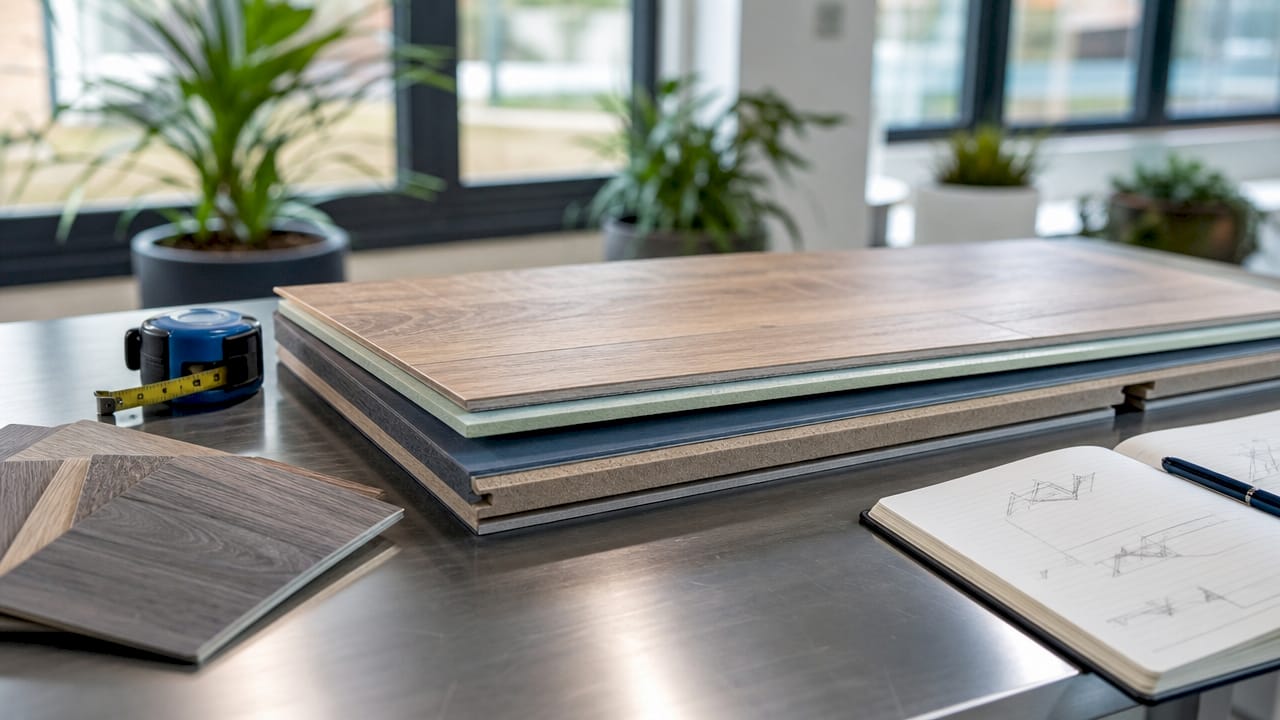
The difference between water-resistant and waterproof laminate is structural, not marketing. Water-resistant floors repel liquid for roughly 20–30 minutes before moisture penetrates the core. Waterproof laminate blocks moisture at the surface, core, and seams. That distinction matters enormously in a basement, where moisture sits longer and comes from multiple directions.
Waterproof laminate achieves its rating through three design features:
- Sealed edges: Tongue-and-groove joints are treated with wax or resin to prevent water wicking between planks.
- Composite or treated HDF core: Standard HDF swells on contact with water. Waterproof cores use denser, resin-impregnated fibreboard or rigid composite materials that resist absorption.
- Surface wear layer: Ratings like AC4 (heavy residential) and AC5 (commercial) indicate scratch and wear resistance. AC5 is the better choice for high-traffic basements.
Waterproof claims are time-limited. Products like Bavaria Oak by Caspar Flooring Direct specify protection up to 48 hours. That covers spills and minor flooding, not a burst pipe or ongoing groundwater seepage. Standing water beyond the warranty window can void your coverage entirely.
Pro Tip: Read the product specification sheet before purchasing. Look for explicit waterproof core claims, not just surface-level water resistance. If the spec sheet only mentions surface treatment, the product is water-resistant, not waterproof.
2. How to prepare and install waterproof laminate in a basement
Installation quality determines whether your waterproof laminate actually performs. A perfectly rated product will fail if the subfloor preparation is wrong.
Follow these steps in order:
- Test subfloor moisture. The subfloor must pass a calcium chloride test at ≤ 5 lbs per 1,000 sq ft per 24 hours. Readings above this threshold mean the concrete is releasing too much moisture vapour for safe laminate installation.
- Check subfloor flatness. The slab must be flat to within 3/16 of an inch over 10 feet. High spots cause joint stress. Low spots create hollow areas where planks flex and crack.
- Install a vapour barrier. Lay a 6-mil polyethylene sheet across the entire concrete slab. Overlap seams by at least 200mm and tape every joint. This layer stops moisture vapour from the concrete reaching the laminate core.
- Acclimate the flooring. Leave the planks in the basement for 48–72 hours before installation. This allows the material to adjust to the room’s temperature and humidity, reducing post-installation expansion.
- Use the floating floor method. Do not glue or nail waterproof laminate to the subfloor. Floating installation preserves the locking joint integrity and allows natural movement.
- Seal expansion gaps. Leave a 10–12mm expansion gap at every wall and fixed object. Fill these gaps with 100% silicone caulk, not acrylic sealant. Silicone remains flexible and waterproof. Acrylic cracks over time and lets water in.
The expansion gap is the most overlooked failure point in basement laminate installations. Water finds its way through unsealed perimeters far more often than through the planks themselves.
Pro Tip: Use a moisture metre to test multiple points across the slab, not just one central spot. Moisture levels vary significantly across a concrete floor, particularly near walls and drains.
3. Top waterproof laminate products for basements
The market offers a range of moisture-resistant flooring products at different price points. These are the most relevant options for basement conditions in 2026.
Bavaria Oak Maplewood by Caspar Flooring Direct
- 8mm thickness with AC5 commercial wear rating
- Waterproof protection certified up to 48 hours
- Click-lock installation system
- Suitable for residential and light commercial basement use
- Plank size: 7.67 x 50.7 inches
Mohawk RevWood Plus
- Uses Mohawk’s HydroSeal technology on all four edges
- Genuine wood look with waterproof core construction
- Available in multiple plank widths for design flexibility
- Backed by Mohawk’s All Pet Plus warranty
Shaw Floorté Laminate
- Shaw applies edge sealing across the Floorté range
- AC4 and AC5 ratings available depending on product line
- Designed for below-grade installations including basements
| Product | Wear rating | Waterproof claim | Best for |
|---|---|---|---|
| Bavaria Oak Maplewood | AC5 | Up to 48 hours | Residential and commercial basements |
| Mohawk RevWood Plus | AC4/AC5 | HydroSeal edge protection | Style-focused residential basements |
| Shaw Floorté | AC4/AC5 | Edge-sealed core | Below-grade residential use |
Cost of water-resistant laminate typically ranges from $3.00 to $7.00 per square foot installed. Waterproof laminate sits at the upper end of that range. Luxury vinyl plank costs more per square foot on average, which makes quality waterproof laminate a cost-effective middle ground for most homeowners.
4. Waterproof laminate vs other basement flooring options
Choosing the right floor for a basement means understanding what each material actually does under moisture pressure.
| Flooring type | Waterproof rating | Durability | Cost (installed) | Aesthetics |
|---|---|---|---|---|
| Waterproof laminate | Limited (up to 48 hours) | High with AC5 rating | $3.00–$7.00 per sq ft | Wood-look, wide range |
| Luxury vinyl plank (LVP) | 100% waterproof | Very high | Higher than laminate | Realistic wood and stone |
| Ceramic or porcelain tile | 100% waterproof | Excellent | Moderate to high | Cold, hard underfoot |
| Engineered hardwood | Water-resistant only | Moderate | High | Premium wood appearance |
Luxury vinyl plank is the only flooring type that is genuinely 100% waterproof throughout its core and edges. That makes LVP the better choice for basements with active moisture problems, such as those without a functioning sump pump or with known groundwater intrusion. Waterproof laminate suits dry, well-sealed basements with no persistent groundwater issues. Engineered hardwood is not suitable for basements with any meaningful moisture exposure. Tile is fully waterproof but cold and hard underfoot, which makes it less comfortable for living spaces.
The practical advantage of waterproof laminate over LVP is cost and feel. Laminate is warmer underfoot, easier to install for DIY homeowners, and significantly cheaper per square foot than premium vinyl plank options.
5. How to choose the best moisture-resistant flooring for your basement
The right product depends entirely on your basement’s moisture status. A flooring decision made without a moisture assessment is a gamble.
Before purchasing any flooring, check these conditions:
- Sump pump function: A working sump pump is the first line of defence against groundwater. If yours fails regularly or the basement floods seasonally, no laminate product will hold up long-term.
- Wall and floor sealing: Look for visible efflorescence (white salt deposits) on concrete walls. This signals active moisture movement through the slab or walls and requires professional waterproofing treatment before any flooring goes down.
- Humidity levels: Basement relative humidity above 60% consistently indicates a moisture problem. A dehumidifier alone is not a fix for structural moisture intrusion.
Waterproof laminate is the right choice when your basement is dry, properly sealed, and has no history of flooding. If any of those conditions are uncertain, luxury vinyl plank or tile is the safer investment. Common basement waterproofing errors include skipping the vapour barrier and failing to address wall seepage before laying flooring.
Pro Tip: Check the manufacturer’s warranty terms before buying. A genuine waterproof warranty covers the core and seams, not just the surface. Warranties that only cover surface staining are water-resistant products sold under waterproof marketing.
Routine maintenance also preserves performance. Clean spills immediately, avoid wet mopping, and inspect expansion gap sealant annually. Silicone degrades over time and may need reapplication every few years.
Key takeaways
Waterproof laminate flooring performs reliably in basements only when the subfloor is dry, the vapour barrier is correctly installed, and every expansion gap is sealed with 100% silicone caulk.
| Point | Details |
|---|---|
| Vapour barrier is mandatory | A 6-mil polyethylene sheet on the concrete slab prevents moisture vapour from destroying the laminate core. |
| Waterproof claims are time-limited | Most products protect against standing water for up to 48 hours, not ongoing moisture exposure. |
| Subfloor prep determines longevity | Moisture testing and flatness checks must be completed before any plank is laid. |
| LVP outperforms laminate in wet basements | For basements with active moisture issues, luxury vinyl plank is the more reliable choice. |
| Seal expansion gaps with silicone | Acrylic sealants crack and fail. Only 100% silicone caulk maintains a waterproof perimeter seal. |
Basement flooring: what I’ve learnt the hard way
The most common mistake I see with basement flooring projects is treating the flooring choice as the primary decision. Homeowners spend hours comparing products and almost no time assessing what is happening beneath the slab. A premium waterproof laminate installed over an untreated, moisture-heavy concrete floor will fail within two years. The floor is the last step, not the first.
The expansion gap issue is real and underestimated. I have seen installations where the planks were perfect but water crept in through a 2mm gap at the skirting board that was sealed with the wrong product. Silicone is not optional. It is the difference between a floor that lasts a decade and one that buckles after the first wet season.
My honest recommendation is this: if your basement has any history of water ingress, resolve that first. Assess subfloor moisture levels properly, install a vapour barrier, and only then choose your flooring. The product matters less than the preparation. A mid-range waterproof laminate on a correctly prepared subfloor will outperform a premium product on a poorly prepared one every time.
— Eben
Basement waterproofing before you lay a single plank
Getting your basement floor right starts well before the first plank goes down. Prowaterproofing provides professional moisture testing, vapour barrier installation, and full basement waterproofing assessments for residential and commercial properties across South Africa.
Whether you are dealing with a damp concrete slab, visible efflorescence on walls, or simply want to confirm your basement is ready for a flooring installation, the team at Prowaterproofing can assess the space and recommend the right moisture control solution. Laying waterproof laminate over an untreated basement is a costly mistake. Getting a professional assessment first protects your flooring investment from day one. Contact Prowaterproofing for a quote before your next basement flooring project.
FAQ
Is laminate flooring suitable for basements?
Waterproof laminate is suitable for dry, well-sealed basements with no active groundwater issues. It is not suitable for basements with recurring flooding or persistent moisture seepage through walls or slabs.
What is the difference between waterproof and water-resistant laminate?
Water-resistant laminate repels surface liquid for 20–30 minutes. Waterproof laminate protects the core and seams and can withstand standing water for up to 48 hours, depending on the product.
Do I need a vapour barrier under laminate in a basement?
Yes. A 6-mil polyethylene vapour barrier is mandatory on any concrete subfloor. Without it, moisture vapour from the slab will penetrate the laminate core and cause swelling and joint failure.
How long does waterproof laminate last in a basement?
With correct subfloor preparation, a vapour barrier, and proper perimeter sealing, quality waterproof laminate can last 15–25 years in a basement. Poor installation or unresolved moisture issues significantly shorten that lifespan.
Can I install waterproof laminate myself in a basement?
Yes, using the floating floor method. The critical steps are moisture testing, vapour barrier installation, acclimation, and sealing expansion gaps with 100% silicone caulk. Skipping any of these steps risks flooring failure.