
TL;DR:
- Waterproof vinyl flooring for basements needs a moisture-resistant core like SPC to prevent warping and mold. Proper subfloor preparation, including testing moisture and installing a vapour barrier, is essential for long-lasting results. SPC rigid core vinyl is the most reliable choice for below-grade environments, offering durability and stability.
Waterproof vinyl flooring for basements is a moisture-resistant flooring solution built to handle damp concrete subfloors without warping, swelling, or growing mould. The best choice for basement use is SPC (Stone Polymer Composite) rigid core vinyl, recognised by flooring specialists for its dimensional stability in cold, humid conditions. Brands such as Lifeproof and COREtec produce SPC products specifically suited to below-grade environments. Cost, installation method, and subfloor preparation all determine whether your floor lasts five years or thirty.
1. What makes waterproof vinyl flooring the best basement option?
SPC rigid core vinyl is the most dimensionally stable vinyl type available for basement conditions. Its stone polymer composite core resists the temperature and humidity swings typical of below-grade spaces, which commonly range between 55°F and 80°F. Standard flexible LVP and WPC vinyl both expand and contract more noticeably under those conditions, which leads to gaps, buckling, and joint failure over time.
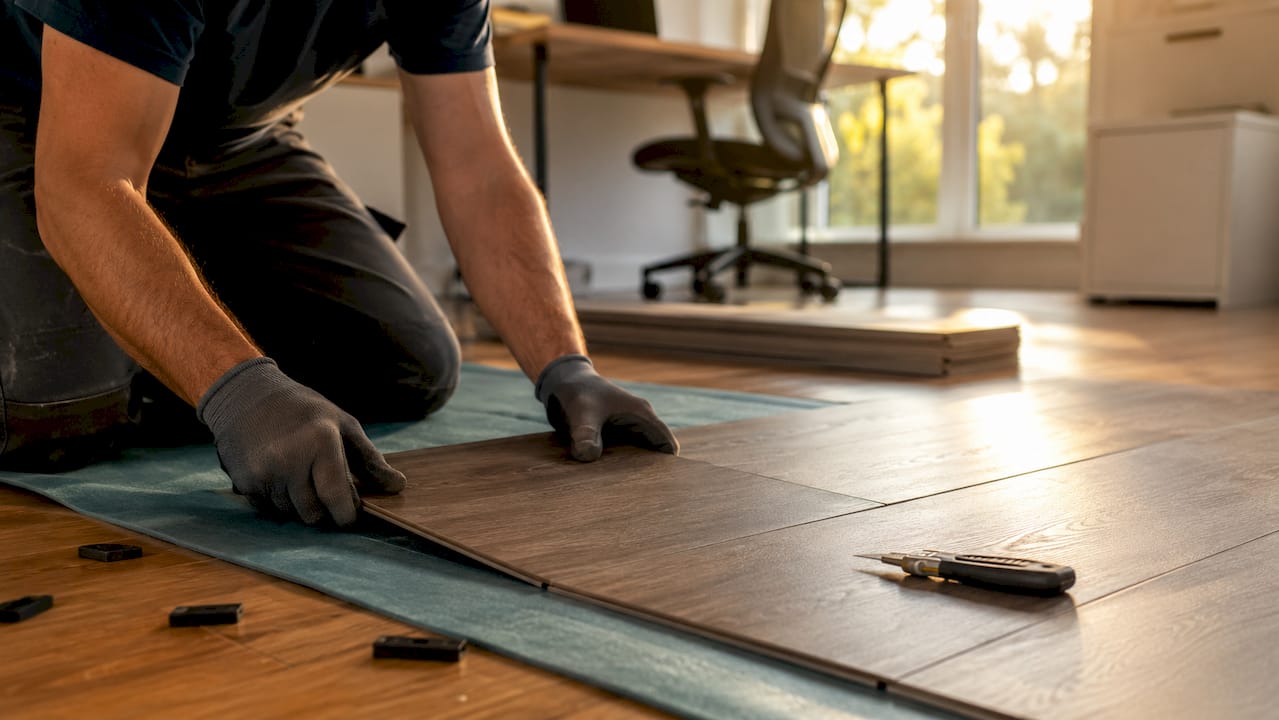
Not all vinyl flooring handles basement conditions equally. Homeowners often assume any vinyl product is suitable because vinyl is marketed as water-resistant. Only SPC rigid core vinyl reliably handles the temperature and humidity swings common in basements, making it the only category worth prioritising below grade.
SPC is also denser than WPC. That density means SPC bridges minor subfloor imperfections better than its softer counterpart, reducing the need for extensive levelling work before installation.
Pro Tip: Test your concrete slab for moisture before purchasing any flooring. Use a calcium chloride test or a relative humidity probe. A reading above 75% relative humidity means you need a vapour barrier or professional waterproofing work before laying any floor.
2. Top 6 waterproof vinyl flooring options for basements
Lifeproof Sterling Oak SPC
Lifeproof Sterling Oak is an SPC rigid core product with a 22-mil wear layer, making it one of the most durable value options in the mid-range price bracket. It installs as a floating floor directly over concrete and includes an attached underlayment. The 22-mil wear layer handles heavy foot traffic without showing wear for well over a decade.
Pros: Excellent moisture resistance, thick wear layer, attached underlayment included.
Cons: Limited colour range compared to premium lines.
COREtec Pro Plus
COREtec Pro Plus uses a cork underlayment attached to the SPC core, which adds sound absorption and thermal comfort underfoot. It suits finished basement rooms used as home offices or living spaces. The cork layer also acts as an additional moisture buffer between the concrete and the wear surface.
Pros: Superior comfort underfoot, good acoustic performance, waterproof core.
Cons: Higher price point than entry-level SPC options.
WPC luxury vinyl plank
WPC (Wood Polymer Composite) vinyl is a budget-friendly alternative to SPC. It feels softer underfoot because its core contains foamed polymer rather than stone composite. The trade-off is reduced dimensional stability. WPC expands more in temperature fluctuations, which makes it a secondary choice for unheated or poorly insulated basements.
Pros: Lower cost, comfortable underfoot, good range of styles.
Cons: Less stable than SPC in cold or damp conditions, higher risk of joint failure.
Luxury vinyl tile (LVT)
Luxury vinyl tile suits basement bathrooms, utility rooms, or laundry areas where a stone or ceramic look is preferred. LVT is fully waterproof at the surface and installs using a glue-down method, which eliminates the floating floor movement risk. The cost of luxury vinyl tile typically falls within the $4 to $16 per square foot range depending on thickness and brand.
Pros: Realistic stone or tile appearance, glue-down stability, fully waterproof surface.
Cons: Glue-down installation is less forgiving if subfloor moisture problems emerge later.
Vinyl sheet flooring
Vinyl sheet flooring is the most affordable water-resistant option, with costs typically between $2 and $7 per square foot. It suits utility basements, workshops, or storage areas where aesthetics are secondary. The continuous sheet surface has no seams, which eliminates the main moisture entry point found in plank or tile formats.
Pros: No seams, lowest cost, quick to install.
Cons: Less attractive finish, harder to repair sections if damaged.
SPC with separate vapour barrier
Some SPC products do not include an attached underlayment. In those cases, installing a separate 6-mil poly vapour barrier beneath the flooring is standard practice. The barrier runs up the walls 4–6 inches to prevent moisture wicking from the foundation. This combination can extend floor life expectancy to 20–30 years by preventing moisture-related issues beneath the surface.
Pros: Maximum moisture protection, works with most SPC products, extends floor lifespan significantly.
Cons: Adds installation time and material cost.
3. Vinyl flooring types compared: which suits your basement?
| Type | Typical cost (per sq ft) | Waterproof rating | Dimensional stability | Wear layer | Attached underlayment |
|---|---|---|---|---|---|
| SPC rigid core LVP | $2.49–$5.00 | Fully waterproof core | Excellent | 12–22 mil | Often included |
| WPC LVP | $2.00–$6.00 | Waterproof surface | Moderate | 12–20 mil | Often included |
| Vinyl sheet | $2.00–$7.00 | Waterproof surface | Good (no seams) | 6–12 mil | Not applicable |
| Luxury vinyl tile (LVT) | $4.00–$16.00 | Fully waterproof | Good (glue-down) | 12–20 mil | Not included |
SPC rigid core LVP offers the best balance of cost, stability, and moisture protection for most basement projects. Vinyl sheet wins on price and seamless coverage for utility spaces. LVT suits wet zones where a glue-down finish is preferred.
4. How to prepare and install vinyl flooring in a basement
Subfloor preparation is the step most homeowners underestimate. Ignoring slab moisture levels risks mould and floor damage even when the vinyl surface itself is waterproof. A flat, dry, tested slab is the foundation of a floor that lasts.
Follow these steps before and during installation:
- Test for moisture. Use a calcium chloride test or a relative humidity probe. Address any readings above the manufacturer’s threshold before proceeding.
- Check flatness. The concrete slab must be flat to within 3/16 of an inch over 10 feet. Grind high spots and fill low spots with self-levelling compound.
- Install a vapour barrier. Lay a 6-mil poly vapour barrier over the entire slab. Run it 4–6 inches up the walls and tape all seams. This is the single most effective step for long-term floor protection.
- Acclimate the flooring. Leave the vinyl planks or tiles in the basement for 48 hours before installation. This allows the material to adjust to the room’s temperature and humidity.
- Choose a floating installation. Floating floors are not glued or nailed to the subfloor. This method suits basements because it allows minor movement without stressing the joints.
- Avoid thick foam underlayments. Foam underlayments thicker than the manufacturer recommends compress unevenly and cause joint failure. Use only the underlayment specified for your product.
- Address structural drainage first. Waterproof vinyl protects from surface water but does not stop moisture migrating up through the foundation. Structural drainage problems must be fixed before any floor goes down.
Pro Tip: Choose SPC products with an attached vapour barrier or underlayment where possible. It reduces installation steps and removes the risk of mismatched materials causing compatibility problems.
For a detailed breakdown of what installation costs in 2026, the basement flooring cost guide at Prowaterproofing covers current pricing across all vinyl types.
5. Maintaining water-resistant vinyl flooring in a damp basement
Waterproof vinyl flooring is low maintenance, but damp basement environments create specific risks that routine care can prevent. The waterproof surface does not mean the floor is immune to problems caused by moisture beneath it.
Do:
- Sweep or vacuum weekly to remove grit that scratches the wear layer.
- Mop with a pH-neutral cleaner diluted in water. Avoid steam mops, which force moisture into seams.
- Inspect seams and joints every six months for gaps or lifting edges.
- Run a dehumidifier to keep basement humidity below 60%.
- Check for musty odours, which signal moisture trapped beneath the floor.
Don’t:
- Allow standing water to sit on the floor surface, even though the vinyl is waterproof.
- Use abrasive cleaners or solvent-based products that degrade the wear layer.
- Ignore condensation on walls or pipes near the floor. Condensation indicates a humidity problem that will eventually affect the subfloor.
- Place heavy furniture directly on the floor without felt pads. Point loads can compress the core over time.
Good basement ventilation and humidity control are as important as the flooring choice itself. A well-chosen floor in a poorly ventilated basement will still fail prematurely.
Key takeaways
SPC rigid core vinyl is the most reliable waterproof vinyl flooring for basements because its stone composite core resists moisture, temperature swings, and subfloor imperfections better than any other vinyl type.
| Point | Details |
|---|---|
| SPC outperforms WPC in basements | SPC’s stone composite core handles temperature and humidity swings without buckling or gapping. |
| Vapour barrier is non-negotiable | A 6-mil poly vapour barrier run 4–6 inches up walls prevents moisture migrating from the concrete slab. |
| Subfloor prep determines longevity | Test moisture levels and flatten the slab before installation to avoid mould and joint failure. |
| Cost ranges widely by type | Sheet vinyl costs $2–$7 per sq ft; premium SPC ranges from $2.49 to $16 per sq ft depending on brand. |
| Avoid thick foam underlayments | Foam thicker than manufacturer spec compresses unevenly and causes structural joint failure. |
Why I always recommend SPC over every other vinyl type for basements
Most flooring articles treat all vinyl as roughly equivalent and suggest any waterproof product will do the job. That advice leads to expensive failures. I have seen WPC floors installed in unheated South African basements buckle within two winters because the temperature swings exceeded what the foamed core could handle. The homeowners had done everything else correctly. The product was simply wrong for the environment.
SPC rigid core vinyl is the only category I recommend for below-grade installations without reservation. The density of the stone composite core means it does not flex, does not expand dramatically, and does not telegraph subfloor imperfections the way softer vinyl does. Products like Lifeproof Sterling Oak and COREtec Pro Plus exist at different price points, but both share that core rigidity that makes the difference.
The second mistake I see consistently is skipping the vapour barrier. Homeowners read “waterproof” on the packaging and assume the floor handles moisture from every direction. It does not. The waterproof surface protects against spills from above. The vapour barrier protects against moisture rising from the concrete below. You need both. Skipping the barrier to save time or money is the single most common reason a floor that should last 25 years fails in five.
If your basement has any history of water ingress, address the underlying drainage issues before laying any floor. No flooring product fixes a structural water problem. Get the waterproofing right first, then choose your floor.
— Eben
Get your basement waterproofing right before the floor goes down
A quality SPC vinyl floor is only as good as the waterproofing beneath it. If your basement has damp walls, rising moisture, or a history of water ingress, the floor will fail regardless of how good the product is.
Prowaterproofing specialises in basement moisture control and vapour barrier installation for South African homeowners. The team assesses your slab, identifies moisture pathways, and installs the correct waterproofing solution before your vinyl floor goes down. That preparation is what separates a floor that lasts three decades from one that needs replacing in five years. Contact Prowaterproofing for a consultation and protect your flooring investment from the ground up. You can also read more about damp basement flooring options suited to South African conditions on the Prowaterproofing website.
FAQ
What is the best waterproof vinyl flooring for a damp basement?
SPC rigid core luxury vinyl plank is the best choice for damp basements. Its stone composite core resists moisture and temperature fluctuations better than WPC or standard flexible LVP.
Do I need a vapour barrier under vinyl flooring in a basement?
A 6-mil poly vapour barrier is standard practice for basement vinyl installations. It prevents moisture from the concrete slab migrating upward and damaging the floor from below.
How much does waterproof vinyl flooring cost for a basement?
Sheet vinyl costs between $2 and $7 per square foot. Premium SPC rigid core vinyl ranges from $2.49 to $16 per square foot depending on brand, wear layer thickness, and whether underlayment is included.
Can vinyl flooring stop basement flooding?
Vinyl flooring protects against surface water but does not address hydrostatic pressure or water ingress through the foundation. Structural drainage problems must be resolved before installation.
How long does vinyl flooring last in a basement?
SPC vinyl with a proper vapour barrier can last 20–30 years in a basement. Without moisture control beneath the floor, even waterproof products fail prematurely due to trapped humidity and mould growth.