
TL;DR:
- Waterproofing due diligence involves advanced testing to detect hidden water-related defects during property acquisition. It helps quantify risks and ensures accurate valuation by uncovering issues often missed in standard inspections. Industry standards and regular audits support effective management of waterproofing systems, protecting long-term property value and investor interests.
Waterproofing due diligence is the forensic evaluation conducted during property acquisition to detect concealed water-related defects that standard inspections routinely miss. Unlike a general Property Condition Assessment (PCA), this specialist process uses advanced diagnostic methods to uncover hidden membrane failures, moisture trapped within building assemblies, and systemic enclosure defects. Standards such as BS 8102:2022 and ASTM E2270, alongside guidance from the International Institute of Building Enclosure Consultants (IIBEC), define what a credible assessment must cover. Post-acquisition envelope failures can cost millions when left undetected at the point of purchase. For property investors and developers, understanding this process is not optional. It is the difference between a sound acquisition and an expensive liability.

What is waterproofing due diligence and why does it matter?
Waterproofing due diligence is a specialised forensic inspection that goes well beyond what a standard PCA delivers. A typical PCA relies on visual observation and generalist checklists. Standard PCAs rarely detect adhesion failure behind sealants or hidden membrane failures without advanced testing. That gap is where significant financial risk lives.
The role of waterproofing in property due diligence is to quantify risk before contracts are signed. A specialist survey evaluates the existing waterproofing strategy against recognised standards, identifies defects, and calculates the cost of remedial work. Those figures feed directly into acquisition pricing, capital expenditure budgets, and negotiation positions. Without them, you are buying blind.

The financial stakes are real. Remediation of systemic waterproofing failures in commercial buildings frequently runs into seven figures when structural elements are affected. Catching these defects pre-purchase gives investors the leverage to renegotiate, require vendor repairs, or walk away from a bad deal entirely.
What are the common waterproofing issues that due diligence aims to detect?
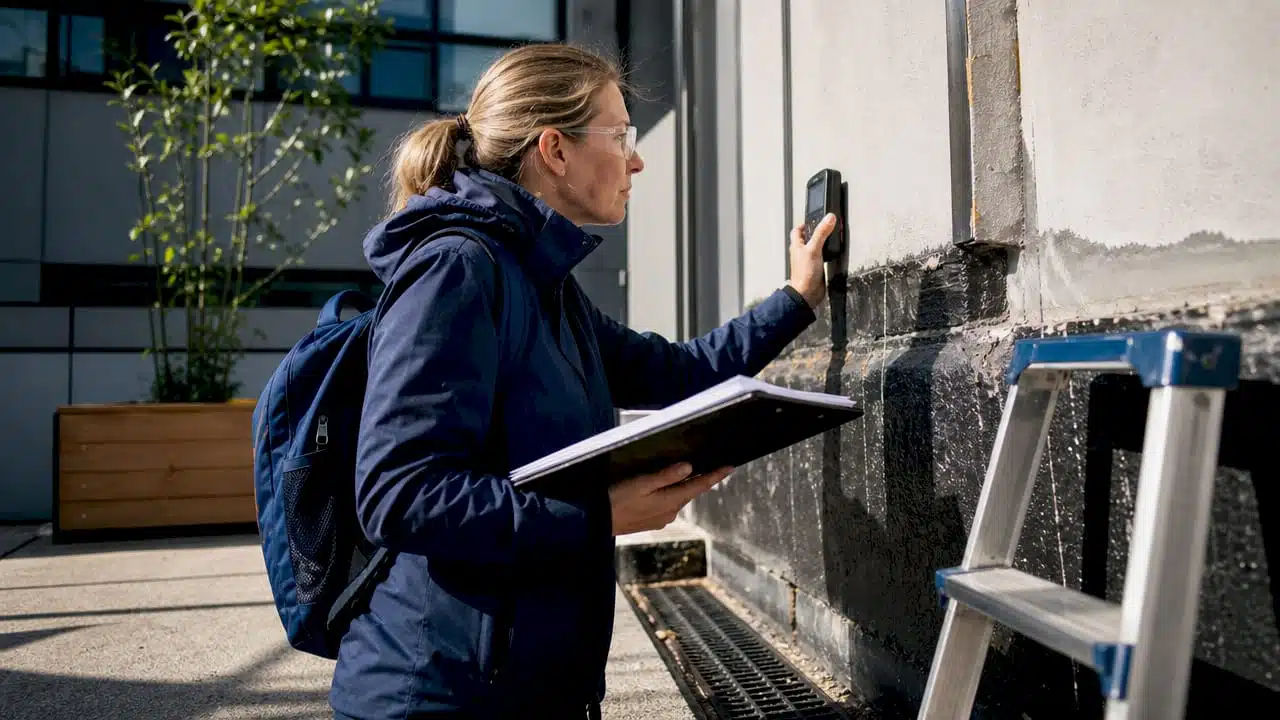
Hidden defects are the defining challenge of any waterproofing evaluation process. Many of the most damaging problems are invisible to the naked eye and are actively concealed by cosmetic repairs. Forensic tools like infrared thermography reveal these concealed issues that visual inspection misses entirely.
The most common waterproofing issues found during specialist inspections include:
- Hidden water intrusion and membrane failure. Membranes degrade over time, particularly at laps and terminations. Water tracks laterally beneath the membrane before appearing as a visible leak, making the source difficult to locate without testing.
- Adhesion failure behind sealants. Sealant joints can appear intact on the surface while the bond behind has failed. Water enters the assembly and saturates insulation or structural elements without any external sign.
- Chronic moisture trapped within assemblies. Moisture accumulates within wall and roof build-ups over years. It causes corrosion, timber decay, and mould growth long before it becomes visible internally.
- Problems at penetrations and transitions. Pipe penetrations, expansion joints, and changes in substrate material are the highest-risk points in any building envelope. Improper detailing at these transitions accounts for a disproportionate share of failures.
- Concealed failures such as improper flashing and buried weep screeds. Flashing installed without adequate laps or sealed incorrectly allows water to bypass the primary membrane. Blocked or buried weep screeds prevent drainage and create hydrostatic pressure within the wall cavity.
Pro Tip: Ask the vendor for maintenance records and any previous waterproofing repair invoices before the inspection. A pattern of repeated repairs to the same location is a reliable indicator of an unresolved systemic failure rather than routine maintenance.
Recognising these common waterproofing failures before purchase is what separates informed investors from those who inherit expensive problems.
Which specialised inspections and tests does waterproofing due diligence include?
A credible waterproofing due diligence process uses a hierarchy of diagnostic methods, moving from non-invasive surveys to targeted destructive investigation where necessary. Successful due diligence requires narrow-angle, high-resolution evaluation of vulnerable areas rather than broad checklists.
The standard sequence of tests is as follows:
- Visual survey and documentation. A specialist inspector photographs and records all visible defects, previous repairs, and areas of concern. This establishes the baseline for all subsequent testing.
- Flood testing and spray testing. Flood testing requires 24–48 hours of ponding water on horizontal surfaces such as podium decks and balconies. Spray testing simulates rainfall on vertical facades and window interfaces to identify water pathways.
- Infrared thermography. Thermal imaging cameras detect temperature anomalies caused by moisture evaporation cooling surfaces. This method maps the extent of hidden moisture within assemblies without cutting into the fabric of the building.
- Non-penetrating moisture mapping. Capacitance and radar-based instruments measure moisture content within walls and roofs without causing damage. This delineates the boundaries of wet areas identified by thermography.
- Destructive evaluation at high-risk points. Where non-invasive methods indicate a significant defect, targeted openings expose the assembly for direct inspection. This confirms the failure mode and informs the remedial specification.
- Geotechnical investigation for below-grade elements. Hydrostatic pressure assumptions without geotechnical reports are a primary cause of below-grade waterproofing failure. A geotechnical investigation confirms groundwater levels and informs the design standard required.
| Test method | Primary purpose | Invasive? |
|---|---|---|
| Flood and spray testing | Confirm water pathways and active leaks | No |
| Infrared thermography | Map hidden moisture within assemblies | No |
| Moisture mapping | Quantify extent of wet areas | No |
| Destructive evaluation | Confirm failure mode at specific points | Yes |
| Geotechnical investigation | Verify hydrostatic pressure conditions | Yes (borehole) |
Pro Tip: Schedule infrared thermography in the early morning or late afternoon when the temperature differential between wet and dry areas is greatest. Midday surveys in direct sunlight produce unreliable results.
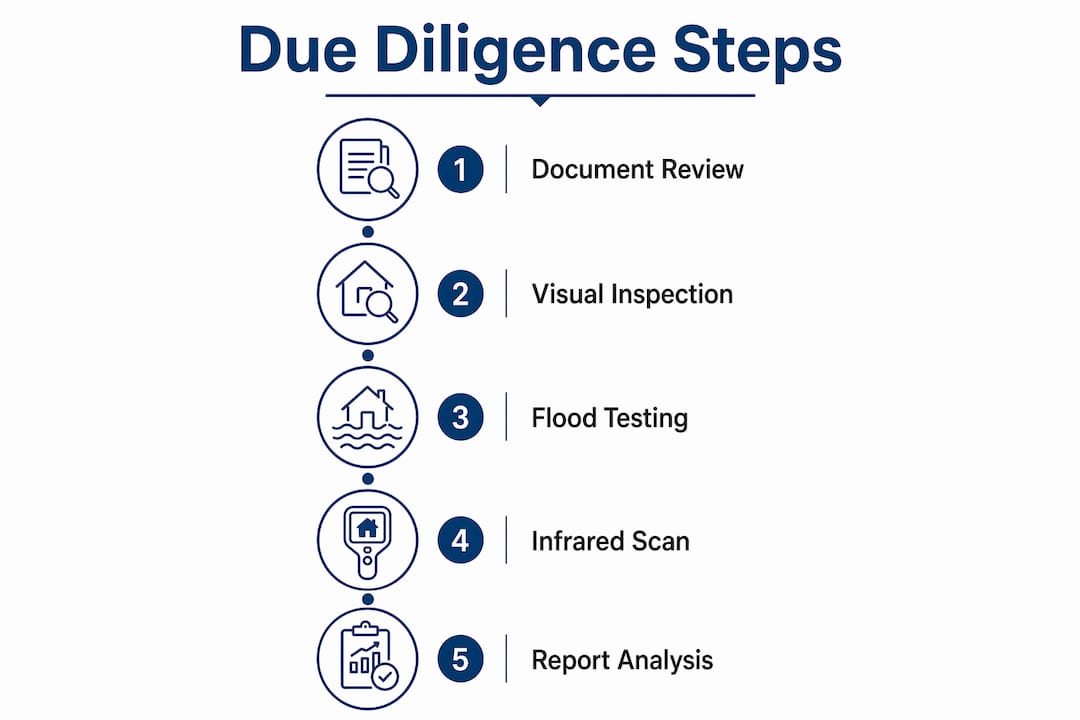
For a full commercial waterproofing checklist covering these methods in detail, Prowaterproofing provides a practical reference for investors assessing commercial assets.
How do industry standards and inspection cycles apply to waterproofing due diligence?
Industry standards give waterproofing due diligence its legal and technical credibility. Without reference to a recognised standard, inspection findings are difficult to defend in negotiations, insurance claims, or litigation.
BS 8102:2022 is the primary British Standard governing the protection of below-ground structures against water ingress. A pre-purchase survey evaluates the existing waterproofing strategy against BS 8102:2022 and calculates the cost of bringing the building into compliance. This is particularly relevant for basement conversions, underground car parks, and mixed-use developments with below-grade retail or residential space.
ASTM E2270 sets out the recommended practice for periodic inspection of building facades, including waterproofing elements. IIBEC recommends facade inspections every five years per ASTM E2270 to maintain compliance and provide documented evidence for regulators and insurers. In a due diligence context, the absence of inspection records spanning the recommended cycle is itself a risk indicator.
| Standard | Scope | Recommended cycle |
|---|---|---|
| BS 8102:2022 | Below-ground waterproofing design and performance | At design stage and change of use |
| ASTM E2270 | Facade and building envelope periodic inspection | Every 5 years |
| IIBEC guidance | Building enclosure commissioning and assessment | At acquisition and every 5 years |
Documented inspections serve as critical evidence for regulators and insurers. A property with a clear inspection history commands stronger insurance terms and reduces the risk of coverage disputes following a water damage event.
How does waterproofing due diligence protect property investments?
The practical value of a thorough waterproofing evaluation process extends well beyond identifying defects. It shapes every financial decision made at the point of acquisition and throughout the asset holding period.
- Accurate capital expenditure budgeting. Survey findings translate directly into costed remedial programmes. Investors can model the true cost of ownership before committing capital, rather than discovering repair bills after completion.
- Negotiation leverage. Documented defects give buyers a factual basis for price reductions or vendor repair obligations. A well-evidenced report is far more persuasive than a general concern about building condition.
- Evaluating change of use. Converting above-ground commercial space to residential, or bringing below-grade areas into habitable use, requires waterproofing systems that meet BS 8102:2022 Grade 3 standards. Due diligence identifies the gap between existing provision and the required standard before planning consent is sought.
- Baseline documentation for dispute resolution. Clear documentation prevents liability conflicts and supports insurance claims. A pre-purchase report establishes the condition of the building at the point of transfer, protecting the buyer if defects emerge post-completion.
- Stabilising Net Operating Income. Early due diligence distinguishes manageable maintenance from costly systemic failure. Addressing systemic failures before they affect tenants protects rental income and prevents the reputational damage that follows visible water damage in occupied buildings.
The role of waterproofing inspections in protecting long-term asset value is well established. Investors who commission specialist assessments consistently make better-informed acquisition decisions than those who rely on generalist reports alone.
Key takeaways
Waterproofing due diligence is the single most effective tool for detecting hidden water-related risks before property acquisition, protecting both capital and long-term asset value.
| Point | Details |
|---|---|
| Go beyond standard PCAs | Standard Property Condition Assessments miss adhesion failures and hidden membrane defects without advanced testing. |
| Use forensic testing methods | Flood testing, infrared thermography, and moisture mapping are the minimum standard for credible assessments. |
| Reference recognised standards | BS 8102:2022 and ASTM E2270 provide the technical and legal framework for defensible inspection findings. |
| Inspect every five years | IIBEC recommends building envelope inspections on a five-year cycle to maintain compliance and insurance evidence. |
| Document everything | A pre-purchase report establishes baseline condition and protects buyers in future disputes or insurance claims. |
Why investors underestimate waterproofing risk at their peril
I have reviewed enough acquisition reports to know that waterproofing is the most consistently underestimated risk in commercial property due diligence. Investors who would never skip a structural survey routinely accept a generalist PCA as sufficient for the building envelope. That is a mistake that costs real money.
The problem is that water damage is patient. A membrane failure at a podium deck joint may take three years to manifest as a visible ceiling stain in the car park below. By that point, the reinforcement is corroding and the remediation cost has multiplied. The defect existed at the point of purchase. The investor simply did not know it.
I have also seen the opposite: investors who commission a thorough specialist survey, identify a significant but manageable defect, and use that finding to negotiate a price reduction that more than covers the remediation cost. That is due diligence working exactly as it should.
The other misconception worth addressing is the idea that a recently refurbished building is low risk. Cosmetic repairs are the most effective way to mask active water ingress. Fresh paint and new plasterboard conceal damp substrates that thermography would expose in minutes. Never assume a recent renovation means a clean bill of health on the envelope.
My advice is straightforward. Engage a specialist building envelope consultant before you exchange contracts, not after. The cost of a forensic inspection is trivial relative to the exposure it eliminates. And if the vendor resists access for testing, treat that resistance as a finding in itself.
— Eben
Prowaterproofing: specialist support for property investors
Prowaterproofing provides forensic waterproofing inspections and pre-purchase assessments for residential, commercial, and industrial properties across South Africa. The team identifies hidden water ingress, membrane failures, and envelope defects at the acquisition stage, before they become the buyer’s problem. Prowaterproofing also supports investors with remedial strategy, technical specification, and construction monitoring once defects are confirmed. Whether you are acquiring a single commercial asset or a multi-site portfolio, early specialist involvement protects your capital and gives you the evidence you need to negotiate with confidence. Contact Prowaterproofing to arrange a pre-purchase assessment before your next acquisition.
FAQ
What is waterproofing due diligence in property transactions?
Waterproofing due diligence is a specialist forensic inspection conducted before property purchase to detect hidden water ingress, membrane failures, and envelope defects that standard assessments miss. It produces a costed report that informs acquisition pricing and capital expenditure planning.
How does waterproofing due diligence differ from a standard PCA?
A standard Property Condition Assessment uses visual inspection and generalist checklists. Waterproofing due diligence adds flood testing, infrared thermography, moisture mapping, and where necessary, destructive investigation to uncover defects invisible to the naked eye.
Which standards apply to waterproofing due diligence?
BS 8102:2022 governs below-ground waterproofing performance, while ASTM E2270 sets out the recommended practice for periodic facade and envelope inspections. IIBEC recommends a five-year inspection cycle for building envelopes to maintain compliance and insurance evidence.
How often should a building envelope be inspected?
IIBEC recommends facade inspections every five years per ASTM E2270. A pre-purchase inspection should always be commissioned regardless of when the last scheduled inspection occurred.
Can waterproofing due diligence findings be used in price negotiations?
Documented defects from a specialist survey provide a factual basis for price reductions or vendor repair obligations. Clear documentation also protects buyers in post-completion disputes and insurance claims.