
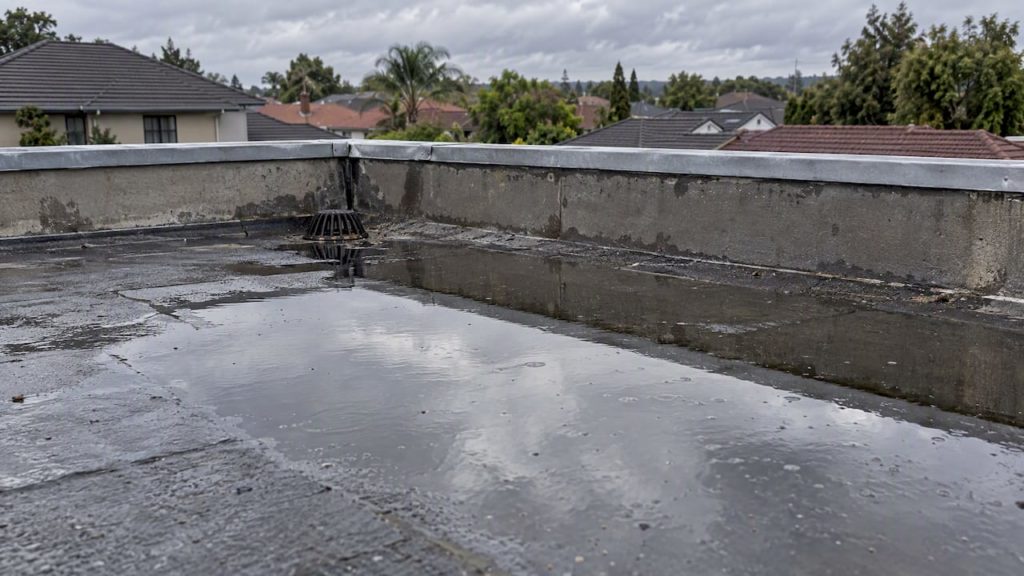
Flat roof homes in Gauteng flood mainly because of blocked gutters and outlets, insufficient roof fall that leaves water pooling instead of draining, and waterproofing membranes worn out by sun and storms. If you own one of these properties, your first move is simple: clear every gutter, downpipe and outlet now, photograph any damage you find, and protect the rooms below before the next downpour arrives.
TL;DR:
- Water remaining on the roof more than a day after rain points to inadequate fall or blocked drainage; recurring stains warrant tracing the leak.
- After heavy storms, inspect outlets, flashings, penetrations, and top floor ceilings, then save dated photos and notes for contractor quotes or insurance claims.
- Clear gutters and outlets before summer, check them after storms, and arrange a contractor inspection after storm season; urban debris can clog drains between rains.
- Hire a waterproofing consultant for recurring leaks, cracked or lifting membranes, or ponding that persists for days; professionals can diagnose breaches and correct roof fall.
Table of Contents
- How Gauteng weather and roof design increase flood risk for flat roofs
- Exactly how water gets past a flat roof into ceilings and walls
- Practical inspection checklist for homeowners
- Prevention and immediate remedial steps you can take now
- When to hire a waterproofing consultant and what they will do
- Maintenance timetable: what to do and when through the year
- Effects of roof design and materials on flooding in Gauteng homes
- How urban pollution and debris affect drainage on Gauteng flat roofs
- Why I always tell homeowners to fix the small things first
- Get your flat roof storm-ready
- FAQ
- Sources
How Gauteng weather and roof design increase flood risk for flat roofs
Gauteng’s storms tend to be short, intense and unpredictable rather than slow and steady. The South African Weather Service has warned that severe weather across the region can bring heavy downpours, hail and damaging winds capable of causing localised flooding, and a flat roof has very little time to shed that volume of water before it backs up.
Flat roofs were never actually flat. They rely on a slight built-in fall, usually just a few degrees, to guide water towards outlets. When that fall is too shallow, uneven, or disrupted by a later renovation, water collects in low spots instead of running off. Parapets, which give flat roofs their clean architectural look, compound the problem: they trap water on the roof surface rather than letting it spill harmlessly over an edge, so every outlet and overflow point has to work properly or the water has nowhere else to go.
Deck finishes and roof penetrations (vent pipes, aerial brackets, air conditioning units) add further weak points. Each one needs a properly sealed junction, and each junction is a place where a membrane can be pierced, stretched or poorly detailed during installation.
On top of this sits material ageing. Gauteng’s high altitude means intense UV exposure, and the daily swing between hot afternoons and cool evenings puts waterproofing membranes through constant expansion and contraction. Over the years, this thermal cycling makes many membranes brittle, and a brittle membrane cracks and splits rather than flexing with the building, which is exactly when small storms start causing big indoor problems.
Exactly how water gets past a flat roof into ceilings and walls
Ponding water is patient. Every time it sits on a seam or lap joint, it pushes slightly at the bond, and repeated cycles of ponding and drying eventually force that joint open. Once a seam fails, water has a direct route into the roof structure.
Blocked outlets and downpipes make this worse by giving water nowhere to go but sideways and upwards, overflowing at penetrations, upstands and parapet junctions instead of exiting through the drainage system as designed. Flashings around chimneys, vents and roof edges are common failure points too, especially where sealant has dried out or lifted.
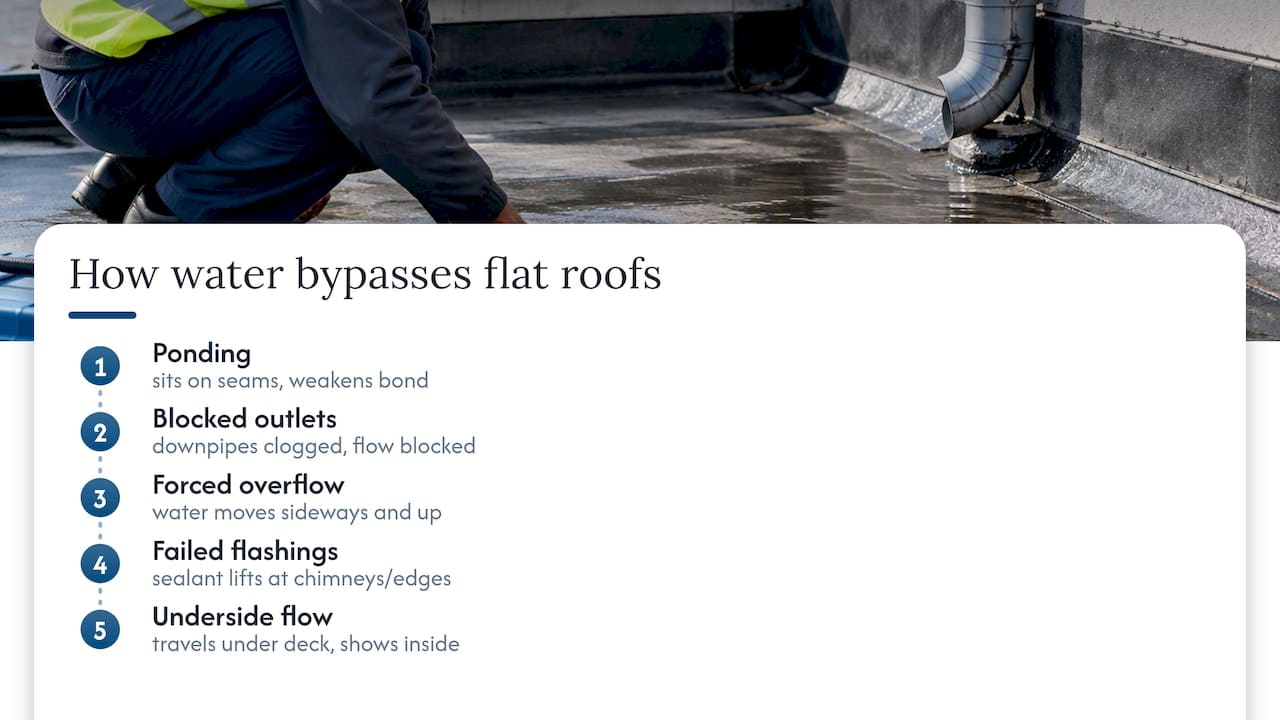
Once water gets past these defences, it travels along the underside of the roof deck before announcing itself indoors: a ceiling stain, a patch of peeling paint, a musty smell, or damp creeping down an internal wall far from where the actual breach occurred.
Practical inspection checklist for homeowners
A short, methodical check after any heavy storm catches most problems before they become expensive ones.
- Gutters and downpipes: confirm they are clear of leaves, sediment and nesting debris, and that water exits freely at ground level.
- Roof surface: look for standing water more than a day after rain, which signals a fall or drainage problem rather than normal run-off time.
- Outlets and scuppers: check that grilles are unblocked and that the opening itself hasn’t been crushed or silted up.
- Flashings and penetrations: inspect the seals around pipes, vents and parapet edges for cracking, lifting or gaps.
- Interior signs: walk through top-floor rooms looking for ceiling stains, bubbling paint or a damp smell, which often appear before any visible roof damage.
Record what you find with dated photos, a rough estimate of ponding depth where relevant, and a short note for each item. This record becomes useful evidence if you need a contractor quote or an insurance claim later.
Pro Tip: Never inspect a flat roof without proper fall protection. Use a stabiliser ladder for low, accessible roofs, and call a contractor for anything steep, high or wet.
Prevention and immediate remedial steps you can take now
Some fixes you can do yourself today; others need a professional’s tools and judgement.
- Clear leaves, moss and silt from every gutter and downpipe by hand or with a hose.
- Run a garden hose into each outlet to confirm water drains away at ground level without backing up.
- Temporarily divert runoff away from any doors, windows or walls showing early signs of water ingress.
Beyond the DIY basics, a contractor can clear and reroute blocked drainage lines, install or unblock scuppers, and confirm that outlet capacity actually matches the volume of water your roof sheds during a typical Highveld storm. For longer-term protection, the real fix is usually replacing or recoating ageing membranes with UV-stable systems, adding tapered insulation or positive fall where the roof allows it, and properly detailing parapets and flashings so water has a clear, sealed path off the roof.
Insurer guidance recommends clearing gutters and roof drains before storm season, and advisories on storm-season preparedness consistently treat this proactive step as the most effective first line of defence against flood-related ceiling damage.
When to hire a waterproofing consultant and what they will do
Some signs mean it’s time to stop patching and bring in a professional: leaks that keep returning after repairs, membranes that are visibly cracked, brittle or lifting, or ponding that sits for days after rain despite a clear roof.
A consultant typically works through a structured process:
- Diagnosing moisture sources, since a stain indoors rarely sits directly below the actual breach.
- Specifying the right membrane type and detailing changes for parapets, penetrations and upstands.
- Supervising the contractor’s work to confirm it matches the specification.
- Advising on warranty terms so you know what’s covered if a problem recurs.
A region-specific diagnosis, matched to Gauteng’s climate and the particular quirks of a flat roof, is exactly what separates a lasting repair from a short-term patch.
Maintenance timetable: what to do and when through the year
A simple seasonal rhythm keeps most flat roofs flood-free.
- Pre-summer: clear every gutter and outlet fully, inspect the whole roof surface for cracks or ponding, and tighten or reseal any loose flashing.
- During storm season: inspect after every heavy storm, clear outlets immediately if blocked, and photograph any new damage while it’s fresh.
- Post-season: book a contractor inspection and schedule any recoating or larger repair work identified during the season.
- Ongoing: keep a simple log of dates, findings and any work carried out, which matters if you ever need to claim under a warranty.
Effects of roof design and materials on flooding in Gauteng homes
Many Gauteng flat roofs were built decades ago to older design standards, often with minimal fall and basic bituminous membranes never intended to last as long as they have. Renovations and rooftop additions, like satellite dishes, solar panels or extra plumbing vents, frequently alter drainage patterns without adjusting the original fall, creating new low points that didn’t exist at construction.
Material choice compounds this. A standard bituminous felt reacts differently to Gauteng’s UV intensity and thermal swings than a modern UV-stable acrylic or polyurethane system, and cheaper membranes installed to cut costs often fail years before better-specified alternatives. The way a membrane is installed matters as much as the product itself: poor lap welding, insufficient overlap at joints, or skipped primer coats all create weak points that show up the first time a storm tests them properly.
Parapet design is another local factor. Many older Gauteng homes have parapets with limited or poorly positioned overflow provision, so when the primary outlet blocks, there’s no safe secondary path for water to escape, and it finds its way inside instead. Our guide to flat roof waterproofing methods covers the systems that address these design weaknesses directly, and it’s worth a read if you’re planning any roof-level renovation.
How urban pollution and debris affect drainage on Gauteng flat roofs
Gauteng’s dense urban environment adds a drainage challenge that rural or coastal properties rarely face in the same way. Fine dust, vehicle emissions residue and construction debris settle on flat roofs constantly, and over time this builds into a gritty sediment that clogs outlet grilles and narrows downpipe openings.
Trees along suburban streets contribute leaves and seed pods that collect in gutters and at scupper openings, and in areas near industrial zones, airborne particulates can accelerate the breakdown of exposed membrane surfaces. None of this debris needs a storm to cause problems: it accumulates steadily between rain events, so a roof that looked clear a month ago can have a partially blocked outlet by the time the next storm arrives.
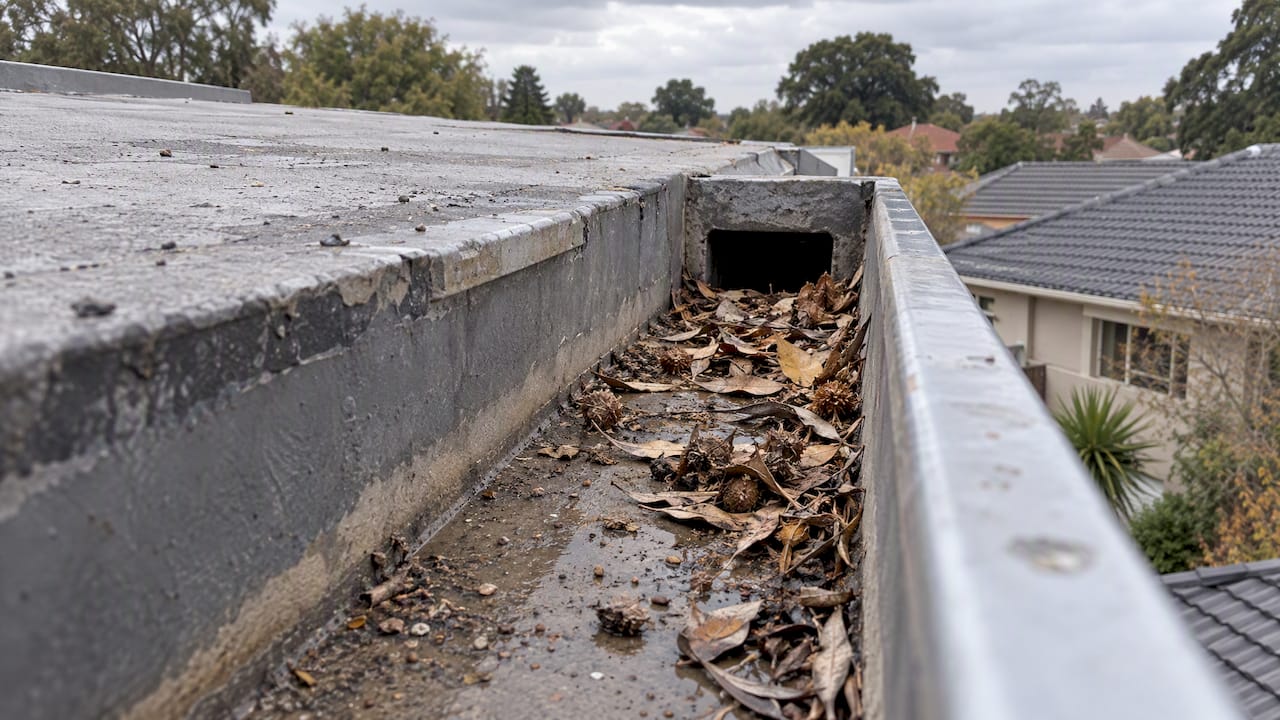
This is one reason seasonal clearing matters more in urban Gauteng than it might elsewhere. A gutter that would stay relatively clean in a rural setting fills up faster here, and a single missed clearing cycle before storm season is often enough to turn a minor downpour into an indoor leak. For broader context on how building choices affect water management, our partners at Home Energy Model have a useful guide on how alternative roof finishes handle rainfall retention, which is a helpful comparison point even outside the Gauteng context.
Why I always tell homeowners to fix the small things first
Most flood damage I see traces back to something small left unchecked: a blocked outlet, a cracked seal, a membrane nobody inspected in years. Proper specification now almost always costs less than emergency repairs later.
— Eben
Get your flat roof storm-ready
Clearing your own gutters only solves half the problem when the membrane underneath is already failing or the fall was never right to begin with. Waterproofing professionals offer flat roof inspections, membrane replacement, outlet and fall remediation, and warranty-backed repair work built around how Gauteng’s climate actually treats a roof, not a generic national standard.

Before you get in touch, it helps to have a few photos of problem areas, the approximate dates you noticed them, and a short description of what you’ve seen, whether that’s ponding, a ceiling stain or a visibly cracked membrane. With that in hand, you can request a quote through our waterproofing services and we’ll take it from there.
- Flat roof inspections with a clear written report.
- Membrane replacement using UV-stable systems suited to Gauteng conditions.
- Outlet, scupper and fall remediation to remove standing water.
- Repairs offered with warranty coverage.
FAQ
What are the main causes of flat roof flooding in Gauteng?
The main causes are blocked gutters and outlets, insufficient roof fall that leaves water ponding instead of draining, and ageing waterproofing membranes weakened by UV exposure and storms. Severe storm warnings for Gauteng highlight how quickly heavy downpours and hail can overwhelm a roof that already has one of these weaknesses.
What is the biggest mistake homeowners make before storm season?
Local storm-season advisories point to blocked gutters and downpipes as the most common, preventable cause of roof and ceiling water damage. Clearing these before the first heavy storm, rather than after a leak appears, is the single most effective step you can take, as storm-season advice from local sources consistently notes.
How can I tell if my flat roof has a drainage problem rather than a one-off leak?
Standing water that remains on the roof surface more than a day after rain, rather than draining away quickly, usually signals a fall or outlet problem rather than a single isolated leak. Recurring ceiling stains in the same spot after different storms point the same way and are worth having a consultant assess.
When should I call a waterproofing professional instead of doing a DIY fix?
Call a professional when leaks keep returning after you’ve patched them, when a membrane looks cracked or brittle, or when water visibly pools on the roof for days after rain. A consultant can diagnose the actual moisture path and specify the right membrane and detailing changes, rather than treating the symptom repeatedly.
How often should I inspect or maintain a flat roof in Gauteng?
Inspect and clear gutters and outlets before summer storm season begins, check again after any particularly heavy storm, and book a contractor inspection once the season ends. Insurer guidance on preparing before storm season treats this proactive clearing as the most effective way to reduce storm-related damage.
Sources
- SAWS warns of heavy rain, damaging winds and hail | SAnews
- Expert advice: the biggest mistake homeowners make during storm season
- Storm season is coming