

Water damage can silently destroy homes across Gauteng, yet more than 25 percent of property owners report serious losses from inadequate waterproofing. British standards influence global best practices, making compliance vital for anyone safeguarding their investment. This article explains how licensed waterproofing contractors provide technical expertise, warranties, and legal protection that keep your property secure, helping you avoid costly risks and ensure long-term peace of mind.
Table of Contents
- Definition And Role Of Licensed Waterproofing Contractors
- Key Types Of Waterproofing Services Offered
- Qualifications And Industry Standards In South Africa
- Legal Compliance And Regulatory Requirements
- Risks Of Unlicensed Contractors And Diy Work
- Benefits: Warranties, Insurance, And Property Protection
Key Takeaways
| Point | Details |
|---|---|
| Engage Licensed Professionals | Always hire licensed waterproofing contractors to ensure quality, compliance, and effective moisture protection. |
| Understand Service Options | Familiarise yourself with different waterproofing techniques and their ideal applications to make informed decisions. |
| Verify Qualifications | Check a contractor’s credentials, certifications, and insurance before hiring to minimise risks and ensure professionalism. |
| Utilise Warranties and Insurance | Ensure you receive comprehensive warranties and insurance to protect your investment and enhance property value. |
Definition and Role of Licensed Waterproofing Contractors
Licensed waterproofing contractors represent specialised professionals who protect residential and commercial properties from moisture damage through expert intervention and systematic protection strategies. These certified experts undergo rigorous training and qualification processes to deliver comprehensive waterproofing solutions that safeguard structural integrity and prevent potential long-term deterioration.
The role of a licensed waterproofing contractor extends far beyond simple surface applications. Understanding their professional responsibilities reveals a complex skill set involving comprehensive property assessment, precise diagnostic techniques, and strategic moisture management. These professionals conduct thorough inspections to identify potential water intrusion points, analyse structural vulnerabilities, and develop customised waterproofing strategies tailored to specific property requirements.
When engaging a licensed waterproofing contractor, property owners can expect a systematic approach that encompasses multiple critical elements. These professionals typically perform detailed moisture mapping, recommend appropriate waterproofing materials, execute precise installation techniques, and provide post-installation warranties. Their expertise covers diverse environments including residential foundations, commercial basements, industrial structures, and external building envelopes. Advanced training enables them to understand complex moisture dynamics, recognise early warning signs of potential water damage, and implement preventative solutions that protect property investments.
Professional Tip: Always request and verify a contractor’s professional licensing credentials before commissioning any waterproofing work to ensure quality and compliance with regional standards.
Key Types of Waterproofing Services Offered
Waterproofing services encompass a diverse range of specialised techniques designed to protect structures from moisture penetration and potential water-related damage. Waterproofing systems in South Africa demonstrate remarkable complexity, addressing unique environmental challenges and structural requirements across different property types.
Professional waterproofing contractors typically offer several critical service categories. These include liquid applied membranes for flat roof surfaces, which provide seamless protection by creating a continuous waterproof layer. Sheet-based waterproofing serves pitched roof structures, offering robust protection through pre-manufactured membrane installations. Cementitious coating systems represent another essential service, delivering basic but effective moisture barrier applications for concrete and masonry surfaces.
Advanced waterproofing services extend beyond surface treatments to comprehensive structural protection. Specialised techniques include heat-fused membrane installations, reinforced and non-reinforced synthetic membrane applications, and targeted solutions for specific architectural elements like balconies, parking decks, and water-retaining structures. These sophisticated approaches require extensive technical knowledge, precise installation skills, and an understanding of local building regulations and environmental conditions.
This summary table outlines the main types of waterproofing services and their ideal applications:
| Waterproofing Type | Best Applied To | Primary Advantage |
|---|---|---|
| Liquid Applied Membrane | Flat roofs, balconies | Seamless, flexible coverage |
| Sheet-Based Waterproofing | Pitched roofs, external walls | Highly durable barrier |
| Cementitious Coating | Concrete, masonry surfaces | Cost-effective moisture block |
| Heat-Fused Membrane | Basements, tanks, decks | Superior resistance, longevity |
Professional Tip: Request comprehensive documentation and warranty details for any waterproofing service, ensuring you understand the specific protection parameters and duration of coverage.
Qualifications and Industry Standards in South Africa
Waterproofing professionals in South Africa operate within a rigorous regulatory framework that ensures high-quality service delivery and technical competence. Comprehensive waterproofing regulations establish strict guidelines for practitioners, mandating specific educational and professional standards that protect both consumers and industry integrity.
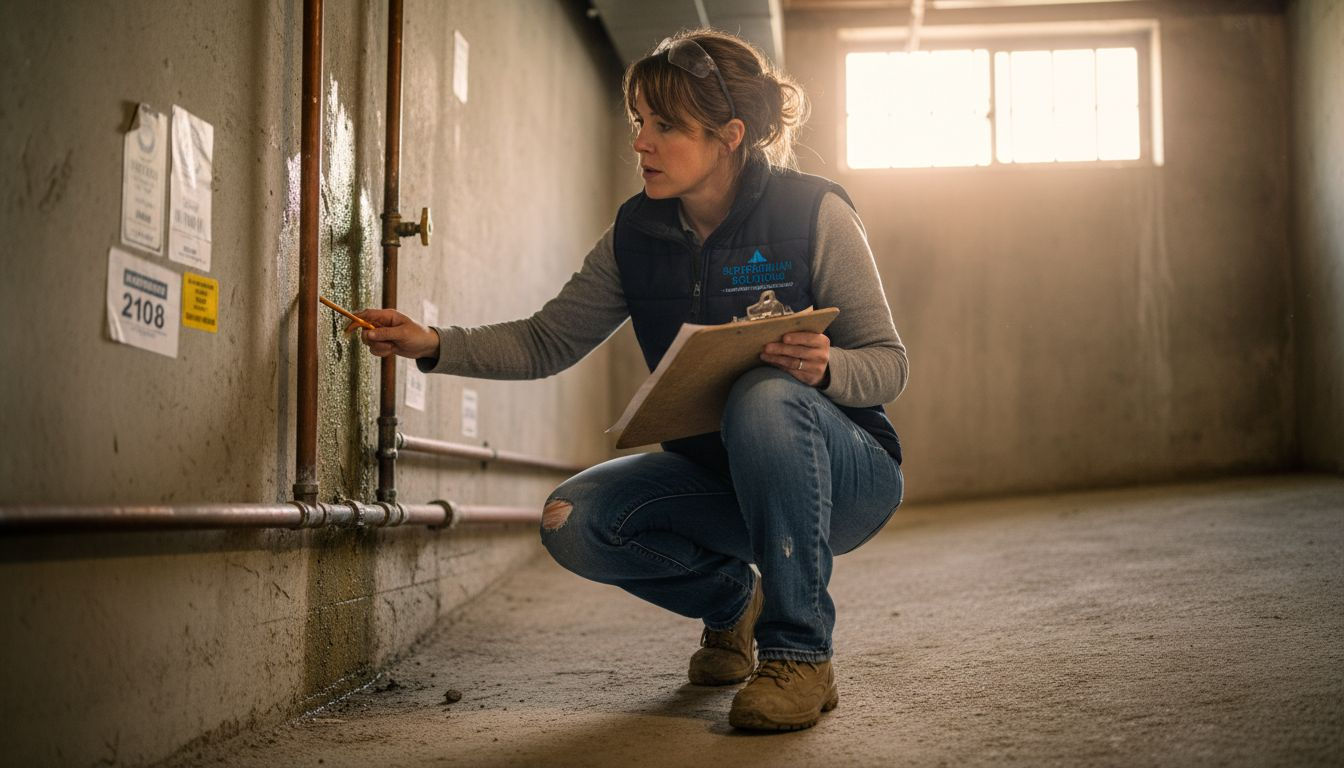
The National Certificate in Waterproofing (NQF Level 2) represents a cornerstone of professional qualification in the industry. This nationally recognised certification encompasses critical competencies including substrate preparation, advanced installation techniques, comprehensive moisture management strategies, and adherence to South African National Standards (SANS). Contractors must demonstrate proficiency in technical skills, understand complex architectural requirements, and maintain updated knowledge of evolving building construction methodologies.
Professional associations like the Waterproofing and Tanking Association of South Africa (WTASA) play a pivotal role in maintaining industry standards. These organisations establish ethical conduct frameworks, facilitate continuous professional development, and collaborate with research institutions such as the Council for Scientific and Industrial Research (CSIR) to ensure waterproofing practitioners remain at the forefront of technological and regulatory advancements. Membership often requires demonstrable technical expertise, commitment to quality workmanship, and compliance with stringent professional benchmarks.
Professional Tip: Always verify a contractor’s professional qualifications by requesting their NQF certification and current association memberships before engaging their waterproofing services.
Legal Compliance and Regulatory Requirements
Waterproofing contractors in South Africa must navigate a complex landscape of legal and regulatory frameworks designed to ensure structural integrity and consumer protection. National building regulations and standards mandate comprehensive requirements for waterproofing works, establishing precise performance, durability, and material certification criteria that protect property owners and maintain construction quality.
The Construction Industry Development Board (cidb) plays a critical role in regulating contractor engagement and professional standards. Waterproofing professionals must demonstrate compliance with multiple legal obligations, including mandatory contractor registration, comprehensive insurance coverage, and adherence to national construction guidelines. These requirements ensure that only qualified and competent professionals can undertake critical waterproofing projects, thereby safeguarding both structural integrity and consumer interests.
South African legal frameworks impose stringent obligations on waterproofing contractors regarding material selection, installation techniques, and post-installation documentation. The National Building Regulations (SANS 10400) specify explicit requirements for roof and surface waterproofing, including detailed specifications for water ingress prevention, structural protection, and long-term performance standards. Contractors must provide comprehensive documentation demonstrating compliance with these technical and legal standards, including detailed installation records, material certifications, and performance warranties.
Professional Tip: Request a comprehensive compliance documentation package from your waterproofing contractor, including cidb registration details, material certifications, and installation warranty information.
Risks of Unlicensed Contractors and DIY Work
Waterproofing represents a sophisticated technical discipline where amateur interventions can lead to catastrophic structural consequences. National building standards emphasise that unprofessional waterproofing work dramatically increases the risk of extensive property damage, health hazards, and significant financial losses.
Unlicensed contractors and do-it-yourself approaches expose property owners to multiple critical risks. These include improper substrate preparation, incorrect material selection, inadequate moisture barrier installation, and non-compliance with local building regulations. Inexperienced practitioners often lack the technical understanding required to create comprehensive waterproofing solutions, potentially creating hidden moisture pathways that compromise structural integrity, generate toxic mould growth, and accelerate building degradation.
The financial implications of unprofessional waterproofing can be profound. Inadequate installations may void property insurance policies, create legal liabilities, and necessitate extensive remediation work that far exceeds the initial cost of professional services. Property owners might face substantial repair expenses, decreased property values, and potential structural failures that emerge months or years after substandard waterproofing interventions. Professional licensed contractors provide comprehensive warranties, technical expertise, and regulatory compliance that protect both immediate and long-term property investments.
The following table contrasts professional waterproofing contractors with unlicensed or DIY efforts, highlighting key differences:
| Aspect | Licensed Contractors | Unlicensed/DIY Approaches |
|---|---|---|
| Technical Expertise | Extensive, industry-certified skills | Limited or informal experience |
| Insurance Compliance | Full insurance and warranties | Typically no formal coverage |
| Legal Standing | Adheres to all regulatory standards | Often non-compliant and unregulated |
| Risk to Property | Minimised by correct installation | Elevated risk of major damage |
| Long-Term Costs | Lower due to quality assurance | Potentially very high for repairs |
Professional Tip: Always verify a contractor’s professional credentials and request comprehensive documentation demonstrating their technical qualifications and insurance coverage before commencing any waterproofing project.
Benefits: Warranties, Insurance, and Property Protection
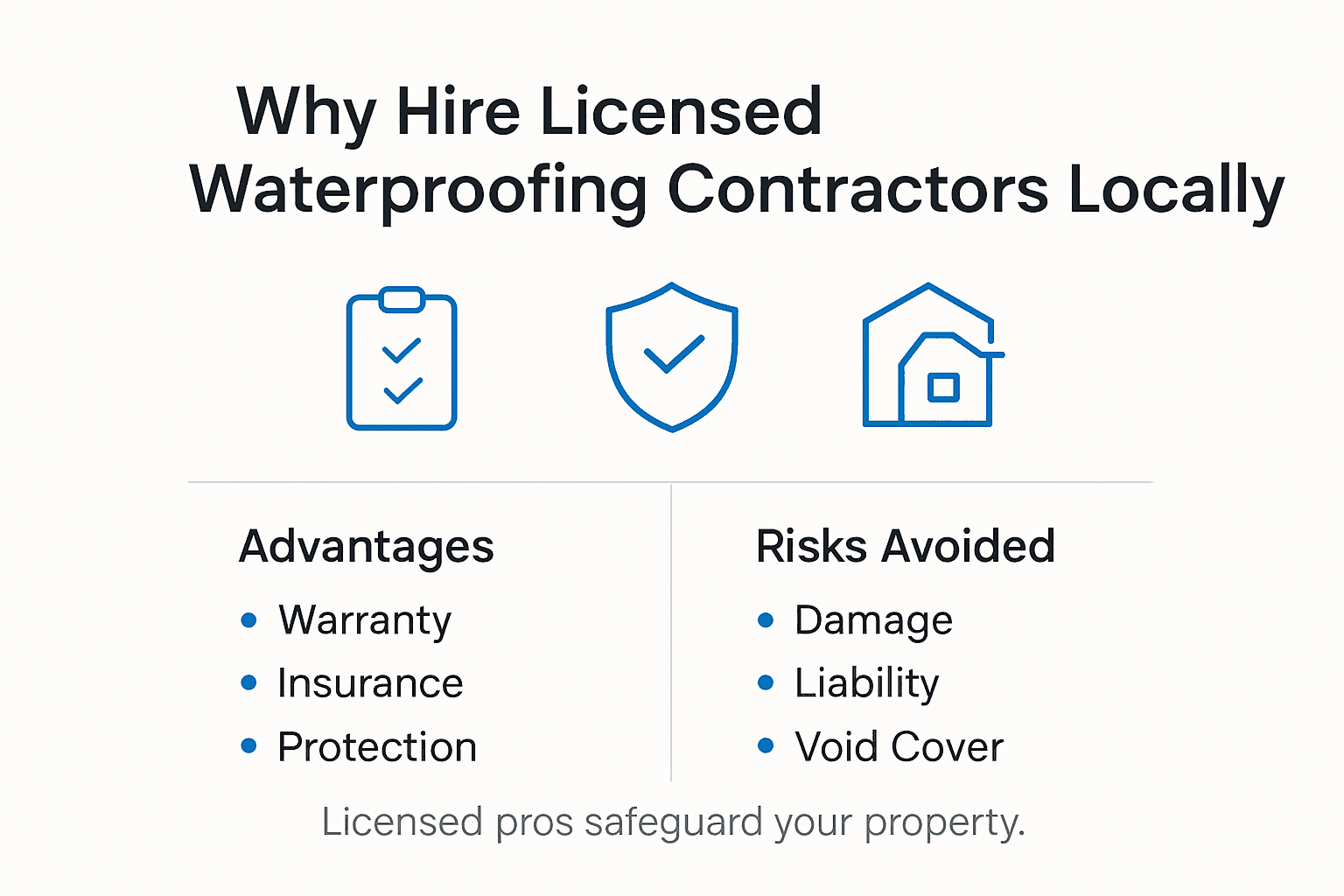
Licensed waterproofing contractors provide comprehensive protection mechanisms that extend far beyond simple surface treatments. Homeowner warranty protections offer critical safeguards against potential structural failures, ensuring property owners receive robust financial and technical support throughout their waterproofing project’s lifecycle.
Professional waterproofing services deliver multi-layered insurance and warranty benefits that protect property investments comprehensively. These protections typically include manufacturer material warranties, workmanship guarantees, and professional indemnity coverage. Such comprehensive protection means that any defects, installation errors, or material failures can be addressed without additional financial burden to the property owner, providing substantial peace of mind and long-term structural security.
The intrinsic value of professional warranties extends beyond immediate repair coverage. Licensed contractors provide detailed documentation, precise installation records, and systematic maintenance recommendations that can significantly enhance property valuation and insurance compliance. These professional documentation packages serve as critical evidence of proper maintenance, potentially reducing insurance premiums and providing clear maintenance history for future property transactions.
Professional Tip: Request a comprehensive written warranty document that explicitly details coverage periods, repair protocols, and the specific conditions under which warranty claims can be initiated.
Ensure Lasting Protection by Hiring Licensed Waterproofing Contractors
Dealing with waterproofing challenges means confronting risks like property damage, legal issues and costly repairs. The article highlights the importance of engaging licensed waterproofing contractors who bring specialised expertise, verified qualifications and adherence to South African building regulations to protect your investment. Key concerns such as legal compliance, warranties and the risks of unlicensed or DIY work emphasise that choosing a professional is not just recommended but essential.
If you want to confidently safeguard your home or commercial property, discover comprehensive solutions on Uncategorized – Pro Waterproofing.
Don’t wait for moisture problems to cause irreversible damage. Visit Pro Waterproofing today to explore expert services, verify contractor credentials and request your personalised quote. Act now to ensure your property benefits from quality workmanship and solid warranty protections provided only by licensed professionals.
Frequently Asked Questions
What are the benefits of hiring licensed waterproofing contractors?
Hiring licensed waterproofing contractors ensures professional expertise, compliance with local regulations, comprehensive warranties, and high-quality materials, ultimately protecting your property from moisture damage.
How do licensed waterproofing contractors assess my property for moisture issues?
Licensed waterproofing contractors conduct thorough inspections, including moisture mapping and structural analysis, to identify potential water intrusion points and vulnerabilities specific to your property.
What types of waterproofing services do licensed contractors typically offer?
Licensed contractors usually offer various waterproofing services, including liquid applied membranes, sheet-based waterproofing, cementitious coating systems, and advanced techniques for specific structures like basements and balconies.
Why is it risky to hire unlicensed contractors for waterproofing work?
Hiring unlicensed contractors increases the risk of improper installations, potential legal issues, and financial losses due to inadequate protection, as their work may not comply with industry standards or local regulations.