
TL;DR:
- A properly selected and installed bituminous waterproofing membrane provides a reliable moisture barrier in various construction scenarios.
- Choosing between APP and SBS types depends on climate, movement, and application method, with system design and standards compliance being essential for durability.
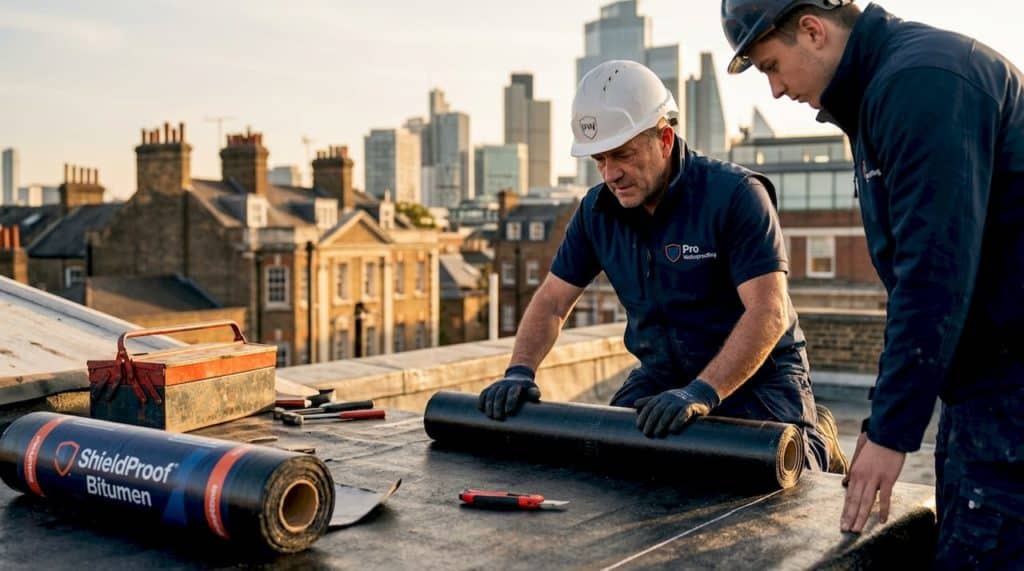
Bituminous waterproofing membrane gets a bad reputation in some circles. Property owners hear “torch-applied” and picture fire hazards, or assume the technology belongs to an earlier era of construction. Neither is accurate. A properly selected and installed bituminous waterproofing membrane is among the most reliable moisture barriers available, widely used across South African residential roofs, commercial flat decks, basements, and terraces. This guide covers everything you need to make sound decisions: what these membranes are made of, how they are installed, how to choose between types, and how to keep them performing for decades.
Table of Contents
- Key takeaways
- What is a bituminous waterproofing membrane?
- How bituminous membranes are installed
- Selecting the right membrane for your project
- Maintenance, repairs, and long-term performance
- My perspective on getting bituminous systems right
- Get professional bituminous membrane installation
- FAQ
Key takeaways
| Point | Details |
|---|---|
| Two main polymer types | APP and SBS modified bitumen membranes serve different climates and movement tolerances. |
| System design matters | A single layer is never sufficient; base sheet plus cap sheet plus details form the complete waterproofing system. |
| Installation conditions are critical | Substrate dryness and ambient temperature directly determine whether a membrane bonds correctly or fails prematurely. |
| Standards confirm performance | Products compliant with EN 1928 watertightness testing provide verified protection rather than unsubstantiated claims. |
| Regular inspection saves money | Catching minor deterioration early prevents costly structural repairs and extends membrane lifespan significantly. |
What is a bituminous waterproofing membrane?
A bituminous waterproofing membrane is a prefabricated sheet system built from bitumen that has been modified with polymers and reinforced with a carrier layer of fibreglass mat or polyester fleece. The result is a flexible, tough sheet that forms a continuous barrier against water ingress when correctly applied to a prepared substrate. It is not, as some assume, simply rolled-out tar paper.
The two dominant polymer modification types are APP (Atactic Polypropylene) and SBS (Styrene-Butadiene-Styrene). Understanding the difference is fundamental to choosing the right product.
- APP modified membranes are stiffer at low temperatures but offer strong resistance to UV radiation and high heat. They are well suited to torch-applied installation and perform reliably in hot, stable climates.
- SBS modified membranes contain a rubber-like polymer that gives the membrane significantly greater flexibility. SBS durability depends on polymer modifications targeting elongation and cyclic fatigue resistance, making SBS the preferred choice wherever roofs experience frequent temperature swings or structural movement.
The reinforcement layer also matters. Fibreglass mat offers dimensional stability and resistance to tearing, while polyester fleece provides higher elongation and better accommodation of substrate cracking. Many high-performance membranes combine both in a composite carrier.
From a performance standpoint, look for products that have been tested to recognised standards. A bituminous SBS membrane can demonstrate watertightness at 60 kPa, complying with UNE-EN 1928, alongside verified flexibility and elongation at break values. Marketing claims alone are not a substitute for documented test data.
How bituminous membranes are installed
The bituminous membrane waterproofing method falls into two main categories: torch-applied and self-adhesive. Both have their place, and the right choice depends on the project type, access constraints, and fire risk considerations.
Torch-applied installation
Torch-on application involves heating the underside of the membrane with a propane torch until the bitumen surface softens and melts, then rolling the sheet firmly onto the primed substrate. The technique requires skill. Properly sized and fully heat-welded laps are the primary waterproofing barrier in the assembly, so underheated or skipped laps are a direct path to future leaks.
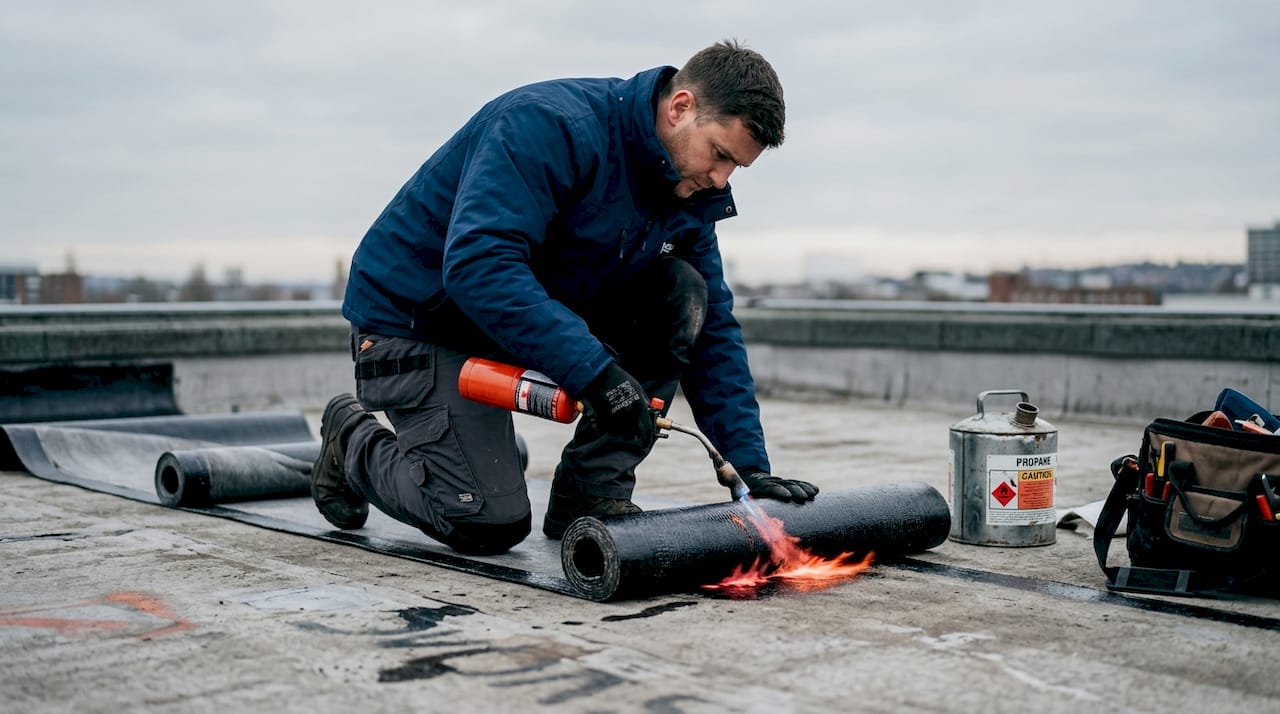
The standard overlap dimensions for APP torch-applied systems are 75 mm side laps and 150 mm end laps, all fully bonded to the primed deck. Any shortcut on these dimensions creates a point of vulnerability that water will find.
Self-adhesive installation
Self-adhesive SBS sheets eliminate the open flame, which matters considerably for retrofit projects on occupied buildings or areas with combustible materials nearby. However, removing the torch does not remove the need for preparation. Correct adhesion still requires a clean, dry substrate and ambient temperatures within the product’s specified range.
For SBS base sheets, installation temperature windows typically run from 10°C to 38°C, with optimal adhesion near 24°C. Working outside this range compromises bond strength even if the membrane appears to lie flat initially.
Steps common to both methods
- Clean the substrate thoroughly, removing dust, grease, loose material, and any standing moisture.
- Apply the specified primer to the substrate and allow it to cure fully before membrane placement.
- Lay the base sheet, maintaining correct overlap dimensions and bonding all seams completely.
- Install the cap sheet over the base, offsetting seams from those below by at least half a roll width.
- Detail all penetrations, upstands, and perimeter edges with compatible flashing material before considering the job complete.
Pro Tip: Never apply a bituminous membrane over a damp deck. Even surface moisture trapped beneath the sheet will turn to vapour under solar heat and cause blistering. If in doubt, perform a polythene sheet test: tape a square of plastic to the deck overnight and check for condensation underneath before proceeding.
The major causes of membrane defects like blistering are moisture in the deck and inadequate heat application. Identifying these risks before installation begins is far cheaper than remedial work afterwards.
Selecting the right membrane for your project
Choosing between the types of waterproofing membranes available requires more than picking the cheapest product per roll. The decision should be guided by climate, structural behaviour, application type, and documented performance data.
Comparing APP vs SBS for your conditions
| Criteria | APP modified | SBS modified |
|---|---|---|
| Low-temperature flexibility | Limited | Excellent |
| Fatigue resistance (movement) | Moderate | High |
| UV and heat resistance | High | Moderate (needs UV cap) |
| Typical installation method | Torch-applied | Torch or self-adhesive |
| Best suited applications | Hot, stable climates | Variable climates, moving structures |
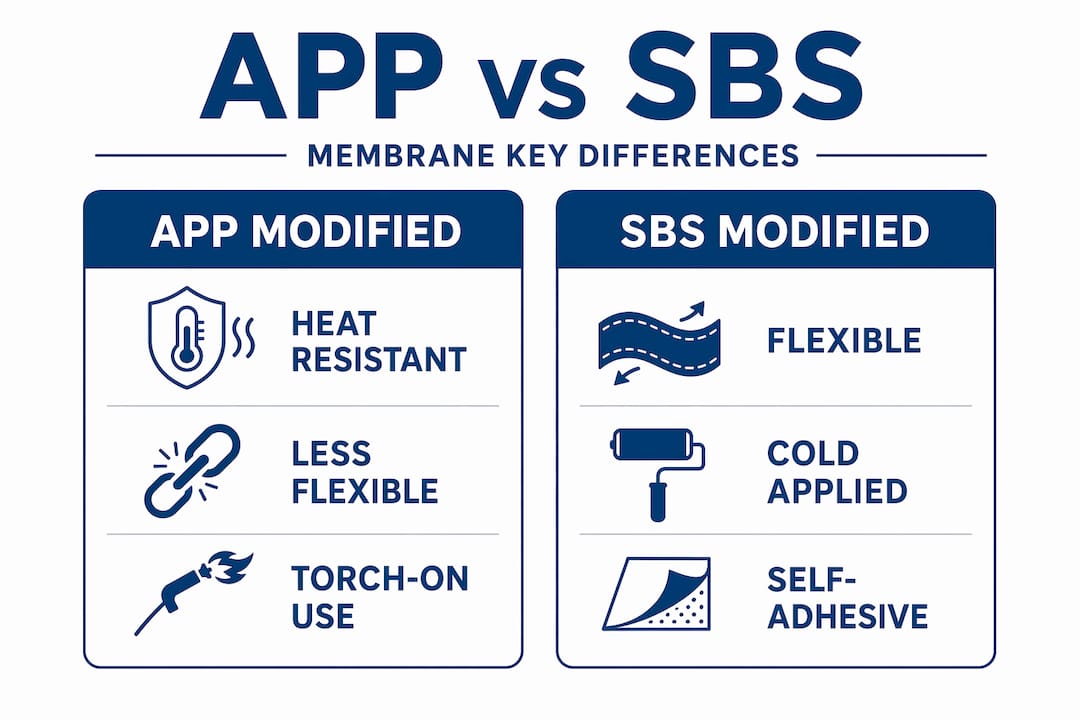
In South Africa, where summer temperatures can push roof deck surfaces well above 70°C, an APP cap sheet with a mineral surface finish performs reliably on low-slope roofs. For basements, podium decks, or structures with known settlement or movement, SBS is the better choice because cyclic fatigue resistance and ultimate elongation properties tolerate the ongoing stress.
Beyond polymer type, consider these factors when specifying:
- Thickness and reinforcement. A 4 mm polyester-reinforced cap sheet offers considerably more puncture and fatigue resistance than a 3 mm fibreglass product.
- Surface finish. Mineral-surfaced cap sheets reflect UV and provide slip resistance underfoot. Burn-off film finishes on base sheets allow full bonding of the overlying cap.
- Standards compliance. Specify only products that carry documented test results from recognised standards. EN 1928 watertightness certification confirms the product has been tested under pressure, not merely described as waterproof.
- System compatibility. Confirm that the primer, base sheet, and cap sheet all come from the same specification or have been tested together. Mixing products from incompatible systems is a common source of adhesion failures.
Multi-ply assemblies are not optional for long-term performance. Base sheets alone provide insufficient UV protection and wear resistance. The cap sheet carries the waterproofing burden at the surface while the base sheet manages adhesion to the deck and accommodates movement. Together, they outperform any single layer on every metric that matters.
For more background on how bituminous membranes compare to other common waterproofing materials, the selection criteria for foundations and basements differ noticeably from those for exposed roof decks.
Maintenance, repairs, and long-term performance
A bituminous coating for roofs and decks does not maintain itself. Regular inspection and prompt minor repairs are what separate a 15-year membrane from one that fails at year six. The cost of waterproofing membrane repair is a fraction of the structural remediation that follows unchecked water ingress.
Typical signs that a membrane needs attention include:
- Visible cracking, crazing, or granule loss on the cap sheet surface
- Blistering or bubbling across the field of the membrane
- Lifted or separated seams at laps, upstands, or penetrations
- Ponding water that has not drained within 48 hours of rainfall
- Staining, efflorescence, or damp patches on internal ceilings below the deck
Pro Tip: Schedule formal inspections twice a year: once before the rainy season and once after. Add an extra check after any storm with high winds or hail. Most serious failures start as minor seam lifts or granule loss that take less than an hour to repair if caught early.
Minor repairs generally involve cutting back the damaged area to clean, sound membrane, priming the exposed substrate, and applying a compatible patch with correctly lapped edges. For torch-applied systems, torch the patch edges; for self-adhesive systems, use compatible self-adhesive flashing tape or a cold-applied compatible product.
When damage is widespread, or where a membrane is older than 15 to 20 years, a professional assessment from a qualified waterproofing contractor is the appropriate step. Attempting to patch-repair a membrane in advanced deterioration typically delays rather than prevents a full replacement, while adding cost in the interim.
My perspective on getting bituminous systems right
From what I have seen across countless residential and commercial projects, the single biggest mistake people make is treating a bituminous waterproofing membrane as a product rather than a system. A contractor quotes on supply and install of a cap sheet, the client approves it, and six months later there are leaks at every penetration because nobody specified a compatible base sheet, the primer was skipped to save time, and the upstand details were improvised on the day.
The specification matters as much as the product itself. I have seen expensive imported membranes fail within two years because the installation ignored substrate preparation, and I have seen modest locally produced products perform for over a decade because the contractor followed the system specification precisely. The membrane does not waterproof the building on its own. The complete assembly does.
My strong advice to both property owners and specifiers is to request the full system documentation from the manufacturer before approving any product. That means primer type and coverage rate, base sheet specification, cap sheet specification, overlap requirements, and detail drawings for all terminations and penetrations. If a supplier cannot provide those documents, their product is not ready for specification.
You can explore the waterproofing application process in more detail, but the principle remains constant: quality products poorly installed will always underperform average products correctly installed.
— Eben
Get professional bituminous membrane installation
Prowaterproofing works with residential and commercial property owners across South Africa to specify, supply, and install complete bituminous waterproofing membrane systems. Whether you are waterproofing a flat roof, a basement slab, a podium terrace, or an industrial facility, the team brings product knowledge and installation experience that translates directly into long-term moisture protection. Getting the system right from the start costs far less than repairing the consequences of getting it wrong. Visit Prowaterproofing to request a consultation or obtain a quote from specialists who treat waterproofing as a system, not a single product.
FAQ
What is a bituminous waterproofing membrane made of?
A bituminous waterproofing membrane is made from bitumen modified with polymers such as APP or SBS, reinforced with a fibreglass mat or polyester fleece carrier, and manufactured as a prefabricated sheet system for site installation.
What is the difference between APP and SBS bitumen membranes?
APP membranes are stiffer and more heat-resistant, making them suitable for hot climates with torch application. SBS membranes contain a rubber polymer that provides superior flexibility and fatigue resistance for structures subject to movement or temperature cycling.
How long does a bituminous waterproofing membrane last?
When installed as a correct multi-ply system on a properly prepared substrate, a bituminous membrane typically performs for 15 to 25 years, depending on UV exposure, foot traffic, and the frequency of maintenance inspections.
How much does waterproofing membrane installation cost?
The cost of waterproofing membrane installation in South Africa varies by system type, roof area, access conditions, and the extent of any existing damage requiring repair before application. Requesting a site-specific quote from a qualified contractor provides the most accurate figure.
Can bituminous membranes be used on basements and below-grade structures?
Yes. Self-adhesive SBS membranes are well suited to below-grade applications including basement walls and floor slabs, where torch application is impractical and flexibility to accommodate structural movement is needed.