
TL;DR:
- Underground parking waterproofing in Cape Town must be site-specific due to fractured sandstone geology and seasonal groundwater surges. Proper assessment and layered solutions, including chemical-resistant membranes and joint treatment, prevent costly water damage and structural failure. Regular inspections and early planning are essential for protecting property value and structural integrity.
Underground parking waterproofing is defined as the application of specialist systems to prevent water and moisture from penetrating below-grade concrete structures. In Cape Town, this is not a standard construction formality. The city’s fractured Table Mountain sandstone geology, seasonal groundwater surges, and urban development pressures create conditions that standard waterproofing fails to address. Why underground parking waterproofing matters in Cape Town comes down to one core fact: the ground beneath your structure behaves differently here than anywhere else in South Africa, and the consequences of ignoring that are structural, financial, and legal.
Why does Cape Town’s geology make underground parking waterproofing so critical?
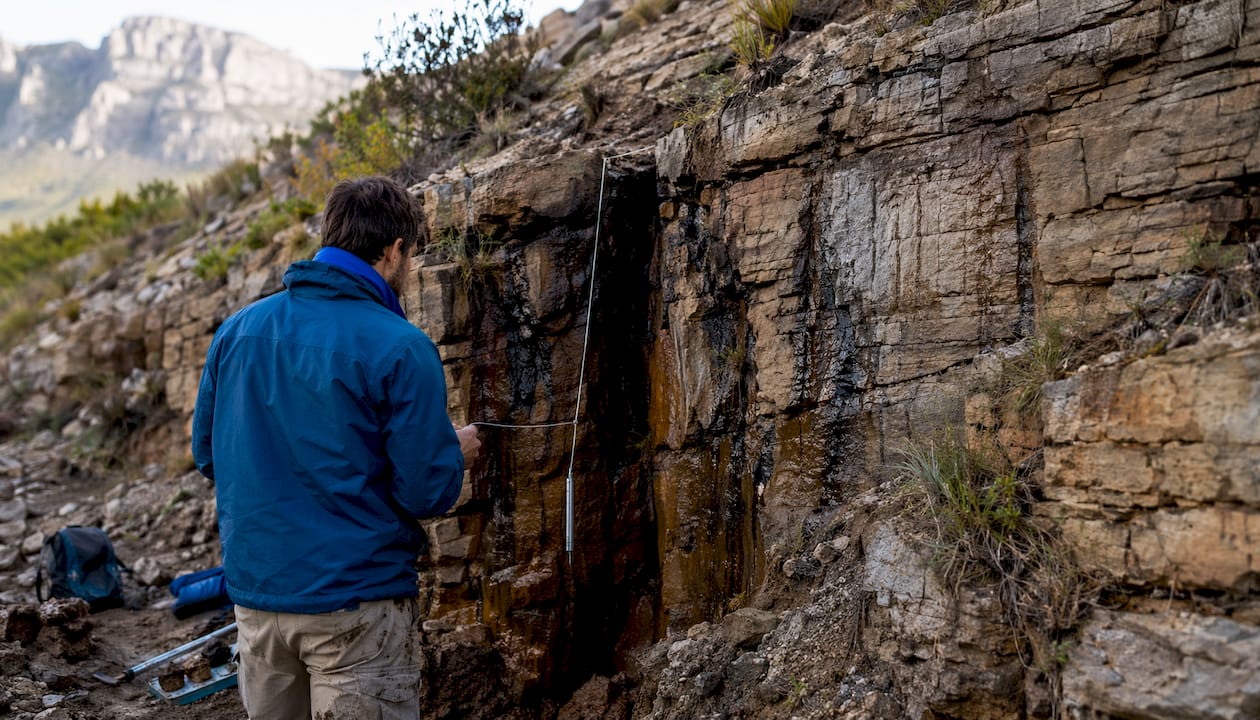
Cape Town sits atop a dual-layer aquifer system fed by fractured Table Mountain sandstone. Water moves through this rock unpredictably, following fracture networks rather than uniform soil profiles. That behaviour makes groundwater pressure variable, directional, and difficult to model without site-specific data.
Groundwater levels fluctuate seasonally, rising sharply after winter rains and creating high-pressure windows between august and october. A parking structure that remains dry in summer can face active water ingress by september if its waterproofing was not designed for peak hydrostatic load. This seasonal cycle repeats every year, and each cycle tests the integrity of every joint, membrane, and seal in the structure.
Urban development compounds the problem. Groundwater abstraction and infrastructure leaks influence aquifer levels more heavily than rainfall alone at many Cape Town urban sites. This means water table monitoring must account for neighbouring construction, municipal pipe failures, and drainage changes, not just the weather. Predictive groundwater simulation models for Cape Town’s dual aquifer system now enable better waterproofing planning, but only when developers commission site-specific assessments before design begins.
The practical implication is direct: a damp-proofing system that performs reliably in stable Gauteng soils can fail entirely in Cape Town’s fractured sandstone environment. Generic specifications do not account for the pressure loads, fracture pathways, or seasonal variability that define this city’s hydrogeology.
- Fractured sandstone channels water along unpredictable paths, bypassing standard membrane coverage zones.
- Seasonal water table rises between august and october create the highest hydrostatic pressure windows.
- Urban infrastructure leaks and abstraction alter aquifer behaviour independently of rainfall.
- One-size-fits-all waterproofing specifications routinely fail under these local conditions.
Pro Tip: Commission a dedicated hydrogeological assessment before finalising your structural design. A groundwater report specific to your site will identify peak pressure loads and fracture orientations that generic soil surveys miss entirely.
What are the risks of inadequate waterproofing in Cape Town parking structures?
Water ingress into an underground parking structure does not announce itself with a dramatic flood. It begins quietly, through hairline cracks, failed joints, and porous concrete surfaces, and the damage accumulates over months and years before it becomes visible.
Moisture ingress causes rot in structural elements and foundational shifts if left untreated. In reinforced concrete structures, water carries chlorides and sulphates that accelerate steel corrosion. Corroding reinforcement expands, which cracks the surrounding concrete from within. That process, called spalling, destroys load-bearing surfaces and is expensive to remediate.
The consequences extend beyond the structure itself:
- Concrete degradation. Water infiltration compromises load-bearing surfaces, leading to expensive structural repairs that far exceed the original waterproofing cost.
- Reinforcement corrosion. Chloride-laden groundwater attacks steel reinforcing bars, reducing structural capacity over time.
- Surface spalling and joint failure. Hydrostatic pressure forces water through wall-floor joints and construction joints, causing surface delamination and cracking.
- Loss of usable space. Persistent damp conditions force bay closures, reducing the lettable area of the parking facility and its income potential.
- Safety hazards. Standing water, algae growth, and damp surfaces create slip risks and electrical hazards in a space where vehicles and pedestrians share tight clearances.
Reduced property value is a direct consequence that property developers often underestimate. A parking structure with visible water damage, active leaks, or a history of remedial work carries a measurable discount in asset valuations. Buyers and tenants price in the liability.
Waterproofing failure in underground car parks most commonly originates from poor joint detailing and missing waterstops. That finding points to a specific vulnerability: the wall-floor interface, where differential movement and concrete shrinkage open gaps that no membrane can bridge without deliberate joint treatment.
What are the best practice waterproofing methods for Cape Town underground parking?
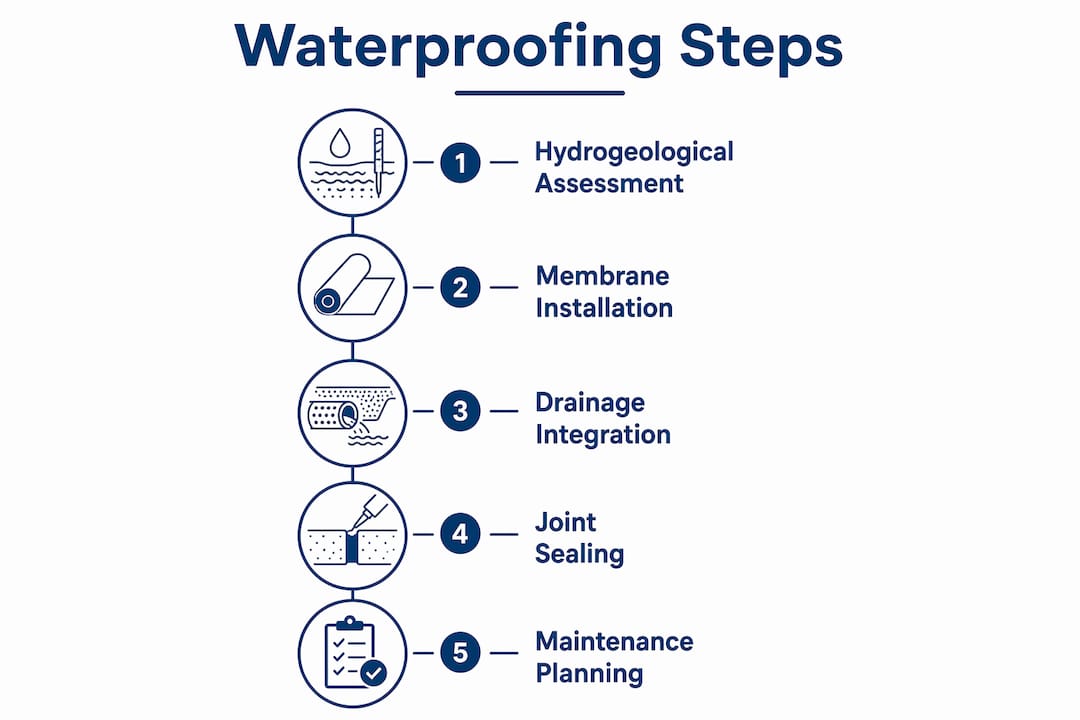
Effective waterproofing solutions for parking garages in Cape Town require a layered approach. No single product or technique addresses all the variables. The most durable systems combine negative-side waterproofing membranes, chemical resistance, drainage integration, and precise joint treatment.
Negative-side waterproofing and chemical-resistant membranes
Negative-side waterproofing is applied to the interior face of a structure, resisting water pressure from outside. This approach is critical in Cape Town because external access for tanking is often impossible once a structure is built. Chemical-resistant membranes are non-negotiable here. Typical roof or residential waterproofing products fail under continuous hydrostatic pressure without the chemical resistance needed to withstand groundwater mineral content.
Drainage integration
Drainage systems do not replace waterproofing. They work alongside it by reducing the hydrostatic head that the membrane must resist. Basement drainage solutions that channel water to sumps and pumps reduce pressure on the primary membrane, extending its service life. In Cape Town’s high-pressure windows, drainage integration is the difference between a system that holds and one that fails.
Joint treatment at wall-floor interfaces
Flexible waterproof coving and pressure-resistant sealants at wall-floor junctions restore watertightness at the most vulnerable points in any underground structure. Joints must accommodate differential movement without cracking. Rigid sealants fail here. Flexible coving systems, combined with waterstops cast into construction joints, provide the movement tolerance that Cape Town’s variable pressure loads demand.
| Waterproofing approach | Best application | Key limitation |
|---|---|---|
| Negative-side membrane | Remedial work, interior access only | Requires dry surface preparation |
| External tanking membrane | New construction, full excavation available | Inaccessible post-construction |
| Crystalline waterproofing | Concrete pores, self-healing capability | Less effective on joints and cracks |
| Drainage cavity system | High water table, ongoing pressure management | Requires pump maintenance |
Pro Tip: Specify waterstops at every construction joint during the design phase, not as an afterthought during construction. Retrofitting waterstops is significantly more costly and less reliable than casting them in place.
How should developers and architects integrate waterproofing into design and maintenance?
The importance of waterproofing underground parking structures is greatest when it is addressed at the design stage, not after the concrete is poured. Retrofitting waterproofing into a completed structure costs multiples of what a properly specified system costs during construction.
- Conduct a site-specific groundwater assessment. Site-specific groundwater assessment is mandatory before specifying waterproofing systems in Cape Town. The assessment must identify peak seasonal pressure, fracture orientations, and proximity to urban infrastructure that may alter aquifer behaviour.
- Specify products for local conditions. Products rated for hydrostatic pressure resistance and chemical exposure should be specified by name in the contract documents. Generic references to “waterproofing membrane” leave too much discretion to contractors unfamiliar with Cape Town’s conditions.
- Coordinate waterproofing with structural and drainage design. Waterproofing is not a finishing trade. It must be coordinated with the structural engineer, drainage consultant, and civil contractor from the earliest design stages.
- Plan for routine inspection. Proactive waterproofing management extends system lifespan and asset value. Inspection intervals of six to twelve months allow early detection of joint failures, membrane delamination, and drainage blockages before they escalate.
- Engage professionals with local experience. Contractors experienced in Cape Town’s fractured sandstone environment understand the failure modes that generic applicators miss. Ask for references from comparable below-grade projects in the Cape Peninsula specifically.
Understanding waterproofing failures and their causes before specifying a system gives developers and architects a clear framework for evaluating contractor proposals and identifying under-specified solutions.
Pro Tip: Include a waterproofing maintenance clause in your building management agreement from day one. A structured inspection schedule costs far less than emergency remediation after a wet season failure.
Key takeaways
Underground parking waterproofing in Cape Town requires site-specific systems that account for fractured sandstone geology, seasonal hydrostatic pressure, and urban aquifer variability, because generic solutions consistently fail under these conditions.
| Point | Details |
|---|---|
| Site-specific assessment is non-negotiable | Commission a hydrogeological report before design to identify peak pressure loads and fracture pathways. |
| Seasonal pressure peaks demand system resilience | Groundwater rises sharply between august and october, testing every joint and membrane in the structure. |
| Joint detailing is the most common failure point | Specify flexible coving and waterstops at all wall-floor interfaces during the design phase. |
| Drainage integration extends membrane life | Cavity drainage systems reduce hydrostatic head, protecting the primary waterproofing membrane. |
| Proactive maintenance protects asset value | Six-monthly inspections detect early failures before they escalate into costly structural repairs. |
My view on waterproofing underground parking in Cape Town
The most consistent mistake I see on Cape Town projects is treating waterproofing as a product decision rather than a design decision. A developer specifies a membrane brand, the contractor applies it, and everyone assumes the job is done. Then the first wet season arrives.
The real problem is almost never the membrane. It is the joint that was left unsealed, the drainage that was omitted to save cost, or the groundwater assessment that was never commissioned because the structural engineer assumed standard conditions. Cape Town’s geology does not allow for assumptions.
What I have found works is integrating the waterproofing consultant into the design team from the concept stage. Not as a specialist called in at the end, but as a voice in the room when structural decisions are being made. That is when you can specify waterstops, coordinate drainage, and design slab thicknesses that accommodate the membrane system. After the concrete is poured, your options narrow dramatically and your costs rise sharply.
The other thing I would urge architects and developers to take seriously is the maintenance obligation. A well-specified system installed correctly will still degrade over time. Joints move. Membranes age. Drainage sumps block. A six-monthly inspection programme is not a luxury. It is the mechanism that keeps a R2 million waterproofing investment performing for thirty years instead of ten. The concrete waterproofing principles that apply above grade apply below grade with greater urgency, because the consequences of failure are harder to detect and more expensive to fix.
— Eben
Prowaterproofing’s underground parking waterproofing services in Cape Town
Cape Town’s underground parking structures face waterproofing challenges that require local knowledge, not generic solutions.
Prowaterproofing specialises in site-specific waterproofing systems for below-grade structures across Cape Town and the broader Western Cape. The team brings direct experience with fractured sandstone hydrogeology, seasonal water table behaviour, and the joint detailing failures that cause most underground parking problems. From initial groundwater assessment through to membrane specification, drainage integration, and long-term maintenance planning, Prowaterproofing provides the full scope of expertise that property developers and architects need to protect their assets from the ground up. Contact Prowaterproofing for a site-specific assessment before your next project breaks ground.
FAQ
What makes Cape Town’s underground parking waterproofing different from other cities?
Cape Town’s fractured Table Mountain sandstone creates unpredictable groundwater pathways and seasonal pressure surges that standard waterproofing systems are not designed to handle. Site-specific assessment and chemically resistant negative-side membranes are required.
When is hydrostatic pressure highest in Cape Town underground structures?
Groundwater levels rise after winter rains, creating peak hydrostatic pressure windows between august and october. Waterproofing systems must be specified to withstand these seasonal load increases, not just average annual conditions.
What is the most common cause of waterproofing failure in underground car parks?
Poor joint detailing and missing waterstops at wall-floor interfaces are the most frequent failure points. Flexible coving and pressure-resistant sealants at these junctions are the standard remediation approach.
How does drainage integration support waterproofing in underground parking?
Drainage cavity systems reduce the hydrostatic head pressing against the primary waterproofing membrane, extending its service life. Without drainage, membranes in high water table environments face continuous maximum pressure loads.
How often should underground parking waterproofing be inspected in Cape Town?
Inspections every six to twelve months allow early detection of joint failures, membrane delamination, and drainage blockages. Proactive inspection programmes significantly reduce long-term repair costs and protect asset value.