

Water stains on your interior walls after heavy Gauteng rainfall can spark frustration and concern for any homeowner. Water damage not only threatens your property’s structure but also undermines its comfort and value over time. Achieving lasting protection involves more than quick fixes—a qualified waterproofing consultant brings specialised expertise to pinpoint and address the root causes, safeguarding your home against future leaks and dampness.
Table of Contents
- Defining Waterproofing Consultancy In South Africa
- Types Of Waterproofing Solutions Offered
- Expert Site Assessment And Specification
- Regulations And Accreditation Requirements
- Selecting Reputable Consultants And Contractors
- Pitfalls Of Poor Waterproofing Advice
Key Takeaways
| Point | Details |
|---|---|
| Waterproofing Consultancy | Specialists in waterproofing assess moisture risks in properties and offer tailored solutions to prevent damage. |
| Comprehensive Assessments | Effective waterproofing requires thorough site inspections to identify unique issues rather than applying generic fixes. |
| Importance of Accreditation | Engaging accredited consultants ensures adherence to regulatory standards, protecting homeowners from substandard practices. |
| Avoiding Poor Advice | Be wary of consultants who provide recommendations without proper assessments, as this can lead to costly long-term mistakes. |
Defining Waterproofing Consultancy in South Africa
Waterproofing consultancy in South Africa represents a specialised profession that bridges the gap between building science and practical property protection. A waterproofing consultant is a qualified professional who assesses moisture infiltration risks in residential, commercial, and industrial properties, then recommends tailored solutions to prevent water damage. Unlike general builders or handypersons, these consultants possess specific technical knowledge about moisture behaviour, building materials, climate conditions, and the regulatory environment unique to South Africa’s diverse regions, from Gauteng’s high-altitude weather patterns to coastal humidity challenges.
The distinction matters greatly. Waterproofing consultants conduct detailed site inspections, identify root causes of dampness or leaks, and design comprehensive remediation strategies rather than applying quick fixes. They understand how Gauteng’s hot summers, occasional flash flooding, and temperature fluctuations interact with different construction materials. They analyse building designs for potential water infiltration points, evaluate existing damage, and specify appropriate protective measures whether that’s membrane applications, cavity barriers, or drainage system improvements. Their role encompasses technical problem-solving, materials knowledge, and the ability to work alongside contractors to ensure specifications are met correctly.
Professional standing matters significantly in this field. The Waterproofing Trade Association of South Africa promotes professionalism and integrity among consultants, contractors, and manufacturers by ensuring members meet minimum skill and reliability benchmarks. This standards-based approach protects Gauteng homeowners from unqualified practitioners. A legitimate waterproofing consultant holds relevant qualifications, often possesses certifications in building science or moisture control, maintains professional insurance, and understands waterproofing regulations and compliance requirements in South Africa. They stay current with evolving building standards and work transparently with clients, providing written assessments and detailed recommendations.
When you hire a waterproofing consultant, you gain access to someone who diagnoses problems accurately rather than guessing at solutions. They prevent costly mistakes and unnecessary work by pinpointing exactly where water enters your property and why. This expertise proves invaluable for Gauteng properties facing persistent dampness, basement seepage, or foundation cracks.
Pro tip: Verify any waterproofing consultant’s credentials by asking for their professional certifications, insurance documentation, and references from completed projects in your area before committing to a consultation.
Types of Waterproofing Solutions Offered
Waterproofing consultants in Gauteng recommend solutions tailored to your specific property challenges, climate conditions, and building structure. The approach is never one-size-fits-all. Instead, consultants assess whether your home faces rising damp from groundwater, lateral water penetration through walls, roof leaks, or condensation problems. Each scenario demands different intervention strategies. Understanding what solutions exist helps you appreciate why your consultant recommends particular approaches rather than cheaper alternatives that might fail within a few years.
Membrane-based waterproofing forms the backbone of most modern solutions. These involve applying liquid or sheet membranes to vulnerable areas, creating a physical barrier against water infiltration. Waterproofing membranes vary significantly in composition, durability, and application methods. Some work best on flat surfaces like balconies or terraces, whilst others suit vertical applications such as basement walls or foundation cracks. Consultants select membranes based on substrate compatibility, expected water pressure, temperature fluctuations in your area, and long-term maintenance requirements. In Gauteng’s climate, where temperature swings between scorching summers and cooler winters occur regularly, membrane flexibility becomes critical to prevent cracking and failure.
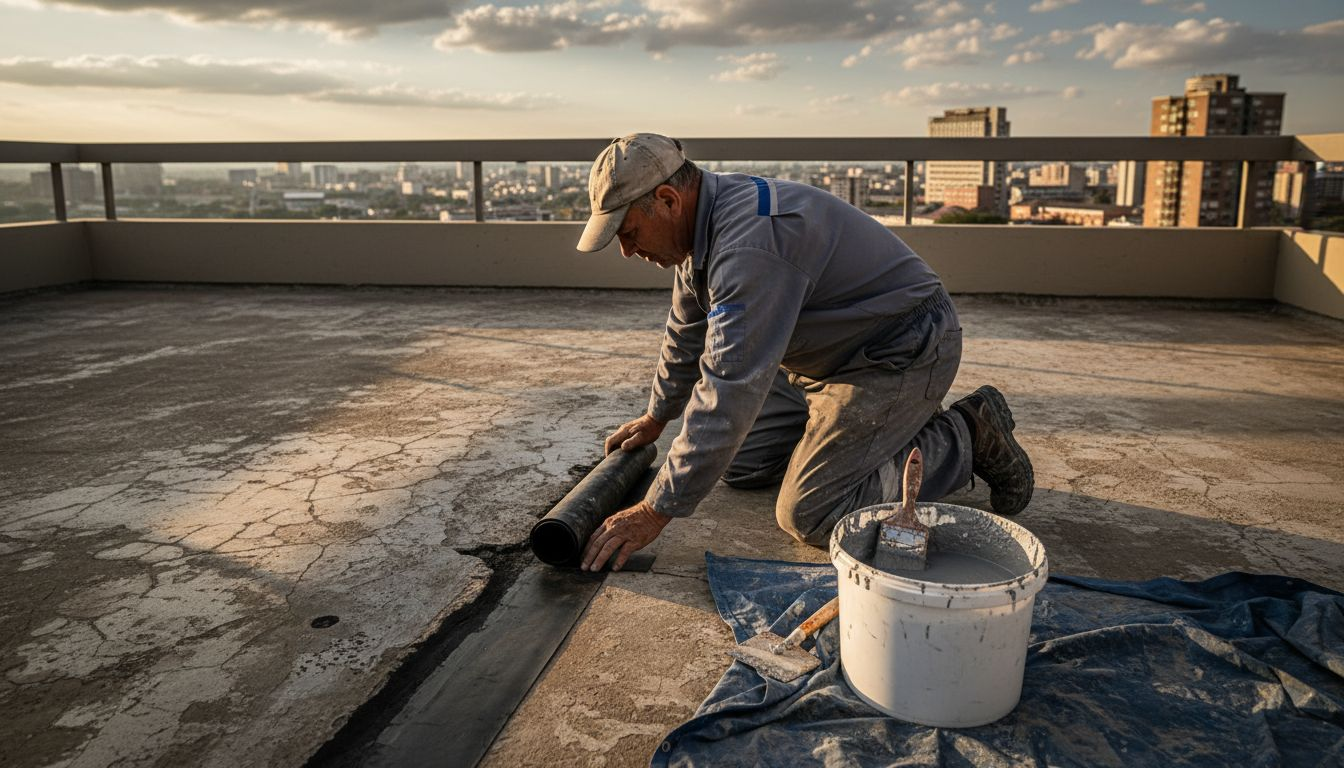
Beyond membranes, consultants specify complementary drainage and ventilation solutions. Cavity trays direct water away from critical structural elements, French drains manage groundwater around foundations, and cavity barriers prevent moisture movement through wall cavities. Some properties benefit from damp-proof courses, which act as horizontal barriers blocking water rise through masonry. Others require improved surface drainage, gutter upgrades, or grading adjustments to redirect water away from your property. Consultants might also recommend dehumidification systems for basements or internal moisture control measures. The integration of these components matters enormously. A premium membrane applied over poor drainage will ultimately fail because water finds alternative pathways.
Internal solutions address existing moisture problems within walls and basements. These include cavity injection systems that inject damp-proofing agents into existing walls, electro-osmotic devices that reverse water capillarity, or internal moisture barriers applied to basement walls. Consultants evaluate whether structural elements remain sound or require remedial work. They also assess whether solutions must be reversible (important for heritage properties) or permanent. The cost and complexity of solutions range from straightforward membrane application to comprehensive basement waterproofing involving excavation, tanking, and drainage infrastructure.
Here is a summary of key waterproofing solution types and their ideal applications:
| Solution Type | Best For | Typical Application Area |
|---|---|---|
| Sheet membrane | Flat roofs, terraces | Large horizontal surfaces |
| Liquid membrane | Balconies, complex details | Irregular or small surfaces |
| Damp-proof course | Rising damp | Masonry walls near ground |
| French drain | Groundwater control | Foundations, garden perimeter |
Pro tip: Request your waterproofing consultant provide written specifications detailing which solution type applies to each problem area, expected lifespan, maintenance requirements, and warranty coverage before work commences.
Expert Site Assessment and Specification
A thorough site assessment separates professional waterproofing consultants from contractors who simply apply solutions without understanding your property’s unique challenges. This process forms the foundation of everything that follows. When a consultant arrives at your Gauteng home, they come armed with knowledge about local rainfall patterns, soil conditions, building orientation, and how your property’s specific structure interacts with moisture. They conduct a systematic evaluation rather than a casual walkthrough, examining both visible damage and potential problem areas before they become catastrophic.
During thorough waterproofing inspections, consultants map water infiltration points with precision. They trace moisture sources by identifying where water enters, how it travels through your walls, and where it accumulates internally. They inspect foundations for cracks, examine mortar joints in brickwork, check guttering and downpipes for blockages or misalignment, assess roof condition and flashings, and evaluate grading around your property perimeter. They look for efflorescence (white salt deposits indicating rising damp), soft plaster, rust stains, and mould growth patterns that reveal moisture behaviour over time. They use moisture metres to measure dampness levels in different materials and locations, documenting objective data rather than relying on visual assessment alone.
The assessment includes evaluating your building’s structural integrity and identifying whether underlying problems exist beyond surface waterproofing needs. A consultant determines whether cracks indicate settlement, structural movement, or simply thermal expansion. They assess whether cavity walls have been damaged or bridged with mortar droppings that allow water bypass. They review your property’s history if available, asking about previous problems, attempted repairs, and whether issues persist despite past interventions. This contextual information helps consultants recommend solutions addressing root causes rather than symptoms. They consider maintenance history, property age, original construction methods, and any modifications made over the years.
Based on this comprehensive evaluation, consultants prepare detailed specifications outlining exactly which waterproofing solution applies to each problem area. These specifications include material selections, application methods, surface preparation requirements, quality standards, and expected outcomes. They provide transparent communication about costs, timelines, and maintenance obligations going forward. Rather than presenting a one-page quote, professional consultants deliver written recommendations explaining why specific solutions were selected, what results you should expect, and how long solutions typically last. This level of detail protects you from costly mistakes and ensures contractors understand exactly what work must be completed.
Pro tip: Before your consultant visits, photograph any visible damp patches, staining, or damage, noting when you first observed problems and whether they worsen during rainy seasons to provide context for the assessment.
Regulations and Accreditation Requirements
Waterproofing consultants operating in Gauteng must comply with specific regulatory frameworks that protect homeowners and ensure quality standards. South Africa’s waterproofing industry operates under several layers of oversight, from local building codes enforced by municipalities to national industry standards and professional body requirements. Understanding these regulations helps you verify whether a consultant possesses legitimate credentials or merely claims expertise without formal backing. Regulatory compliance distinguishes professional consultants from unaccredited individuals offering solutions without proper training or accountability mechanisms.
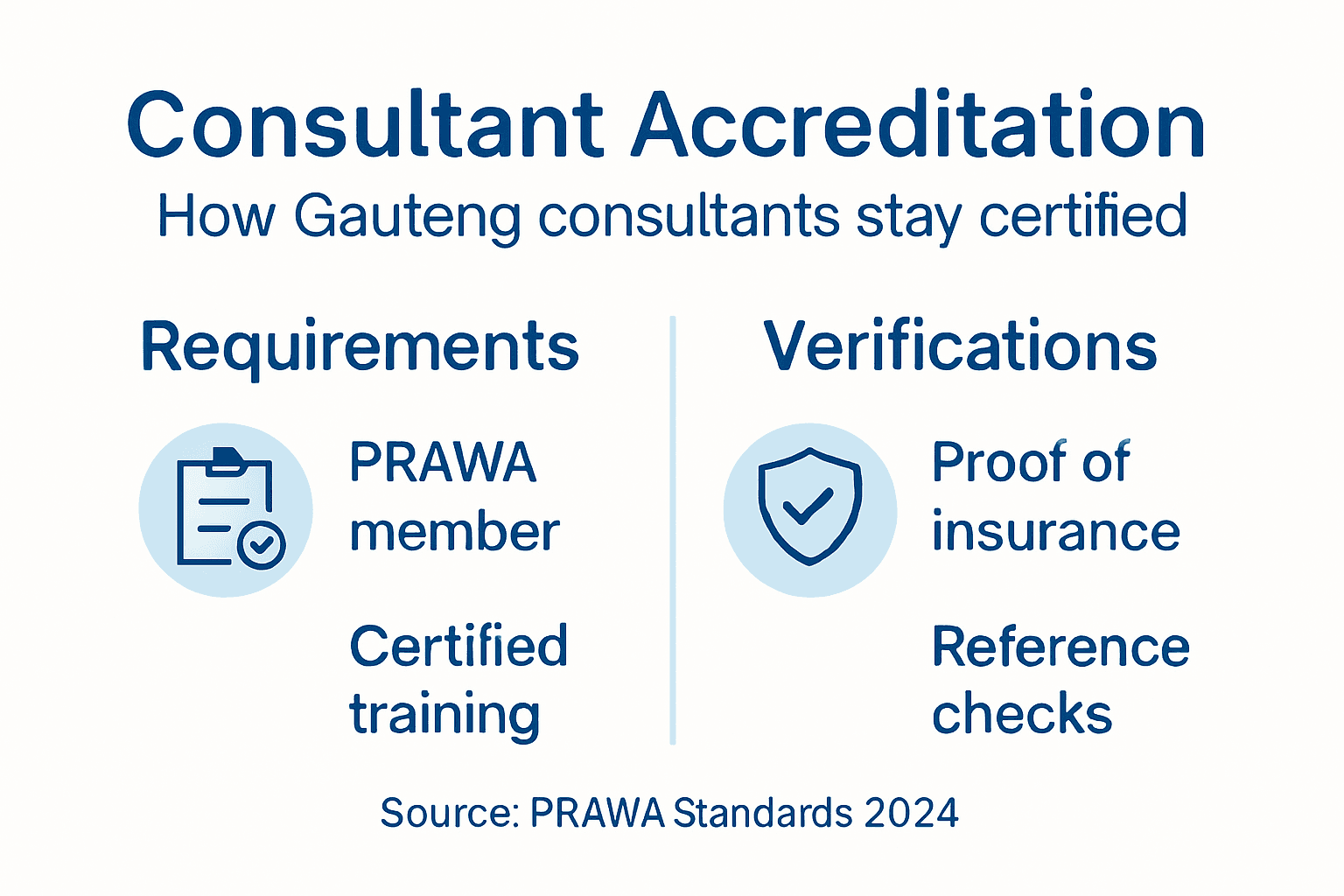
The Professional Roof Repair and Waterproofing Association (PRAWA) establishes industry standards through membership criteria requiring company registration, tax compliance, insurance coverage, and adherence to legislative standards. Consultants and contractors affiliated with PRAWA have undergone vetting processes and committed to maintaining professional conduct. PRAWA membership demonstrates that practitioners meet minimum competency requirements and operate within established guidelines protecting consumers. Certified applicators working under PRAWA standards issue guarantee certificates for completed work, creating documented accountability and confidence in waterproofing projects. This accreditation system protects Gauteng homeowners by ensuring practitioners follow industry best practices, use appropriate materials, and employ correct application methods.
Beyond industry bodies, waterproofing consultants must understand building regulations established by the National Building Regulations and Building Standards, which outline minimum requirements for moisture resistance in new construction and substantial renovation work. Local municipalities in Gauteng enforce these standards through building plan approval processes and occupancy inspections. Consultants advising on new waterproofing installations must ensure recommendations comply with these regulations. For existing properties, whilst retrofitting may not trigger regulatory approval, consultants should still reference best practice standards to ensure durability and performance. Some waterproofing materials and systems carry specific product certifications from standards bodies, confirming suitability for particular applications and climate conditions.
When selecting a waterproofing consultant, verify their professional affiliations, whether they maintain required insurance coverage, and whether they operate under formalised quality assurance systems. Ask whether they hold certifications from recognised training institutions or professional bodies. Request evidence of ongoing professional development, as the industry evolves constantly with new materials and techniques emerging regularly. Consultants demonstrating commitment to regulatory compliance and professional standards typically prove more reliable than those offering rock-bottom pricing with minimal documentation or guarantees.
Pro tip: Request evidence of accreditation, insurance documentation, and references from completed projects before engaging a waterproofing consultant, and verify their standing with PRAWA or similar professional bodies independently.
This comparison shows the risks of hiring non-accredited versus accredited waterproofing consultants:
| Consultant Type | Risks Involved | Outcome Likelihood |
|---|---|---|
| Accredited | Regulatory compliance, written guarantees | Durable, accountable results |
| Non-accredited | Lack of insurance, substandard materials | Frequent failures, no recourse |
Selecting Reputable Consultants and Contractors
Choosing the right waterproofing consultant and contractor for your Gauteng property requires more than simply selecting the cheapest quote. Your decision directly impacts whether your home receives genuine protection or temporary solutions that fail within a few years. Reputable professionals demonstrate specific markers of quality that distinguish them from opportunistic operators. Start by verifying credentials, checking references, and understanding how they approach your specific moisture problems. The investment of time upfront in selection prevents far costlier remediation work later when poor solutions fail spectacularly.
Begin by identifying candidates through professional bodies like PRAWA, which maintains directories of licensed and skilled waterproofing contractors who have undergone vetting processes. Contractors affiliated with professional associations have committed to maintaining standards, engaging in continuous professional development, and adhering to industry codes of conduct. Ask potential consultants directly whether they hold PRAWA membership or equivalent accreditation. Request evidence of professional indemnity insurance, public liability insurance, and workers compensation coverage for any staff they employ. Insurance documentation proves they operate formally and take responsibility for their work. Avoid contractors reluctant to provide these details, as they likely operate informally without accountability structures.
Evaluate their approach during initial consultations. Professional consultants ask detailed questions about your property’s history, previous problems, and maintenance practices rather than immediately recommending expensive solutions. They conduct thorough site inspections before providing recommendations. They explain their findings in language you understand, avoiding technical jargon or pressure tactics designed to rush decisions. Request written specifications detailing exactly which materials they’ll use, how long solutions should last, and what warranty coverage applies. Ask for references from completed projects in similar properties within Gauteng. Contact these references and ask about workmanship quality, adherence to timelines, and whether promised results materialised.
Compare multiple quotes but never select solely on price. Suspiciously low quotes often indicate corners being cut, inferior materials, or inexperienced applicators. Compare what each consultant recommends and why. If recommendations differ significantly, ask each to explain their reasoning. Professional consultants justify their approach through reference to your property’s specific conditions rather than simply applying standardised solutions. Verify that contractors comply with statutory requirements and employ certified applicators. Request guarantees in writing, specifying what’s covered, for how long, and what invalidates the guarantee. Reputable practitioners back their work with documented warranties because they’re confident in their quality.
Pro tip: Contact at least three consultants for quotes, ask each one to visit your property independently, and compare not just pricing but their diagnostic findings and recommended solutions to identify the most thorough assessment.
Pitfalls of Poor Waterproofing Advice
Poor waterproofing advice can cost you tens of thousands of rands in remedial work and property damage. When consultants or contractors provide inadequate recommendations, they typically stem from limited expertise, pressure to cut costs, or failure to properly diagnose root causes. Gauteng homeowners frequently encounter advice that sounds plausible but ultimately fails because it treats symptoms rather than underlying problems. Understanding common pitfalls helps you identify red flags before committing to solutions that will disappoint you. The difference between sound advice and poor recommendations often determines whether your investment protects your home for decades or requires complete reworking within years.
One major pitfall involves recommending solutions without conducting proper site assessments. Some consultants suggest standardised treatments based on vague descriptions rather than detailed inspections. This approach might work occasionally by chance but typically misses critical factors unique to your property. Rising damp requires different intervention than lateral water penetration, yet unqualified advisors often recommend identical solutions regardless. Another common mistake involves applying only surface-level fixes without addressing drainage or ventilation problems. A consultant might recommend internal membrane applications for basement dampness when the real issue is inadequate external drainage or grading. The membrane temporarily masks problems but fails when water pressure continues building underground. Poor advice also manifests when consultants dismiss structural issues, recommending cosmetic waterproofing for properties requiring foundation repairs or structural remediation first.
Cost cutting represents another dangerous pitfall. Unscrupulous practitioners recommend cheaper materials unsuitable for Gauteng’s climate or your property’s specific exposure conditions. They might suggest single-coat applications where multiple coats are necessary, skip proper surface preparation, or use applicators lacking proper training. These shortcuts reduce immediate costs but ensure premature failure. Additionally, poor advice sometimes involves contractors guaranteeing results they cannot control. Water damage prevention depends on proper design, material selection, application quality, and ongoing maintenance. Anyone promising permanent solutions without acknowledging maintenance requirements or property conditions is offering false certainty. Understanding waterproofing failures helps you recognise which problems stem from poor advice versus unforeseen circumstances.
Poor communication represents a subtle but destructive pitfall. Advisors who cannot explain their recommendations in understandable terms, who rush your decision-making process, or who dismiss your questions demonstrate inadequate professionalism. Quality consultants welcome detailed discussion about their reasoning, provide written documentation, and ensure you understand what solutions will and will not accomplish. They acknowledge uncertainty where it exists rather than pretending absolute confidence. They also communicate clearly about maintenance obligations going forward. When advice comes without transparency about limitations, warranty details, or long-term requirements, question whether the consultant truly understands your situation or merely wants your money quickly.
Pro tip: If a consultant’s recommendations differ significantly from others, request detailed written explanations of their approach and ask them to justify why their solution addresses root causes better than alternatives before proceeding.
Protect Your Gauteng Home with Expert Waterproofing Consultancy
Recognising the unique challenges Gauteng properties face from moisture and water infiltration is the first step to lasting protection. With the detailed assessments and tailored solutions discussed in this article, it is clear that choosing a qualified waterproofing consultant is essential to prevent costly damage such as rising damp, foundation cracks, and basement seepage. At Pro Waterproofing, we understand the importance of professional evaluations and customised recommendations that reflect the specific climate and structural conditions of South African homes.
Take control of your property’s wellbeing now by exploring expert advice and real solutions on our site. Visit our Uncategorized – Pro Waterproofing category to learn more about waterproofing methods and regulatory requirements. Connect with trusted specialists and receive detailed quotes through our comprehensive contact options at Pro Waterproofing. Don’t wait for water damage to escalate—secure reliable protection from experienced consultants who prioritise quality, compliance, and transparency today.
Frequently Asked Questions
What is the role of a waterproofing consultant?
A waterproofing consultant assesses moisture infiltration risks in properties and recommends tailored solutions to prevent water damage, conducting detailed inspections and providing expertise on materials and regulatory requirements.
What types of waterproofing solutions do consultants typically recommend?
Consultants often recommend various solutions such as membrane-based waterproofing, damp-proof courses, drainage improvements, and internal moisture control methods tailored to specific property challenges.
How do I know if a waterproofing consultant is qualified?
Verify a consultant’s credentials by checking for relevant qualifications, certifications in building science or moisture control, professional insurance, and affiliations with reputable industry associations.
Why is a thorough site assessment important in waterproofing?
A thorough site assessment helps identify the root causes of moisture problems, ensuring that recommended solutions address specific issues rather than just symptoms, thereby preventing costly mistakes and ensuring long-term effectiveness.