
TL;DR:
- Water damage prevention is crucial due to South Africa’s rising severe weather events.
- Regular inspections and proper sealing of entry points can save significant repair costs.
- Professional waterproofing ensures compliance, durability, and preserves property value.
Water damage is one of the most destructive and expensive problems a South African homeowner can face. Storms roll in without warning, drainage systems fail quietly, and a small crack in a wall can become a structural nightmare within months. Inadequate waterproofing can reduce your property value by up to 30%, yet most damage is entirely preventable with the right routines in place. This guide walks you through the practical steps every homeowner and property manager should take to protect their investment and keep water where it belongs.
Table of Contents
- Set your prevention criteria: understanding local risks
- Inspect and maintain your roofing
- Manage property drainage and ground slope
- Seal vulnerable entry points and waterproof structures
- Monitor, detect and act on early warning signs
- Why prevention beats repair: the cost and compliance reality
- Protect your property: get expert waterproofing help
- Frequently asked questions
Key Takeaways
| Point | Details |
|---|---|
| Prevention saves money | Proactive maintenance and early intervention reduce the cost of major repairs by up to 30%. |
| Climate risks are high | Heavy storms and flooding are common in South Africa, making water damage prevention essential. |
| Compliance matters | Modern waterproofing must meet SANS standards and be installed by qualified professionals for lasting results. |
| Routine checks work | Regular inspections detect leaks early, protecting both your property value and occupants’ health. |
Set your prevention criteria: understanding local risks
With the stakes clear, let’s start by setting out the main criteria that drive effective water protection. South Africa’s climate is not forgiving. Coastal regions deal with persistent humidity and salt-laden air, while inland areas face intense summer thunderstorms and flash flooding. The KZN 2022 floods caused R17 billion in damage, a stark reminder that water events here are not rare inconveniences but serious threats.
Before you can prevent damage, you need to understand what makes your specific property vulnerable. Consider these key risk factors:
- Building age: Older homes often have outdated waterproofing membranes or none at all.
- Design flaws: Flat roofs, poor drainage gradients, and inadequate overhangs all invite water in.
- Weather exposure: Properties in high-rainfall zones or near watercourses face elevated risk.
- Maintenance history: A property with no inspection records is a property with unknown vulnerabilities.
Once you’ve assessed your risk profile, prioritise your prevention efforts in this order: roof integrity, surface drainage, wall and joint sealing, and then regular scheduled inspections. A structured waterproofing checklist tailored to South African conditions gives you a reliable framework to work from, rather than guessing where to start.
Stat to remember: South Africa’s severe weather events are increasing in frequency. Prevention is no longer optional; it is a financial necessity.
Inspect and maintain your roofing
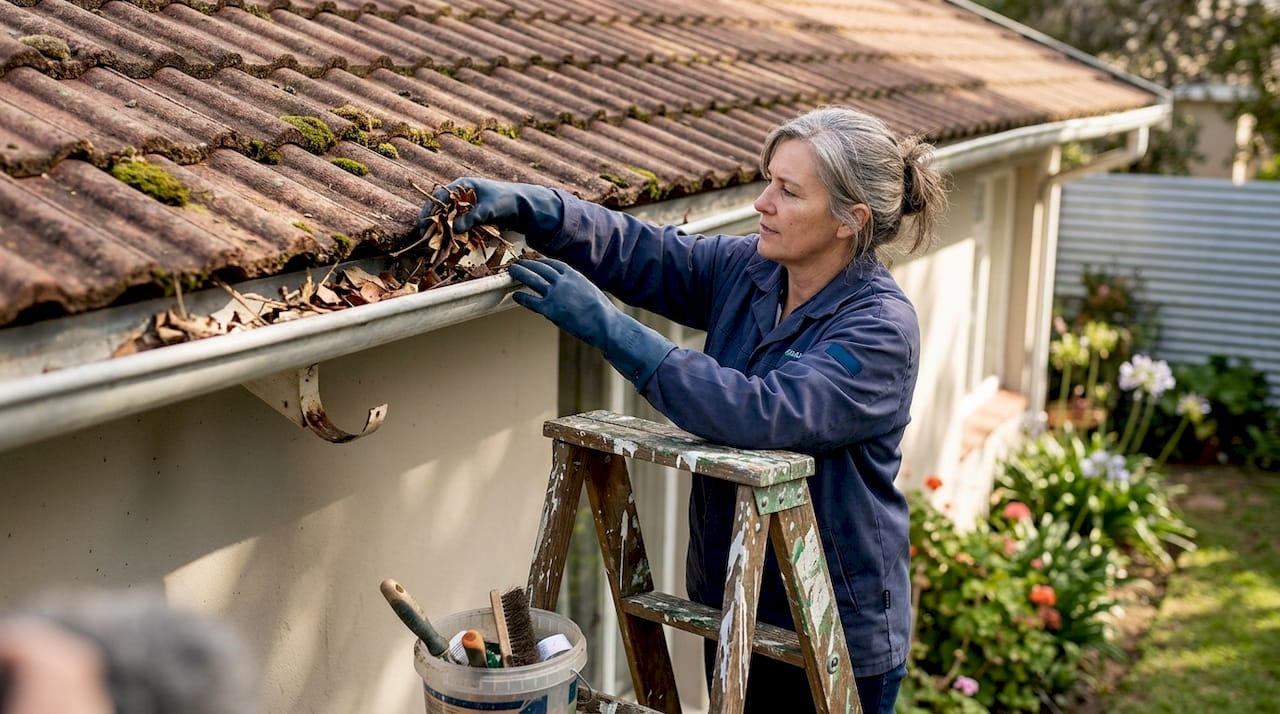
Once you’re clear on the risks and priorities, start prevention from the top of your property, the roof. Your roof is your first and most critical line of defence. In South Africa’s unpredictable climate, checking for cracked tiles, clogged gutters, and loose flashings is not optional maintenance; it is essential protection.
Aim for at least two formal inspections per year: once before the summer rainy season and once after winter. Between those, do a visual sweep after any severe storm. Common weak points to check include:
- Cracked or missing roof tiles
- Loose or corroded flashing around chimneys and skylights
- Blocked or sagging gutters and downpipes
- Moisture or mould in the roof cavity or attic
- Water stains on ceilings or upper walls
- Peeling paint or musty odours in upper rooms
Catching a leak early can save you up to 30% on repair costs compared to addressing the same problem after it has spread. A small damp patch on a ceiling is cheap to fix. The same leak left for six months can mean replacing structural timbers, ceiling boards, and insulation.
“The roof is the most neglected part of a home until it fails. By then, the cost is rarely just the roof.”
Pro Tip: Build a simple rainy season readiness routine. Two weeks before the rains arrive, clear gutters, check flashings, and walk the roof perimeter. Pair this with a roof maintenance guide and a professional waterproofing inspection every two to three years for complete peace of mind.
Manage property drainage and ground slope
Keeping water out starts with keeping it away from your walls and foundation. Even the best-sealed building will eventually suffer if water is allowed to pool against its base. Ground slope, drainage channels, and outflow management are your first physical barrier against foundation damage.
Here is a practical sequence to follow:
- Assess your ground slope. The ground around your building should slope away from the walls at a gradient of at least 1:20 for the first three metres. If it slopes inward, water funnels directly to your foundation.
- Clear gutters and downpipes. Blocked outflows during heavy rain overflow and saturate the soil directly against your walls.
- Install French drains where needed. These subsurface drainage channels redirect groundwater away from foundations before it can cause damage.
- Check paving and hardscaping. Cracked or sunken paving can channel water toward the building rather than away from it.
To help you choose the right drainage solution, here is a quick comparison:
| Solution | Best for | Approximate cost | Lifespan |
|---|---|---|---|
| French drain | Chronic groundwater | Moderate | 10 to 30 years |
| Surface channel drain | Paved areas, driveways | Low to moderate | 15 to 25 years |
| Dry well | Isolated pooling spots | Low | 10 to 15 years |
| Regrading | Incorrect ground slope | Moderate to high | Permanent |
A thorough drainage checklist will help you identify which solution suits your property. As the guidance on clearing gutters and installing French drains confirms, these interventions are among the most cost-effective you can make.
Pro Tip: For chronic pooling in a garden or paved area, a dry well is a simple and affordable fix. It is essentially a gravel-filled pit that absorbs surface water and releases it slowly into the subsoil, preventing it from sitting against your structure.
Seal vulnerable entry points and waterproof structures
With outdoor water directed properly, turn to vulnerable entry points and structures for comprehensive defence. Water is remarkably persistent. It finds the smallest gaps around window frames, door sills, external wall joints, and service penetrations, and once inside, it spreads silently.
Sealing windows, doors, and exterior walls with quality caulking and water-resistant coatings is straightforward but must be done correctly and refreshed regularly. Caulk degrades in UV exposure and temperature fluctuations, both of which South Africa delivers in abundance.
For basements and foundations, the stakes are higher. Moisture barriers and modern membranes are now required under SANS 10400-L, which mandates that roofs remain watertight for at least five years and that installation is carried out by qualified personnel. Non-compliance is not just a building code issue; it can void your insurance and complicate property sales.
Here is a comparison of common waterproofing materials:
| Material | Flexibility | Typical warranty | Best application |
|---|---|---|---|
| Flexible membrane | High | 10 to 15 years | Roofs, decks, balconies |
| Rigid membrane | Low | 5 to 10 years | Foundations, retaining walls |
| Cementitious coating | Medium | 5 to 8 years | Basements, wet rooms |
| Crystalline waterproofing | High | 10 to 25 years | Concrete structures |
Warning signs that your sealing has failed include damp spots on internal walls, musty smells in rooms, warped timber floors, and efflorescence (white salt deposits) on brick or plaster. Review the latest SA waterproofing standards and explore modern waterproofing materials to ensure you are using the right products for each application.
Monitor, detect and act on early warning signs
Sealing and draining are powerful, but only if you quickly spot new issues before they escalate. The most effective prevention system in the world still needs a human eye checking it regularly. Monthly walk-throughs cost nothing and can save thousands.
Here is a practical monthly inspection sequence:
- Check all ceilings for new stains or discolouration.
- Inspect skirting boards and floor edges for warping or dampness.
- Look behind furniture against external walls for mould or moisture.
- Check under sinks and around geysers for drips or corrosion.
- Walk the exterior perimeter and look for new cracks in plaster or pointing.
Your water meter is also a powerful diagnostic tool. Turn off every tap and appliance in the house, then watch the meter for 15 minutes. If it moves, you have a hidden leak. Monitoring water bills and meters for unexplained increases is one of the simplest ways to catch concealed pipe failures or slow seepage.
“A dripping tap wastes 30 litres per hour. A small internal leak can lose 500 litres per day without a visible sign indoors.”
Pro Tip: Keep a simple logbook for your property. Note the date of every inspection, any issues found, and what was done about them. This record is invaluable when selling, insuring, or disputing a claim. Find more actionable waterproofing tips to build this habit into your routine.
Why prevention beats repair: the cost and compliance reality
Once prevention routines are in place, it is worth reflecting on why they truly matter in the local context. We see a pattern repeated constantly in South Africa: a homeowner notices a damp patch, decides it can wait, and six months later faces a bill that is five times what early action would have cost. Prevention measures consistently run 30% or more below the cost of major repairs, and that gap widens the longer a problem is ignored.
The appeal of DIY waterproofing is understandable, but it carries real risks. DIY lacks warranties and SANS compliance, whereas professional systems can last 20 to 30 years. A failed DIY repair that causes structural damage may not be covered by your insurer, leaving you fully exposed.
SANS 10400-L now requires certified installation for waterproofing on new builds and major renovations. This is not bureaucracy for its own sake; it reflects hard-won knowledge about what actually protects buildings long-term. Understanding waterproofing’s role in maintenance helps you see it not as a grudge purchase but as a core part of responsible property ownership.
Pro Tip: Always request a certificate of compliance from your waterproofing contractor. It protects you legally, supports your insurance claims, and adds documented value when you sell.
Protect your property: get expert waterproofing help
Ready to take the next step? Knowing what to do is one thing; having the right team to do it correctly is another entirely. Professional waterproofing ensures that every intervention meets SANS standards, uses materials suited to your specific conditions, and comes backed by a meaningful guarantee.
At Pro Waterproofing, our certified specialists work across residential, commercial, and industrial properties throughout South Africa. Whether you need a full inspection, targeted repairs, or a complete waterproofing system, we can assess your property and recommend the most effective solution. Contact us today for a quote and protect your property before the next storm arrives.
Frequently asked questions
How often should I inspect my roof for water damage?
In South Africa, inspect your roof at least twice a year and after any severe storm. Regular inspections are the most reliable way to catch leaks before they cause costly structural damage.
What’s the best way to check for hidden water leaks?
Turn off all taps and appliances, then watch your water meter for movement. Monitoring your meter alongside unexplained bill increases is the simplest method for detecting concealed leaks.
Do I need a professional for waterproofing or can I DIY?
DIY is possible for minor maintenance, but professionals ensure SANS compliance and offer warranties of up to 30 years. Qualified installers are essential for roofs, foundations, and any regulated structure.
How does poor waterproofing affect property value?
Inadequate waterproofing can reduce a property’s market value by as much as 30%, making it one of the costliest maintenance oversights a homeowner can make.
Recommended
- 7 Essential Waterproofing Tips for Homeowners in South Africa
- 7 Essential Waterproofing Tips for Homeowners in South Africa
- 7 Essential Waterproofing Tips for Homeowners in South Africa
- 7 Key 2025 Waterproofing Trends South Africa Homeowners Must Know
- Top home repair trends to enhance your property value
- How to Maintain Your Roof in Bristol for Longevity and Durability – Precision Remodeling Solutions