
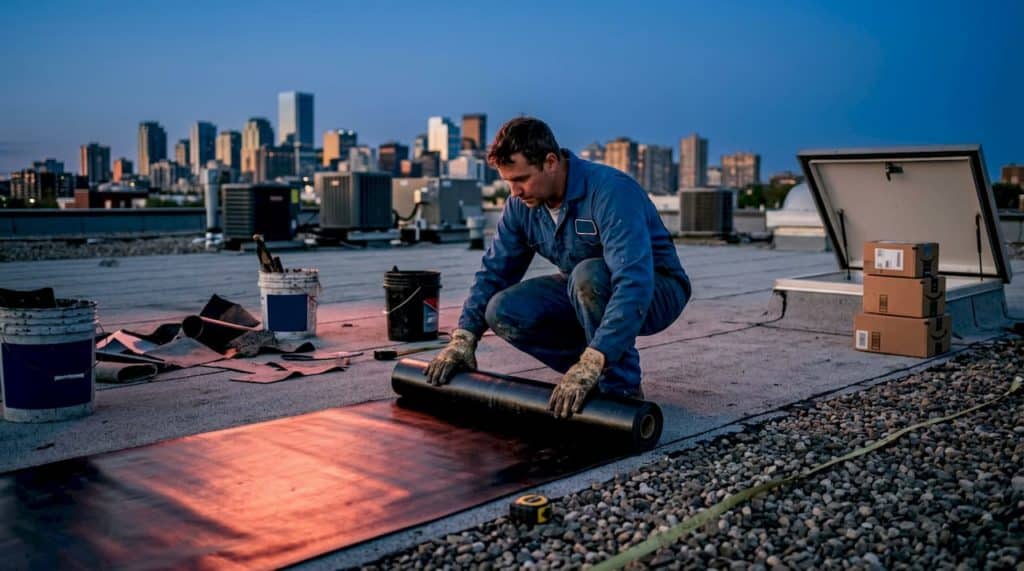
TL;DR:
- Flat roof waterproofing requires specialized membrane systems because standard materials often fail under ponding conditions. EPDM provides the longest lifespan, while installation quality and drainage are critical to prevent early failure and ensure durability. Regular inspections and proper maintenance significantly extend membrane performance, making expert guidance essential for lasting flat roof solutions.
Flat roofs demand a very specific approach to waterproofing. The common assumption that any waterproof material will do the job has led to countless failed roofs and expensive repairs. A waterproof membrane flat roof system is not a luxury upgrade. It is a structural necessity. Flat roofs below a 2:12 slope require dedicated membrane systems because standard shingles simply cannot manage water that sits rather than runs off. This guide covers every major membrane type, installation method, durability factor, and maintenance practice you need to make a confident, informed decision.
Table of Contents
- Key takeaways
- Waterproof membrane flat roof types explained
- Installation methods and what goes wrong
- Durability and maintenance of flat roof membranes
- Choosing the right membrane system
- My honest take on flat roof membranes
- How Prowaterproofing can help
- FAQ
Key takeaways
| Point | Details |
|---|---|
| Membrane choice is critical | Not all waterproof materials suit flat roofs; the slope and drainage profile dictate which system performs. |
| EPDM offers the longest lifespan | With proper care, EPDM membranes last 40 to 50 years, outperforming most alternatives. |
| Seam quality determines longevity | TPO heat-welded seams are stronger than the membrane itself when done correctly, but fail early when not. |
| Ponding water is a drainage problem | Standing water degrades adhesives faster than membrane material; correct slope and drainage are non-negotiable. |
| Professional installation protects your investment | Poorly installed membranes void warranties and cause failures within years, regardless of material quality. |
Waterproof membrane flat roof types explained
Choosing the right membrane starts with understanding what each material actually does under real conditions. There are four main categories used across residential, commercial, and industrial flat roof systems today.
EPDM (ethylene propylene diene monomer)
EPDM is a synthetic rubber membrane and the benchmark for flat roof durability. EPDM lifespan averages 40 to 50 years with proper maintenance, making it the longest-lasting single-ply option available. It handles temperature extremes well, remains flexible in cold conditions, and resists UV degradation without surface coatings. The material is available in large sheets that reduce the number of seams, which directly reduces leak risk.
TPO (thermoplastic polyolefin)
TPO is a single-ply reflective membrane that has gained significant market share over the past decade. Its white or light-coloured surface reflects solar radiation, reducing cooling loads in warm climates. The shift toward reflective, energy-efficient membranes is driven by green building standards and the real reduction in cooling costs it produces. TPO seams are heat-welded, which creates an incredibly strong bond when done correctly. The trade-off is that improper welding produces early failure, so installer skill matters enormously here.
Liquid-applied membranes
Polyurethane, silicone, and acrylic liquid membranes are applied as coatings that cure to form a seamless waterproof layer. This makes them ideal for roofs with complex shapes, penetrations, or existing surfaces that are difficult to strip. Silicone coatings resist ponding water better than most alternatives because the material does not absorb water or degrade from sustained contact. Acrylic options are more budget-friendly but perform poorly in areas with prolonged ponding.
PVC and built-up roofing (BUR)
PVC membranes offer strong chemical resistance and are often specified for restaurants or industrial buildings where grease and chemical exposure are concerns. Built-up roofing uses multiple layers of bitumen and reinforcing fabric to create a thick, durable system. BUR is one of the oldest flat roofing solutions, and while labour-intensive to install, it performs well when properly constructed and maintained.
Pro Tip: When comparing flat roof membrane options, prioritise total lifecycle cost over upfront price. A less expensive material that requires replacement in 15 years will cost significantly more than a premium membrane lasting 40 years.
| Membrane type | Lifespan | Relative cost | Key strength | Maintenance demand |
|---|---|---|---|---|
| EPDM | 40 to 50 years | Moderate | Flexibility and UV resistance | Low |
| TPO | 20 to 30 years | Moderate | Reflectivity and seam strength | Low to moderate |
| Liquid (silicone) | 15 to 25 years | Moderate to high | Seamless application | Moderate |
| PVC | 20 to 30 years | Moderate to high | Chemical resistance | Low to moderate |
| Built-up roofing | 15 to 30 years | Low to moderate | Layered redundancy | Moderate to high |
Installation methods and what goes wrong
The membrane material is only half the equation. How it is installed determines whether it performs as designed or fails within a few years. Understanding the installation process helps you ask the right questions of any contractor before work begins.
-
Substrate preparation: Every membrane system depends on a clean, dry, and structurally sound substrate. Contamination, moisture trapped beneath the membrane, or an uneven deck creates adhesion failure points that no amount of primer will fix. This step is the most commonly rushed part of the process, and the consequences appear later.
-
Primer and adhesive selection: The primer must be compatible with both the substrate and the membrane. An incompatible primer creates a weak bond that feels solid initially but fails under thermal movement or moisture exposure. Always confirm compatibility with the membrane manufacturer’s specifications.
-
Mechanical fastening versus full bonding: Mechanical fastening speeds up installation but allows for wind flutter at seams and edges under high-load conditions. Fully adhered membranes are more wind-resistant but demand a perfectly prepared substrate and precise application. The right choice depends on your building’s wind load rating and the installer’s capability.
-
Seam execution: This is where most flat roof membrane failures originate. TPO heat-welded seams are stronger than the membrane itself when welded at the correct temperature and speed. Too fast and the bond is superficial. Too slow and the material burns. EPDM seams use adhesive tape and bonding agents, which are more forgiving but still require clean, overlap-correct application.
-
Drainage and slope: Flat roofs are not truly flat. They require a minimum slope of 1:80 to direct water toward drains or outlets. Installing a membrane over a deck with inadequate falls guarantees ponding, which accelerates adhesive degradation and voids most warranties.
Pro Tip: Ask your contractor to provide a drainage plan before installation begins. A good contractor will assess existing falls, identify low spots, and specify tapered insulation where needed rather than assuming the deck will shed water adequately.
Learning how to waterproof flat roofs correctly from the outset saves thousands in remedial work down the line.
Durability and maintenance of flat roof membranes
A membrane is only as durable as the care it receives after installation. The synthetic polymer waterproofing membrane market is valued at $18.78 billion in 2025 and growing at 7.4% annually, which tells you the industry is producing better materials year on year. But even the best membrane fails early without proper maintenance.
The main threats to membrane longevity are:
- UV exposure and thermal cycling: Repeated heating and cooling causes expansion and contraction. Over time this stresses seams and lap joints, particularly on dark-coloured membranes without UV-stabilising additives.
- Foot traffic: Flat roofs are often accessed for maintenance of HVAC equipment. Without designated walkways or protective boards, membrane surfaces develop wear patches that thin the waterproofing layer.
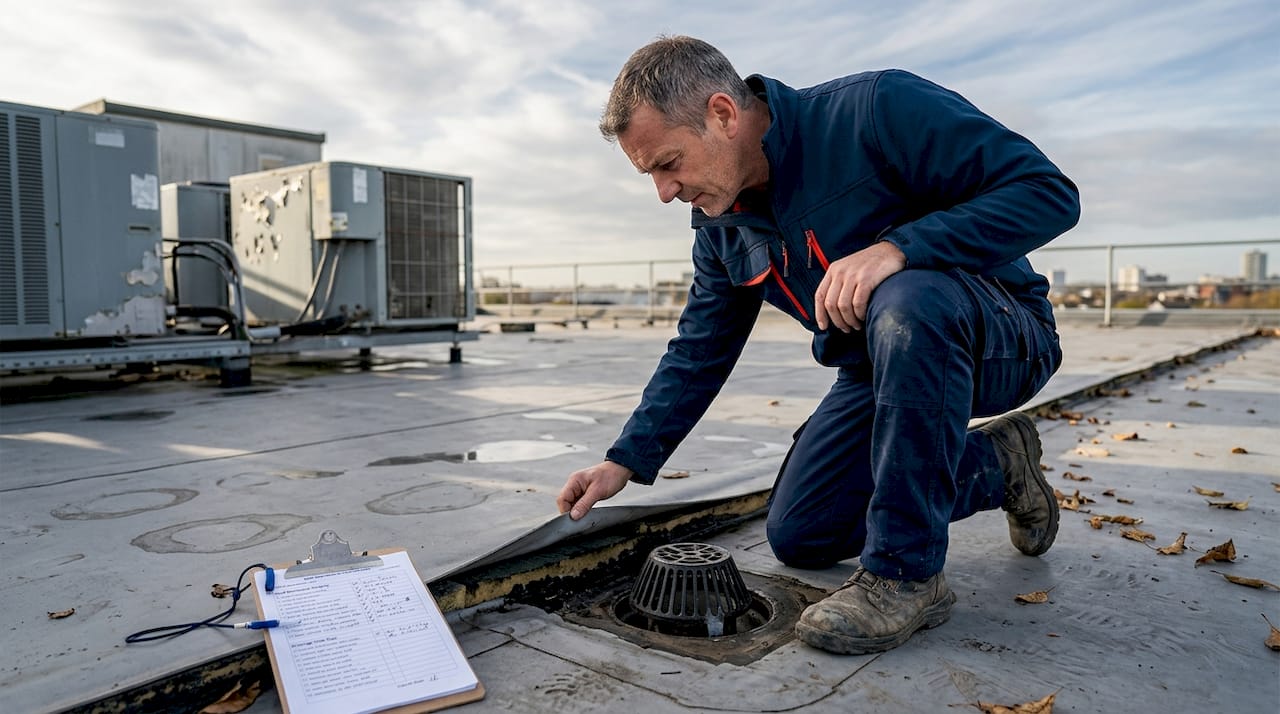
- Ponding water: This is the most underestimated threat. Standing water degrades adhesives faster than it degrades the membrane itself, meaning a roof can appear intact while its bond to the substrate is failing invisibly beneath.
- Vegetation and debris: Leaves and organic matter trap moisture against the membrane surface and can accelerate biological growth that degrades certain membrane materials, particularly bitumen-based systems.
Regular inspections twice a year, and after any major storm, catch the early signs of failure before they become structural problems. Look for blistering, lifting edges, cracked seams, and blocked drainage outlets.
Properly installed and maintained EPDM lasts longest, but TPO is a strong contender where reflective cooling and chemical resistance matter more than raw longevity. The maintenance requirements for both are similar and manageable with a consistent routine.
For a detailed look at waterproof roofing solutions suited to South African conditions, the variations in UV intensity and rainfall patterns make local expertise particularly valuable when selecting your system.
Choosing the right membrane system
Applying everything above to your specific project comes down to four considerations: climate, building use, structural capacity, and budget.
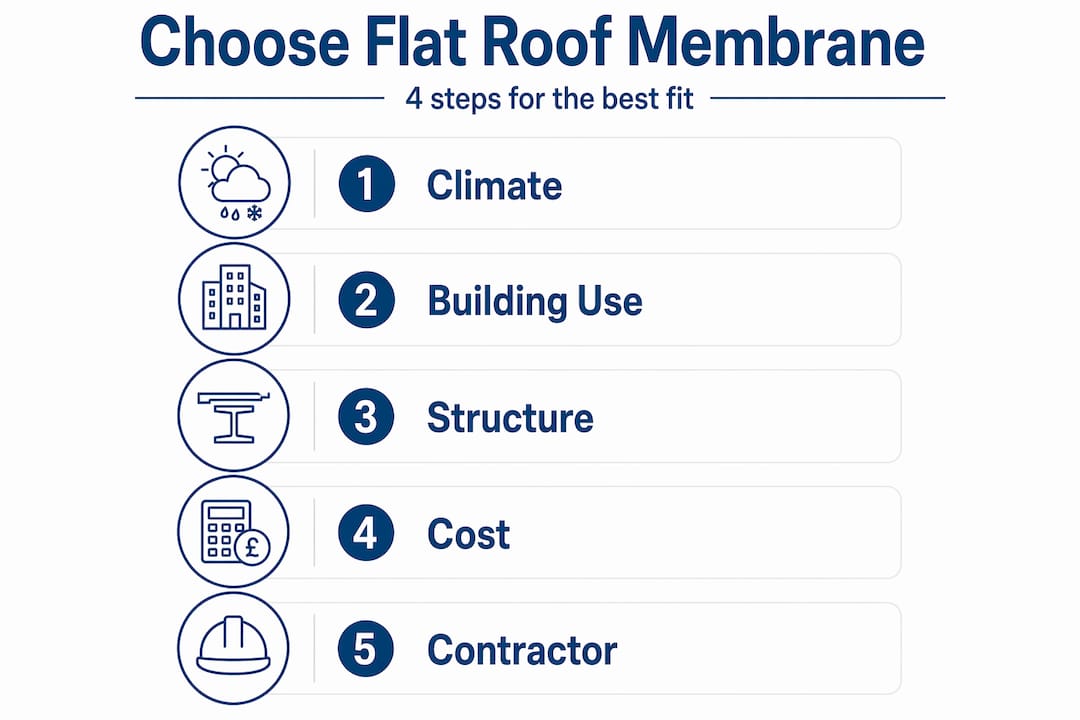
Climate: In hot, sunny climates, TPO and white PVC membranes reduce cooling costs through reflectivity. In regions with extreme cold, EPDM’s flexibility prevents cracking during freeze-thaw cycles. South African properties in high-UV coastal regions benefit significantly from UV-stabilised membranes.
Building use and loading: Roofs that will bear foot traffic from regular maintenance access need membranes with protective layers or walkway boards. Roofs supporting green installations or ballasted systems require structural assessment before membrane specification.
Ballasted EPDM systems: Ballasted EPDM roofs use gravel or pavers placed over the membrane to resist wind uplift and protect the membrane from UV and physical damage. This system is highly effective where the structure can support the additional weight, and it significantly extends membrane life.
Budget and lifecycle cost: Professional flat roof installation costs between $12 and $17 per square foot in 2026, covering both labour and materials. That figure is the starting point for your lifecycle analysis, not the total cost of ownership. A cheaper membrane requiring replacement in 15 years versus a premium system lasting 40 years will always cost more in aggregate, once you account for labour, disruption, and disposal.
Contractor credentials: The best membrane on the market installs poorly by an unqualified team will fail. Verify that your contractor holds relevant certifications, carries liability insurance, and can provide manufacturer-backed warranties. Choosing the best waterproofing material is only worth doing if the installation matches the product’s potential.
My honest take on flat roof membranes
I’ve seen more flat roof failures caused by poor installation than by poor material choice. That’s the uncomfortable truth that most product comparisons skip over entirely. A contractor who rushes substrate prep or skimps on primer because it saves an hour will cost you far more in three years when the membrane lifts at every seam.
In my experience, EPDM consistently delivers when installed by someone who respects the process. TPO is genuinely impressive in the right conditions, particularly where energy efficiency is a priority, but its performance depends almost entirely on seam quality. I’ve inspected TPO roofs that looked perfect from a distance and had delaminating seams that a probe test revealed in minutes.
What I’ve learned is that the inspection phase after installation matters as much as the installation itself. Push for a seam probe test and a thermal scan before you sign off on any membrane flat roof. These tests cost very little relative to the remedial work they prevent.
The other thing I tell every property owner is this: ponding water is never a membrane problem first. It is always a drainage problem. Fix the falls and outlets, and your membrane will perform as specified. Ignore the drainage and no membrane on earth will save you.
— Eben
How Prowaterproofing can help
Whether you are specifying a flat roof membrane for a new commercial building or replacing a failing system on a residential property, getting professional guidance from the start makes the difference between a roof that lasts decades and one that needs remedial work within years.
Prowaterproofing brings specialist knowledge in flat roof membrane systems across residential, commercial, and industrial applications throughout South Africa. The team advises on membrane selection based on your specific climate, building use, and budget, then backs that with quality installation and maintenance support. From EPDM and TPO to liquid-applied and BUR systems, Prowaterproofing covers the full range of flat roof waterproofing options with warranties you can rely on. Contact the team today for a consultation and accurate quote.
FAQ
What is the best waterproof membrane for a flat roof?
EPDM is widely regarded as the most durable option, with a lifespan of 40 to 50 years, though TPO is preferred where reflective energy efficiency is a priority. The best choice depends on climate, building use, and budget.
How long does a flat roof membrane last?
Lifespan varies by material. EPDM lasts 40 to 50 years, TPO and PVC between 20 and 30 years, and liquid-applied silicone systems between 15 and 25 years with proper maintenance.
What causes flat roof membrane failure?
The most common causes are poor seam execution during installation, inadequate substrate preparation, and ponding water that degrades adhesives beneath the membrane over time.
Can I apply a waterproof membrane over an existing flat roof?
In many cases, liquid-applied membranes can be installed over existing surfaces without full removal, provided the substrate is structurally sound and free of trapped moisture. A professional assessment is required before proceeding.
How often should a flat roof membrane be inspected?
Inspections should be carried out at least twice a year and after any significant storm event. Routine checks help identify blistering, lifting seams, and blocked outlets before they cause serious damage.