
TL;DR:
- A proper basement fix depends on accurately diagnosing the water entry mechanism, whether condensation, surface runoff, or hydrostatic pressure. Interior drainage systems with sump pumps are suitable for most residential cases, while exterior waterproofing is reserved for serious structural issues. Regular maintenance of gutters, grading, and sump pumps is essential to ensure long-term dryness and prevent repair failures.
A basement fix is a targeted repair and waterproofing process that addresses the precise cause of water entry to prevent structural damage, mould growth, and property value loss. The method you choose matters enormously. Applying the wrong solution, such as surface sealants under hydrostatic pressure or drainage systems where condensation is the culprit, is one of the most expensive mistakes a homeowner can make. The right approach draws on tools like sump pumps, French drains, and hydraulic cement, each matched to a specific water entry mechanism. Get the diagnosis right, and the repair lasts. Get it wrong, and you are back to square one within a season.
How do you diagnose basement water problems?
Accurate diagnosis is the foundation of every successful basement repair solution. Water enters basements through three distinct mechanisms: condensation, surface runoff, and hydrostatic groundwater pressure. Each requires a completely different fix, and misdiagnosis leads to repeated failures despite applying technically correct products.
Identifying the water source starts with these symptoms:
- Hydrostatic pressure: Water seeping upward through the floor slab or weeping at the cove joint (where floor meets wall) points directly to groundwater pressure beneath the foundation. This is the most serious mechanism and the hardest to seal permanently.
- Surface runoff: Water stains appearing only after heavy rain, concentrated near windows or wall penetrations, suggest poor grading or blocked gutters directing surface water toward the foundation.
- Condensation: Moisture that forms on cool wall surfaces during warm, humid weather is condensation, not groundwater. It leaves no tide marks and disappears when humidity drops.
The tape test is a reliable DIY inspection tool. Tape a sheet of plastic film tightly to a damp wall section and leave it for 24 hours. Moisture forming on the room side confirms condensation. Moisture behind the film confirms groundwater intrusion.
Pro Tip: Before calling a contractor, photograph every damp patch after a rain event and again during dry weather. This visual record helps a professional distinguish seasonal groundwater pressure from surface drainage failures in minutes rather than hours.
Incorrect diagnosis does not just waste money. It can accelerate structural deterioration by leaving the actual water source untreated while masking symptoms temporarily. A complete waterproofing guide from The Basement Guide confirms that condensation needs ventilation or dehumidifiers, groundwater demands drainage systems, and structural issues require specialist repairs. These are three entirely separate categories of work.
Interior vs exterior waterproofing: which do you need?
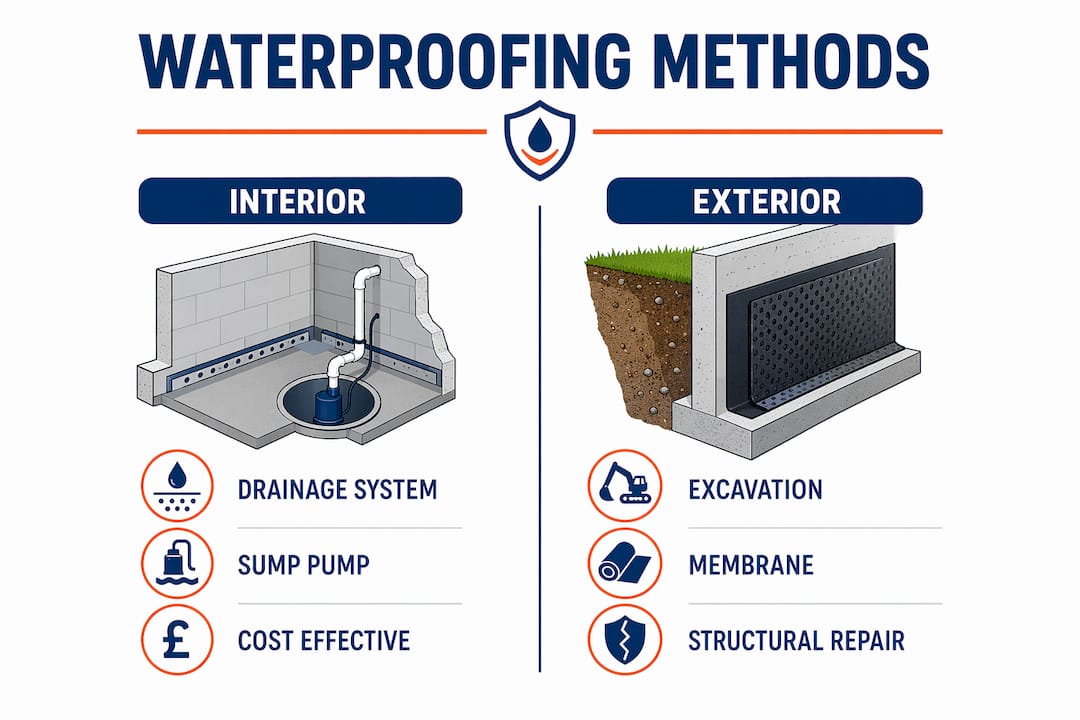
The choice between interior and exterior basement waterproofing methods is the single biggest decision in any repair project. It determines cost, disruption, and long-term effectiveness.
| Factor | Interior Drainage System | Exterior Excavation Waterproofing |
|---|---|---|
| Typical cost | £2,400–£6,300 (approx. $3,000–$8,000) | £6,300–£11,800+ (approx. $8,000–$15,000+) |
| How it works | Intercepts water after entry, routes to sump pump | Stops water at the wall face before entry |
| Best for | Cove joint seepage, minor wall cracks, floor seepage | Bowing walls, severe hydrostatic pressure, structural cracks |
| Disruption level | Interior floor work only | Full exterior excavation required |
| Feasibility for existing homes | High | Low to moderate |
Interior drainage systems do not prevent water from entering the foundation wall. They intercept it at the perimeter and channel it to a sump pump before it can flood the floor. This is a pressure management solution, not a barrier. For the vast majority of residential retrofits, it is the standard approach and comes with professional warranties.
Exterior waterproofing is the exception rather than the rule. It is appropriate when foundation walls are bowing inward, when structural cracks run through the full wall thickness, or when hydrostatic pressure is severe enough that interior drainage cannot manage the volume. New builds in the UK often receive external BS 8102 Type A tanking membranes before backfill. Existing basements typically receive internal cavity drain systems (Type C) because excavation feasibility guides the choice.
Pro Tip: Get at least three contractor quotes and ask each one to explain their diagnosis in writing before recommending a method. If two contractors recommend different approaches, the one who can explain the specific water entry mechanism in detail is the one to trust.
How to fix a basement: step-by-step techniques
Implementing the right repair technique requires preparation, the correct materials, and a clear sequence. Rushing any stage is the most common reason repairs fail within two years.
Installing an interior perimeter french drain
- Prepare the perimeter. Break up the concrete floor along the interior perimeter, typically 300–450mm wide, using a jackhammer or angle grinder.
- Excavate the trench. Dig down to the footing level to expose the cove joint where wall meets floor.
- Lay drainage pipe. Place perforated pipe in the trench, surrounded by clean gravel, sloping toward the sump pit location.
- Install the sump pit and pump. Dig the sump pit at the lowest point, fit a sump pump rated for your expected water volume, and connect the discharge line to drain away from the foundation.
- Backfill and re-pour. Cover the pipe with gravel, then re-pour the concrete floor over the system.
Sealing floors alone fails under hydrostatic pressure because the pressure finds new pathways. Drainage redirects water rather than fighting it.
Sealing cracks with hydraulic cement or epoxy injection
- Mix hydraulic cement to a stiff consistency and press firmly into active cracks while water is still seeping. It sets in 3–5 minutes and stops flow immediately.
- For dry, structural cracks, epoxy injection is more appropriate. Inject low-viscosity epoxy under pressure to bond the crack and restore structural integrity.
- Do not apply either product over painted or damp surfaces without preparation. Clean the crack with a wire brush and remove all loose material first.
Managing surface water before any major work
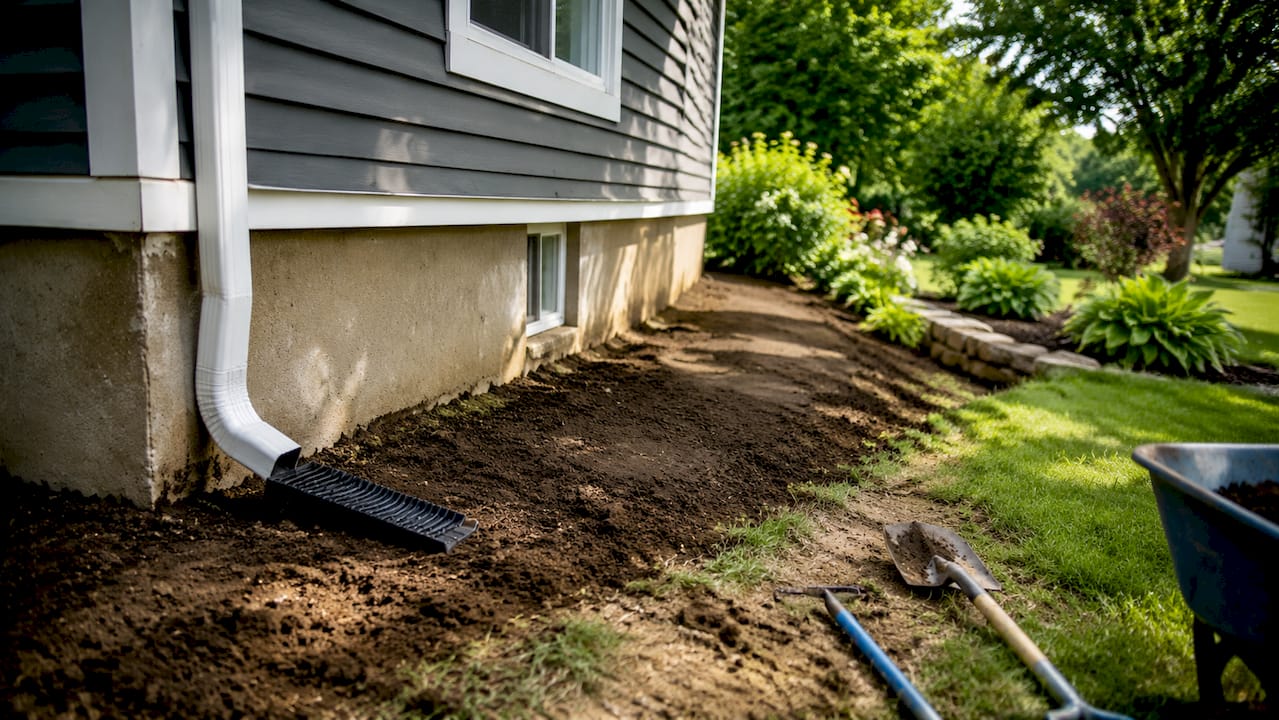
Reducing external water load through gutters and soil grading should precede drainage or membrane work. Clean gutters and extend downspouts at least 1.8 metres from the foundation. Re-grade soil so it slopes away from the building at a minimum of 25mm per 300mm for the first 1.8 metres.
Pro Tip: DIY drainage systems usually fail because they overlook required precision and system components. If you are installing a French drain, hire a professional for at least the sump pump connection and discharge routing. That single element determines whether the whole system works.
What does a basement fix actually cost?
Budgeting accurately for basement repairs requires understanding what drives cost variation. Severity, access, and the chosen method all affect the final figure significantly.
| Repair Type | Typical Cost Range | Key Cost Driver |
|---|---|---|
| Interior drainage system | $3,000–$8,000 | Linear metres of perimeter, concrete thickness |
| Exterior excavation waterproofing | $8,000–$15,000+ | Depth of excavation, landscaping reinstatement |
| Sump pump installation | $1,000–$4,000 | Pump capacity, discharge routing complexity |
| Battery backup for sump pump | $850–$1,750 | Battery capacity, automatic switchover features |
| Hydraulic cement crack repair | $200–$800 | Number and length of cracks |
Interior drainage systems cost $3,000–$8,000 on average, while exterior excavation runs $8,000–$15,000 or more. That cost gap reflects the labour and disruption involved in full excavation, not necessarily a proportional improvement in outcome for typical residential cases.
Sump pump installation typically costs $1,000–$4,000, with battery backup adding $850–$1,750. A battery backup is not optional in storm-prone areas. Power outages coincide with the heaviest rainfall, which is precisely when the pump is working hardest.
When evaluating contractor bids, ask for a written scope of work that specifies the drainage pipe diameter, gravel specification, sump pump model, and warranty terms. Cheap basement repairs that omit these details often omit the components themselves.
How do you maintain a basement fix long-term?
A repaired basement requires ongoing maintenance to stay dry. Most repeat failures are not product failures. They are maintenance failures.
Signs that a previous repair has failed:
- Persistent dampness or new tide marks appearing after rain
- White crystalline deposits (efflorescence) forming on walls, indicating ongoing water movement through masonry
- New hairline cracks appearing near previous repair sites
- Sump pump running continuously or failing to activate during wet weather
Sump pump reliability is critical in storm-prone zones. Test your pump quarterly by pouring water into the pit and confirming it activates and discharges correctly. Replace the pump every 7–10 years regardless of apparent condition.
Exterior maintenance is equally important. Check gutters and downspouts twice yearly, in autumn and spring. Inspect soil grading after any landscaping work or significant rainfall that may have eroded the slope away from the foundation. Review the prevent water damage guide for a full seasonal maintenance checklist.
Pro Tip: Book a professional inspection every three to five years even if no symptoms are visible. Minor cove joint deterioration and small new cracks are far cheaper to address before they become active leaks. Early intervention is the most cost-effective basement repair solution available.
If symptoms persist after a repair, do not apply additional sealants over the existing work. Consult a specialist who can assess whether the original diagnosis was correct and whether the system was installed to specification.
Key takeaways
A successful basement fix depends entirely on matching the repair method to the confirmed water entry mechanism, not on applying the most expensive or most visible solution.
| Point | Details |
|---|---|
| Diagnose before you repair | Identify whether water enters via condensation, surface runoff, or hydrostatic pressure before choosing any method. |
| Interior drainage suits most homes | Interior French drains with sump pumps are the standard residential retrofit and cost $3,000–$8,000. |
| Exterior work is for serious cases | Reserve exterior excavation for bowing walls, structural cracks, or severe hydrostatic pressure. |
| Surface water management comes first | Fix gutters and soil grading before installing any drainage or membrane system to reduce incoming water volume. |
| Maintenance protects your investment | Test sump pumps quarterly and inspect gutters twice yearly to prevent repeat failures. |
What i have learned about basement fixes after years in the field
The most common mistake I see is homeowners skipping the diagnosis and going straight to a product. They buy a tin of waterproofing paint, apply it to a damp wall, and call it done. Six months later, the paint is bubbling off and the wall is wetter than before. That is not a product failure. That is a diagnosis failure.
My strong preference for most residential cases is interior drainage as the primary fix, combined with exterior water load reduction through gutters and grading. This layered approach addresses both the volume of water trying to enter and the pressure that builds when it cannot escape. It is more reliable than exterior excavation for most existing homes, and significantly more affordable.
The one thing I would warn against most strongly is the DIY French drain. I have seen dozens of them. They almost always fail within two years because the pipe gradient is wrong, the sump pit is undersized, or the discharge point causes water to pool back toward the foundation. The foundation leak repair guide on Prowaterproofing covers what professional installation actually involves. Read it before deciding to go it alone.
Exterior waterproofing is genuinely necessary in some cases, particularly where walls are moving or where a leaky basement has been left untreated long enough to cause structural deterioration. But it is the exception, not the starting point.
— Eben
Get expert basement waterproofing from Prowaterproofing
Prowaterproofing provides diagnosis-driven basement repair and waterproofing services for residential and commercial properties across South Africa. Every project starts with a thorough site assessment to identify the exact water entry mechanism before any work is recommended.

Prowaterproofing’s team installs interior drainage systems, sump pump setups, and exterior waterproofing membranes, all backed by written warranties. There are no generic solutions. Each repair is scoped to the specific problem found on site. Whether you are dealing with floor seepage, cove joint leaks, or structural cracks, Prowaterproofing’s expert team can assess your property and provide a detailed quotation. Contact Prowaterproofing today for a free survey and take the guesswork out of your basement repair.
FAQ
What is the most effective basement fix for floor seepage?
An interior French drain system with a sump pump is the most effective solution for floor seepage caused by hydrostatic pressure. Sealing the floor alone fails because pressure finds new pathways; drainage redirects water before it floods the space.
How do i know if i need interior or exterior waterproofing?
Choose interior drainage for cove joint seepage and minor cracks, and exterior excavation for bowing walls or severe structural damage. The diagnosis determines the method, not the severity of visible dampness alone.
How long does a sump pump last?
A properly installed sump pump lasts 7–10 years with regular maintenance. Test it quarterly and fit a battery backup to maintain operation during power outages, which typically coincide with the heaviest storms.
Can i fix basement leaks myself?
Minor crack repairs using hydraulic cement are manageable as a DIY task. Full interior drainage systems require professional installation because incorrect pipe gradient or an undersized sump pit causes the entire system to fail within a few years.
What causes white powder on basement walls?
White powder, known as efflorescence, forms when water moves through masonry and deposits dissolved salts on the surface. It confirms ongoing water movement through the wall and signals that a proper basement waterproofing assessment is needed rather than surface treatment alone.