
TL;DR:
- Exterior waterproofing and active drainage management are essential to stop water seepage in basements, not interior sealants alone. Proper preparation, including wall repairs and ground grading, is crucial for long-lasting waterproofing systems that resist hydrostatic pressure. Regular inspection and maintenance of drainage systems help ensure basement dryness and prevent costly failures.
Stopping water from seeping through basement walls requires exterior waterproofing combined with active drainage management, not interior sealants alone. The industry term for this is “basement waterproofing,” which is distinct from damp proofing. Damp proofing resists moisture vapour but cannot withstand hydrostatic pressure, the force groundwater exerts against your foundation. More than 60% of damp problems in South African properties originate from exterior surfaces failing to manage moisture before it reaches the wall. That figure tells you where the real battle is fought: outside, not inside. Prowaterproofing works with homeowners and property managers across South Africa to address this at the source, using proven exterior systems that handle real water pressure.
How to stop water from seeping through basement walls: causes first
Water enters basement walls through two main mechanisms: hydrostatic pressure and capillary action. Hydrostatic pressure builds when groundwater saturates the soil around your foundation. The water has nowhere to go, so it pushes directly into any crack, joint, or porous section of your wall.
Capillary action is subtler. Concrete and masonry are naturally porous. Water wicks upward and inward through microscopic channels, even without visible cracks. This is why a basement can feel damp even when the walls look intact.
The critical mistake most homeowners make is applying interior sealants and calling it done. Interior sealants and moisture barriers can help block water but are only effective if external water sources are managed first. Applied alone, they trap moisture inside the wall structure, which accelerates deterioration and can cause paint to blister and concrete to spall.
- Hydrostatic pressure from saturated soil pushes water through cracks and joints
- Capillary action draws water through porous concrete even without visible damage
- Poor exterior drainage allows water to pool against the foundation
- Failed or absent exterior membranes leave walls unprotected at the source
- Interior-only treatments address symptoms, not the underlying pressure
Damp proofing materials like bitumen paint cannot withstand hydrostatic pressure and often blister and fail within a single rainy season when used on basement walls. This is a costly error that many homeowners only discover after the damage is done.
How do you prepare basement walls before waterproofing?
Preparation determines whether your waterproofing system lasts five years or twenty-five. Skipping this stage is the single most common reason waterproofing fails prematurely.
Inspect and repair the wall surface
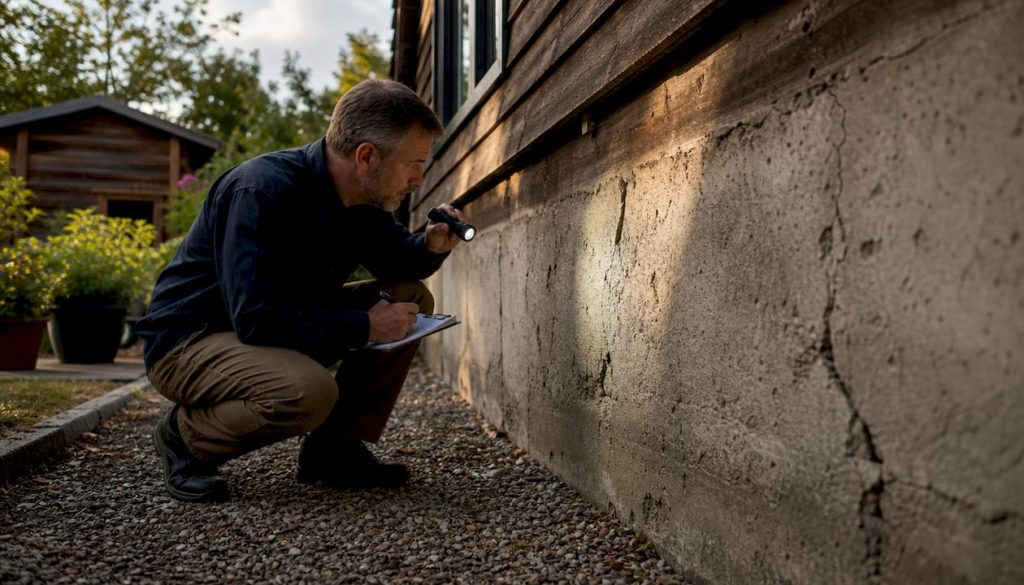
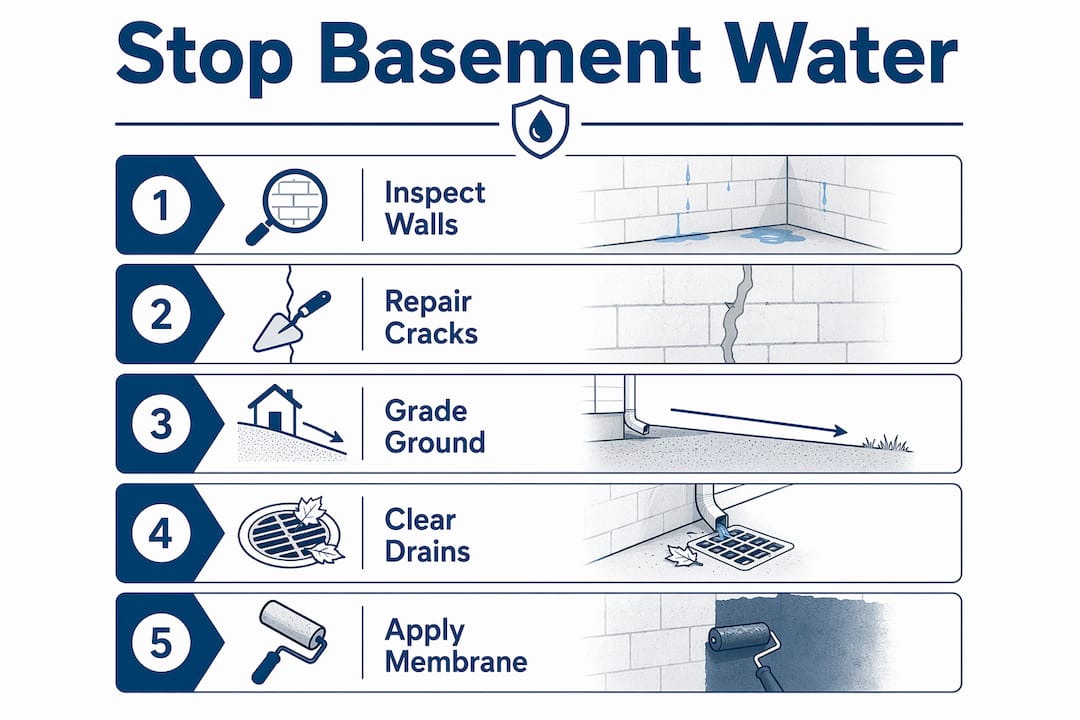
Start by examining every wall face for cracks, efflorescence (white salt deposits), and areas of spalling concrete. Hairline cracks wider than 0.3mm need filling with a cementitious repair mortar before any membrane is applied. Larger structural cracks require assessment by a qualified engineer before waterproofing proceeds.
Clean the surface thoroughly. Remove loose material, paint, and any existing sealant using a wire brush or angle grinder. Waterproofing membranes bond to clean, sound concrete. They do not bond reliably to dusty, painted, or contaminated surfaces.
Grade the ground away from the building
Grading ground slope away from the basement is a simple yet effective method to prevent water from pooling near walls and reduce hydrostatic pressure. The ground should fall away from the building at a minimum gradient of 1:20 for at least 1.5 metres from the foundation. This single step reduces the volume of water reaching your walls significantly.
Pro Tip: Check your grading after heavy rain by watching where puddles form. If water pools within 1.5 metres of the foundation, you need to regrade before applying any waterproofing system.
Preparation checklist and materials
| Task | Tool or material needed |
|---|---|
| Crack inspection | Torch, crack gauge, notepad |
| Surface cleaning | Wire brush, angle grinder, pressure washer |
| Crack repair | Cementitious repair mortar, trowel |
| Ground grading | Spade, compacted fill, spirit level |
| Drainage clearance | Drain rods, gloves, inspection camera |
Clear or install perimeter drainage before applying any exterior membrane. A blocked French drain or absent drainage channel makes even the best membrane system redundant over time.
What exterior waterproofing methods stop basement seepage effectively?
Proper basement waterproofing must address hydrostatic pressure from groundwater, which requires thicker, durable membranes or cementitious coatings rather than standard damp proofing products. The method you choose depends on your soil type, water table depth, and wall construction.
Fluid-applied membranes
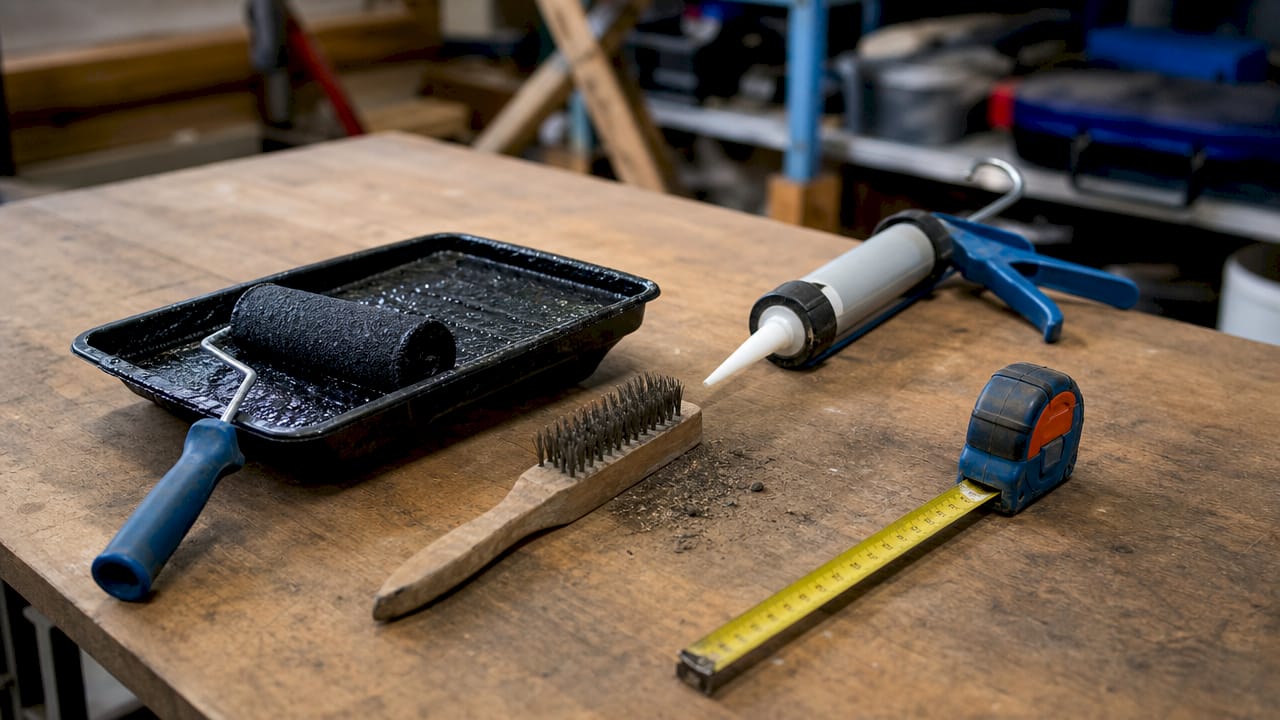
Fluid-applied membranes are sprayed or rolled onto the exterior wall face to form a continuous, seamless barrier. They conform to irregular surfaces and fill minor surface voids. Polyurethane and modified bitumen variants are the most widely used. They perform well where the wall surface is reasonably smooth and the application team is experienced.
Cementitious coatings
Cementitious waterproofing coatings bond chemically with concrete and become part of the wall structure. They resist hydrostatic pressure from both directions, which makes them suitable for below-grade applications. They are rigid, so they are less effective on walls with active movement or wide cracks.
Sheet membranes and external tanking
Sheet membranes, typically HDPE or modified bitumen sheets, are mechanically fixed or adhered to the exterior wall. External tanking refers to a complete waterproof envelope applied to the outside of the structure. This approach offers the highest level of protection but requires full excavation of the foundation perimeter, which increases cost and disruption.
Crystalline waterproofing systems
Crystalline systems use reactive chemicals that penetrate concrete and form insoluble crystals within the pore structure. These crystals block water passage and self-seal minor cracks over time. Crystalline products are particularly effective in high water table conditions and are used widely in South African basement construction.
Exterior waterproofing uses fluid-applied membranes, sheet coatings, drainage planes, and breathable coatings to create a continuous barrier while managing moisture movement. The drainage plane is as important as the membrane itself. Without a drainage channel at the base of the wall to carry water away, even a perfect membrane faces constant pressure.
Pro Tip: Never apply a waterproofing membrane over a damp proofing layer. The two systems are incompatible. Remove existing bitumen paint before applying a proper waterproofing membrane, or the new layer will delaminate.
| Method | Best suited for | Key limitation |
|---|---|---|
| Fluid-applied membrane | Smooth walls, moderate water pressure | Requires skilled application |
| Cementitious coating | Concrete walls, high pressure | Cracks with structural movement |
| Sheet membrane | High water table, full excavation | Higher cost and disruption |
| Crystalline system | Porous concrete, active seepage | Not suitable for masonry block |
For a detailed breakdown of each approach, the exterior basement waterproofing techniques guide from Prowaterproofing covers practical application steps for South African conditions.
How do you maintain basement waterproofing for lasting results?
Regular maintenance and inspection after heavy rain and seasonal shifts are necessary for long-term waterproofing effectiveness. A membrane applied correctly today will not protect indefinitely without attention.
Inspect your drainage systems at least twice a year, once before the rainy season and once after. Blocked gutters, downpipes, and French drains are the leading cause of waterproofing failure in otherwise sound systems. A blocked drain redirects water back against the foundation wall, undoing months of careful work.
Watch for these early signs of waterproofing failure:
- White efflorescence appearing on interior wall faces
- Musty odour in the basement without visible water
- Paint bubbling or peeling on interior walls
- Visible damp patches that grow after rainfall
- Rust staining from reinforcing steel near the wall base
Waterproofing failures often occur due to inconsistent application, incompatible materials, and neglected drainage systems. Catching failure early means a repair rather than a full system replacement. Schedule a professional reassessment every three to five years, or immediately after any significant ground movement or structural work near the foundation.
For homeowners wanting a broader view of lasting basement protection, Prowaterproofing’s technical articles cover material lifespans and inspection schedules in detail. You can also find practical guidance on preventing basement water damage before problems escalate.
Key takeaways
Effective basement waterproofing requires exterior membrane systems and active drainage management, not interior sealants, to resist hydrostatic pressure and stop water seepage at its source.
| Point | Details |
|---|---|
| Exterior first | More than 60% of damp problems start outside; address the exterior before treating interior walls. |
| Damp proofing is not waterproofing | Bitumen paint fails under hydrostatic pressure; use membranes or cementitious coatings for basements. |
| Preparation is non-negotiable | Clean, repair, and grade the ground before applying any waterproofing system. |
| Match method to conditions | Choose fluid-applied, cementitious, sheet, or crystalline systems based on water table and wall type. |
| Maintain drainage systems | Inspect and clear drains twice yearly to prevent pressure buildup against the membrane. |
What I have learned from years of watching basement waterproofing fail
The most expensive mistake I see repeatedly is homeowners treating a basement damp problem with interior paint or a vapour barrier and then wondering why it comes back within a season. The water does not care about your interior coating. It is sitting outside in saturated soil, pressing against your wall at constant pressure, and it will find a way through.
The second mistake is confusing damp proofing with waterproofing. They are not interchangeable terms. Damp proofing handles vapour. Waterproofing handles liquid water under pressure. Using the wrong system in a basement is not a minor error. It is a guarantee of failure.
What actually works is starting outside. Grade the ground. Clear the drains. Then apply the right membrane for your specific wall type and water table. I have seen crystalline systems perform exceptionally well in high water table conditions in South Africa, particularly where the concrete is sound but porous. Sheet membranes with a proper drainage channel at the base are the gold standard for new construction or full excavation projects.
Maintenance is the part nobody wants to hear about. A blocked French drain will defeat a perfectly applied membrane within one rainy season. The homeowners who get twenty-plus years from their waterproofing system are the ones who inspect their drainage every year without fail. That is not complicated. It is just consistent. You can read more about what works best for basements if you want a deeper technical comparison before committing to a system.
For further reference on membrane compatibility and drainage design, TT Waterproofing’s technical resources and Sealtек Cape’s application guides offer useful supplementary reading on South African conditions.
— Eben
Prowaterproofing’s basement waterproofing solutions
Basement seepage is not a problem you patch. It is a system you build correctly from the outside in. Prowaterproofing specialises in exterior basement waterproofing and drainage management for residential, commercial, and industrial properties across South Africa.
Whether you are dealing with active seepage, planning a new build, or reassessing an ageing system, Prowaterproofing’s team assesses your specific conditions and recommends the right membrane system and drainage configuration. Every project includes a thorough site inspection before any product is specified. Visit Prowaterproofing to request a quote or speak to a waterproofing specialist about your basement.
FAQ
What is the difference between damp proofing and waterproofing?
Damp proofing resists moisture vapour only and cannot withstand hydrostatic pressure. Waterproofing uses membranes or cementitious coatings designed to resist liquid water under sustained pressure, making it the correct choice for basements.
Can I stop basement leaks with interior sealant alone?
Interior sealants reduce moisture transmission but do not address the source of pressure outside the wall. They are only effective as a secondary measure after exterior drainage and waterproofing are in place.
How often should I inspect my basement waterproofing?
Inspect drainage systems at least twice a year, before and after the rainy season. Schedule a professional waterproofing reassessment every three to five years, or after any ground movement near the foundation.
What is the best waterproofing method for a high water table?
Crystalline waterproofing systems and sheet membranes with a drainage channel at the base perform best in high water table conditions. The choice depends on wall construction and whether full excavation is possible.
Does grading the ground really make a difference to basement seepage?
Grading ground to slope away from the foundation at a minimum of 1:20 gradient reduces the volume of water reaching the wall and lowers hydrostatic pressure. It is one of the most cost-effective preparatory steps before any waterproofing system is applied.