
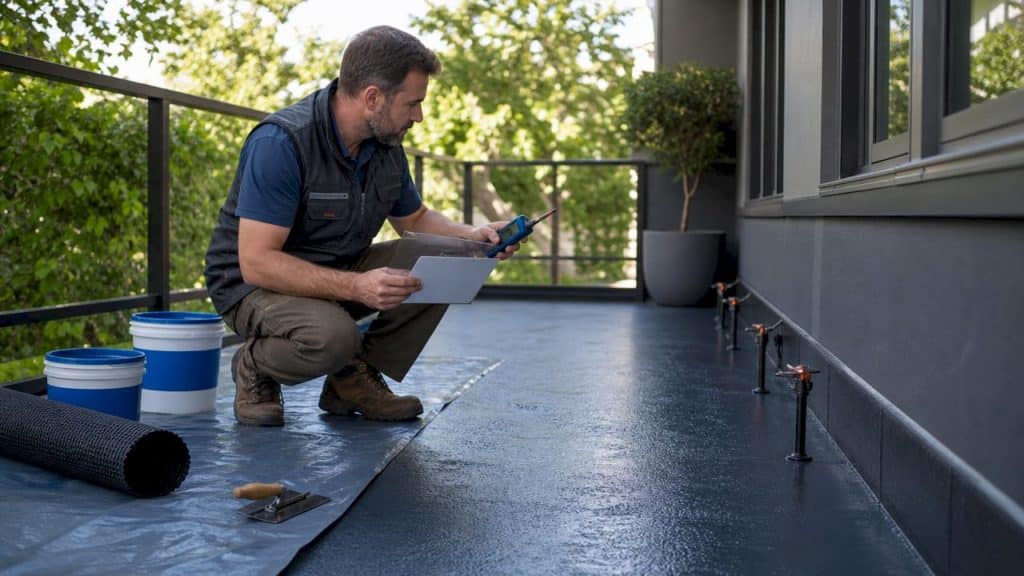
TL;DR:
- Waterproofing for sprinkler system areas protects structures and electrical components from moisture damage. It involves layered membranes, drainage, and waterproof connectors to prevent water infiltration and corrosion. Proper design, installation, and maintenance ensure long-term system integrity and property protection.
Waterproofing for sprinkler system areas is the set of methods used to prevent water damage and moisture infiltration where irrigation systems operate near structural and electrical components. It covers physical barriers such as liquid-applied membranes and drainage layers for terraces and planters, as well as UL-listed waterproof connectors for sprinkler wiring. Without these measures, constant irrigation cycles cause concrete degradation, rebar corrosion, and electrical failure. Prowaterproofing works with property owners across South Africa to address exactly these risks before they become costly repairs.
What is waterproofing for sprinkler system areas?
Waterproofing for sprinkler system areas is the integrated practice of shielding structures, substrates, and wiring from the sustained moisture generated by irrigation. The term covers two distinct disciplines: membrane-based waterproofing for landscape surfaces and terraces, and electrical waterproofing for the wiring and connectors that control sprinkler valves. Both are necessary. Neglecting either one leaves a gap that water will find.
The industry standard for landscape and terrace waterproofing calls for a multi-layer membrane system comprising a liquid-applied membrane, a root-resistant barrier, and a drainage layer. Each layer addresses a different failure mode. The membrane blocks water, the root barrier stops plant roots from puncturing it, and the drainage layer removes excess water before pressure builds against the structure.

On the electrical side, sprinkler wiring runs through wet valve boxes and direct-burial trenches. Standard thermostat wire does not meet the moisture and temperature requirements of these environments. Waterproof wire connectors rated under UL 486D or UL 486G use silicone or grease-filled housings to seal each connection against water ingress and corrosion.
What materials and systems waterproof landscape and terrace areas?
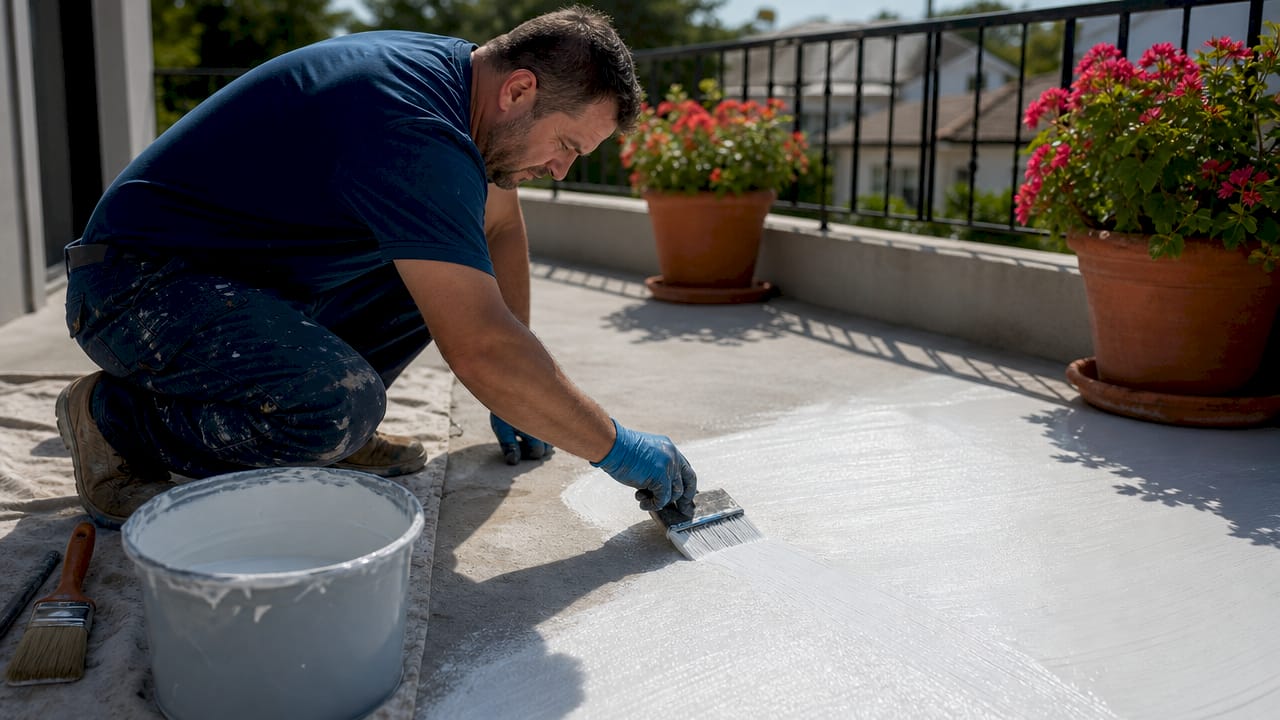
The foundation of any landscape waterproofing system is the liquid-applied membrane. These membranes are applied in two perpendicular coats, with a 4–6 hour wait between coats, to close pinholes and ensure uniform coverage. After curing, a leak test using 2 inches of water held for 24 hours confirms the membrane is sound before any overburden is placed.
Root-resistant barriers sit directly above the membrane. Standard membranes are no match for aggressive root systems. Root penetration causes premature failure in planter and landscape waterproofing more than any other single factor. A dedicated root barrier, specified for chemical resistance to soil acids and fertilisers, is non-negotiable in any planted area near sprinklers.
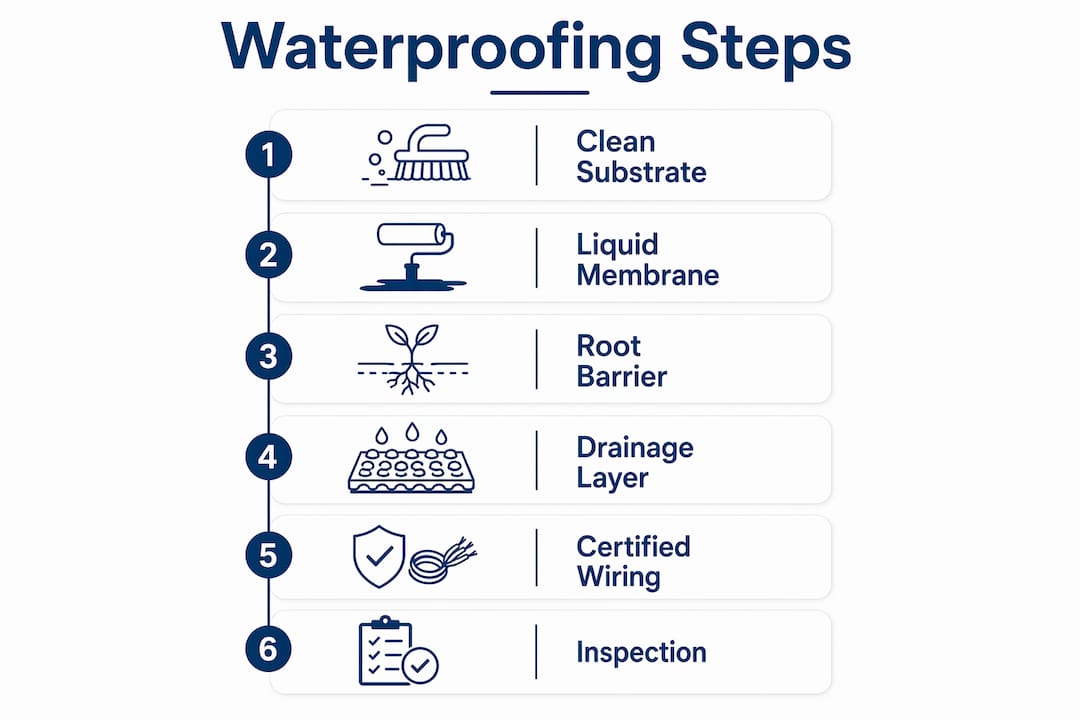
The drainage layer completes the system. Even a flawless membrane fails if water has nowhere to go. Drain cells or gravel beds keep soil aerated and relieve hydrostatic pressure that would otherwise push water back through the membrane. This is the layer most often skipped by property owners trying to cut costs, and the one that causes the most callbacks.
Key materials used in sprinkler area waterproofing include:
- Liquid-applied polyurethane membranes: flexible, seamless, and suitable for irregular surfaces around irrigation heads
- Root-resistant barrier sheets: chemically treated to resist penetration from common garden plants and trees
- Drainage cells or gravel beds: create a free-draining layer between soil and membrane
- Waterproof wire connectors (UL 486D/G): silicone or grease-filled, rated for wet and direct-burial use
- Geotextile filter fabric: placed above the drainage layer to prevent soil migration into drain cells
Pro Tip: Apply the liquid membrane to a clean, dry substrate. Any moisture trapped beneath the membrane during application will cause blistering and delamination within one irrigation season.
For terraces and roof gardens with sprinkler systems, the waterproofing approach for flat surfaces follows the same layered logic, adapted for the higher foot traffic and UV exposure those surfaces receive.
How does waterproofing protect sprinkler system electrical components?
Sprinkler wiring carries 24 VAC signals to solenoid valves buried in wet valve boxes. That combination of low voltage, constant moisture, and soil chemicals creates ideal conditions for corrosion and short circuits. Waterproof wire connectors rated UL 486G are the standard solution. They are approved for wet locations and direct-burial applications, meaning they can sit submerged in a flooded valve box without failing.
Correct installation follows a clear sequence:
- Switch off the power to the irrigation controller before touching any wiring. Even 24 VAC can cause shorts that damage controller boards.
- Strip the wire ends to the correct length specified by the connector manufacturer. Too short and the seal is incomplete; too long and bare wire is exposed.
- Match the connector to the wire gauge. Each connector is sized for a specific gauge range. Using an oversized connector on thin wire leaves gaps in the silicone seal.
- Twist the connector firmly until the silicone or grease fills the housing and contacts all wire strands.
- Never reuse a connector. Once twisted into place, the silicone seal is compromised and the connector must be discarded. Single-use is the rule, not a recommendation.
- Bury the connection at the depth specified for direct-burial cable in your local electrical code.
Electrical codes increasingly mandate certified components for sprinkler wiring. Standard thermostat wire often violates these codes because it lacks the moisture rating required for direct-burial or wet-location use. The 2024 IRC updates reinforce that waterproofing is a performance requirement where hydrostatic pressure exists, not an optional upgrade.
Pro Tip: Label each wire connection with a weatherproof marker before burying it. When a valve fails two years later, knowing which wire goes where saves hours of fault-finding.
What landscaping and drainage practices support waterproofing?
Landscape design is the first line of defence against sprinkler-induced water damage. A 1–2% slope away from structures directs surface runoff away from foundations and walls. That gradient sounds minor, but it is the difference between water draining safely and water pooling against a wall for hours after each irrigation cycle.
A 2–4 foot dry buffer zone between irrigated planting beds and any structure reduces seepage risk significantly. This zone uses non-porous materials such as gravel, pavers, or compacted aggregate. Water from sprinkler overspray lands on a free-draining surface rather than saturated soil pressed against a wall.
Irrigation head placement matters as much as membrane quality. Sealants alone cannot prevent foundation seepage caused by poorly aimed sprinkler heads. Heads should be positioned to water planting beds, not walls, paths, or the base of structures. Downspouts must discharge away from irrigated zones to avoid compounding the water load on any one area.
Good drainage and landscape design work best when integrated with the irrigation and drainage management approach used during the initial site layout. Retrofitting drainage after installation is possible but always more expensive than designing it correctly from the start.
- Slope all paved and planted surfaces at 1–2% away from buildings
- Install a gravel or paver buffer zone at least 2 feet wide around structures
- Position sprinkler heads to avoid direct spray onto walls, foundations, or electrical enclosures
- Route downspouts to discharge at least 1.5 metres from any irrigated planting bed
- Use pop-up sprinkler heads in high-traffic areas to reduce overspray onto hard surfaces
How to maintain waterproofing in sprinkler system areas
Maintenance is where most waterproofing systems fail. A membrane installed correctly in year one can fail by year three if nobody checks it. Bi-annual inspections for dampness and drainage performance are the minimum standard for any landscape waterproofing system near active sprinklers.
A practical maintenance routine covers these areas:
- Membrane condition: look for cracks, blisters, or areas where the membrane has lifted. Any breach allows water to track beneath the surface and reach the structure.
- Root intrusion: check planter edges and tree root zones for signs of membrane puncture. Root damage is the leading cause of premature membrane failure.
- Drainage layer performance: pour water into the drainage outlet and time how quickly it clears. Slow drainage signals a blocked drain cell or silted gravel bed.
- Wire connector condition: open valve boxes after heavy rain and check for standing water. If water is present, inspect connectors for corrosion or looseness and replace any that show signs of seal failure.
- Sprinkler head alignment: adjust heads that have shifted to spray onto walls or hard surfaces. Even a small drift in head angle changes the water load on adjacent structures.
Coordinate membrane inspections with sprinkler system servicing. The two systems interact directly, and a fault in one often signals stress in the other. Prowaterproofing recommends scheduling a waterproofing maintenance check at the start of each wet season, before irrigation demand peaks.
Pro Tip: After any repair to a membrane or wire connector, run a full irrigation cycle and inspect the repaired area immediately. Catching a failed repair while the contractor is still on site costs nothing. Catching it six months later costs significantly more.
Key takeaways
Effective waterproofing for sprinkler system areas requires membranes, drainage layers, root barriers, and certified electrical connectors working together as a single system.
| Point | Details |
|---|---|
| Multi-layer membrane system | Apply liquid membrane, root barrier, and drainage layer in sequence for full protection. |
| UL-rated electrical connectors | Use UL 486D or UL 486G connectors for all sprinkler wiring in wet or buried locations. |
| Landscape grading | Maintain a 1–2% slope away from structures and a 2–4 foot dry buffer zone. |
| Single-use connectors | Never reuse waterproof wire nuts; the silicone seal is compromised after first use. |
| Bi-annual inspections | Inspect membranes and drainage performance twice yearly to catch failures early. |
What I have learned from waterproofing sprinkler zones
The most common mistake I see is treating sprinkler area waterproofing as two separate jobs: one for the landscape and one for the electrics. Property owners call a waterproofing contractor for the terrace membrane and assume the irrigation installer handles the wiring. Neither party checks what the other has done, and the gaps between those two scopes are exactly where water gets in.
The second mistake is relying on surface sealants as a substitute for proper membrane systems. A sealant coat on a concrete planter wall looks like waterproofing. It is not. It delays water ingress by a season or two at best. The real protection comes from the membrane beneath the soil, the drainage layer above it, and the graded landscape that keeps water moving away from the structure in the first place.
What actually works is integrated design. When the landscape grading, the membrane specification, the drainage layout, and the electrical connector selection are all decided at the same time, by people who understand how each element affects the others, the system performs for decades. When those decisions are made separately and bolted together afterwards, callbacks start within two years.
The property owners who get this right are the ones who ask their waterproofing contractor and their irrigation installer to be in the same room during the planning phase. That single conversation prevents more water damage than any product upgrade.
— Eben
Protecting your property with Prowaterproofing
Sprinkler system waterproofing is not a single product or a one-time fix. It is a system that needs the right specification from the start and consistent upkeep over time.
Prowaterproofing brings together membrane application, drainage design, and maintenance expertise for residential, commercial, and industrial properties across South Africa. Whether you are dealing with a terrace planter that is showing damp patches or a valve box that floods after every irrigation cycle, the team at Prowaterproofing can assess the full system and recommend a solution that addresses the root cause. Contact Prowaterproofing for a site assessment and get a clear picture of what your property actually needs.
FAQ
What is the purpose of waterproofing in sprinkler system areas?
Waterproofing prevents water from irrigation cycles infiltrating structures, causing concrete degradation, rebar corrosion, and electrical failure in valve wiring. It combines membranes, drainage layers, and certified wire connectors to protect both the building fabric and the irrigation system itself.
Which wire connectors are rated for sprinkler system use?
Connectors rated under UL 486D or UL 486G are approved for wet and direct-burial applications in sprinkler systems. These use silicone or grease-filled housings to seal against moisture and corrosion in valve boxes and buried trenches.
Can I use a surface sealant instead of a waterproof membrane?
Surface sealants alone do not prevent water infiltration in sprinkler areas. They delay moisture ingress for a short period but cannot withstand sustained hydrostatic pressure or root penetration the way a multi-layer membrane system can.
How often should I inspect waterproofing in sprinkler areas?
Bi-annual inspections are the recommended minimum for any landscape waterproofing system near active sprinklers. Check membranes for cracks or root damage, test drainage performance, and inspect wire connectors after heavy rain.
What slope is needed to prevent water pooling near structures?
A 1–2% slope away from structures, combined with a 2–4 foot dry buffer zone, is the standard recommendation for reducing water intrusion near sprinkler-irrigated areas.