
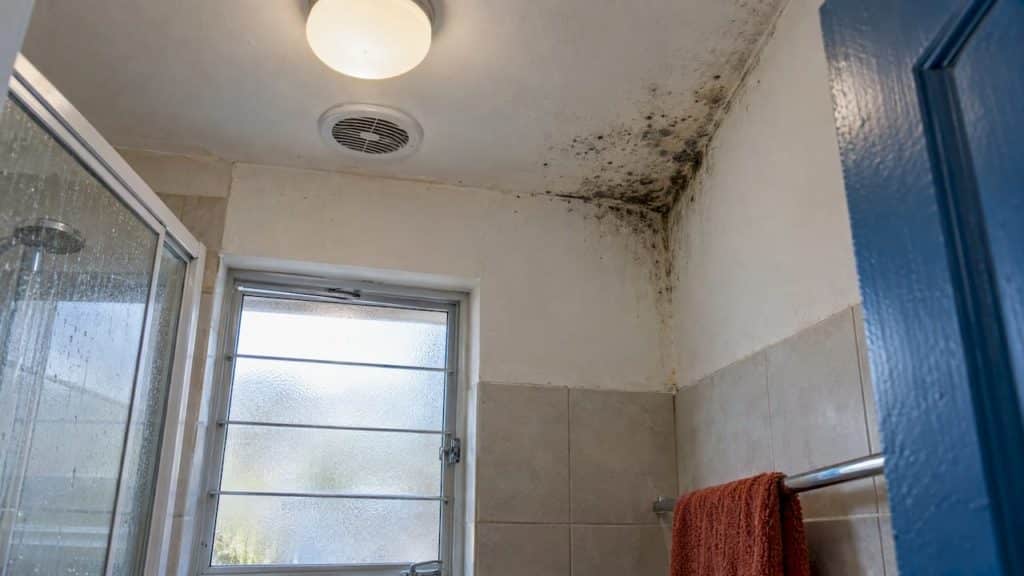
Mould grows on a ceiling because the ceiling is staying wet. The water arrives in one of two ways: as condensation from warm, humid air meeting a cold surface, or as a leak from the roof, a gutter, a pipe or the structure above. Find which one it is and fix it, and the mould has nothing to feed on. Clean or paint over it without doing that, and it comes back. If you suspect a roof or structural leak, a waterproofing specialist can trace and seal it. We connect property owners with vetted waterproofing professionals through a simple quote request.
TL;DR
- Mould needs moisture. Spores are always present, and they only grow where a surface stays damp, according to US government building guidance.
- The two main sources are condensation (cold ceiling, humid air, poor ventilation) and water ingress (roof, gutter, plumbing or wall leaks).
- A tidemark or stain that grows after rain points to a leak. Mould in corners and on cold, still-air surfaces points to condensation.
- Painting over mould or wiping it off does not last if the moisture source remains.
- Large patches, repeated returns or a suspected roof leak call for a qualified professional.
Table of Contents
- What mould actually needs to grow on a ceiling
- Cause one: condensation on a cold ceiling
- Cause two: water getting in from outside or above
- Condensation or a leak? How to tell
- Why it shows up in bathrooms and bedrooms
- Why mould comes back after cleaning or painting
- Health and mould on ceilings
- When the cause is the building itself
- Getting a waterproofing professional for the job
- FAQ
- Sources
What mould actually needs to grow on a ceiling
Mould is a fungus that spreads by tiny spores. They are in the air of almost every building, so you cannot keep them out. What decides whether they grow is water. Official US guidance says growth may begin when spores land on wet surfaces, and that moisture can get in through rainwater or groundwater, leaks in the building envelope, plumbing or appliance leaks, and cold or humid weather.
Ceilings are an easy target for three reasons:
- Warm, wet air rises. Steam from showers, cooking and breathing ends up at ceiling level.
- The ceiling is often the coldest inside surface, especially under a roof or against an external wall.
- Ceiling materials hold water. The CDC lists ceiling tiles, drywall, insulation, paper and dust among the materials indoor mould grows on. Health Canada adds that it can sit in hidden areas above ceiling tiles or inside walls.
Timing matters too. Ottawa Public Health says growth may start within 48 hours of materials getting wet, which is why drying out and removing water-damaged material within 24 to 48 hours limits it.
Cause one: condensation on a cold ceiling
Condensation is the most common reason for mould on ceilings in occupied homes. RICS, the professional body for surveyors, explains that it forms when water vapour cools and turns to liquid on a surface at or below the air’s dew point. The dew point is the temperature at which the air can no longer hold its moisture. It depends on how humid the air is, how warm it is and how cold the surrounding surfaces are. Poor ventilation makes the problem worse.
In plain terms, four things have to line up:
- A surface colder than the dew point.
- High indoor humidity.
- A route for warm, moist air to reach that surface, such as gaps around loft hatches, light fittings or pipes.
- Too little ventilation or drying to clear the moisture again.
That list follows the Building America Solution Center’s description of condensation in attics and roofs, where warm indoor air escapes into a cold roof space and condenses on the underside of the roof or on the trusses.
Why insulation gaps matter
A ceiling is cold when insulation above it is thin, patchy or bypassed. The US Environmental Protection Agency notes that gaps in insulation or uninsulated framing can leave indoor surfaces colder than the dew point, and that holes in the air barrier let cold air get round the insulation and chill surfaces enough to support mould. Insulation alone does not solve it if air leaks bypass it. Insulation, air sealing and ventilation have to work together.
This is why mould often shows up as dark patches in the corners where the ceiling meets an external wall. RICS reports that condensation-related mould commonly appears around windows, on external walls and on ceilings close to external walls.
Humidity you create at home
Everyday life adds a surprising amount of water to indoor air. Ottawa Public Health lists showers and baths, humidifiers, cooking, plants, aquariums and the moisture people themselves give off as indoor water sources. Drying washing indoors belongs in the same category.
Two public-health agencies give very similar targets. Health Canada recommends indoor relative humidity between 30% and 50%, with exhaust fans in kitchens and bathrooms and a dehumidifier if needed. The CDC advises keeping humidity no higher than 50% all day, using extractor fans that vent outdoors and making sure tumble dryers vent outside too.
Cause two: water getting in from outside or above
The second route is a leak. Water enters through cracks or failures in the building envelope, plumbing or flooding, and soaks the ceiling from above. Health Canada lists plumbing leaks and envelope cracks among the problems that cause mould.

RICS lists the usual culprits for rain penetration: broken tiles, defective roof flashings, blocked or leaking gutters and rainwater pipes, and failed seals around windows. Flashings are the metal or membrane strips that seal the joints where a roof meets a wall or chimney.
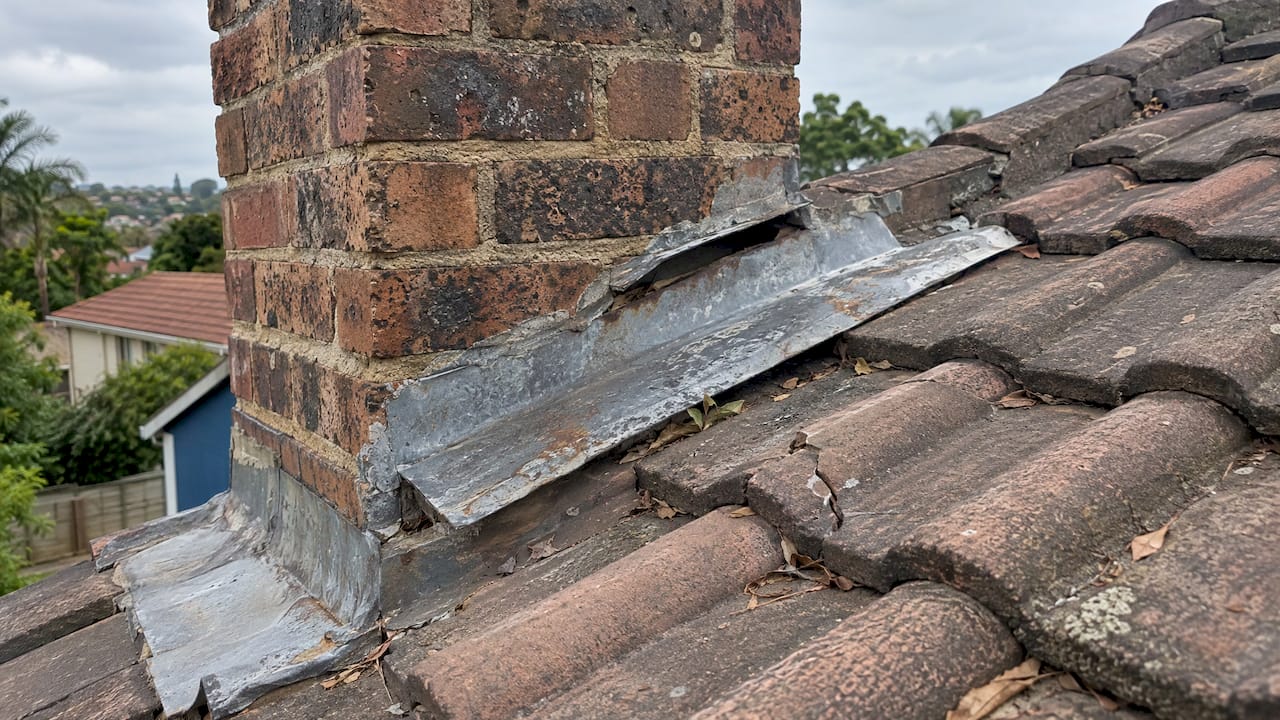
For flat roofs, concrete decks and top-floor ceilings, the roof covering itself is often the route in. A cracked or aged waterproofing layer lets water through slowly, so the ceiling below is damp for weeks before anything drips. If that sounds like your building, our guides on what causes ceiling leaks and how to identify roof leaks walk through the clues.
Condensation or a leak? How to tell
The distinction decides the fix, so it is worth a careful look before you buy any products or call anyone. Plymouth City Council gives a useful rule: condensation generally appears on cold surfaces and in areas with little air movement and does not leave a tidemark, while leaking pipes, roof holes, blocked gutters and downpipes can leave tidemarks.
| Clue | Points to condensation | Points to a leak |
|---|---|---|
| Pattern | Corners, edges, behind furniture, cold external walls | A patch under a roof, pipe, bath or wall junction |
| Staining | Dark speckled mould, no tidemark | Brown or yellow ring or tidemark, often with peeling paint |
| Timing | Worse in cold weather, after showers or cooking | Worse after rain, or when a particular pipe or appliance is used |
| Wet surface | Beads of water on windows and cold walls too | Damp or soft ceiling even when the room is dry |
| Spread | Slow, across cold areas | Grows from one spot outward |
General signs to look for during a visual inspection are stains or discolouration, peeling paint, warped wood, visible leaks, condensation and a musty smell, according to Health Canada. Check the rooms, the loft or roof space and the areas around plumbing.
Western Australia’s Department of Health adds that visible signs should trigger an investigation of the cause, and that moisture readings of building materials may be needed to find the underlying source. A moisture meter reading in a patch that looks dry is a strong sign of a hidden leak.
Why it shows up in bathrooms and bedrooms
Bathrooms are the obvious case: hot showers put a large amount of vapour into a small room, and the ceiling is the first cool surface that vapour meets. If the extractor fan is weak, blocked or does not vent outdoors, the vapour stays. An exhaust fan that vents into the loft, rather than outside, simply moves the moisture to a colder place.
Bedrooms are less obvious. People give off moisture while they sleep, doors are shut, and windows are often closed in cold weather. Bedrooms on the top floor or on an external corner usually have the coldest ceilings. The recipe is the same as in the bathroom: moisture produced indoors, little air movement and a cold surface.
A quick way to separate the causes:
- Mould in a bathroom ceiling, worse after showers, with a fan that is quiet or weak: ventilation and humidity.
- Mould in a bedroom corner on an external wall, worse in winter: cold surface and insulation or air leakage.
- A bathroom or bedroom ceiling with a stain directly below another bathroom, a roof or a pipe run: a leak, whatever the room.
Why mould comes back after cleaning or painting
Mould returns when the moisture source remains. Health Canada’s advice is to fix the underlying cause, such as water damage, excessive humidity or inadequate ventilation, after cleaning up. Its wider public-health approach puts controlling dampness and cleaning visible mould first, rather than identifying the species of mould.
What a lasting fix looks like depends on the cause:
- Condensation: warm the cold surface with continuous insulation, limit air leakage into the loft, reduce indoor humidity and provide proper roof ventilation. The Building America Solution Center recommends continuous ridge and soffit vents with insulation baffles for roof spaces.
- Roof, gutter or wall leaks: repair the entry point, then dry the ceiling and structure fully before redecorating.
- Plumbing leaks: repair the pipe, then dry the area. The CDC recommends drying flood-damaged areas within 24 to 48 hours.
- Large patches or porous ceilings: RICS advises that large areas, such as a substantial part of a ceiling, should be handled by qualified professionals, and that absorbent ceiling tiles may be hard to clean completely.
Stained plaster after a leak is a separate job once the water is stopped. Our guide on how to get water stains out of the ceiling covers it, and the article on fixing a wet ceiling covers the first response.
Health and mould on ceilings
Damp and mould exposure may be associated with health problems. If you or someone in the household has symptoms you think are linked to mould, Health Canada recommends discussing them with a healthcare professional. Western Australia’s Department of Health notes that spore sampling is not recommended for establishing health risk. The practical focus is the moisture source, not a lab test of the mould.
When the cause is the building itself
Some ceiling mould cannot be solved with a fan and a dehumidifier. If the stain tracks rain, sits under a flat roof or balcony, appears below a bathroom that has a failed seal, or follows a damp wall down from the roof line, the building envelope is letting water in. That is waterproofing work: locating the entry point and sealing it so the structure stays dry. Our article on how waterproofing prevents mould explains the link in more depth, and the guide to reducing dampness in a room shows what to ask for from a contractor.
Getting a waterproofing professional for the job
If your survey points to a roof, wall or deck leak, Pro Waterproofing offers waterproofing services for residential, commercial and industrial properties, including roof, basement, bathroom, foundation and concrete deck waterproofing. You send a quote request through our waterproofing page, and we connect you with vetted waterproofing professionals.

When you compare contractors, we encourage owners to look at quality of work, experience, licensing and warranties, and to ask each of them how they will find the source of the water before they quote for a repair.
Our view on ceiling mould
Most ceiling mould we see discussed is treated as a cleaning problem. We think it is a water problem first. A ceiling does not grow mould because it is dirty, it grows mould because it stays damp.
That is why we push owners to ask contractors how they will find the source, not only how they will remove the stain. Quality, experience, licensing and a proper warranty are the questions that separate a lasting repair from a repaint. For a leaking roof, deck or wall, a waterproofing specialist is the right person to call.
Eben
FAQ
Will mould go away if you paint over it?
No. Paint hides the surface, but if the ceiling is still getting damp, the mould returns. Health Canada’s advice is to fix the cause, such as water damage, excess humidity or poor ventilation, once the cleanup is done. Redecorate only when the area is dry.
Does having the heating on stop mould?
Warmer surfaces are less likely to reach the dew point, so steady background heat can help with condensation. It does not stop a leak, and heating a damp room without ventilation can still leave humid air with nowhere to go. Combine it with extraction and humidity of 50% or below.
Why does mould keep coming back on my bathroom ceiling?
Usually because the vapour from showers is not leaving the room. A weak fan, a fan that vents into the loft, or a cold ceiling above poor insulation will all keep the surface wet. If there is also a tidemark or the paint is peeling, check for a leak from the roof or a pipe above.
When should I call a professional?
Call one when the patch covers a large part of the ceiling, when it returns after you have dealt with ventilation, or when the stain follows rain or a pipe. RICS advises qualified professionals for large areas. For a leaking roof, deck or wall, a waterproofing specialist can trace and seal the source.
Sources
- Mold and Rot: Brief Guide to Mold, Moisture and the Home (US Department of Energy)
- Mold (CDC)
- Mould (Health Canada)
- Guide to addressing moisture and mould indoors (Health Canada)
- Mould (Ottawa Public Health)
- Damp and mould (RICS)
- Condensation Control in Attics and Roofs in Cold Weather (Building America Solution Center)
- Moisture Control Guidance for Building Design, Construction and Maintenance (US EPA)
- Keeping homes free from damp and mould (Plymouth City Council)
- Mould and dampness (Western Australia Department of Health)