

TL;DR:
- Waterproofing for loading bay floors involves applying protective membranes to prevent water and chemical damage. Proper joint and edge protection are critical to prevent membrane failure and floor deterioration over time.
Waterproofing for loading bay floors is defined as the application of protective membranes or coating systems to concrete surfaces, preventing water penetration, chemical damage, and structural deterioration in high-traffic industrial areas. Loading bays face a combination of threats that ordinary floors do not: forklift traffic, chemical spills, standing water, and constant mechanical stress. Without a purpose-designed waterproofing system, concrete degrades rapidly, creating safety hazards and costly repair bills. The industry standard approach involves either liquid-applied membranes such as polyurethane and epoxy coatings, or modular surface systems like heavy-duty interlocking PVC tiles. Prowaterproofing works with facility managers and property owners across South Africa to specify and install the right system for each loading bay environment.
What is waterproofing for loading bay floors?
Waterproofing for loading bay floors is the process of sealing and protecting concrete slabs against water ingress, chemical attack, and surface wear. The term covers a broad range of systems, from thin liquid coatings to thick membrane assemblies, all designed to keep moisture out of the concrete substrate. In the commercial and industrial waterproofing sector, this practice is also referred to as “deck waterproofing” or “industrial floor protection,” and both terms describe the same functional goal.
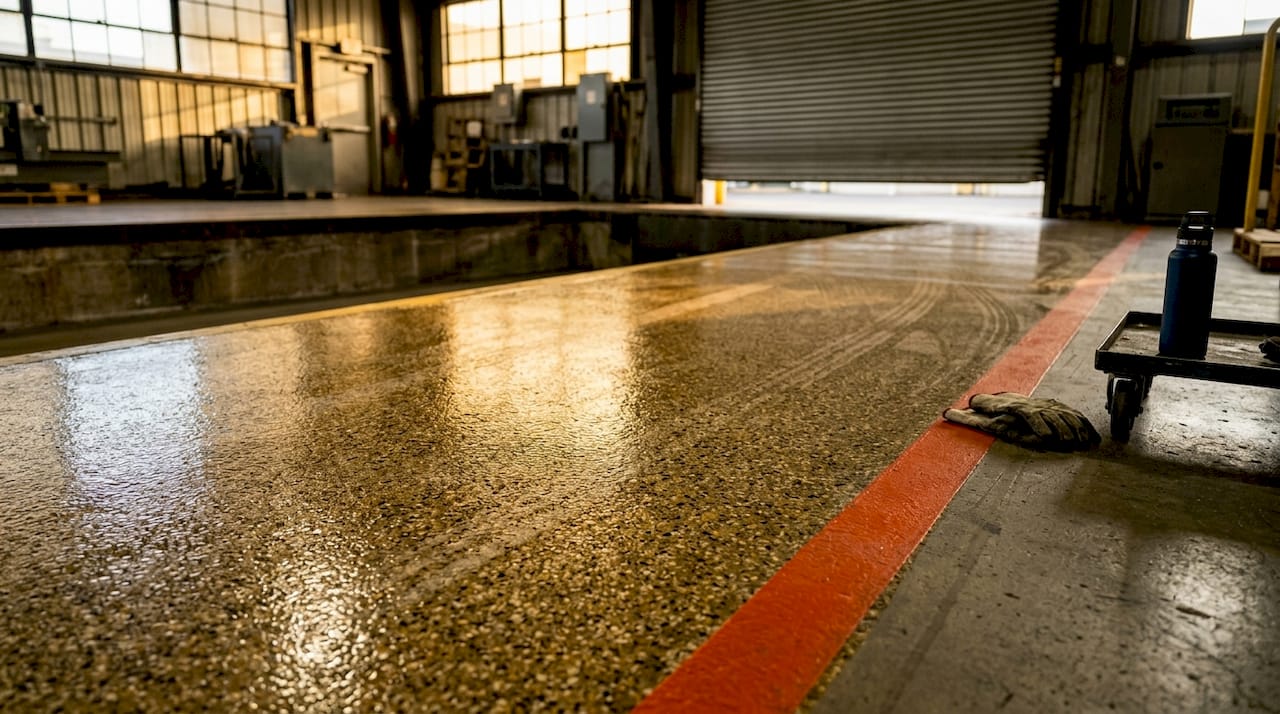
The importance of floor waterproofing in a loading bay context goes beyond keeping the floor dry. Water that penetrates concrete causes the embedded steel reinforcement to corrode, which weakens the slab from within. Over time, this leads to spalling, cracking, and eventual structural failure. A well-specified waterproofing system addresses all of these risks simultaneously, making it one of the most cost-effective investments a facility manager can make. You can read more about commercial waterproofing applications to understand how these principles apply across different building types.
What materials and systems are used for loading bay floor protection?
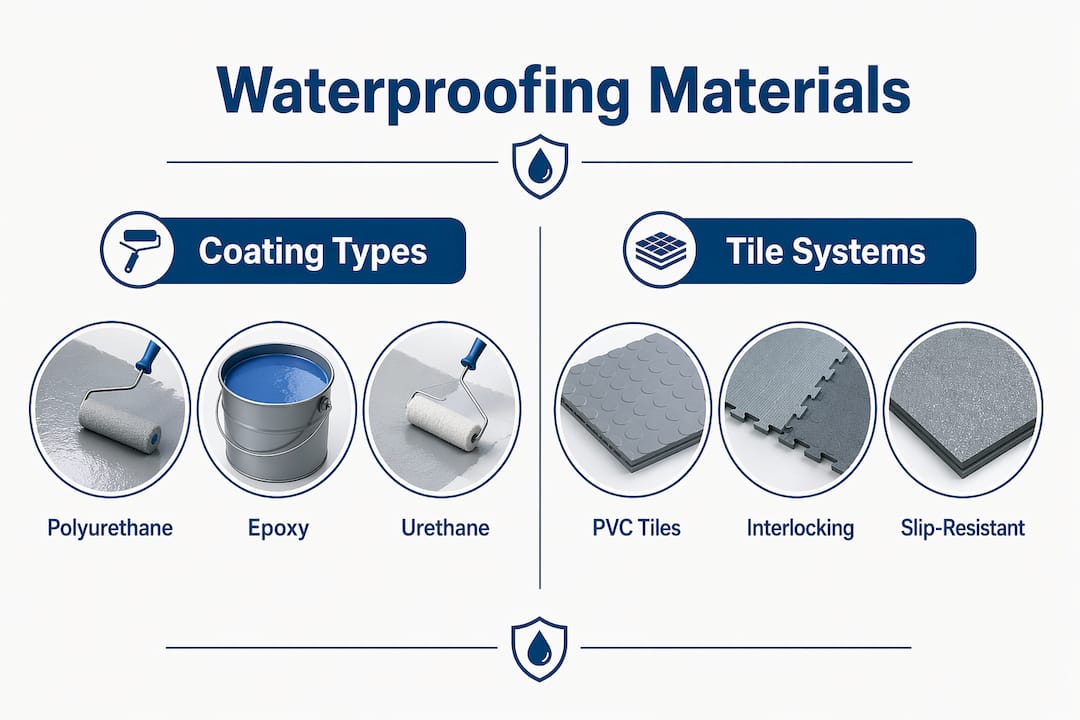
The three primary material categories for loading bay waterproofing are polyurethane-based deck coatings, liquid epoxy or urethane membranes, and modular PVC tile systems. Each suits a different set of conditions, and the right choice depends on traffic intensity, chemical exposure, and acceptable downtime during installation.
Polyurethane deck coating systems
Polyurethane deck coatings are the preferred choice for high-traffic loading bays. They resist hydraulic fluids, battery acids, oils, and UV exposure, making them suitable for environments where forklifts and heavy goods vehicles operate daily. These systems also bridge hairline cracks in the concrete substrate, which prevents water from finding a path through existing surface defects.
Liquid epoxy and urethane membranes
Liquid membranes such as epoxy and urethane create a fully bonded, impermeable layer across the floor surface. They seal the concrete against both water and chemical penetration while maintaining surface wear resistance. Epoxy systems tend to be harder and more abrasion-resistant, while urethane membranes offer greater flexibility, which matters in areas subject to thermal movement.
Heavy-duty interlocking PVC tiles
Heavy-duty interlocking PVC tiles offer a modular alternative to liquid-applied systems. They protect the concrete beneath, improve traction, and allow individual sections to be replaced without shutting down the entire bay. This makes them particularly useful in facilities that cannot afford extended downtime for a full re-coating project.
Key properties to compare when selecting a system:
- Chemical resistance: polyurethane coatings withstand the widest range of industrial chemicals
- Crack bridging: liquid membranes accommodate minor slab movement; PVC tiles do not bond to the slab at all
- Installation time: PVC tiles can be laid immediately; liquid coatings require cure time before traffic resumes
- Repairability: modular tiles allow spot replacement; coatings require localised grinding and re-application
- Slip resistance: all three systems can incorporate anti-slip aggregates or textured surfaces
| System | Best for | Key advantage |
|---|---|---|
| Polyurethane deck coating | High-traffic bays with chemical exposure | Chemical resistance and crack bridging |
| Epoxy membrane | Abrasion-heavy environments | Hard-wearing, impermeable surface |
| Urethane membrane | Areas with thermal movement | Flexibility and water tightness |
| Interlocking PVC tiles | Facilities needing fast installation | Modular replacement, no cure time |
Pro Tip: Specify a slip-resistant aggregate finish on any liquid membrane system. Wet loading bays are a leading cause of workplace accidents, and the additional cost of anti-slip texture is negligible compared to the liability of an injury claim.
How does waterproofing protect loading bay floors from common damage?
Loading bay floors face four distinct damage mechanisms, and a correctly specified waterproofing system addresses each one directly.
Water ingress is the most insidious threat. Concrete is porous by nature, and water that enters the slab carries dissolved salts that accelerate reinforcement corrosion. Once corrosion begins, the expanding rust creates internal pressure that fractures the concrete from within. A continuous waterproof membrane stops this process before it starts.
Chemical spills are a daily reality in most loading bays. Hydraulic fluid from dock levellers, battery acid from electric forklifts, and cleaning detergents all attack unprotected concrete. Polyurethane coatings withstand this chemical exposure, extending floor life and reducing the frequency of maintenance interventions. Without chemical resistance built into the floor system, you are effectively allowing the slab to absorb and react with every spill.
Heavy vehicular traffic creates point loads and abrasion that strip unprotected concrete surfaces over time. A properly bonded waterproofing membrane distributes these loads more evenly and resists surface wear. The result is a floor that maintains its integrity under the weight of fully loaded forklifts and articulated lorries.
Slip resistance is the fourth protection layer. Waterproofing systems that incorporate textured or aggregate finishes reduce accident risk in areas where pedestrians and vehicles share the same floor space. This is not a secondary benefit. In a busy loading bay, a slip or trip incident can cause serious injury and significant operational disruption.
Why is joint and slab edge protection critical in loading bay waterproofing?
The most common point of waterproofing failure in a loading bay is not the membrane itself. It is the joint between concrete slabs, particularly at slab edges adjacent to dock levellers and pit walls.
Forklifts crossing these joints repeatedly create vertical differential movement between adjacent slabs. Without protection, the concrete arris (the sharp edge of the slab) chips and spalls under this repeated impact. Once the arris breaks down, the waterproof membrane loses its substrate and fails at the joint. Steel armour joints with plate dowel systems prevent this by protecting the slab edge and allowing controlled horizontal movement while eliminating vertical differential movement.
Industry standards including ACI 302.1R and TR34 both address joint design in industrial floors. These documents specify load transfer requirements and joint arris protection as non-negotiable elements of a durable floor system. Relying on a membrane alone, without integrated slab edge protection, leads to membrane failure and accelerating floor damage at the most vulnerable points.
Pro Tip: Walk your loading bay and inspect every construction joint and dock leveller pit edge at least once per quarter. Early signs of concrete chipping or membrane lifting at joints indicate that armour joint protection is needed before the damage spreads to the wider floor area.
Facility managers who invest in safety compliance frameworks alongside physical floor protection find it easier to document maintenance histories and demonstrate due diligence during audits.
What are practical considerations for maintaining waterproofed loading bay floors?
Choosing the right waterproofing system is only the first decision. Long-term performance depends on matching the system to your specific operating conditions and maintaining it correctly.
-
Assess your traffic and chemical profile first. A bay that handles electric forklifts and battery charging stations needs a system rated for battery acid exposure. A bay handling food-grade products may prioritise cleanability over chemical resistance. Write down the specific chemicals, vehicle weights, and traffic frequency before specifying any system.
-
Compare liquid coatings and modular tiles by total cost of ownership. Liquid coatings have a higher upfront installation cost and require the bay to be closed during application and curing. Modular PVC tiles can be installed in sections, keeping part of the bay operational. However, coatings typically offer a more durable long-term surface in high-abrasion environments.
-
Schedule routine inspections every three to six months. Check for membrane lifting, joint deterioration, surface cracking, and any areas where the coating has worn through to bare concrete. Early intervention is always cheaper than full resurfacing.
-
Use modular tiles for phased upgrades. Modular PVC tiles lock together without adhesive, which means damaged sections can be swapped out individually without disrupting the rest of the floor. This is a significant operational advantage in a busy warehouse environment.
-
Budget for recoating cycles. Even the best polyurethane deck coating will eventually wear in the highest-traffic zones. Plan for a maintenance coat every five to seven years in typical loading bay conditions, and keep records of the original system specification so the maintenance coat bonds correctly to the existing surface.
Pro Tip: Keep a small stock of replacement PVC tiles if you use a modular system. When a tile is damaged by a dropped load or chemical spill, replacing it the same day prevents the concrete beneath from being exposed to further damage.
The commercial waterproofing solutions guide from Prowaterproofing covers material selection in greater depth for facility managers who want to compare options across different building types.
Key takeaways
Effective loading bay waterproofing requires a combination of the right membrane or surface system, proper joint protection, and a consistent maintenance routine.
| Point | Details |
|---|---|
| Define the right system early | Match the waterproofing material to your specific chemical exposure and traffic load before specifying. |
| Protect slab joints, not just the surface | Steel armour joints at dock leveller edges prevent the most common cause of membrane failure. |
| Slip resistance is non-negotiable | Anti-slip finishes built into the waterproofing system reduce accident risk in shared pedestrian and vehicle areas. |
| Modular tiles suit phased upgrades | Interlocking PVC tiles allow section-by-section replacement without shutting down the entire bay. |
| Inspect quarterly, not annually | Catching joint deterioration or membrane lifting early saves significant repair costs over the floor’s lifespan. |
What I have learned from loading bay waterproofing projects
After working on a range of industrial waterproofing projects, the pattern I see most often is this: facility managers spend considerable money on a quality membrane and then neglect the joints entirely. The membrane looks perfect on day one. Within two years, the dock leveller edges are chipping, the membrane is lifting at every construction joint, and the floor needs remedial work that costs more than the original installation.
The uncomfortable truth is that a loading bay floor is only as waterproof as its weakest joint. A polyurethane coating rated for battery acid and heavy forklift traffic will fail prematurely if the slab edges are not protected with steel armour joints. This is not a minor detail. It is the detail that determines whether your waterproofing investment lasts five years or fifteen.
I have also seen facility managers dismiss modular PVC tiles as a “temporary fix.” That view underestimates them. In a bay that handles mixed traffic and needs to stay operational during upgrades, tiles are often the most practical long-term solution. They are not inferior to liquid coatings. They are a different tool for a different set of constraints.
My advice to any property owner or facility manager is to get a site-specific assessment before committing to any system. The right answer for a chilled distribution centre is different from the right answer for a heavy manufacturing plant. Generic specifications lead to generic results, and in a loading bay, generic results mean early failure.
You can find practical guidance on maintaining waterproofed areas to help you build a maintenance routine that keeps your system performing as specified.
— Eben
Prowaterproofing: professional loading bay floor protection
Loading bay floors take more punishment than almost any other surface in a commercial or industrial property. Getting the specification right from the start prevents years of costly repairs.
Prowaterproofing provides expert waterproofing assessments and installations for loading bays, warehouses, and industrial facilities across South Africa. The team at Prowaterproofing specifies systems based on your actual traffic loads, chemical exposure, and operational constraints, not a one-size-fits-all catalogue solution. Whether you need a polyurethane deck coating, a liquid membrane system, or guidance on modular floor protection, Prowaterproofing has the experience to get it right the first time. Contact the team for a site assessment and a clear, no-obligation recommendation.
FAQ
What is waterproofing for loading bay floors?
Waterproofing for loading bay floors is the application of protective membranes or coating systems to concrete surfaces, preventing water ingress, chemical damage, and structural deterioration under heavy industrial traffic.
Which waterproofing system is best for a loading bay?
Polyurethane deck coating systems are the preferred choice for most loading bays because they resist hydraulic fluids, battery acids, and UV exposure while bridging hairline cracks in the concrete substrate.
How often should loading bay waterproofing be inspected?
Inspect waterproofed loading bay floors every three to six months, focusing on slab joints, dock leveller edges, and any areas showing surface wear or membrane lifting.
Why do loading bay joints need special protection?
Slab joints at dock leveller edges experience repeated vertical movement from forklift traffic, which chips the concrete arris and causes membrane failure. Steel armour joints with plate dowels prevent this damage and maintain waterproof integrity.
Can interlocking PVC tiles replace liquid waterproofing membranes?
Interlocking PVC tiles protect the concrete beneath and allow section-by-section replacement without downtime, making them a practical alternative in facilities that cannot close the bay for liquid membrane installation and curing.