
TL;DR:
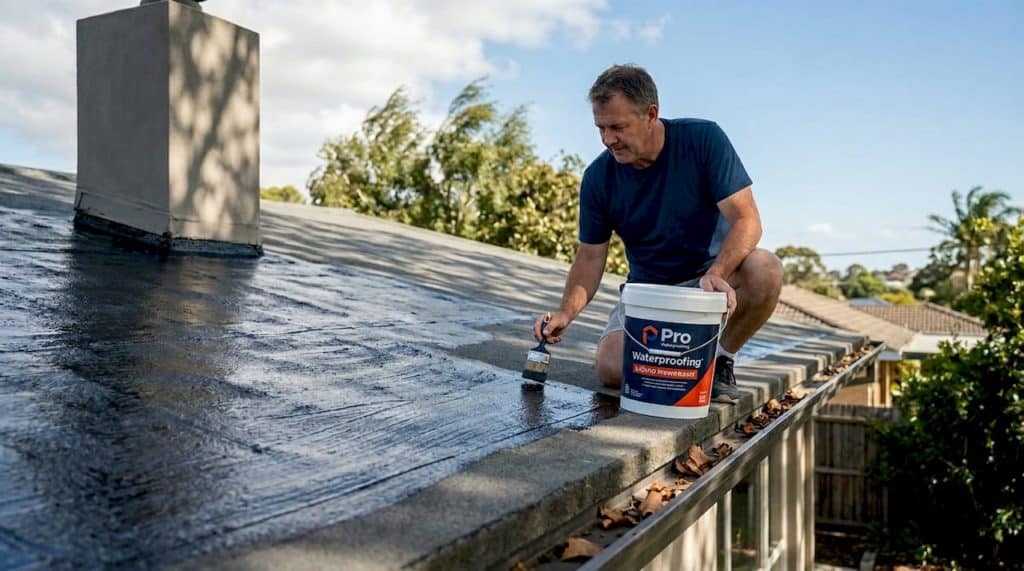
- Roof waterproofing involves applying specialized materials to prevent moisture ingress, ensuring long-term building protection. Selecting and properly installing the appropriate system—such as EPDM, liquid coatings, or bituminous membranes—and maintaining it through biannual inspections are key to avoiding water damage. Most leaks originate from detailing issues like flashing failures, highlighting the importance of precise workmanship over material choice alone.
Roof waterproofing is defined as the application of specialised materials and systems that prevent moisture from penetrating a building’s structure through its roof assembly. The right waterproofing methods for roof protection determine whether your property stays dry for decades or faces recurring water damage, rotted decking, and compromised insulation. Technologies such as EPDM membranes, liquid-applied polyurethane coatings, bituminous sheets, and cementitious compounds each serve distinct roof types and climates. Water ingress often starts at flashing, penetrations, and sealant failures, causing structural damage that is far more expensive to fix than the original waterproofing would have cost.
What are the main waterproofing methods for roofs?
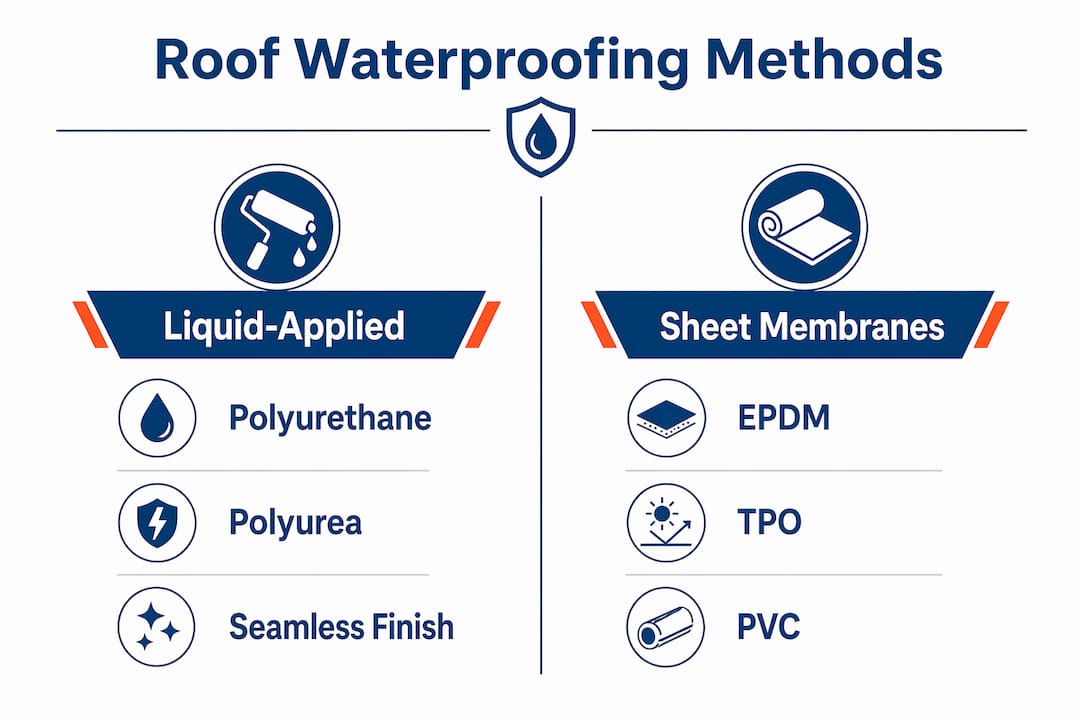
Roof waterproofing systems fall into four broad categories: liquid-applied membranes, synthetic sheet membranes, bituminous systems, and cementitious coatings. Each category suits different roof geometries, budgets, and performance requirements. Understanding the distinctions before you commit to a product saves you from costly rework.
Liquid-applied membranes
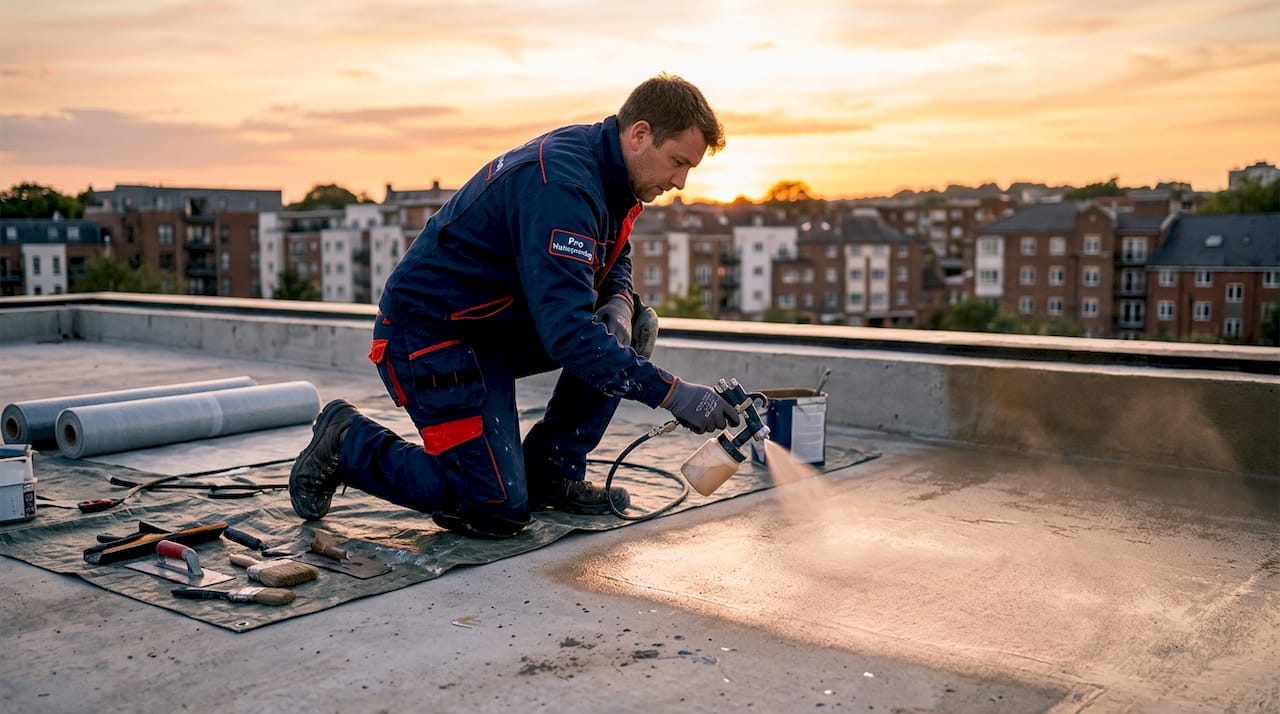
Liquid-applied coatings, including polyurethane and polyurea formulations, are sprayed or rolled directly onto the roof deck and cure to form a seamless, flexible film. Their greatest advantage is that they conform to any shape, eliminating the seam vulnerabilities that plague sheet systems. Polyurea cures in seconds, making it suitable for large commercial roofs where downtime is costly, while polyurethane offers a longer working time that suits DIY and smaller residential projects.
Synthetic sheet membranes
EPDM (ethylene propylene diene monomer), TPO (thermoplastic polyolefin), and PVC are the dominant synthetic sheet options. EPDM membranes deliver 20 to 50+ years of waterproofing performance when correctly installed, making them one of the most cost-effective long-term choices for flat and low-slope roofs. TPO and PVC are heat-welded at seams, producing a bond that is often stronger than the membrane itself.
Bituminous and cementitious systems
Bituminous membranes, whether torch-applied or self-adhesive, are the traditional choice for flat roofs across South Africa and remain widely specified for their proven durability and ease of repair. Cementitious coatings are rigid, cement-based products applied by brush or spray, best suited to concrete decks, parapet walls, and below-grade structures where flexibility is less critical. They bond tenaciously to masonry and resist hydrostatic pressure, which makes them a reliable option for water tanks and basement roofs.
| System | Typical lifespan | Application method | Best use case |
|---|---|---|---|
| EPDM sheet membrane | 20 to 50+ years | Adhesive and mechanical fix | Flat and low-slope roofs |
| Liquid polyurethane | 10 to 20 years | Spray or roller | Complex shapes, refurbishment |
| Bituminous membrane | 15 to 25 years | Torch-on or self-adhesive | Flat roofs, parapet details |
| Cementitious coating | 10 to 15 years | Brush or spray | Concrete decks, masonry |
| TPO / PVC sheet | 15 to 30 years | Heat-welded seams | Commercial flat roofs |
Pro Tip: Match your system to roof slope first. Slopes below 1:20 demand membranes rated for ponding water, such as EPDM or TPO. Steeper pitches can accommodate bituminous or liquid coatings with shorter drainage paths.
How to prepare and apply waterproofing materials correctly
Correct surface preparation is the single biggest predictor of waterproofing success. Skipping or rushing this stage causes blistering, delamination, and premature failure regardless of how premium the product is.
Follow these steps for a reliable installation:
- Inspect and repair the substrate. Remove all loose material, cracked mortar, and old sealant. Fill cracks and voids with a compatible filler and allow it to cure fully before proceeding.
- Pressure wash the surface. Pressure washing at 2,500 to 3,500 PSI removes contaminants that prevent adhesion. Allow the surface to dry completely, which typically takes 24 to 48 hours depending on ambient humidity.
- Test for residual moisture. Tape a sheet of polythene to the deck and leave it for 16 hours. Condensation beneath the sheet means the substrate is too wet to coat.
- Apply primer where specified. Most liquid membranes and EPDM adhesives require a compatible primer on porous or previously coated surfaces to achieve the rated bond strength.
- Install the membrane or coating. For EPDM, roll out the sheet, fold it back on itself, and apply water-based adhesive to the deck area. Use contact adhesive only at perimeters and vertical surfaces. Incorrect adhesive use is one of the most common and costly installation errors. For liquid coatings, apply in two perpendicular passes to achieve uniform film thickness.
- Form corners and details correctly. The ‘pig’s ear’ corner fold technique in EPDM installation creates a watertight, durable corner without cutting the membrane, which significantly reduces leak risk at the most vulnerable points.
- Seal all penetrations and flashings. Integrate flashing at upstands, pipes, and rooflights using compatible lap sealant or cover strips before the final coat is applied.
Pro Tip: Apply liquid coatings only when air temperature sits between 10°C and 38°C and rain-free conditions are forecast for at least 24 to 48 hours after application. Cold or damp conditions prevent proper curing and void most manufacturer warranties.
What maintenance routines ensure long-lasting roof waterproofing?
Roof waterproofing longevity depends on material choice, installation quality, and active maintenance working together as a system. A well-installed membrane that is never inspected will still fail prematurely. Treat roof maintenance as a scheduled capital investment rather than a reactive expense.
Key maintenance practices include:
- Biannual inspections in spring and autumn. Inspections should prioritise flashing integrity, membrane seams, drainage, and penetration seals to catch moisture intrusion before it reaches the structure below.
- Check for ponding water. Standing water that remains 48 hours after rain indicates a drainage problem. Ponding accelerates membrane degradation and adds structural load.
- Clear gutters, downpipes, and outlets. Blocked drainage is the leading cause of premature waterproofing failure on flat roofs. Clear debris after every significant storm.
- Inspect seams and laps. Lift the edges of sheet membranes at seams and laps to check for delamination or moisture ingress. Re-bond any lifted edges immediately with compatible adhesive.
- Reapply sealant at penetrations. Pipe boots, vent collars, and skylight flashings are the most common entry points for water. Reapply sealant every three to five years or whenever cracking is visible.
For a detailed maintenance schedule, the Prowaterproofing guide on waterproofing maintenance covers lifecycle management and material-specific care in depth. You can also find practical repair techniques in the article on lasting roof repairs to address minor defects before they escalate.
Which waterproofing method suits your roof type and climate?
Matching the waterproofing system to the roof geometry and local weather conditions is as important as the product quality itself. A system that performs brilliantly in a dry climate may fail rapidly in a high-rainfall coastal environment.
Modern waterproofing standards require precise flashing integration and ventilation to withstand extreme weather stresses, including wind-driven rain and thermal cycling. This is particularly relevant in South Africa, where coastal areas experience high humidity and UV exposure while inland regions face significant temperature swings.
| Roof type | Climate challenge | Recommended system |
|---|---|---|
| Flat concrete deck | Ponding water, UV | EPDM or liquid polyurethane |
| Low-slope IBR sheet | Wind-driven rain | Bituminous membrane with lap sealing |
| Pitched tile roof | Freeze-thaw, moss | Breathable underlay with flashing upgrade |
| Parapet and upstand | Hydrostatic pressure | Cementitious coating with waterproof render |
| Green or inverted roof | Constant moisture | Root-resistant EPDM or PVC with drainage layer |
Flat and low-slope roofs carry the highest waterproofing risk because water sits rather than drains. EPDM and TPO sheet systems are the preferred choice for these geometries because they are rated for continuous water contact. Pitched roofs shed water quickly, so the focus shifts to flashing quality at valleys, ridges, and penetrations rather than the primary covering material. Roof failures most often originate from poor detailing at vulnerable points such as chimneys and vents, not from the main roofing material. This means that upgrading flashing and sealing details often delivers more protection per rand spent than replacing the entire roof covering.
For commercial properties, resources such as commercial roof maintenance provide additional guidance on system selection and scheduled upkeep for larger roof areas.
Key takeaways
Effective roof waterproofing requires matching the right system to your roof type, preparing the substrate correctly, and maintaining the installation with biannual inspections.
| Point | Details |
|---|---|
| System selection matters | Match EPDM, liquid coatings, or bituminous sheets to roof slope, climate, and substrate type. |
| Preparation determines success | Pressure wash at 2,500 to 3,500 PSI and allow 24 to 48 hours drying time before applying any coating. |
| Flashing is the weak point | Most roof leaks originate at flashings and penetrations, not the primary membrane. |
| Biannual inspections protect value | Check seams, drainage, and flashing every spring and autumn to catch defects before they escalate. |
| Maintenance is a capital investment | Proactive upkeep costs a fraction of structural remediation after prolonged water ingress. |
Why most roof leaks are a detailing problem, not a material problem
After years of reviewing waterproofing failures across residential and commercial properties, the pattern is consistent. Many property owners focus on shingles and neglect the waterproofing layers beneath, and that misplaced focus is where most money gets wasted.
The roof covering, whether tiles, IBR sheeting, or a flat membrane, is only one layer of a moisture management system. Beneath it sit the underlays, flashings, seals, and drainage details that do the real work of keeping water out. When I see a property owner replace an entire roof covering because of a persistent leak, and the leak returns within a year, it is almost always because the flashing at a chimney or the sealant around a pipe boot was never addressed.
My advice to property managers is straightforward. Before you approve any waterproofing spend, ask the contractor to show you exactly where the water is entering and which detail has failed. A reputable contractor will point to a specific joint, seam, or penetration. A contractor who cannot give you that answer is guessing, and guessing with your budget.
Viewing roof waterproofing as a long-term capital asset rather than a maintenance line item also changes how you schedule work. A proactive inspection and minor repair programme costs a small fraction of the structural remediation bill that follows years of undetected moisture ingress. The Prowaterproofing article on how to maintain waterproofing sets out a practical framework for exactly this kind of scheduled care.
— Eben
Protect your roof with professional waterproofing services
Choosing the correct waterproofing system and applying it to the required standard is not straightforward. Material compatibility, substrate condition, environmental timing, and detailing precision all affect the outcome. Getting any one of these wrong shortens the system’s life significantly.
Prowaterproofing provides expert roof waterproofing services for residential, commercial, and industrial properties across South Africa. From initial inspection and material specification through to installation and scheduled maintenance, the team at Prowaterproofing handles every stage with the precision that long-term performance demands. Whether you need a full flat roof membrane installation or a targeted repair to failing flashings, contact Prowaterproofing to schedule a consultation and protect your property investment.
FAQ
What is the most durable waterproofing method for a flat roof?
EPDM synthetic rubber membranes are the most durable option for flat roofs, delivering 20 to 50+ years of performance when correctly installed. Their resistance to UV, ponding water, and thermal movement makes them the preferred choice for long-term flat roof waterproofing.
How do I know if my roof waterproofing has failed?
Water stains on ceilings, damp patches on internal walls, and visible membrane blistering or seam lifting are the clearest signs of waterproofing failure. Biannual inspections that check flashing, seams, and drainage catch these defects before they cause structural damage.
Can I waterproof my roof myself?
Liquid-applied coatings and self-adhesive bituminous membranes are suitable for competent DIY application on small areas, provided surface preparation meets the manufacturer’s specification. Complex details such as flashings, penetrations, and large EPDM sheet installations are best left to a professional to avoid costly callbacks.
How often should roof waterproofing be inspected?
Professional inspections are recommended twice yearly, in spring and autumn, focusing on flashing integrity, membrane seams, drainage outlets, and penetration seals. Catching minor defects at this stage costs a fraction of the remediation required after prolonged water ingress.
Does roof slope affect which waterproofing system I should choose?
Roof slope is a primary selection factor. Flat and low-slope roofs below 1:20 require systems rated for ponding water, such as EPDM or TPO. Steeper pitches shed water quickly, shifting the priority to flashing quality and breathable underlays rather than full membrane coverage.