
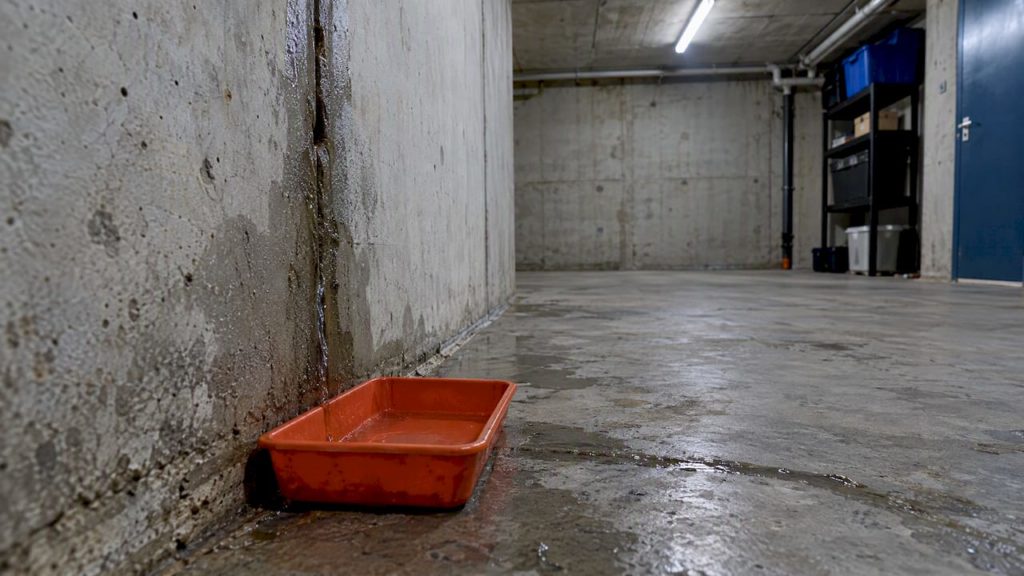
Water ingress is the unwanted entry of water into a building, through the roof, walls, floors, windows, joints or from the ground. It is not the same as a burst pipe. It is water getting past the building envelope, the shell that is meant to keep rain and ground moisture out. South African standards define the related term, penetrating dampness, as dampness in a structure caused by external moisture getting in.
This guide explains how ingress happens, how to recognise it, what the regulations expect, and what a lasting repair looks like. It is written for owners and managers of homes, commercial buildings and industrial sites in South Africa.
TL;DR
- Water ingress means rain, ground water or runoff entering a building through a failed roof, wall, joint, slab or opening.
- Typical signs: ceiling stains, damp at the base of walls, peeling paint, blistering, a musty smell and mould in corners.
- South African regulations expect walls to resist water penetration, and new habitable buildings should show no dampness on the inside face of external walls.
- Cosmetic fixes and quick sealants often trap moisture. Find the source first, then repair the system.
- Keep electrical appliances away from wet areas and call an electrician if you see sparks or smoke.
Table of Contents
- What water ingress actually means
- Where water gets in
- Signs you may have water ingress
- Why it keeps coming back
- What the rules expect in South Africa
- What to do when you find ingress
- Our perspective
- Get the leak assessed by a vetted contractor
- Preventing ingress before it starts
- FAQ
- Sources
What water ingress actually means
A building is a system for shedding water. Roofs slope, gutters and outlets carry rain away, walls resist penetration, damp-proof courses stop moisture rising from the ground, and sealants close the joints. Ingress happens when any part of that system fails, or was never built correctly.
Three things must be present: water, a path, and a force that moves the water along the path. The water may be rain, groundwater, runoff from a neighbouring slope or leaking services. The path may be a hairline crack, a gap around a window frame, a poorly sealed pipe penetration or a porous mortar joint. The force may be gravity, wind-driven rain, capillary action (water drawn up through porous masonry) or hydrostatic pressure, where water below ground pushes against a basement wall or slab.
The CSIR introductory guide to damp in buildings makes a useful point: water is continually moving through the fabric of any house, entering, evaporating and being replaced. Normally that balance is harmless. Ingress is when more water comes in than the building can shed or dry out.
Ingress, rising damp and condensation
These three get confused, and the repair for each is different.
| Problem | Where the water comes from | Typical clue | Usual direction of fix |
|---|---|---|---|
| Water ingress | Rain, runoff or groundwater entering from outside | Worse after rain, localised stains | Seal or waterproof the entry path |
| Rising damp | Ground moisture drawn up through masonry | Tide marks low on walls, salts | Restore or install a damp-proof barrier |
| Condensation | Indoor humidity meeting cold surfaces | Mould on cold walls and windows, worse in winter | Ventilation, heating, humidity control |
It is common for two to occur together. A leaking gutter can wet a wall that then also suffers condensation. That is why a proper diagnosis matters before anyone quotes for a fix.
Where water gets in
Roofs
Roofs are the most common entry point. On pitched roofs the culprits are broken or slipped tiles, rusted sheeting fixings, failed flashings around chimneys and skylights, and blocked or undersized gutters. On flat roofs and concrete decks the problems are different: cracked or blistered membranes, ponding water, and poor detailing at the edges.
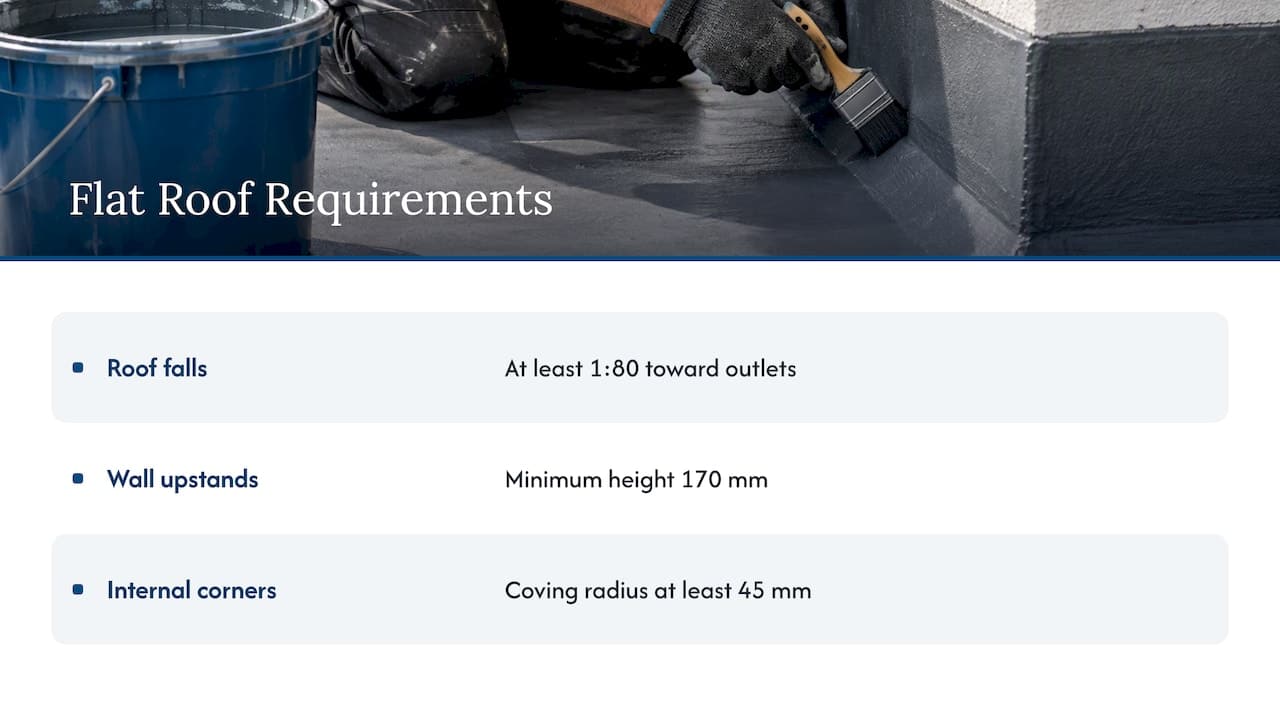
SANS 10400-L, the roofs part of the National Building Regulations application standards, sets out what a sound flat roof needs. According to the standard, falls should be at least 1:80 toward gutters and outlets, a minimum upstand height of 170 mm applies where roofs meet walls, and internal corners need coving with a radius of at least 45 mm so the membrane does not tear or bridge at sharp edges. Where these details are missing, you often find ingress at exactly those junctions.
Ponding is the warning sign to look for. Even when the design falls are correct, construction inaccuracies can leave water standing near outlets, and standing water shortens the life of most waterproofing materials.
Walls
Walls leak through cracked render, failed pointing, porous face brick, unsealed window and door frames, and poorly flashed parapets. Wind-driven rain is a particular test on exposed coastal and highveld elevations. The National Building Regulations, Part K, regulation K2, requires any wall to adequately resist water penetration where it would harm occupants’ health or the durability of the building.
The Agrément South Africa performance criterion goes further for new buildings meant for human habitation: no dampness should be visible on the internal faces of external walls.
Basements, foundations and retaining walls
Below ground, the issue is pressure. Water collects against the structure and finds cracks, movement joints, cold joints and service penetrations. A technical article on underground structures is not needed to see the pattern: slabs and joints are the usual weak points, and a basement that stays dry in summer may weep after the first winter rains in the Western Cape.
Bathrooms and wet areas
Showers, balconies and bathroom floors leak when the waterproofing layer beneath the tiles fails or was never applied. The damage often appears in the room below, as a stain on the ceiling, long after the original failure.
Signs you may have water ingress
Look for these, especially after heavy rain:
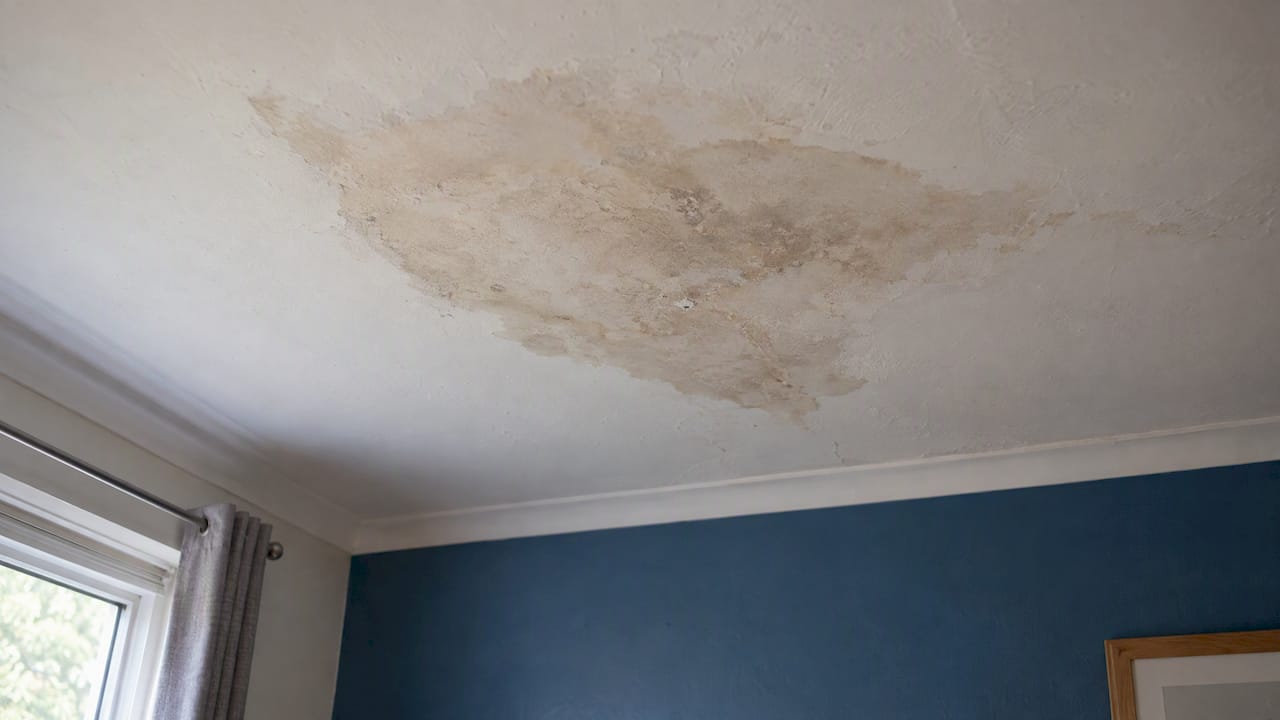
- Brown or yellow stains spreading across a ceiling.
- Dampness at the base of a wall, or a tide mark.
- Paint that bubbles, flakes or peels, or plaster that turns powdery.
- White salt deposits (efflorescence) on brick or plaster.
- Mould in corners, behind furniture or inside cupboards on external walls.
- A persistent musty smell.
- Water pooling on a flat roof or balcony more than a day after rain.
- Rusting of fixings, reinforcing steel or metal door frames.
A single stain does not tell you where the water enters. Water travels along beams, pipes and slab edges, so the visible mark can be metres away from the true source.
How professionals confirm it
Detecting a leak behind a wall usually needs a moisture assessment rather than guesswork. Damp patches, peeling paint and a musty smell are indicators, but contractors verify with instruments such as moisture meters and hygrometers. Moisture content matters again at repair stage. Public project specifications, such as the CSIR architectural specification, call for walls at 8% moisture content or less (BD 2 scale) before primer is applied. Painting over a wet wall simply hides the problem for a season.
Why it keeps coming back
Most recurring ingress has the same root: the repair treated the symptom. CSIR guidance stresses that damp is rarely a surface issue. It reflects an underlying design or construction failure, such as inadequate roof falls or a damp-proof course that is not properly integrated with the rest of the wall.
There are a few repeating patterns:
- Wrong material for the exposure. A product suited to an inland, sheltered roof may not last on a coastal one. SANS 10400-L expects a waterproofing system to stay watertight for at least five years without maintenance beyond cleaning gutters and outlets, which assumes the right material, installed to the manufacturer’s instructions.
- Wet substrate. The standard limits moisture to no more than 7% by weight for concrete and 10% for sand-cement screeds before waterproofing is applied. Trapped moisture can vaporise under a membrane and cause blisters.
- Poor junction detailing. Missing upstands and coving, as described above, are a leading cause of early failure.
- Design and material mismatch. CSIR research on subsidised housing points to poor coordination between structural design and material dimensions, and inadequate roof assembly details, as sources of ingress in low-cost and older housing.
- Quick fixes. Surface coatings or sealants over a wet wall can trap moisture. A building envelope needs to shed water and still let walls dry.
If you want a wider look at why roofs deteriorate before their time, this overview of why roofs fail prematurely explains the mechanisms, though conditions in South Florida differ from ours.
What the rules expect in South Africa
The National Building Regulations set the legal baseline. Part K requires walls to resist water penetration, and Part L covers roofs. SANS 10400-L provides the deemed-to-satisfy rules for roof coverings and waterproofing, including that the system resists the penetration of rain. SANS 10021 covers the waterproofing of buildings, including damp-proofing and vapour barriers.
For owners, the practical meaning is simple. A new or renovated building should not leak under normal weather, and waterproofing is a specialist trade that should be carried out by a competent person following manufacturer instructions. If you want the detail, we have covered it in our guide to waterproofing regulations in South Africa and in our piece on what to expect from SANS-compliant interior waterproofing. To check who is qualified to do the work, read how contractor licensing works.
When you look at drainage and runoff on your own site, the same logic applies at a larger scale. A buyer’s questions on stormwater design show why water management around a building matters as much as the membrane on it, even if the setting is a different country.
What to do when you find ingress
Make it safe first
Water and electricity are a dangerous mix. Eskom’s home safety guidance says water is an excellent conductor and should be kept away from appliances and wall sockets. Do not use an appliance that is wet or in a wet area. If you see sparks or smoke, unplug the device if it is safe to do so and call a qualified electrician. If water is coming through a ceiling that holds light fittings, switch off that circuit at the distribution board and have an electrician check it before you use it again.
Then follow a sensible sequence
- Document it. Photograph stains and note when they appear, for example after rain from a particular direction. This helps the inspector and any insurance claim.
- Limit the damage. Move belongings, catch drips, and ventilate. Do not paint over the area.
- Trace the source. Check gutters, outlets, flashings, balcony drainage and external wall cracks above the stain. Do not climb onto a wet or fragile roof. Use a qualified person.
- Get an assessment. Ask for a moisture reading and a written finding of the cause, not just a quote for a coating.
- Repair the cause, then the finish. Fix drainage and detailing first, waterproof the correct layer, let the substrate dry, and only then redecorate.
- Ask for the warranty in writing. Know what it covers and for how long, and what maintenance it assumes.
Our waterproofing inspection checklist for South African buildings is a useful companion for steps 1 to 3.
Is it a structural defect?
Sometimes. Persistent ingress that corrodes reinforcing steel, spalls concrete or rots roof timbers is more than a nuisance. It affects durability, which is exactly what regulation K2 is concerned with. A structural engineer should assess cracking in load-bearing elements or concrete that is flaking.
Our perspective
We see the same pattern repeatedly: an owner paints over a stain, the stain returns the following winter, and a second or third patch repair follows before anyone asks where the water is actually coming from. The expensive part is rarely the waterproofing itself. It is the years of repeat repairs and the damage underneath.
Our view is that the contractor you choose matters as much as the product. That is why our site focuses on the questions to put to any waterproofing contractor: what is their experience with your type of structure, are they properly licensed, what exactly does the warranty cover, and which system do they propose for your exposure, coastal or inland, flat roof or basement. A contractor who cannot explain the cause of your leak in plain language is not ready to fix it.
We also encourage owners to ask for a diagnosis before a price. If the answer to “why is it leaking?” is vague, the quote will be too.
— Eben
Get the leak assessed by a vetted contractor
If you are dealing with a leaking roof, damp walls, a basement or a failing bathroom floor, Pro Waterproofing can connect you with vetted waterproofing professionals for homes, commercial buildings and industrial sites. Send a quote request through the site, describe what you are seeing, and use the questions in our guides to compare what contractors tell you. Our complete waterproofing checklist for owners will help you prepare before the first call.
Preventing ingress before it starts
Prevention is mostly maintenance. SANS 10400-L assumes that gutters and outlets are cleaned, and that is the single cheapest task on this page. A sensible routine:
- Clear gutters, downpipes and roof outlets before the rainy season and after storms. In the Western Cape that means before winter; on the highveld, before the summer thunderstorms.
- Inspect flashings, sealants and flat roof membranes once a year, looking for cracks, blisters, lifted edges and ponding.
- Repoint and reseal external wall cracks promptly, using products suited to your wall type.
- Keep soil and paving levels below the damp-proof course, and direct runoff away from walls.
- Do not block wall ventilation with stored goods or dense planting against masonry.
- Keep records of previous waterproofing work, warranties and product data sheets.
We explain the reasoning in why waterproofing systems need maintenance. For commercial and industrial managers, a scheduled inspection of large roofs and decks is far cheaper than an emergency repair after an interruption to trading or production.
FAQ
Is water ingress the same as a leak?
Not quite. A leak usually refers to water escaping from a pipe or appliance. Water ingress is water entering a building from outside, through the roof, walls, openings or the ground. The two can look alike on a ceiling, so a proper inspection should check both.
How can I tell if water is leaking behind a wall?
Watch for damp patches, peeling paint, bubbling plaster, salts and a musty smell. These suggest moisture but do not locate it. A contractor can take moisture readings and trace the source, which is far more reliable than cutting into the wall at random.
Is it safe to use electrical appliances near water ingress?
No. Eskom advises that wet appliances, or those in wet areas, must not be used, and that sparks or smoke mean you should unplug the device and call an electrician. If water is coming through a ceiling near lights or sockets, switch off the circuit and have it checked.
Is water ingress a structural defect?
It can become one. Short-term staining may be cosmetic, but long-term ingress can corrode reinforcing steel, damage concrete and rot timber. National Building Regulation K2 ties wall performance to the durability of the building, so persistent ingress deserves a professional assessment.
Who pays for water leak damage?
It depends on the cause, your policy wording and, for sectional title, the body corporate rules. Insurers often treat sudden events differently from gradual seepage, so check your policy and speak to your broker before you start repairs, and keep photographs and quotes.
Sources
- SANS 10021: The waterproofing of buildings
- SANS 10400-L: Roofs
- National Building Regulations, K2 Water penetration
- Agrément South Africa performance criterion: water penetration and damp-proofing
- CSIR: Introductory guide to damp in buildings
- CSIR architectural project specification
- Eskom: Safety at home