
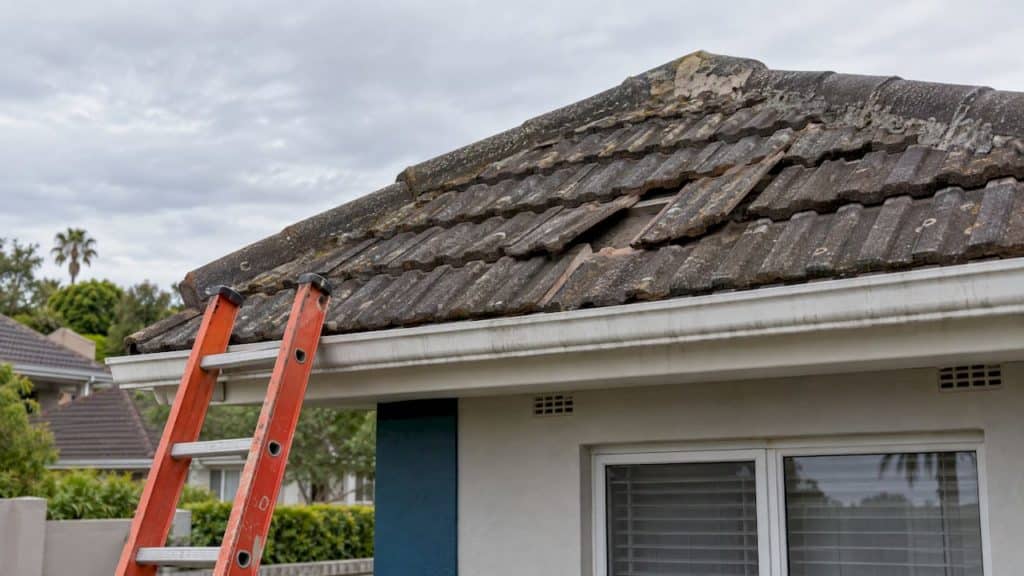
A roof does not earn rent, but every rand of rent depends on it. When a roof is in poor condition, you take on four risks at once: insurers price you higher or reject claims, water damage spreads into the parts of the building that do earn income, tenants leave or cannot be signed, and buyers or valuers mark the property down. For South African owners the most important of these is the insurance risk, because damage caused by an ageing, unmaintained waterproofing layer is usually the damage a policy will not pay for. If you own or manage property in Gauteng or the Western Cape, a documented waterproofing and roof condition plan is the cheapest way to keep that risk off your balance sheet. Our quote request connects you with vetted waterproofing professionals who can assess and treat the roof.
TL;DR
- A roof in poor condition costs insurers far more per policy: US claims research found about 48% higher pure premiums than for roofs in good condition, and South African insurers can refuse claims that stem from poor maintenance.
- Hidden leaks do the real damage. Water can travel for months before a stain shows, so the repair bill is usually for the interior, not the roof.
- South African building rules expect flat-roof waterproofing to stay watertight for at least five years without maintenance beyond clearing gutters and downpipes, which gives you a benchmark for judging an existing roof.
- Inspect twice a year and after severe weather, and keep dated records: they support insurance claims and make due diligence easier when you buy or sell.
Table of Contents
- Why the roof is the biggest swing factor in a building
- What insurers see when they look at your roof
- The South African twist: claims refused for poor maintenance
- Small defects, large bills
- What the standard expects of a roof
- Roof condition at purchase and resale
- A holding routine that keeps the risk down
- Getting the roof assessed and fixed
- Our view as property people
- FAQ
- Sources
Why the roof is the biggest swing factor in a building
Think of the roof as the asset that protects every other asset. Ceilings, wiring, insulation, finishes, stock and tenants all sit beneath it. One US asset manager describes it as the single most important building system from an operating cost perspective: it generates nothing itself but protects everything that does. Its argument is that the best moment to replace a roof is the one that maximises total building value, which can be before the roof actually fails, because insurance savings, fewer repair calls and better marketability can outweigh the outlay.
That is the investor’s way of looking at a roof. You are not asking “does it leak today?” but “what does this roof cost me each year in premiums, call-outs and lost income, and what will it do to the price when I sell?”
What insurers see when they look at your roof
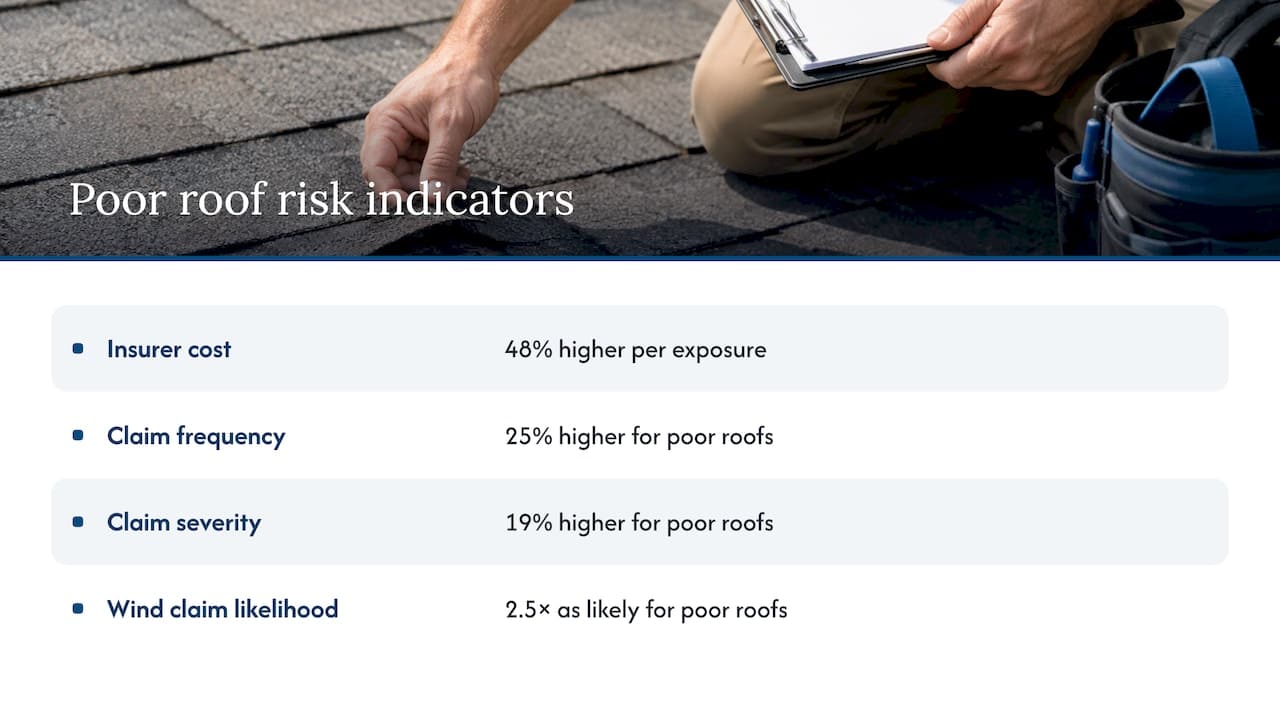
Insurers price what they can measure, and roof condition is one of the clearest predictors of loss. A summary of aerial-imagery claims research reports that roofs in poor condition cost insurers roughly 48% more per exposure than roofs in good condition, with 25% higher claim frequency and 19% higher claim severity. The same source cites underwriting analysis finding roofs in bad condition are 2.5 times as likely to produce a wind claim. These are US figures, so treat them as a direction of travel rather than a South African quote, but the logic carries over: a worse roof is a worse risk.
The reverse is also true. A June 2026 Brookings working paper analysing more than 18 million Florida policy observations found that roof-improvement discounts can reach up to 47% of total premium, worth hundreds to over a thousand dollars a year. A RAND report on commercial property insurance found one insurer valued roof anchorage as its most valuable resilience investment, with premiums falling 23% in total as anchorage went from below average to above average.
If you manage a block of units, the numbers compound. In one Florida example, replacing a 22-year-old built-up roof with a new system and wind mitigation cut insurance from about $2,800 to between $1,800 and $2,000 per unit per year. On a 20-unit building that is $16,000 to $20,000 a year flowing straight to net operating income. Local premiums will differ, but the principle is the same: roof spend can be paid back through lower running costs, not only at resale.
The South African twist: claims refused for poor maintenance
For a South African owner, the larger insurance risk is not the premium but the refusal. Home and building policies are written for sudden, unexpected events. A senior product executive at a financial consultancy puts it plainly: insurance is for sudden events, not damage that builds up over time. The same report says the National Financial Ombud Scheme found gradual deterioration, lack of maintenance or wear and tear to be the main reason homeowners’ claims were rejected, with such complaints up 7% since 2023.
Roofs are where this bites hardest. Aon South Africa explains that insurance may respond to damage caused by a leaking roof, but will not pay to repair waterproofing that deteriorated through lack of maintenance. Nedgroup’s homeowner policy wording goes further and says the insured must take all reasonable steps to maintain the property, including regular waterproofing, sealing and maintenance of the roof so it can withstand rain.
In investment terms, an unmaintained roof turns a covered, insurable loss into an uninsured one. The risk you thought you had transferred sits back on your books.
There is also a warranty gap. The NHBRC brochure for enrolled new homes states a five-year warranty against structural defects and a one-year roof-leak warranty, and that the fund does not cover maintenance items or inadequate maintenance. After year one, a leaking roof on a new home is generally your problem to manage.
Small defects, large bills
Roof problems rarely announce themselves. The RCABC Roofing Practices Manual notes that small isolated problems, if undetected, escalate until they are extensive and more expensive to resolve, and that a proper maintenance programme adds years to roof life and avoids interruption to the building’s internal functions.
The interior is where the money goes. The same asset manager cites a case where deferring an $80,000 roof for three years led to $200,000 in interior repairs and lost rent. It is one case, not a rule, but it shows the shape of the risk: the deferral saves a visible cost and creates a larger hidden one.
Warning signs worth acting on
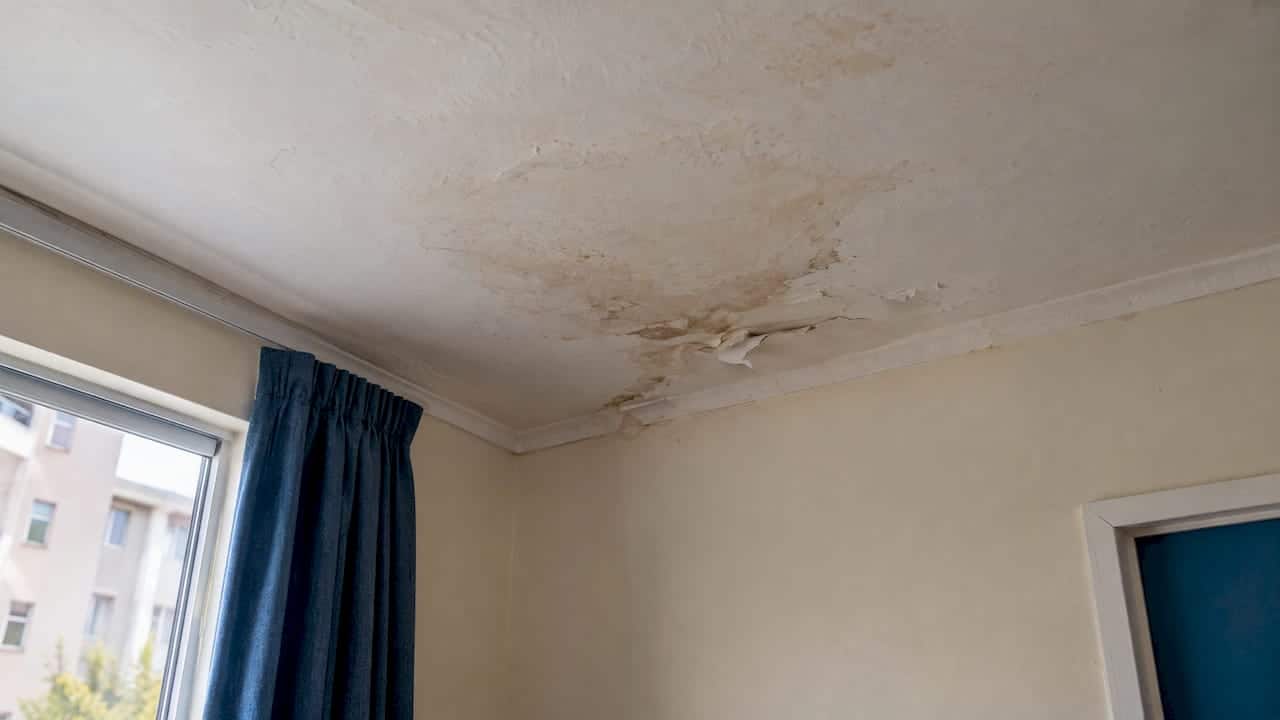
The National Roofing Contractors Association of the US lists the signs of a roof leak. Look for stains, bubbling paint or soft spots on ceilings and upper walls, a musty smell, damp insulation, daylight in the attic, granules in gutters, and loose or rusted flashing. It also notes that water can travel along decking for months before a stain appears, which is why a clean ceiling is not proof of a sound roof.
Flashing, the metal or membrane strip that seals the joints where a roof meets walls, pipes and vents, deserves special attention. South African valuers note that in sectional title schemes with tile roofs, flashings are the major cause of maintenance and need attention about every three years. Our guide on flashing in waterproofing explains what property managers should look for.
What the standard expects of a roof
South Africa’s national building regulations give you a yardstick. SANS 10400-L, the part of the regulations covering roofs, requires roof coverings and waterproofing to resist rain penetration and to stay repairable as they age. It sets out that roof coverings should keep their properties with normal maintenance for at least 10 years in readily repairable systems and 20 years in systems that are difficult to replace. Flat-roof waterproofing must remain watertight for at least five years without maintenance other than cleaning gutters and downpipes.
So a flat roof that leaks within five years of installation is a workmanship or specification question, while one that is simply old and unmaintained is your risk. Knowing which one you own changes how you negotiate a purchase price or a contractor’s warranty. For the detail, see our owner guide to South African waterproofing standards and our flat roof waterproofing guide.
Maintenance cycles differ by roof type. Valuers note that flat malthoid roofs were traditionally recoated about every three years with full replacement around every 10 years, and that thatch carries substantially higher insurance premiums because of fire risk. One insurer’s guide gives thatch a lifespan of 10 to 15 years and recommends checking the roof once a year, because waterproofing deteriorates under sun and weather.
Roof condition at purchase and resale
Valuers and buyers read roof condition as a proxy for how the whole building has been looked after. The cheapest roof option is also not always the cheapest over time. Valuers advising sectional title trustees say that continuous roof problems and maintenance can outweigh the cost of replacing a faulty roof with a low-maintenance alternative, and that buyers will pay more for a home with the best roof option and lowest maintenance.
US figures show roof work only partly comes back at sale, which is a reason to judge roof spend on running costs as well as resale. Use them only as context, because South African markets, materials and costs differ.
A pre-purchase roof check
Before you commit to an acquisition, put these questions on your due diligence list:
- How old is the roof covering and the waterproofing layer, and what is it made of? Age and system type tell you where the building sits in its maintenance cycle.
- Are there inspection and repair records? Insurers and later buyers both value an accessible record.
- Is there interior evidence? Check top-floor ceilings, upper walls and parapet corners for stains, bubbling paint and damp.
- What do the gutters, downpipes and flashings look like? Blocked outlets cause ponding on flat roofs, and failed flashings let water in at the joints.
- What would your insurer say? Ask for the policy wording on maintenance and roof conditions before you close, not after your first claim.
- Is there a guarantee still running? Ask for the installer’s written warranty and who stands behind it.
Our waterproofing inspection checklist for South African buildings gives you a fuller list to work through on site.
A holding routine that keeps the risk down
Bank guidance for South African owners recommends inspecting the roof at least twice a year, especially after severe weather, keeping gutters clear, checking flashings and the roof underlay, and keeping records of inspections and repairs, since an accessible record helps when you file a claim.
| When | What to do | Why it protects your position |
|---|---|---|
| Twice a year and after storms | Visual roof inspection, gutters, downpipes, flashings | Catches small defects before they reach the interior |
| Each inspection | Photograph and date findings, file repair invoices | Evidence of reasonable maintenance if you claim |
| Every few years, by roof type | Recoat or re-seal waterproofing, service flashings | Keeps the waterproofing within its expected life |
| Before buying or renewing cover | Independent condition assessment | Prices the roof into the deal and the policy |
Aon also advises speaking to an insurance broker to understand weather-related limits and deductibles, since some policies exclude floods, hail, subsidence and landslip. Read your own schedule before the storm season, particularly if you hold property in more than one region. For more on the routine itself, see our guides to roof maintenance and waterproofing and roof leak prevention.
Getting the roof assessed and fixed
Pro Waterproofing helps property owners, managers and investors with roof, basement, bathroom, foundation and concrete deck waterproofing across residential, commercial and industrial buildings in South Africa. When you complete a quote request, we connect you with vetted waterproofing professionals. Our guidance focuses on the questions that separate a reliable contractor from a risky one: quality, experience, licensing and warranties. That matters for an investor because a written warranty and a dated invoice are exactly the documents that support an insurance claim and a sale.
If you hold property in Gauteng or the Western Cape and want a roof or waterproofing assessment, request a waterproofing quote and tell us the building type and what you have seen.
Our view as property people
Owners tend to treat the roof as a cost to put off. We look at it differently: it is the piece of the building that decides whether every other repair is your problem or your insurer’s.
The pattern we would ask any investor to remember is simple. Insurance pays for sudden events and not for neglect, so the waterproofing layer is where your cover is won or lost. A roof you can show was inspected, repaired and guaranteed is a roof you can defend to an insurer, a valuer and a buyer.
That is why we put so much weight on choosing the contractor properly. Licensing, experience and a clear warranty are not paperwork, they are the evidence that protects your investment years later. Whether the building is a home, a warehouse or an office block, we would rather you act on a small defect this season than explain a large one to an insurer next year.
Eben
FAQ
Does a bad roof lower a property’s value?
It usually reduces what a well-informed buyer or valuer will pay, because the roof is a known, near-term expense and a sign of how the building has been kept. Valuers advising South African sectional title schemes say buyers pay more for lowest-maintenance roof options. Dated inspection records and a current waterproofing guarantee help you hold your price.
Will my insurer pay for a leaking roof?
That depends on the cause. Insurance may respond to damage from a sudden leak, but not to repairing waterproofing that failed through lack of maintenance. Read your policy wording on maintenance duties, and keep inspection and repair records so you can show you took reasonable care.
How often should I inspect a roof I own as an investment?
Twice a year and after severe weather is the routine recommended in Nedbank’s roof maintenance guidance. Flat roofs and tile flashings may need attention on a shorter cycle, so ask your waterproofing contractor for a schedule matched to the roof type.
Is replacing a roof early ever worth it for an investor?
Sometimes. One US asset manager argues that replacing a roof that still works can pay off where insurance savings, fewer repair calls and marketability outweigh the cost. The right timing depends on the roof’s age, its system and your local premiums, so get a written condition assessment before deciding.
Sources
- Midwood Asset Management: Roof replacements guide
- The Roofing Brief: Roof age and hail claim severity
- Brookings working paper WP109: Insurance pricing and household roof investment
- RAND Corporation report RRA2382-1
- The Business of Money: Simple home maintenance checks
- Aon South Africa: Protecting your home from severe weather
- Nedgroup homeowners cover policy wording
- NHBRC housing consumers brochure
- RCABC Roofing Practices Manual: Roof maintenance
- NRCIA: Signs of a roof leak
- SAIV: Advantages and disadvantages of different roof types
- SANS 10400-L: Roofs
- Outsurance: Buildings maintenance guide
- Nedbank: Maintain your roof to comply with insurance T&Cs