
TL;DR:
- Persistent dampness fuels mould growth, not surface grime or cleaning.
- Effective waterproofing prevents moisture entry, stopping mould before it starts.
- Regular inspections and maintenance are crucial for long-term mould prevention.
Scrubbing mould off your bathroom ceiling or painting over damp patches on a wall might feel like solving the problem, but it rarely is. Without sufficient moisture, mould spores cannot germinate or proliferate, which means the real fight is against persistent dampness, not surface grime. Most South African homeowners and building managers lose this battle not from lack of effort, but because they are targeting the symptom rather than the cause. This guide explains how waterproofing works at the source, which systems apply to your property type, and what practical steps you can take right now to keep mould from returning.
Table of Contents
- How mould develops: the moisture problem explained
- Foundations of waterproofing: systems and science
- How waterproofing interrupts the mould cycle
- Common challenges and expert solutions for South African properties
- The reality: what most homeowners miss about waterproofing and mould
- Protect your property with proven waterproofing
- Frequently asked questions
Key Takeaways
| Point | Details |
|---|---|
| Mould needs moisture | Controlling water and humidity halts mould before it starts. |
| Waterproofing is proactive | Addressing moisture with compliant systems prevents costly future damage. |
| Combine methods for best results | Using multiple waterproofing systems boosts effectiveness in risky areas. |
| Maintenance is essential | Regular inspections keep waterproofing strong and mould at bay. |
How mould develops: the moisture problem explained
Mould is not an aesthetic nuisance. It is a biological response to one very specific condition: persistent dampness. Mould requires persistent dampness, typically moisture levels above 70 to 80 percent relative humidity (RH), to grow and spread. Below that threshold, spores remain dormant. Above it, they activate within 24 to 48 hours on almost any organic surface, including timber, plaster, and paint.
In South Africa, several distinct pathways allow moisture to reach these thresholds inside buildings:
- Rising damp: Ground moisture moves upward through masonry by capillary action, saturating walls from the base upwards.
- Penetrating damp: Rainwater enters through cracked render, failed roof flashings, or porous brick.
- Condensation: Warm, humid indoor air meets cold surfaces, releasing moisture directly onto walls and ceilings.
- Plumbing leaks: Slow, hidden leaks behind tiles or within cavities maintain constant wetness without obvious signs.
The consequences are significant. Damp buildings are linked to a substantial portion of property defects reported in South Africa, with similar statistics reflected across the UK where 4 to 27 percent of homes are affected by damp-related issues. South African properties face comparable pressures given coastal humidity in Cape Town and Durban, plus summer rainfall patterns across Gauteng.
| Moisture entry source | Likely mould severity | Typical location affected |
|---|---|---|
| Rising damp | Moderate to severe | Lower walls, skirting boards |
| Penetrating damp | Severe if ongoing | Exterior walls, ceilings |
| Condensation | Mild to moderate | Bathrooms, kitchens, corners |
| Roof or plumbing leaks | Severe if undetected | Ceilings, internal wall cavities |
The critical insight here is straightforward: surface cleaning removes the visible colony, but the moisture that feeds it remains completely untouched. Unless humidity levels drop below the germination threshold, mould will return, often within weeks. Understanding waterproofing regulations in your area helps you know what level of protection is legally required for your property type.
With mould’s dependency on dampness established, it is crucial to understand how waterproofing interrupts this process at its source.
Foundations of waterproofing: systems and science
Not all waterproofing is the same. Primary mechanisms include barrier protection, drained protection, and active control, and each is suited to specific risk levels and building types.
- Type A (barrier systems): These use membranes, coatings, or tanking slurry applied to the structure to physically prevent water entry. Common examples include liquid-applied membranes on flat roofs and crystalline coatings on basement walls.
- Type B (structural waterproofing): The structure itself is designed to resist water. Waterproof concrete or dense blockwork falls into this category. Used primarily in new commercial builds.
- Type C (drained protection): Rather than blocking water entirely, these systems collect and redirect it using drainage channels, sumps, and pumps. Particularly effective in below-grade spaces where hydrostatic pressure is high.
| System type | Typical lifespan | Best application | Mould risk reduction |
|---|---|---|---|
| Type A barrier membrane | 10 to 25 years | Roofs, basement walls | High |
| Type B structural waterproofing | Building lifespan | New builds, basements | High |
| Type C drained system | 15 to 30 years (with maintenance) | Cellars, retaining walls | Moderate to high |
| Damp-proof course (DPC) | 20 to 50 years | Ground-level walls | Moderate |
SANS 10400 mandates waterproofing standards that require moisture exclusion from occupied spaces. Non-compliance does not just risk a failed inspection; it leads directly to mould, structural decay, and costly repairs down the line. South African standards also specify a minimum five-year performance period for new waterproofing installations, giving property owners a clear benchmark when assessing contractor quotes.
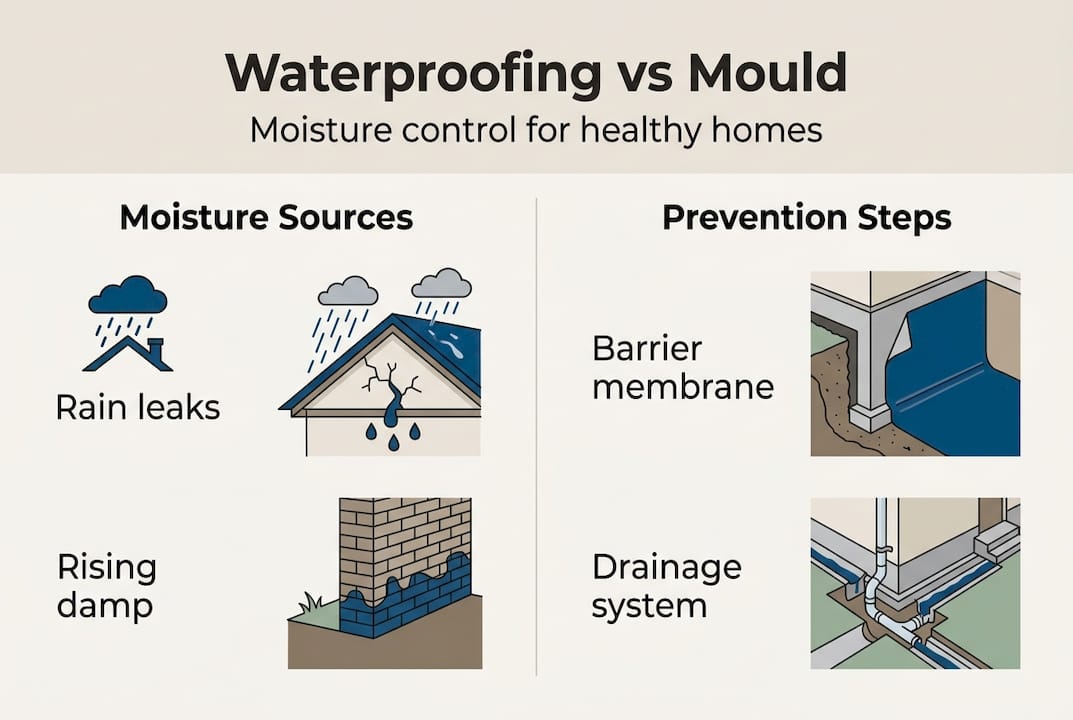
For guidance on navigating these requirements as a property owner, the waterproofing standards owner guide provides a clear breakdown. Combining Type A and Type C systems delivers superior results in high-risk areas, and understanding the role of maintenance and waterproofing is equally critical to long-term performance.
Pro Tip: For basements, retaining walls, or any below-grade space, combining a barrier membrane (Type A) with a drainage channel system (Type C) gives you redundancy. If one layer fails, the other catches the water before mould can take hold.
How waterproofing interrupts the mould cycle
Understanding the systems is useful, but the real value lies in seeing exactly how effective waterproofing stops mould before it begins.
- Moisture is blocked or redirected before it can penetrate the building envelope, keeping interior RH below 70 percent.
- Spores remain dormant because the humidity threshold for germination is never reached.
- Surfaces stay dry, meaning no organic matter becomes wet long enough to sustain a colony.
- Air quality remains stable, reducing the risk of respiratory irritation linked to mould exposure.
- Structural integrity is preserved because the timber, plaster, and masonry that mould degrades are kept consistently dry.
Waterproofing prevents mould by blocking or managing moisture entry into buildings, and this is as true for a 1960s semi-detached in Johannesburg as it is for a new sectional title complex in Cape Town. The approach differs, but the principle is identical.
For new builds, waterproofing is incorporated at the construction stage. Membranes are laid before concrete slabs are poured, flashings are installed around every roof penetration, and DPCs are set at foundation level. Retrofitting an existing property requires a more investigative approach: identifying active moisture pathways, preparing surfaces thoroughly, and selecting a system that can be applied without full structural access.
“Proactive waterproofing delivers best ROI for homeowners: R10 spent now saves R100 in remediation later.”
This is not an exaggeration. A mould remediation project in a mid-size South African home can easily run into tens of thousands of rands once structural repairs, plaster replacement, and repainting are included. The waterproofing best practices for South African properties make clear that prevention is the only genuinely cost-effective strategy.
Pro Tip: Schedule an annual inspection every autumn before winter rains arrive. Small cracks in render or minor membrane lifts are inexpensive to seal. Left for two seasons, they become water channels that saturate walls entirely.
Common challenges and expert solutions for South African properties
Effective waterproofing is not just about choosing the right product. Real-world conditions introduce complications that catch many property owners and even some contractors off guard.
The three most common moisture problems and their solutions:
- Rising damp: Chemical DPC injection costs between R300 and R800 per metre and creates a horizontal barrier that stops ground moisture from travelling upward through the wall.
- Condensation: This is a ventilation and insulation problem, not a waterproofing one. Improving air circulation, upgrading insulation, and fitting extraction fans in bathrooms and kitchens often resolves recurring condensation-related mould without any membrane work at all.
- Penetrating damp: Failed render, cracked mortar joints, and damaged flashings need physical repair before any coating or sealant is applied. Applying a waterproof coating over damaged substrate is a short-term fix that peels within a season.
The DIY versus professional question is a real one. Minor condensation management and small crack repairs are within reach for a capable homeowner. Rising damp treatment and below-grade membrane installation are not. Getting these wrong the first time typically doubles the eventual cost of a professional fix.
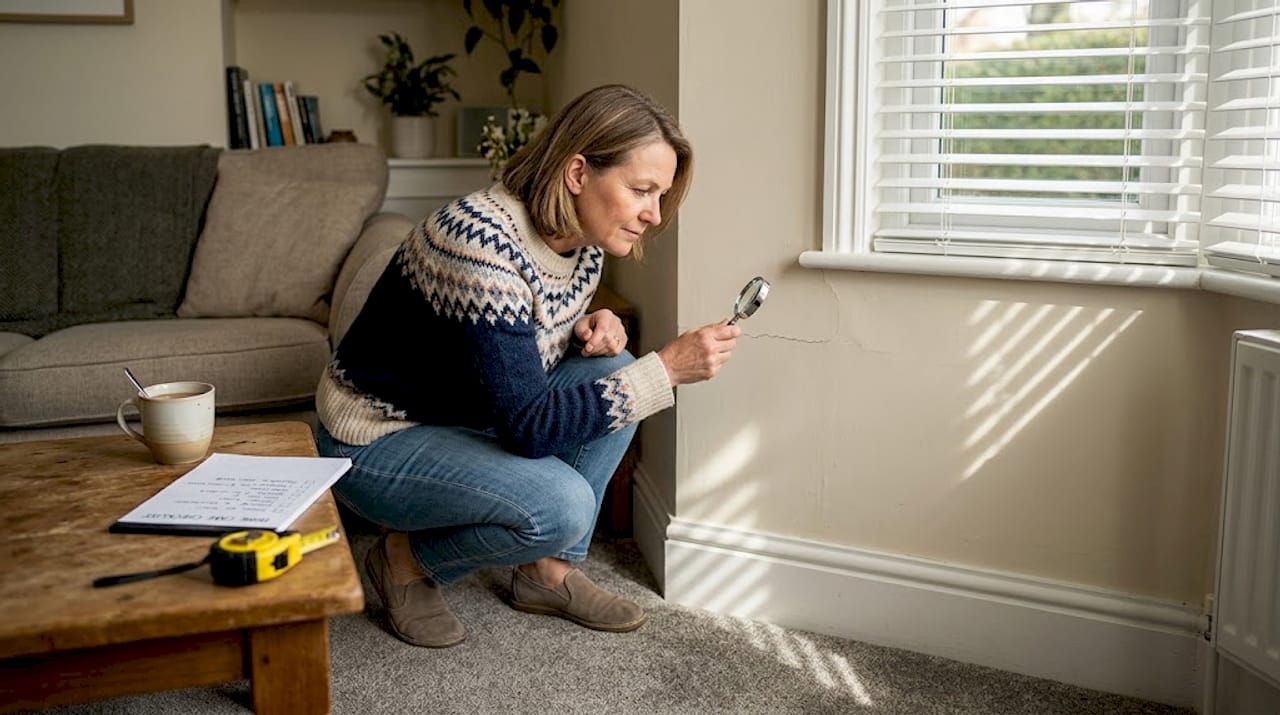
Annual inspections are the single most recommended maintenance action across professional waterproofing guides. Use a structured inspection checklist to cover all vulnerable points: roof flashings, parapet walls, basement joints, window reveals, and ground-level masonry.
For ongoing protection, a dedicated approach to waterproofing maintenance in South Africa ensures that minor issues are caught before they escalate into structural damage.
Pro Tip: If your home has exposed facebrick or is a heritage building, use a breathable waterproof system rather than a film-forming sealant. Trapping moisture behind an impermeable coating causes spalling and accelerates decay in older masonry.
The reality: what most homeowners miss about waterproofing and mould
Here is the uncomfortable truth. Most South African homeowners reach for a spray bottle of mould remover long before they consider calling a waterproofing contractor. That instinct is understandable, but it is also why the same mould patch reappears on the same wall, season after season.
Reactive cleaning fails because mould recurs whenever moisture persists. Sprays and bleach solutions address the visible surface. They do nothing for the saturated plaster behind it, or the rising damp working its way up from the footing.
There is also a broader mindset problem. Many property owners treat waterproofing as a once-off event, something done during construction and never revisited. In practice, membranes degrade, sealants shrink with thermal cycling, and flashings lift under wind pressure. A building that was perfectly waterproofed ten years ago may now have multiple small failures that, together, maintain exactly the humidity levels mould needs.
The importance of waterproofing maintenance cannot be overstated. Think of it the way you think of a car service: not optional, not a sign that something went wrong, but a routine that keeps the system performing as it should. Treat annual waterproofing inspections as a line item in your property maintenance budget, not a crisis response.
Protect your property with proven waterproofing
If this article has made one thing clear, it is that lasting mould prevention starts with moisture control, not surface treatments.
Pro Waterproofing works with homeowners and building managers across South Africa to deliver SANS-compliant waterproofing solutions tailored to your specific property and risk profile. Whether you need a full below-grade system, roof membrane replacement, or a professional annual inspection, our team brings the technical knowledge and local experience to get it right the first time. Review our best practices guide to understand what a properly specified solution looks like, then contact us for a property assessment and take the first step toward genuinely durable, mould-free interiors.
Frequently asked questions
How does waterproofing stop mould from growing?
Waterproofing blocks moisture from entering walls and floors, keeping interior humidity below the threshold mould needs to germinate. No persistent dampness means no active mould growth.
What is the difference between waterproofing and damp-proofing?
Waterproofing resists liquid water under pressure, while damp-proofing controls vapour transmission. For complete moisture protection, most properties need both systems working together.
How often should waterproofing be inspected or renewed?
Annual inspections are recommended for all property types, and SANS minimum standards require a five-year minimum performance period for new waterproofing installations in South Africa.
Can I prevent mould just by cleaning with bleach or mould remover?
No. Cleaning removes visible colonies but does nothing to address the underlying moisture. Mould recurs when moisture persists, regardless of how thoroughly the surface is treated.