
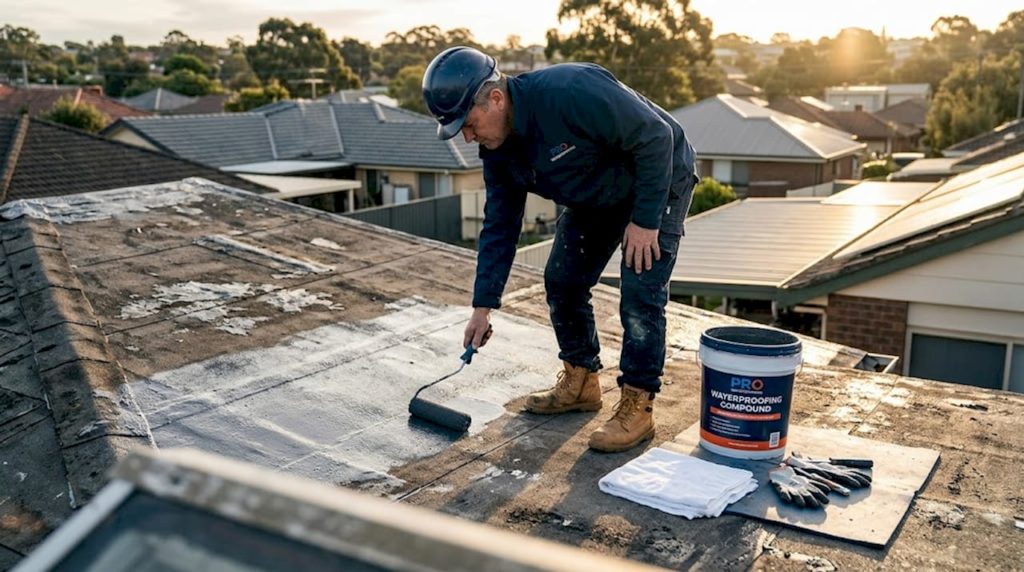
TL;DR:
- Choosing the right waterproofing chemical depends on roof type, climate, and traffic to ensure long-term protection. Polyurea offers 20 to 30 years of durability but requires professional application, while acrylics are budget-friendly but need frequent re-coating. Proper surface preparation and system integration are essential for effective waterproofing performance and sustained building protection.
Choosing the best waterproofing chemical for roof protection is one of the most consequential decisions you will make for any building. The wrong product fails within a few years, leaving you with water ingress, structural damage, and repair bills that dwarf the original waterproofing cost. The right product, correctly applied, can protect your roof for two decades or more. With polyurethane coatings holding 34.83% market share in 2025 and dozens of competing chemical systems on the market, property owners and building managers need clear, criteria-based guidance. This article delivers exactly that.
Table of Contents
- Key takeaways
- Criteria for selecting the best waterproofing chemical for roof protection
- The 10 best waterproofing chemicals for roofs
- Comparison of top waterproofing chemicals at a glance
- Choosing the right chemical for your roof type, climate, and budget
- What I have learned from years of watching waterproofing fail
- Let Prowaterproofing protect your roof with the right system
- FAQ
Key takeaways
| Point | Details |
|---|---|
| No single product fits all roofs | The best waterproofing chemical depends on roof type, substrate, climate, and foot traffic. |
| Polyurea leads on performance | Polyurea offers a lifespan of 20 to 30 years and tensile strength of 2,000 to 6,000 psi. |
| Surface prep determines success | Poor substrate preparation causes most early coating failures, not product defects. |
| System thinking beats product thinking | Drainage, flashing, and ventilation matter as much as the chemical you choose. |
| Lifecycle cost beats upfront price | A costlier product with a 25-year lifespan often works out cheaper than recoating every five years. |
Criteria for selecting the best waterproofing chemical for roof protection
Before you compare products, you need a clear set of criteria. Without them, you are choosing by price or by what a sales rep recommends. Neither approach reliably produces the right result.
Longevity and durability. Look for products with a proven service life of at least 10 to 15 years under your specific conditions. Premium systems like polyurea last 20 to 30 years.
Elasticity and crack bridging. Roofs expand and contract with temperature. A coating that cannot flex will crack. Look for elongation values above 150%, ideally 250% or more.
UV and weather resistance. South African roofs face intense UV exposure, which degrades many coatings quickly. Silicone and polyurethane formulations handle UV particularly well.
Substrate compatibility. A product that bonds perfectly to concrete may fail on metal or timber. Always confirm that the manufacturer approves the coating for your specific substrate.
Application method and curing time. 2K polyurethane systems can take five or more days to fully cure at 23°C and 50% humidity, which affects project scheduling. Polyurea and PMMA cure in hours.
Maintenance and recoat frequency. Some systems need recoating every five to seven years. Others need only a topcoat inspection. Factor this into total cost.
Environmental and health safety. Solvent-heavy products require ventilation and protective equipment. Water-based acrylics are safer for occupied buildings.
Pro Tip: Always request a product technical data sheet before specifying any waterproofing chemical. The TDS tells you elongation, tensile strength, recommended primer, and recoat windows. If a supplier cannot provide one, walk away.
Proper substrate cleaning, drying, and priming are equally non-negotiable. Poor preparation causes delamination and blistering within the first year, regardless of how good the coating is.
The 10 best waterproofing chemicals for roofs
1. Polyurea
Polyurea is the top performer in the market on almost every measurable criterion. It delivers tensile strength of 2,000 to 6,000 psi with elongation exceeding 300%, and a service life of 20 to 30 years. It cures in minutes, not days, which minimises downtime on commercial roofs.
The limitation is cost and application. Polyurea requires plural component spray equipment and skilled operators. It is not a DIY product. For large commercial or industrial roofs where long-term performance is the priority, it is the best waterproofing material for roof protection available today.
2. Polyurethane liquid membrane
Polyurethane is the most widely used liquid-applied system, accounting for the largest market share among professional contractors. It bonds to concrete, metal, and timber, offers good elasticity, and handles UV and chemical exposure well.
Two-component polyurethane systems are favoured for commercial use because of their strength and chemical resistance. Single-component versions are simpler to apply and suit residential terraces and flat roofs. This is the system Prowaterproofing most frequently specifies for residential and light commercial projects.
3. Silicone coatings
Silicone is the best roof sealant option for roofs with standing or ponding water. It does not absorb water and maintains its elasticity over decades. It resists UV degradation exceptionally well, making it a strong choice for hot, sunny climates.
The drawback is that silicone is difficult to recoat. Future waterproofing layers will not bond well over silicone unless the entire coating is removed or a compatible primer is used. Consider this a long-term commitment, not an interim solution.
4. Acrylic coatings
Acrylic is the budget-friendly option among waterproof roofing products. It is water-based, low in VOCs, easy to apply, and available in reflective formulations that reduce heat absorption. For mild climates and low-traffic residential roofs, it performs adequately.
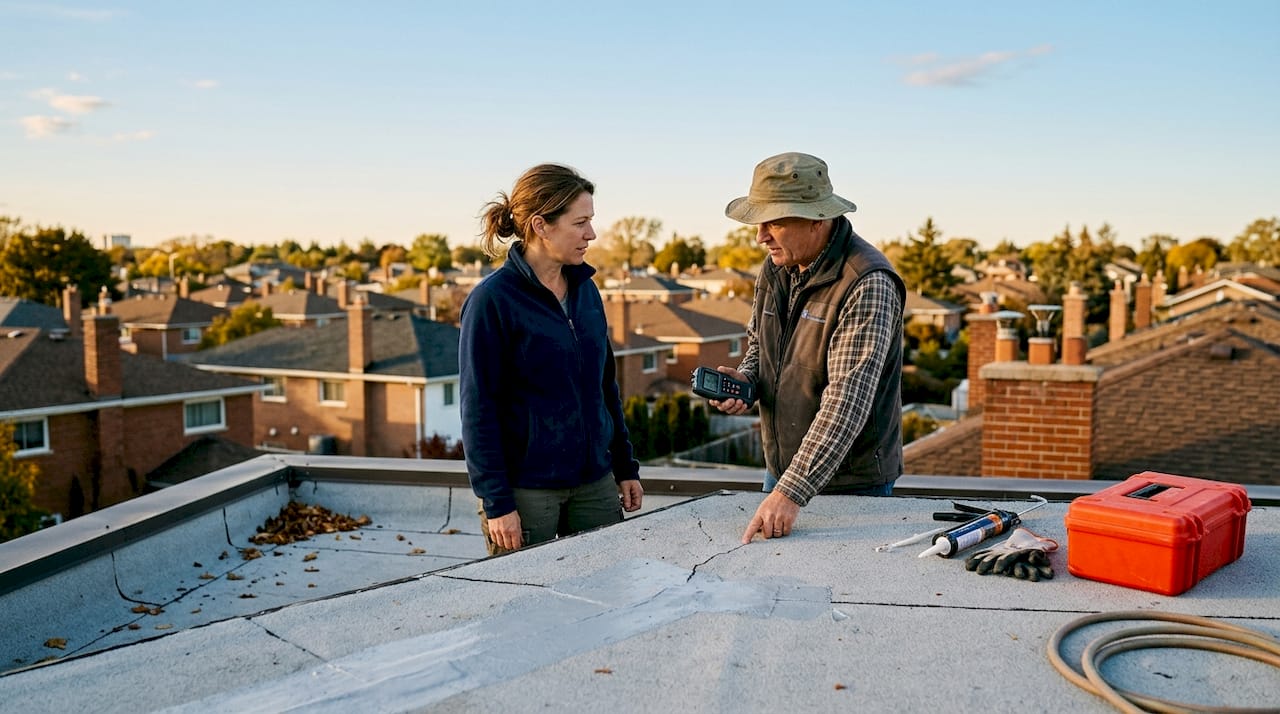
The weakness is limited crack-bridging ability and a shorter service life, typically five to seven years before recoating is needed. Acrylic is best suited to light residential use in areas with moderate rainfall and UV exposure, not the best waterproofing chemical for terrace areas that receive heavy foot traffic.
5. EPDM rubber membranes
EPDM is a sheet membrane rather than a liquid coating, but it remains one of the most proven long-life roof waterproofing options available. Correctly installed, EPDM lasts 30 to 50 years. It is highly resistant to UV, ozone, and temperature extremes.
Installation requires skilled lapping and bonding at seams, which are the most vulnerable points. EPDM is an excellent choice for large flat commercial roofs where long-term reliability outweighs any other consideration.
6. TPO membranes
Thermoplastic polyolefin (TPO) is the energy-efficient option among commercial waterproofing systems. Its white reflective surface reduces cooling loads significantly, and its heat-welded seams create a monolithic, leak-resistant barrier.
TPO is lighter than PVC and easier to recycle. It is best suited to commercial and industrial flat roofs where energy performance matters alongside waterproofing reliability.
7. PVC membranes
PVC membranes are highly resistant to chemicals, root penetration, and industrial pollutants. They suit flat commercial roofs exposed to harsh environments, including food processing facilities and industrial sites.
PVC is dimensionally stable and easy to weld at seams, but it does contain plasticisers that can migrate over time, leading to brittleness in very old installations. Specify high-quality formulations with proven plasticiser stability.
8. Modified bitumen
Modified bitumen is the traditional multi-layer flat roof system that has been in use for decades. Torch-applied or cold-applied, it creates a durable, layered barrier that handles heavy rainfall and thermal movement well.
It is heavier than liquid-applied systems and requires skilled torch application. For refurbishment of existing bitumen roofs, modified bitumen is often the most practical and cost-effective top roof waterproofing solution because it is compatible with existing substrates.
9. Cementitious coatings
Cementitious waterproofing is the most economical option in the market. It is cement-based, easy to mix and apply, and bonds strongly to concrete. It is widely used for water tanks, basement walls, and concrete roofs.
The significant limitation is rigidity. Cementitious coatings do not flex and will crack if the substrate moves. Expect a service life of five to ten years on a roof with thermal movement. Consider it a short-term or maintenance-coat solution, not a primary waterproofing system for roofs in variable climates.
10. PMMA (polymethyl methacrylate)
PMMA is the specialist’s choice for complex roof geometries and trafficked surfaces. It cures within minutes to hours, adheres to almost any substrate, and offers high wear resistance for roofs that carry pedestrian or vehicular traffic. It is the most effective roofing chemical for podium decks and rooftop car parks.
PMMA is odorous during application and requires careful mixing ratios, so professional application is important. Its fast cure makes it ideal when a roof must return to service quickly.
Comparison of top waterproofing chemicals at a glance
| Chemical | Typical lifespan | UV resistance | Flexibility | Best for | Application complexity |
|---|---|---|---|---|---|
| Polyurea | 20 to 30 years | Excellent | Very high | Industrial, commercial roofs | High (spray equipment) |
| Polyurethane | 15 to 25 years | Good to excellent | High | Residential, terraces, commercial | Medium |
| Silicone | 20 to 25 years | Excellent | High | Ponding water roofs | Medium |
| Acrylic | 5 to 7 years | Good | Low to medium | Light residential roofs | Low |
| EPDM | 30 to 50 years | Excellent | High | Large flat commercial roofs | Medium to high |
| TPO | 20 to 30 years | Excellent | Medium | Energy-efficient commercial | Medium |
| PVC | 20 to 30 years | Good | Medium | Industrial, chemical exposure | Medium |
| Modified bitumen | 15 to 25 years | Fair to good | Medium | Flat roof refurbishment | Medium to high |
| Cementitious | 5 to 10 years | Fair | Very low | Concrete roofs, water tanks | Low |
| PMMA | 20 to 25 years | Good | High | Trafficked decks, complex details | High |
Waterproofing as a system means drainage, flashing, and ventilation must work alongside whichever chemical you choose. A product failure at the drain or parapet flashing will cause a leak regardless of how good the field coating is.
Pro Tip: At all junctions, drains, and upstands, apply a layer of reinforcement fleece embedded in your liquid membrane. Up to 80% of leaks originate at poorly detailed junctions rather than through the field of the membrane.
You can also use this roof waterproofing checklist to work through the critical inspection and installation steps before specifying your system.
Choosing the right chemical for your roof type, climate, and budget
The comparison table gives you data. This section helps you apply it to your specific situation.
Flat roofs with ponding water. Silicone or polyurethane are the preferred choices. Both tolerate prolonged water contact. Avoid acrylic, cementitious coatings, and modified bitumen as the primary layer in areas where water sits for more than 48 hours.
Pitched roofs in high-UV climates. Polyurethane acrylic hybrid membranes form elastic, UV-resistant films with strong crack-bridging performance and low dirt adhesion. These suit South African conditions particularly well.
High-traffic terrace roofs. PMMA is the best waterproofing chemical for terrace areas that carry regular foot traffic. Polyurea is the choice for vehicular loads.
Budget-conscious residential projects. Acrylic coatings are adequate for mild climates, but plan for recoating every five to seven years. For a 20-year view, polyurethane delivers better lifecycle value despite its higher upfront cost.
New construction versus refurbishment. New construction allows you to specify the ideal system from the start. Refurbishment requires you to confirm compatibility with the existing substrate. Some coatings adhere over old bitumen; others require full removal first.
When to choose professional application. Liquid-applied systems form seamless membranes that eliminate common leak points. They require consistent wet film thickness and proper reinforcement at details. This is not work to hand over to an untrained team. The steps involved in commercial roof waterproofing go well beyond simply rolling on a coat of paint.
Biannual inspections are the simplest way to extend the life of any system. Look for stains on interior ceilings, blistering or peeling on the membrane surface, warped decking, and any musty odours inside the building. Catching problems early saves considerably on repair costs. Ignoring a leaky roof escalates damage far beyond what the original waterproofing repair would have cost.
What I have learned from years of watching waterproofing fail
I have seen property managers spend significant money on premium coatings only to be back on the roof two years later with water pouring through the same spots. In nearly every case, the product was not the problem. The preparation was wrong, or the contractor applied the membrane at full thickness over a dusty, damp, unprimed substrate.
My strongest advice is this: treat the chemical as one component of a system, not the whole answer. Drainage, flashing, and ventilation must be addressed alongside the coating. A beautifully applied polyurea membrane will still leak if the parapet flashing is poorly terminated or the drain is blocked.
On polyurea specifically: the rapid cure time is genuinely transformative for commercial projects. I have watched a contractor spray a 2,000 square metre roof, and have it fully cured and trafficked by the next morning. Nothing else comes close on that front.
For building managers watching a tight budget, I would rather see you choose a solid mid-range polyurethane system with proper prep and professional application than a premium product badly applied. The skill of the applicator and the quality of the surface preparation will outperform expensive chemistry every single time.
— Eben
Let Prowaterproofing protect your roof with the right system
If you are ready to move from research to a real solution, Prowaterproofing is the team to call. As a trusted South African waterproofing specialist, Prowaterproofing applies the leading systems discussed in this article, from polyurethane liquid membranes to polyurea spray coatings, across residential, commercial, and industrial properties.
Every project starts with a proper substrate assessment so you get the right product, correctly applied, with no guesswork. Prowaterproofing also supports clients with ongoing maintenance inspections to catch problems before they become expensive repairs. Visit Prowaterproofing to request a quote or speak directly with a specialist about your roof. You will get honest advice, not a one-size-fits-all sales pitch.
FAQ
What is the best waterproofing chemical for a flat roof?
Polyurethane liquid membrane or polyurea are the top choices for flat roofs. Both offer high elasticity, UV resistance, and long service lives of 15 to 30 years depending on formulation and maintenance.
How long does roof waterproofing last?
Lifespan varies by product. Acrylic coatings last five to seven years, polyurethane 15 to 25 years, and EPDM or polyurea systems can last 30 to 50 years with proper installation and biannual maintenance inspections.
Can I apply roof waterproofing myself?
Simple acrylic coatings can be DIY-applied on small residential roofs. Polyurethane, polyurea, and PMMA systems require professional equipment and skill. Poor application causes bonding failure, which is the leading cause of premature waterproofing breakdown.
Which waterproofing chemical is best for a terrace with foot traffic?
PMMA is the best waterproofing chemical for terrace areas that carry regular foot traffic due to its high wear resistance, fast curing, and ability to seal complex details such as drains and upstands.
Does waterproofing chemical choice differ for new builds versus refurbishments?
Yes. New construction allows full system specification from scratch. Refurbishment requires testing compatibility with the existing substrate, which may limit your product choices or require primer coats and surface preparation before the new coating is applied.