

TL;DR:
- Elastomeric liquid waterproofing membranes offer seamless, flexible barriers that conform to complex building shapes and resist structural movement. They outperform sheet membranes by eliminating joints and can be applied directly over existing roofs, reducing costs and disruption. Proper surface preparation and reinforcement at critical points are essential for longevity and effective waterproofing performance.
An elastomeric liquid waterproofing membrane is a cold-applied, seamless coating that forms a flexible, rubber-like barrier across building surfaces to prevent water ingress. Unlike sheet membranes, it moulds to any shape, seals around penetrations, and stretches with structural movement without cracking. Products such as ARBOFLEX PU, DANOPUR PT, and MiraSEAL represent the current standard in liquid-applied waterproofing technology. For property owners and managers protecting roofs, balconies, and concrete decks, this system offers a measurable step up from traditional methods in both durability and ease of application.
What is an elastomeric liquid waterproofing membrane?
An elastomeric liquid waterproofing membrane is a polymer-based coating, typically polyurethane or acrylic, that cures into a continuous, joint-free waterproof layer. The term “elastomeric” refers to its ability to stretch and recover, which is the defining property that separates it from rigid coatings or bitumen-based systems. Industry professionals also refer to this category as liquid-applied waterproofing or cold-applied waterproofing membrane systems.
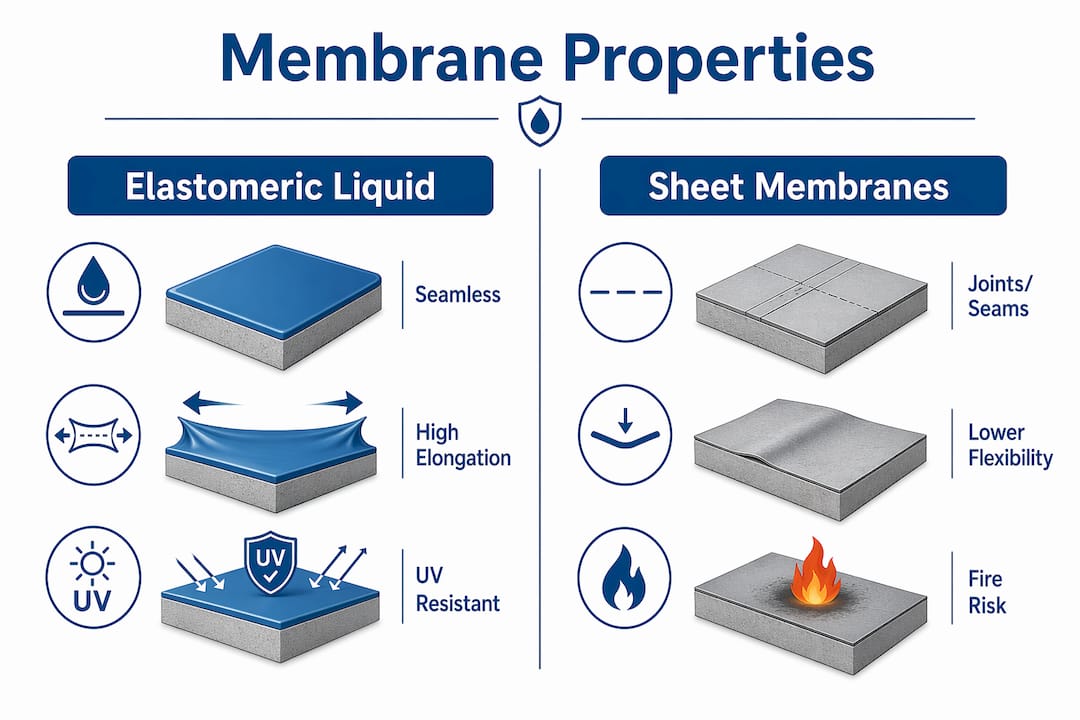
The core advantage is seamlessness. Sheet membranes rely on overlapping joints, and those joints are where most leaks begin. A seamless liquid barrier eliminates that failure point entirely, forming a monolithic skin over the substrate. This makes it particularly effective at complex details such as pipe penetrations, upstands, and drainage outlets where sheet membranes struggle to conform.
Single-component polyurethane systems like MiraSEAL and ARBOFLEX PU cure through moisture reaction, meaning they harden when exposed to ambient humidity. That chemistry produces a durable rubber-like coating with excellent adhesion to concrete, metal, bitumen, and timber substrates.
What are the key physical properties of elastomeric liquid membranes?
The performance of any liquid membrane comes down to its physical specifications, and elastomeric systems are defined by exceptional elongation capacity. Most formulations achieve 600–800% elongation, which means the membrane can stretch to six or eight times its original length before tearing. That figure translates directly into crack-bridging capability of 4–6 mm, covering the kind of structural movement that occurs in South African buildings through seasonal temperature swings.
Tensile strength and UV resistance
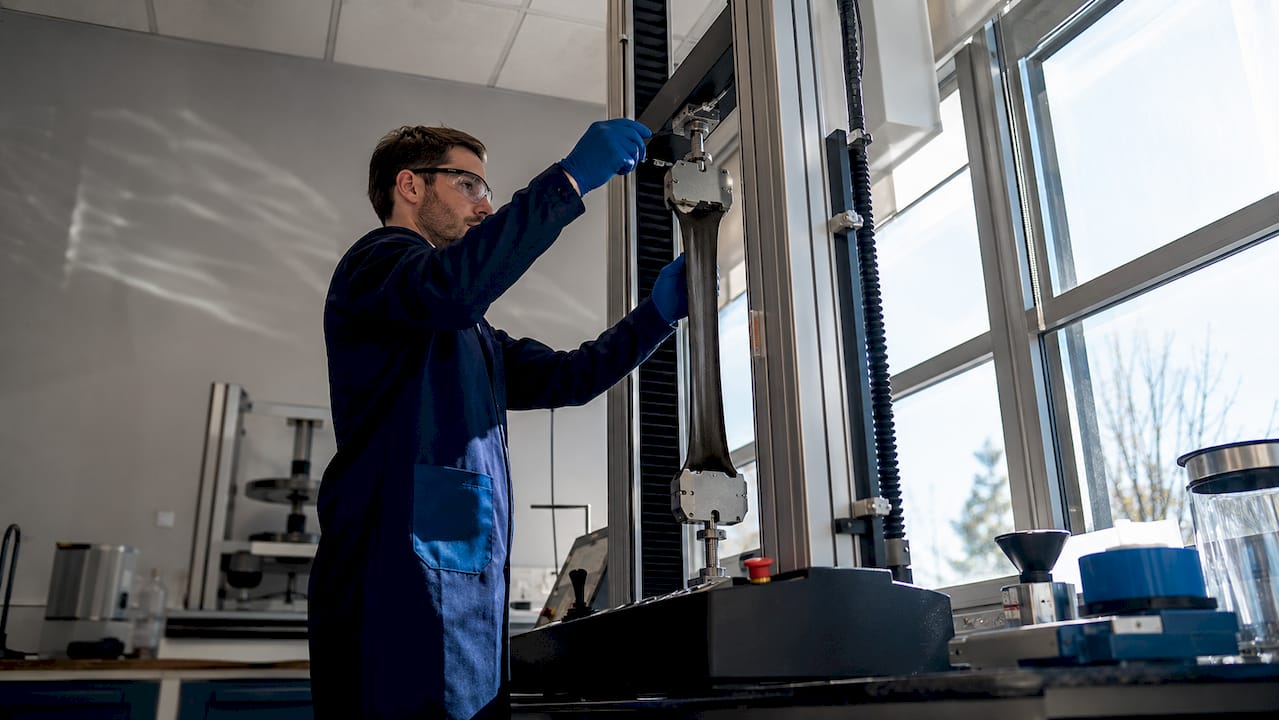
Beyond elongation, tensile strength determines how well the membrane resists tearing under load. Elastomeric coatings also resist UV radiation, ozone, and chemical exposure, which matters on exposed rooftops where unprotected surfaces degrade within a few years. Ponding water, a common problem on flat roofs, does not compromise a properly cured elastomeric membrane.
Application temperature and curing conditions
Optimal application conditions require ambient temperatures between 5°C and 35°C and relative humidity below 80%. Outside these parameters, curing slows or becomes unpredictable. Typical yield is 1.25 kg/m² per coat, with drying time of 2–5 hours between coats. Full cure, including pedestrian traffic readiness, occurs within 12–24 hours depending on the specific polymer and site conditions.
Pro Tip: Check the weather forecast for a full 24-hour window before starting application. Rain or high humidity during the curing window is the single most common cause of premature membrane failure on South African rooftops.
| Property | Typical specification |
|---|---|
| Elongation at break | 600–800% |
| Crack-bridging capacity | 4–6 mm |
| Application temperature | 5°C to 35°C |
| Drying time between coats | 2–5 hours |
| Full cure time | 12–24 hours |
| Typical yield per coat | 1.25 kg/m² |
How do elastomeric liquid membranes compare to sheet membranes?
The practical differences between liquid and sheet membranes affect installation time, safety, long-term performance, and total project cost. Understanding these trade-offs helps you make the right choice for your building.
Sheet membranes, including torch-on bitumen and self-adhesive systems, have been the industry standard for decades. They perform well on large, flat, unobstructed surfaces. The problem is that every seam, lap joint, and detail is a potential leak point. Liquid membranes create a joint-free waterproof barrier that fully seals penetrations and irregular shapes without relying on overlaps.
| Feature | Elastomeric liquid membrane | Sheet membrane |
|---|---|---|
| Seams and joints | None | Multiple, prone to failure |
| Application method | Cold-applied, brush or roller | Hot works or self-adhesive |
| Complex details | Excellent conformity | Difficult, requires extra cuts |
| Fire risk during installation | None | Present with torch-on systems |
| Overlay on existing roof | Direct application possible | Often requires strip-out |
| Skill requirement | Moderate | High for torch-on |
Cold application is a significant practical advantage. Cold-applied systems eliminate open flames entirely, which reduces fire risk and lowers insurance premiums for refurbishment projects, particularly in occupied buildings. There is no need to evacuate tenants or shut down operations during application.
The overlay capability of liquid membranes is equally important. Applying a new elastomeric coating directly over aged bitumen, asphalt, or metal roofing avoids costly strip-outs, reduces landfill waste, and cuts project timelines significantly. For property managers with occupied buildings, that reduction in disruption is often the deciding factor.
What are the best practices for applying elastomeric liquid waterproofing membranes?
Correct application is what separates a membrane that lasts 20 years from one that fails within two. The process is straightforward, but each step is non-negotiable.
-
Surface preparation. Remove all loose material, dirt, oil, and biological growth. The substrate must be structurally sound and free of standing water. For concrete, repair cracks and spalls before membrane application. Refer to surface prep best practices for detailed guidance on achieving the right surface profile.
-
Moisture testing. Use a calibrated moisture meter to confirm substrate humidity is below 5%. Visual inspection is not reliable. Trapped moisture causes blistering and delamination, which are the two most common and costly membrane failures.
-
Primer application. Apply the manufacturer-specified primer to improve adhesion, particularly on porous or contaminated substrates. Allow the primer to tack off fully before proceeding.
-
First coat application. Apply the liquid membrane at the specified rate using a brush, roller, or airless sprayer. Work methodically from the highest point to the lowest to avoid walking on freshly applied material.
-
Reinforcement at critical points. Embed polyester felt or fibreglass mesh into the wet first coat at all upstands, corners, drains, and pipe penetrations. These are the stress concentration points where building movement is greatest and where membranes most commonly tear.
-
Second and final coats. Allow 2–5 hours between coats. Apply subsequent coats at right angles to the previous coat to achieve uniform coverage. The total dry film thickness must meet the manufacturer’s minimum specification.
-
Slip resistance on walkable surfaces. Broadcast quartz sand or silica aggregate onto the final wet coat on any roof area used for maintenance access or pedestrian traffic. Standard liquid membranes are slippery when wet; aggregate inclusion is a standard professional requirement, not an optional upgrade.
Pro Tip: Always apply a test patch on a small area of the actual substrate before committing to full application. This confirms adhesion compatibility and gives your team a reference point for the correct application rate.
For a broader view of how these steps fit into a complete building protection strategy, the commercial waterproofing checklist from Prowaterproofing covers the full scope of what property managers should verify before and after any waterproofing project.
What practical advantages do elastomeric membranes offer property owners?
The real-world benefits of choosing an elastomeric liquid waterproofing system go beyond technical specifications. They affect your maintenance budget, your tenants, and the long-term value of your asset.
- Reduced maintenance frequency. The crack-bridging capacity of 4–6 mm means minor structural movement does not open new leak paths. You spend less time and money on reactive repairs between scheduled maintenance cycles.
- Lower fire risk during installation. Cold application removes the open-flame risk entirely. This is critical for occupied residential blocks, hospitals, schools, and any building where hot works require permits, evacuations, or insurance notifications.
- Faster project turnaround. With drying times of 2–5 hours between coats and full cure within 24 hours, a liquid membrane system can be completed and handed back to the building owner far faster than torch-on alternatives.
- Environmental efficiency. Overlaying an existing roof instead of stripping it to the deck reduces landfill waste and lowers the carbon footprint of the project. This is increasingly relevant for commercial property owners with sustainability reporting obligations.
- Suitability for complex roof geometry. Curved parapets, multiple penetrations, and irregular drainage details are all handled without cutting, welding, or specialist fabrication. The liquid simply conforms to the shape.
- Lifecycle cost savings. A correctly installed elastomeric system on a flat roof can deliver 15–20 years of service life with minimal intervention. That longevity, combined with the lower installation cost relative to full strip-and-replace, produces a strong return on investment.
For guidance on maintaining your membrane after installation, Prowaterproofing’s article on waterproofing maintenance explains what to inspect and when to act.
Key takeaways
An elastomeric liquid waterproofing membrane delivers superior crack-bridging, seamless coverage, and cold-application safety that sheet membranes cannot match on complex or occupied buildings.
| Point | Details |
|---|---|
| Seamless protection | Liquid membranes eliminate seam failures, the most common cause of roof leaks. |
| High elongation capacity | 600–800% elongation bridges structural cracks up to 6 mm without losing watertightness. |
| Cold application safety | No hot works means no fire risk, making it suitable for occupied buildings. |
| Surface preparation is critical | Substrate moisture above 5% causes blistering; always use a moisture meter before application. |
| Overlay reduces cost and waste | Direct application over existing roofing avoids strip-out costs and landfill waste. |
What I have learned from years of working with elastomeric membranes
The most consistent mistake I see on South African rooftops is skipping proper moisture testing. A contractor will look at a concrete deck, decide it looks dry, and proceed with application. Three months later, the client calls about bubbling and lifting. A moisture meter costs very little. The repair bill does not.
The second pattern I have noticed is under-specification at critical details. The main field of a roof is almost never where a membrane fails. It fails at the upstand behind an air-conditioning unit, at the collar around a drainage pipe, or at the corner of a parapet wall. These are the points where reinforcement fabric is non-negotiable, yet they are also the points that get rushed at the end of a long installation day.
My honest view on product selection is this: the brand matters less than the installer’s familiarity with the system. DANOPUR PT, ARBOFLEX PU, and MiraSEAL are all capable products when applied correctly. An experienced applicator using a mid-range product will consistently outperform a novice using a premium one. When you are evaluating contractors, ask specifically how they handle upstands and penetrations. That question alone will tell you whether they know what they are doing.
For property managers, I would also encourage you to think about exterior waterproofing best practices as a whole-building concern, not just a roof issue. Water finds the path of least resistance, and that path often starts at the roof but ends in a basement wall.
— Eben
Get professional elastomeric membrane waterproofing from Prowaterproofing
Prowaterproofing specialises in the professional installation and assessment of elastomeric liquid membrane systems for residential, commercial, and industrial properties across South Africa. Whether you are dealing with a leaking flat roof, a deteriorating balcony deck, or a complex commercial rooftop with multiple penetrations, the team at Prowaterproofing brings the technical knowledge and product expertise to get it right the first time. Every project starts with a thorough site assessment, including moisture testing and substrate evaluation, before a single litre of membrane is applied. Contact Prowaterproofing today for a customised waterproofing assessment and quotation tailored to your building’s specific needs.
FAQ
What is an elastomeric liquid waterproofing membrane?
An elastomeric liquid waterproofing membrane is a cold-applied polymer coating, typically polyurethane or acrylic, that cures into a seamless, flexible, waterproof layer on building surfaces. It stretches with structural movement and bridges cracks up to 6 mm without losing its watertight integrity.
How long does an elastomeric liquid membrane last?
A correctly installed elastomeric membrane system typically delivers 15–20 years of service life on flat roofs and concrete decks with routine inspection and maintenance. Longevity depends on correct surface preparation, application thickness, and environmental exposure.
Can you apply a liquid membrane over an existing roof?
Yes. Elastomeric liquid membranes can be applied directly over aged bitumen, asphalt, and metal roofing substrates, provided the existing surface is structurally sound and moisture levels are below 5%. This overlay approach avoids strip-out costs and significantly reduces project disruption.
What temperature is needed to apply an elastomeric liquid membrane?
Application requires ambient temperatures between 5°C and 35°C and relative humidity below 80%. Applying outside these conditions risks incomplete curing, poor adhesion, and premature membrane failure. Always check weather conditions for a full 24-hour window before starting.
Why is reinforcement fabric used with liquid membranes?
Reinforcement fabric, typically polyester felt or fibreglass mesh, is embedded at upstands, corners, drains, and pipe penetrations to prevent tearing from building movement. These stress concentration points are where membranes most commonly fail without additional reinforcement.