
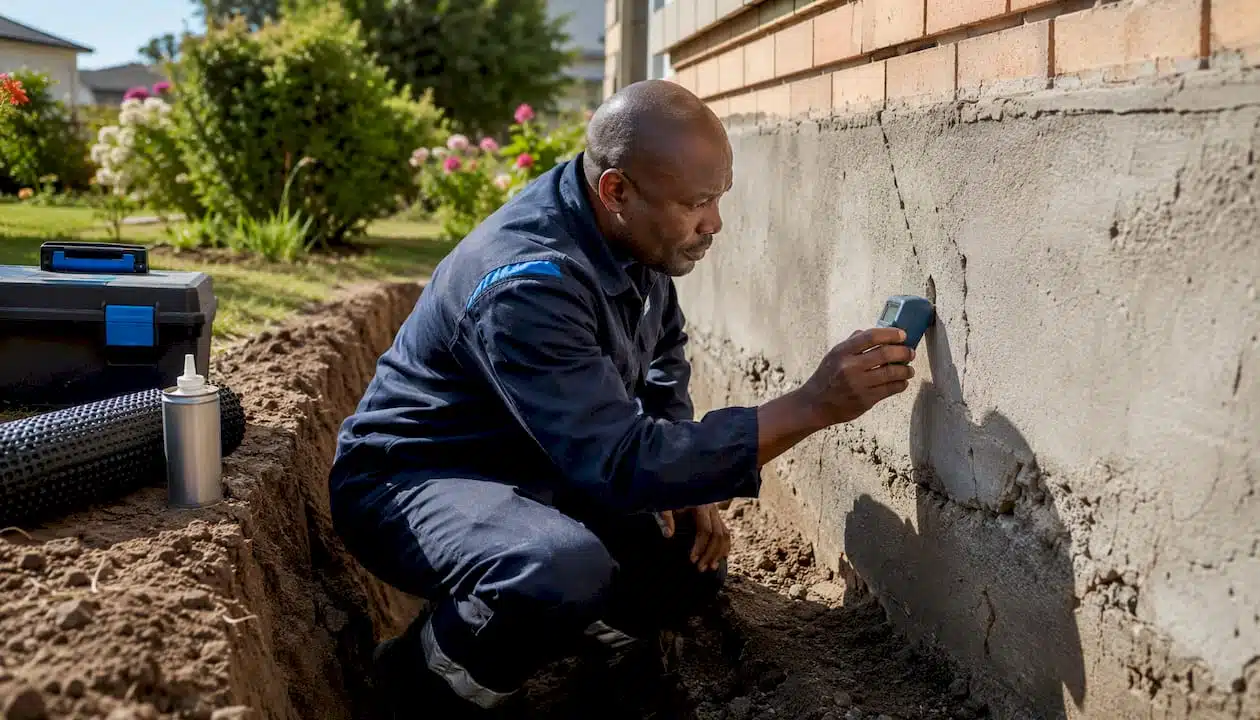
Finding qualified basement leak repair near you in South Africa comes down to three things: verifying contractor licensing, confirming compliance with SANS 10021, and getting a written warranty before any work begins. Painting over damp walls or applying a surface sealant without addressing the underlying hydrostatic pressure will fail within months. You need a professional who diagnoses the source, not just the symptom.
When you first notice a leak, act on these steps immediately:
- Stop the spread. Move furniture, electronics, and stored items away from the affected area.
- Document the damage. Photograph damp patches, cracks, and any efflorescence before calling a contractor.
- Contact a licensed waterproofing contractor for an on-site assessment. Do not wait for the next dry season.
- Ask about emergency availability. Flooded basement repair after heavy rain requires a contractor who can respond within 24–48 hours.
- Request a written quote that specifies the repair method, materials, timeline, and warranty terms.
- Verify transferable warranties. A warranty on completed work protects you if you sell the property.
Emergency repairs address active flooding and structural risk. Scheduled repairs cover slower ingress, rising damp, and preventive waterproofing. Both require the same standard of contractor qualification.
What causes basement leaks and how do you spot them?
Hydrostatic pressure is the most common driver of basement water ingress in South Africa. When saturated soil presses against a basement wall or floor slab, water finds every crack, joint, and poorly sealed penetration. In areas like Cape Town’s Southern Suburbs and Johannesburg’s northern regions, seasonal rainfall dramatically increases this pressure, and basements that were dry for years can begin leaking almost overnight.
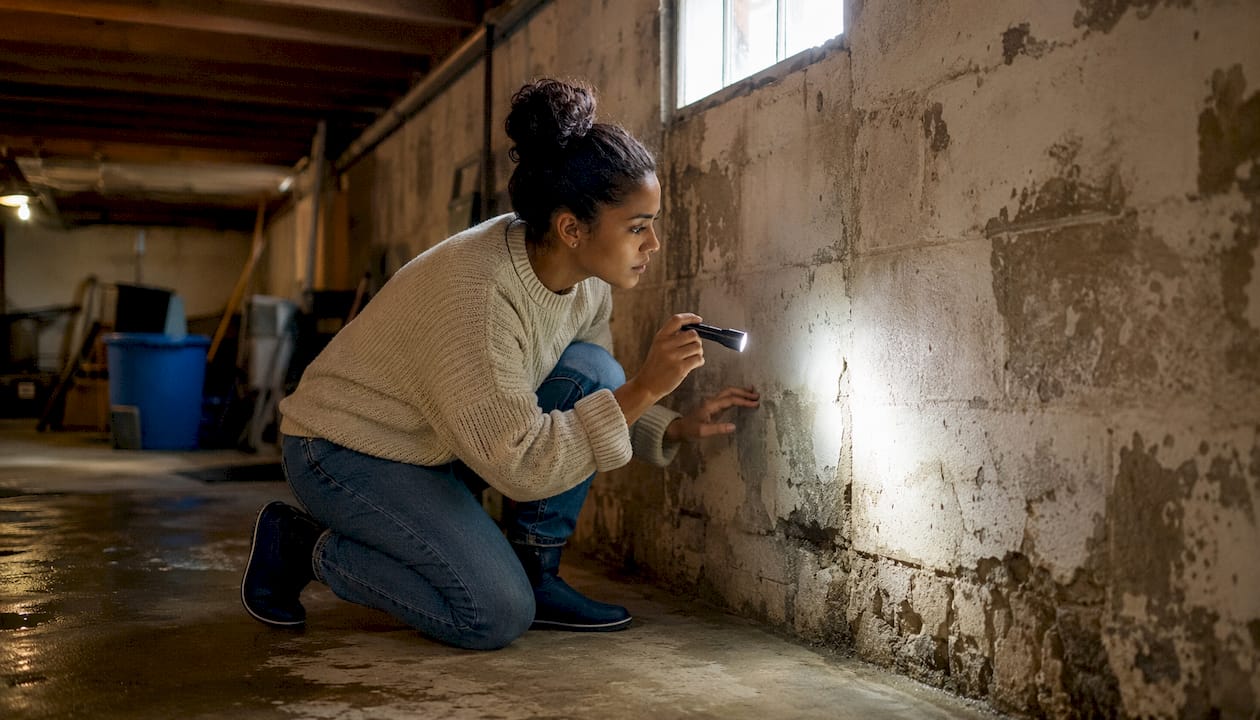
Cracks in walls and floor slabs are the most visible entry points. They form through concrete shrinkage, differential settlement, or the gradual deterioration of construction joints. A damaged or “bridged” damp-proof course is another frequent culprit: when plaster is applied continuously across a damp-proof membrane without the required V-joint, moisture bypasses the barrier entirely and rises through the wall. SANS 10021 requires a small V-joint at damp-proof level to prevent moisture bypass.
Clogged or undersized drainage systems compound the problem. If surface water from gardens, courtyards, or downpipes is not directed away from basement walls, it accumulates against the structure and increases lateral pressure. French drains and land drains that have silted up over time offer little protection.
Warning signs to watch for:
- Damp or wet patches on walls and floors, particularly after rain
- White powdery deposits on masonry (efflorescence), caused by salts carried to the surface by moisture
- Mould growth and musty odours, which indicate persistent moisture rather than a one-off event
- Peeling paint or crumbling plaster at skirting level
- Rust stains on metal fixtures or fittings stored in the basement
- Cracks in floor slabs or walls, especially horizontal cracks in retaining walls
Statistic callout: Visible damp, efflorescence, and musty odours are recognised indicators of basement water ingress requiring professional assessment, as confirmed by industry guidance on basement waterproofing in South Africa.
Musty smells deserve particular attention. By the time you can smell mould, it has already established itself in wall cavities and behind plaster. Black mould carries genuine health risks, and surface cleaning without fixing the moisture source achieves nothing lasting.
What repair and waterproofing methods do professionals use?
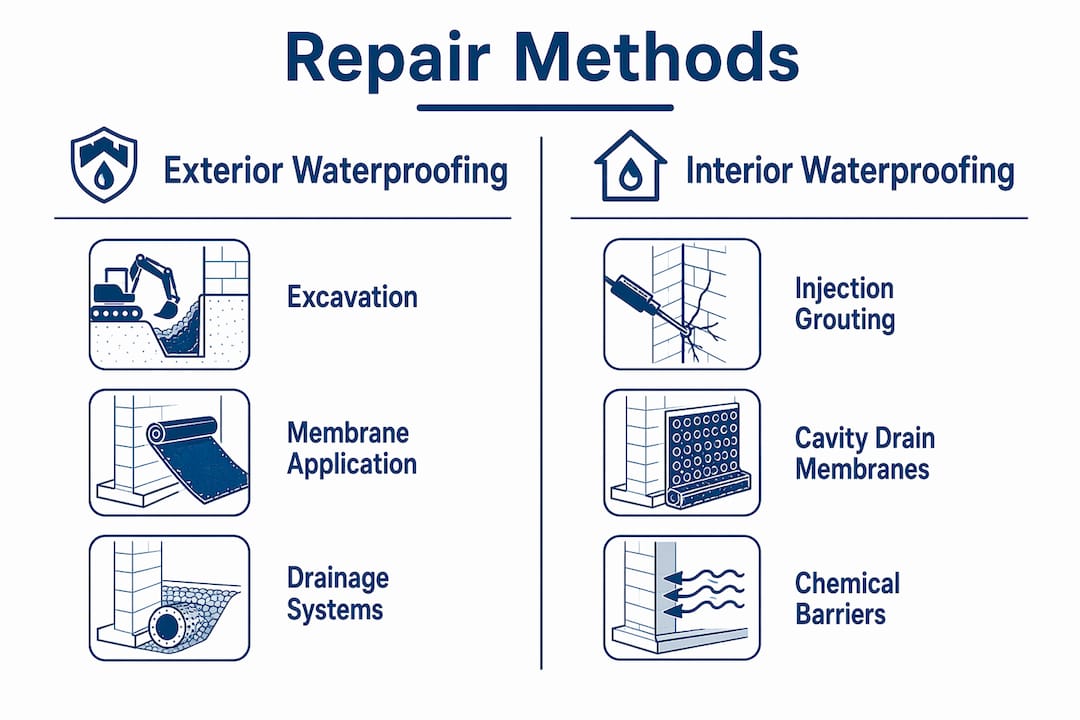
The method a contractor proposes should match the source of the leak, not just the visible symptom. There are four main approaches used by local waterproofing contractors in South Africa, and most serious projects combine at least two.
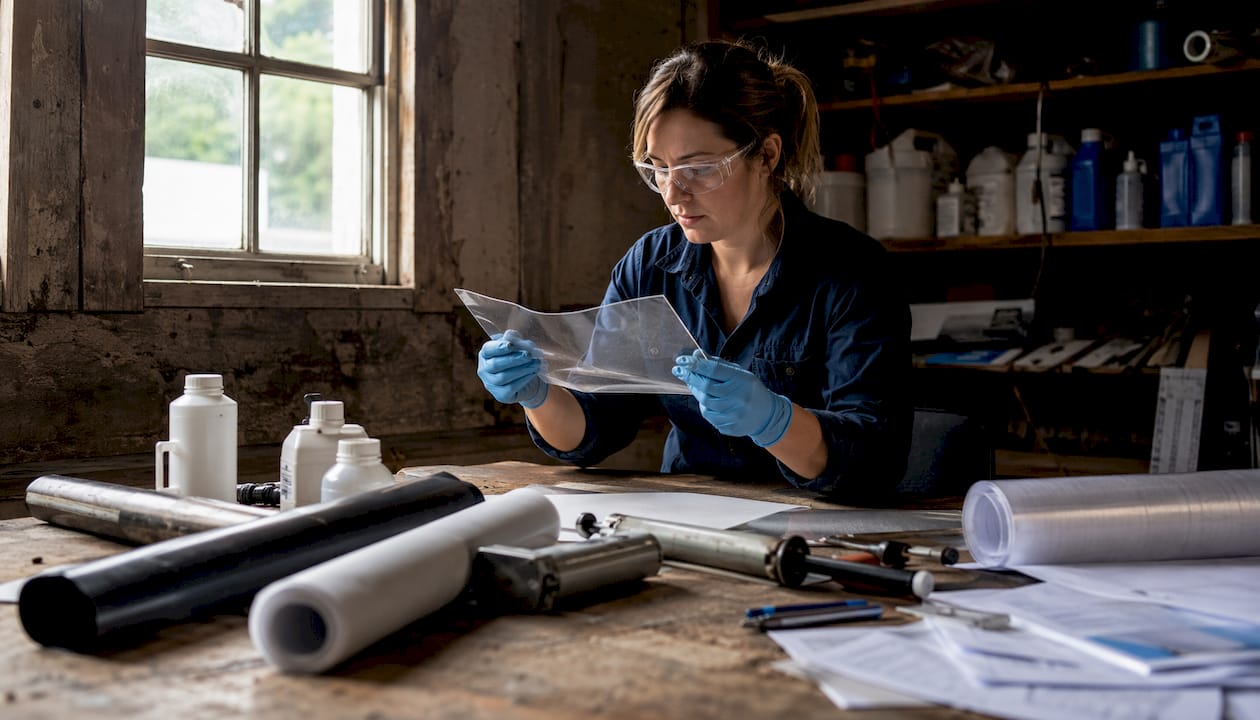
Exterior waterproofing addresses water at its source. It involves excavating around the basement walls, applying a waterproof membrane (bituminous felt, mastic asphalt, or polyolefin sheeting), and installing a drainage layer before backfilling. Exterior waterproofing is the most thorough solution because it stops water before it reaches the structure. The trade-off is cost and disruption: excavation in an established garden or near a boundary wall adds significantly to the project price.
Interior waterproofing manages water that has already entered the structure. Cavity drain membrane systems channel water to a sump pump, which removes it automatically. Internal drainage systems are less disruptive than excavation but do not stop water from entering the wall itself. They are a practical choice for retrofitting existing basements where exterior access is limited. For a detailed look at internal waterproofing methods, the approach works well when combined with crack injection.
Injection grouting seals active cracks using polyurethane or epoxy injected under pressure directly into the crack. Polyurethane expands on contact with moisture, making it effective for wet cracks. Epoxy is used for structural cracks where strength restoration is needed. Both methods stop water ingress at the point of entry without requiring excavation.
Chemical damp-proof courses are injected into mortar lines to create a horizontal moisture barrier, stopping rising damp from travelling up through brickwork. The chemicals line the pores of the mortar and adjacent masonry. Most manufacturers provide a 10-year guarantee against further rising damp. Before application, all floor coverings, skirting tiles, and damaged plaster must be removed to allow the structure to dry out fully.
| Method | Typical cost (South Africa) | Best for | Key limitation |
|---|---|---|---|
| Exterior membrane (new build) | R400–R800 per m² | New construction, full protection | High cost, excavation required |
| Cavity drain membrane (new build) | — | New builds needing drainage layer | Requires sump pump system |
| Internal cavity drain (retrofit) | — | Existing basements, limited access | Does not stop water entering wall |
| Internal drainage system (French drain) | R1,500–R3,000 per linear metre | Active water management | Ongoing pump maintenance |
| Sump pump installation | R8,000–R15,000 complete | Basements with recurring flooding | Requires power; pump can fail |
| Injection grouting per crack | R1,000–R2,500 per crack | Active cracks, structural joints | Not suitable for large voids |
| Chemical damp-proof course | Varies by wall length | Rising damp in masonry walls | Requires full plaster removal |
One point that catches many homeowners out: superficial repairs like waterproof paint or skim coats applied directly over damp masonry do not address hydrostatic pressure and will fail. The substrate must be sound, dry, and properly prepared before any membrane or coating goes on.
Pro Tip: Ask your contractor whether the proposed method addresses the source of water pressure or only manages water after it enters. A solution that only manages ingress is not a permanent fix.
How do you choose a qualified waterproofing contractor in South Africa?
The single most reliable filter is experience. SANS 10021 recommends a minimum of five years’ industry experience for waterproofing contractors. That threshold exists because waterproofing failures are rarely visible immediately. A contractor with less experience may apply the right product incorrectly, and you will only discover the problem when the next rainy season arrives.
Beyond experience, check these before signing anything:
- Proof of licensing and registration. Ask whether the contractor is affiliated with the Damp Proofing and Waterproofing Association of Southern Africa (DWASA). Membership signals commitment to industry standards.
- Public liability insurance. If a worker is injured on your property or causes accidental damage, you need confirmation that the contractor’s insurance covers it.
- Written, transferable warranties. Transferable warranties protect you if you sell the property. A verbal guarantee is worth nothing at transfer.
- References from recent local projects. Ask for two or three clients you can contact directly. A contractor who hesitates here is telling you something.
- A detailed written quote. It should specify the repair method, materials by product name, preparation steps, timeline, and warranty period. Vague line items like “waterproofing works” with a lump sum are a warning sign.
Questions to ask every contractor before you commit:
- What is the root cause of the leak, and how did you diagnose it?
- Which method do you recommend, and why is it appropriate for this specific problem?
- What preparation work is required before application?
- How long will the work take, and what disruption should I expect?
- What does the warranty cover, and is it transferable to a new owner?
- Are you insured for public liability and contractor’s all-risk?
Red flags that indicate an unreliable contractor:
- Offers a quote without visiting the site
- Cannot name the specific products or systems they plan to use
- Asks for full payment upfront before work begins
- Provides no written warranty or offers only a vague verbal assurance
- Dismisses the need for preparation work like plaster removal or drying time
- Has no verifiable local references or online reviews
Pro Tip: Search for the contractor’s name alongside their suburb on Google Maps and check their Google reviews. Pay attention to how they respond to negative reviews. A contractor who dismisses complaints publicly will handle your problem the same way.
What do basement leak repairs cost and how long do they take?
Repair timelines vary considerably depending on the method, the extent of damage, and whether the structure needs to dry out before treatment. A straightforward injection grouting job on two or three cracks can be completed in a single day. A full exterior waterproofing project involving excavation, membrane application, and drainage installation typically takes three to seven working days, sometimes longer if the soil conditions are difficult or if the basement is large.
Rising damp repairs that require plaster removal, drying time, and re-plastering take the longest. Once the damaged plaster comes off, the brickwork needs several days to dry before chemical injection and new plaster can go on. Rushing this step is one of the most common reasons repairs fail within a year.
Key cost components to budget for:
- Excavation and backfilling (exterior work only): labour and equipment costs vary by depth and access
- Waterproof membranes or cavity drain systems: material costs depend on the product specified
- Injection grouting: R1,000–R2,500 per crack for polyurethane or epoxy injection
- Sump pump installation: R8,000–R15,000 for a complete system
- Internal drainage (French drain): R1,500–R3,000 per linear metre
- Plaster removal, drying, and re-plastering: additional labour and materials cost
- Salt-retardant plaster additives: required when re-plastering over previously damp masonry
Emergency call-outs for flooded basement repair carry a premium. Contractors who respond outside normal working hours or within 24 hours typically charge higher rates. If your basement floods during Cape Town’s winter rains or Johannesburg’s summer storms, expect to pay more for same-day attendance than for a scheduled assessment the following week.
Getting at least three written quotes from local waterproofing contractors is the most effective way to understand fair pricing in your area. Rates in Johannesburg, Pretoria, and Cape Town differ, and a quote from a contractor based 50km away may not reflect local labour costs accurately. Check what each quote includes: some contractors price materials and labour together, others itemise them separately, and the difference matters when comparing proposals.
For guidance on preventing future water damage after repairs are complete, proactive maintenance and drainage management reduce the likelihood of recurrence significantly.
Key takeaways
Choosing a licensed, experienced contractor and securing a transferable written warranty are the two decisions that determine whether your basement leak repair holds for years or fails within months.
| Point | Details |
|---|---|
| Verify contractor experience | SANS 10021 recommends a minimum of five years’ industry experience for waterproofing contractors. |
| Match method to leak source | Exterior waterproofing stops water at source; interior systems manage ingress after it enters the wall. |
| Budget realistically | Retrofit internal systems cost —; sump pump installation runs R8,000–R15,000 complete. |
| Demand transferable warranties | Written warranties transferable on property sale protect you from future liability and repair costs. |
| Act on early warning signs | Efflorescence, mould, and musty odours indicate active moisture ingress requiring professional assessment. |
Get professional basement waterproofing help in South Africa
Prowaterproofing connects South African homeowners and property managers with qualified, experienced waterproofing specialists across the country. Whether you need emergency flooded basement repair or a scheduled assessment for persistent damp, the team at Prowaterproofing provides expert guidance, detailed quotes, and solutions backed by written warranties. Visit the site to request a consultation and get the right contractor for your property.